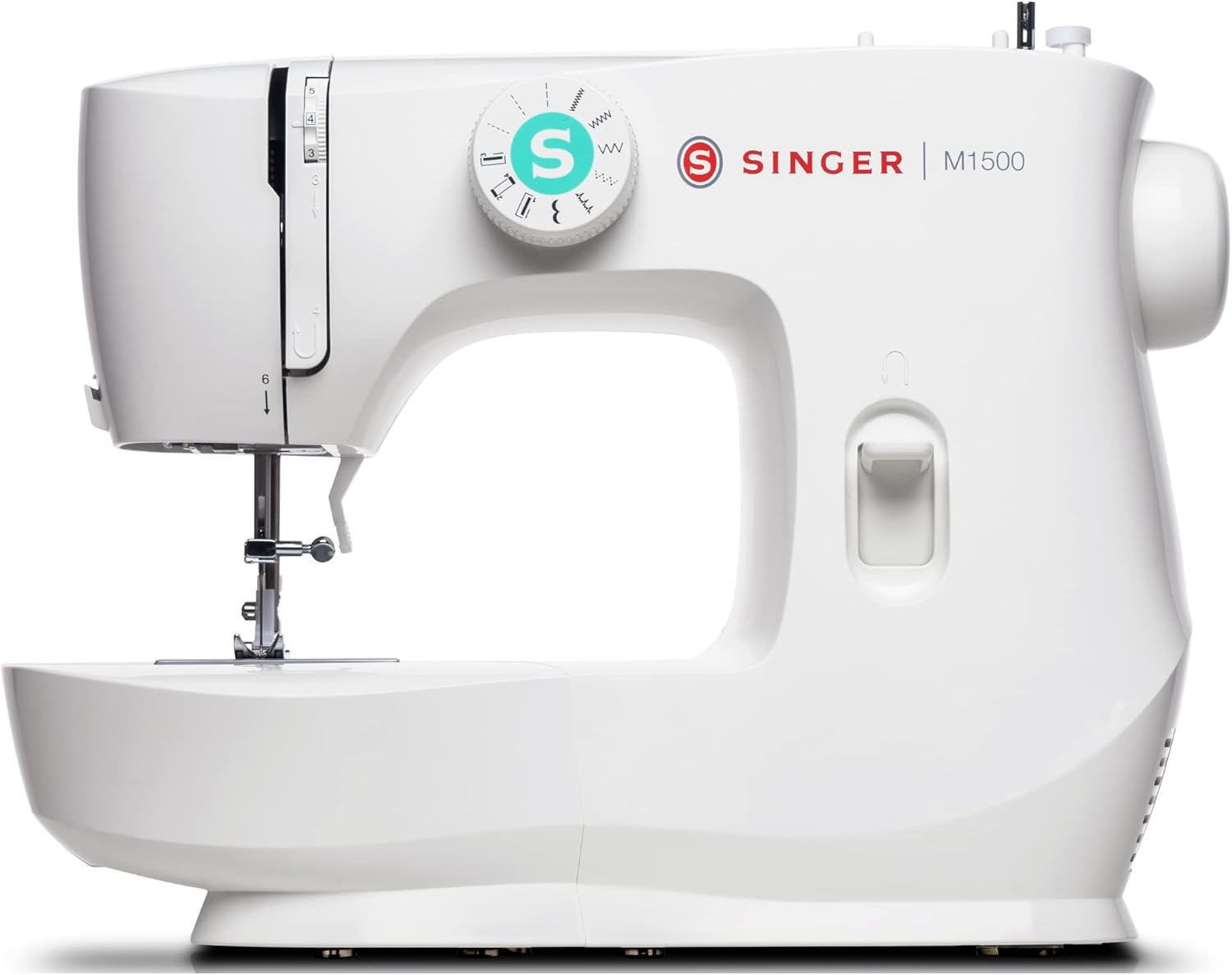
Current Price: $125 On Amazon
Best for: beginners, mending, basic garments
✅ Lightweight & portable
✅ Simple front-load bobbin
✅ Lowest entry price

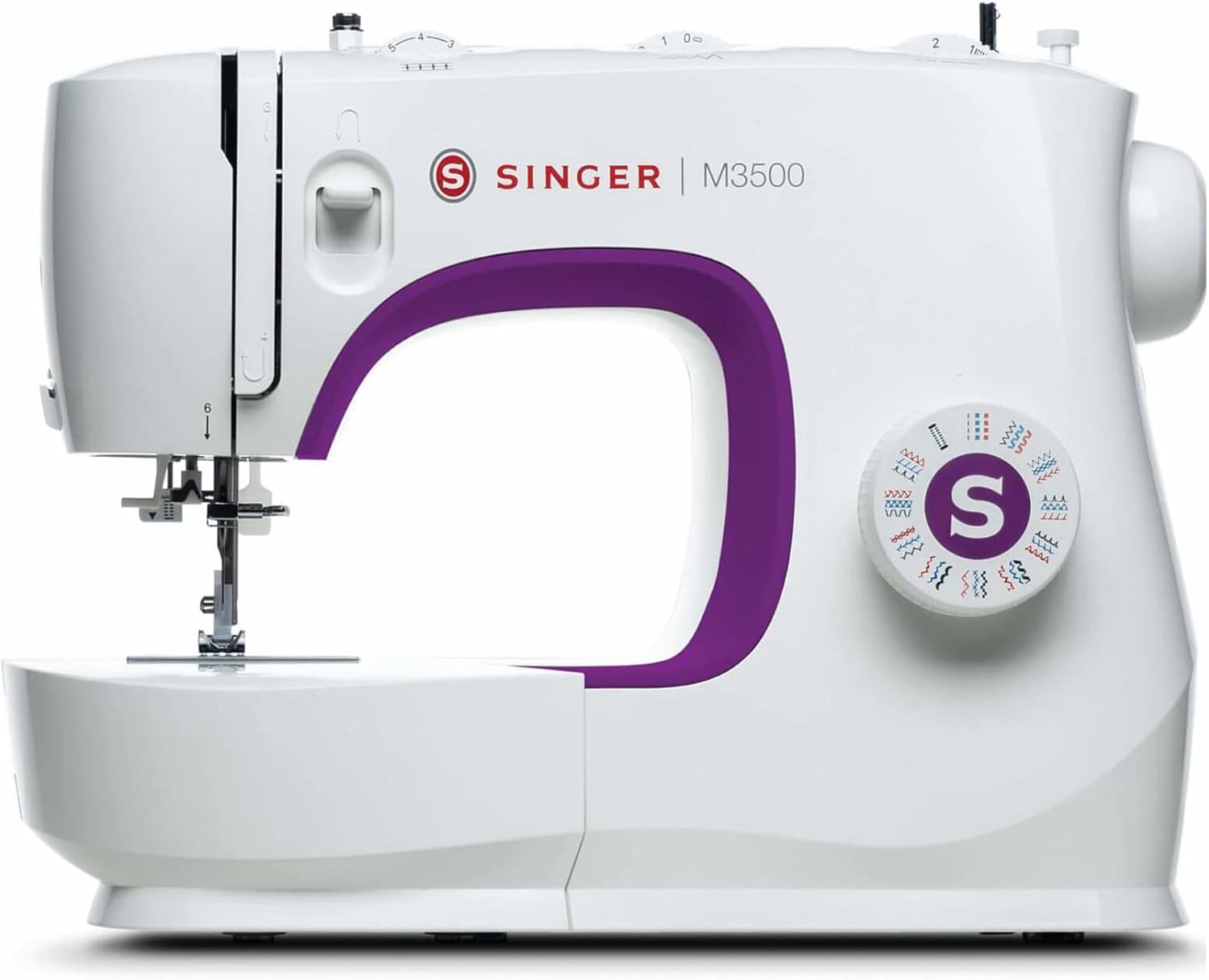
Current Price: $199 On Amazon
Best for: knit fabrics, decorative stitching, threading-averse sewists
✅ Automatic needle threader
✅ 110 stitch applications
✅ Top drop-in bobbin
Introduction
I’ve had both machines threaded, tested, and fighting for space on my sewing table for the past few weeks — the M1500 on one side, the M3500 on the other — because I kept running into the same wall every time I searched for a real comparison: every article online just restates the spec sheet. 57 stitches vs 110. Front-load bobbin vs top-load. Cool. None of that tells you what actually happens when you sit down to sew a hem at 9pm before school pickup the next morning.
So instead of another spec table, here’s what I found by actually using both.
If you’re also considering to buy any of these two machines, read this article to the end.
Table of Contents
Quick TL;DR:
Get the M1500 if you want the lowest-friction price for mending and basic garments. Get the M3500 if threading needles is your actual dealbreaker and you sew knits. Skip both for heavy denim work.
At-a-glance: Singer M1500 vs M3500
| Features | Singer M1500 | Singer M3500 |
|---|---|---|
| Best for | Mending, basics, budget start | Knits, decorative work, ease of use |
| Needle threading | Manual | Automatic |
| Bobbin | Front-load | Top drop-in |
| Stitch applications | 57 | 110 |
| Weight | Lighter, more portable | Heavier, more stable |
| Biggest Catch | Threading learning curve | Fussy first bobbin wind |
| Where To Buy | Check On Amazon | Check On Amazon |
The Amazon rating doesn’t match what I’m reading in the reviews
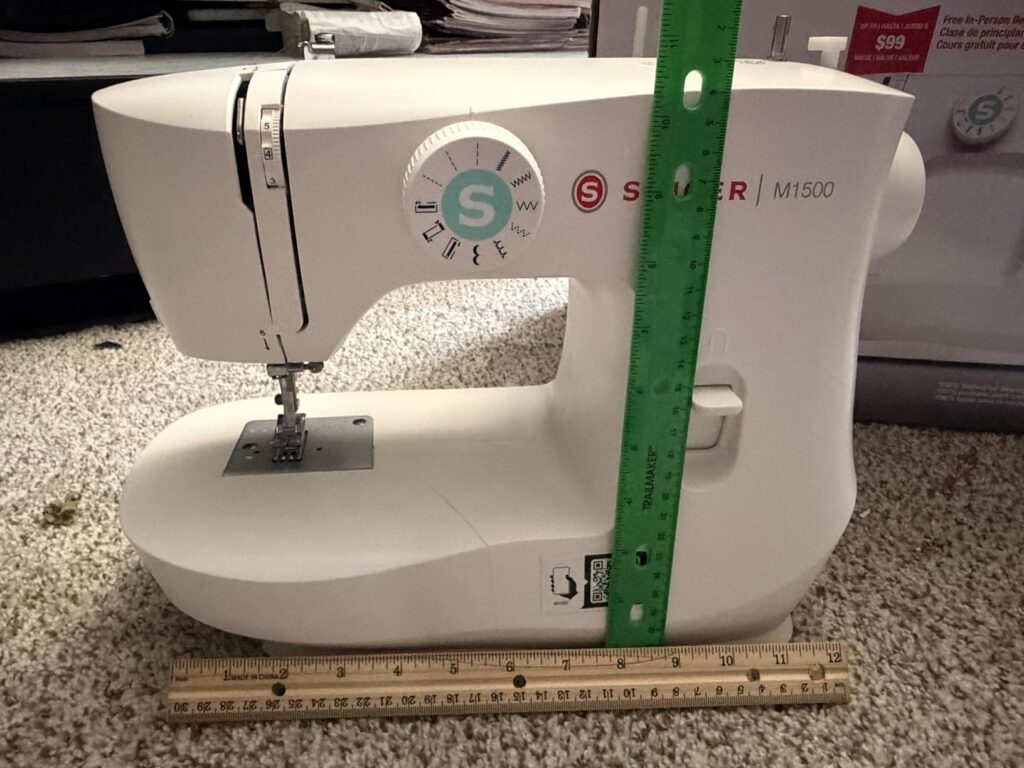
Before I even opened either box, something bugged me. The M3500 shows a solid star rating on its Amazon listing — the kind of number that makes you think “great, safe buy.” But when I actually started reading the written reviews underneath that number, the tone didn’t match. A lot of frustration, a lot of “returned it,” mixed in with five-star praise.
Turns out there’s a reason for that disconnect. Amazon has a habit of pooling ratings across an entire product family — in this case the M1500, M3300, and M3500 all get folded into the same aggregate score. When you isolate the M3500’s own reviews from the group, the number drops noticeably from what’s displayed on the page. That’s not a knock on the machine itself, but it is something worth knowing before you use the star rating as your deciding factor — because right now, it’s not really the M3500’s rating you’re looking at. It’s a blended average of three different machines.
Takeaway: don’t let the headline star rating make this decision for you. Read the actual written reviews for the specific model, not the number sitting above them.
I don’t know if I’ll actually use 110 stitches, or if that’s just marketing
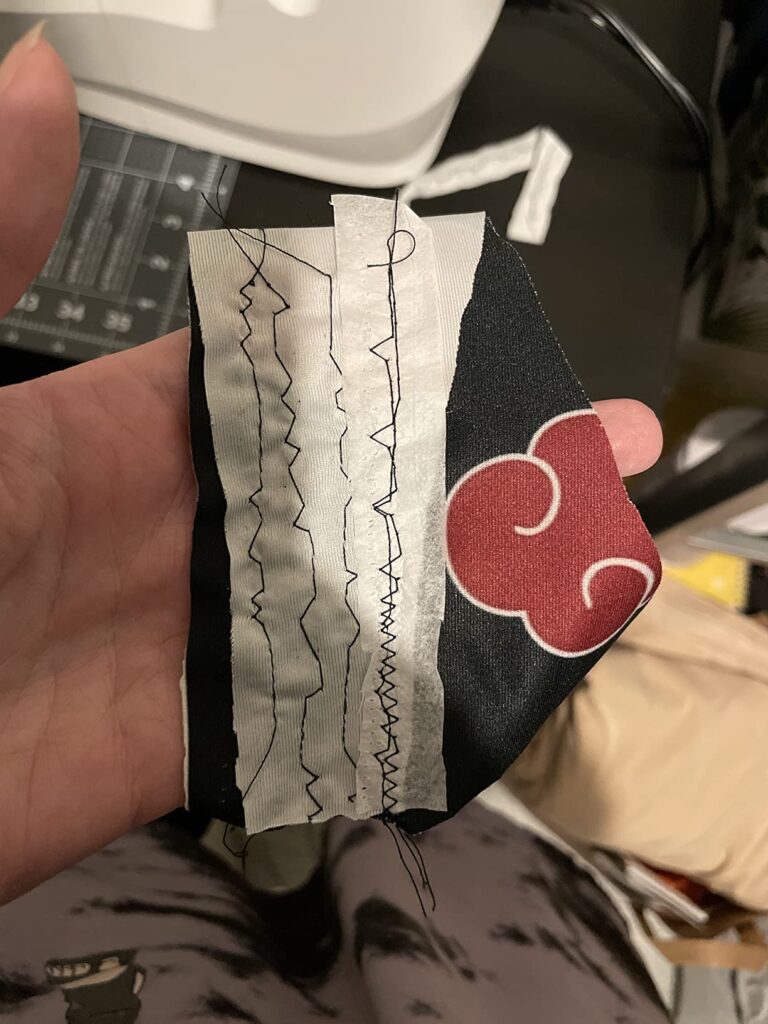
This is the number every listing leads with — 57 stitch applications on the M1500, 110 on the M3500 — and it’s the number that makes the M3500 feel like the “obviously better” choice. So I sat down and actually used both machines the way I sew in real life: hemming pants, patching knees, sewing a tote bag, doing a bit of quilting piecework.
Here’s the honest answer: for about 90% of what I actually made, I used straight stitch, zigzag, and a basic stretch stitch. That’s it. The extra stitches on the M3500 — the decorative ones, the extra stretch variations — sat untouched for days at a time. If your sewing life looks like mending, garment construction, basic quilting, or teaching a kid the fundamentals, the M1500’s smaller stitch library covers essentially everything you’ll reach for.
Where the extra stitches did matter: I was hemming a knit t-shirt and needed a stitch that could flex with the fabric without popping. The M1500’s fixed stitch options got the job done but felt a little more rigid on stretch fabric. The M3500’s adjustable stitch length and width let me loosen things up specifically for knits, and the seam held up better after a wash-and-wear test.
Takeaway: if you sew wovens, mending, and basics — the M1500’s 57 applications are not a compromise, they’re plenty. If knits, decorative topstitching, or garment variety are part of your actual projects, the M3500’s flexibility earns its keep.
Threading a machine makes me want to give up before I even start
This is where the two machines genuinely diverge, and it’s the difference that matters most for anyone who dreads the setup process more than the sewing itself.
The M1500 has no automatic needle threader. The first time I sat down with it, I was squinting, holding thread up to a tiny needle eye, missing on the first four tries. Once I got the hang of it — hold the thread taut, come at the eye from the front, use the built-in threading guide printed right on the machine — it became routine within a day. But that first session was genuinely frustrating, and if you have shaky hands, poor close-up vision, or you’re teaching a kid to thread it themselves, that’s a real daily friction point, not a one-time inconvenience.
The M3500 has a built-in automatic needle threader, and it’s the single feature that made the biggest difference in how often I actually wanted to sit down and sew. Drop the lever, hook the thread, done — no squinting. On a night when I just wanted to finish a quick repair before bed, not having to fight the needle mattered more than I expected.
Takeaway: if threading is the barrier that’s kept you from finishing projects in the past, this one feature alone might justify the price gap for you. If you don’t mind a short learning curve and actually enjoy the more hands-on, mechanical feel, the M1500’s manual threading isn’t a dealbreaker — some people, myself included on my slower days, actually like understanding every step instead of the machine doing it for me.
Nobody warns you the ‘better’ machine can be harder to set up out of the box
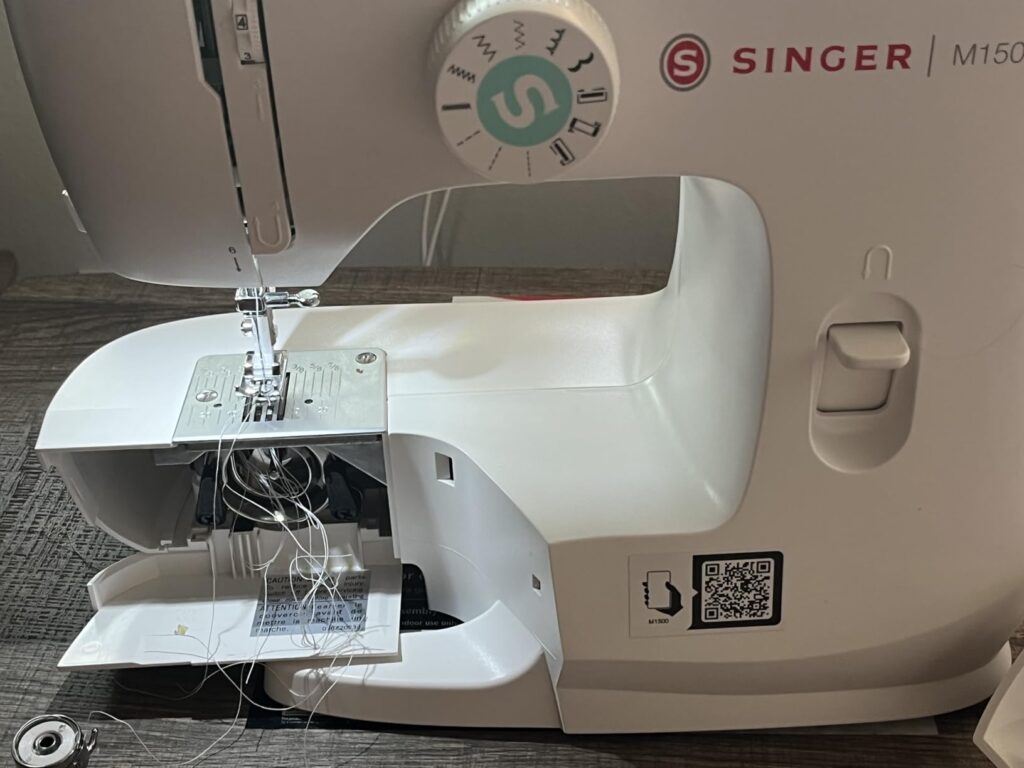
I almost didn’t believe this until I saw it happen.
My first bobbin wind on the M3500 came out uneven — looser on one side of the bobbin than the other. It wasn’t a defect. It was a threading-path issue: the thread needs to wrap the tension disc on the bobbin winder fully before it starts winding, and if you rush that step (which, on your first day with a new machine, you will), you get exactly this problem. Once I rewound it properly, it was a non-issue for the rest of testing. But that first-hour frustration is common enough, and specific enough, that it’s clearly not just me having a bad day with the machine.
The M1500, by comparison, had a boring, uneventful first setup. Front-load bobbin, wind it, drop it in, sew. No drama, but also none of the top-load convenience of being able to glance down and see how much thread is left without popping anything open.
Will either of these actually get through denim, or am I wasting my money?
Neither of these machines is marketed as heavy-duty, and I want to be upfront about that before anyone buys either one expecting to hem multiple layers of raw denim on the regular.
That said, I ran both through a folded-hem test on a pair of jeans — the kind of thick, multi-layer seam you hit finishing a hem, not sewing through a single layer of denim. Both machines got through it, but the M1500 needed a slower, steadier hand-crank start over the thickest point to avoid the needle deflecting, and I swapped in a denim needle before starting either test — a regular needle will struggle regardless of which machine you’re using. The M3500’s slightly heavier build (it’s noticeably more substantial when you pick it up) gave it a touch more stability pushing through that same thick seam, likely helped by its heavier body absorbing more of the vibration.
Neither machine is what I’d reach for if multi-layer denim or canvas is a regular part of your workload — that’s a heavy-duty-machine job. But for the occasional jeans hem or patch, both are capable if you’re patient and use the right needle.
I need something I can actually carry — will either of these be a pain to move around?
If you’re sewing at a kitchen table, in a shared space, or hauling a machine to a class, weight matters more than any stitch count. The M1500 is the noticeably lighter of the two, and it showed the moment I picked both up to move them off the table after a session — one felt like a quick, one-handed carry, the other needed both hands and a little more care.
The M3500’s extra heft is a trade-off, not a flaw — that added weight is part of why it felt more planted during the denim test above. But if your machine lives in a closet between projects and comes out for sewing class or a friend’s house, the M1500’s lighter build is the one that won’t make you dread the walk to the car.
So, portability-first sewists (students, class-goers, small-space sewers) should weight this heavily. Home-base sewists who set up once and leave it out won’t notice the difference day to day.
So Which One Should You Actually Buy?
Current Price: $125 On Amazon
Best for: beginners, mending, basic garments
✅ Lightweight & portable
✅ Simple front-load bobbin
✅ Lowest entry price
Get the Singer M1500 if: you’re mending, doing basic garment work, teaching someone to sew, need the lightest machine to carry, and you’re fine with a short threading learning curve in exchange for saving money.
Get the Singer M3500 if: you sew knits regularly, threading needles genuinely stops you from starting projects, you want room to grow into decorative stitching, and you’re willing to spend the first 30 minutes getting the bobbin tension right before it settles in.
Skip both if: heavy denim, canvas, or multi-layer upholstery work is a regular part of your sewing — that’s a heavy-duty machine’s job, not either of these.
Final Verdict
The real decision here isn’t stitches or price — it’s which annoyance you’d rather live with.
The M1500 asks you to tolerate a manual needle threader every single session in exchange for saving $74.
The M3500 asks you to tolerate one fussy bobbin-winding session in exchange for never squinting at a needle eye again.
Neither machine is “better” in the abstract — one just trades a small recurring friction for a small one-time friction, and the right pick depends entirely on which kind of annoyance actually wears you down over time.
Related Articles:
FAQs
Does the M1500 really lack an auto-threader?
Yes — this is worth calling out because it’s actually reported backwards on a few comparison sites out there. The M1500 threads manually; the M3500 has the automatic threader.
Is the M3500’s higher Amazon rating a reliable signal?
Treat it with caution — it reflects a pooled average across multiple Singer models, not the M3500 in isolation. Read the model-specific written reviews instead of trusting the star number alone.
Will I outgrow the M1500?
If your projects stay in the mending/basic-garment lane, not really — the ceiling is higher than the stitch count suggests. If you’re moving toward knits or more decorative work, that’s when the M3500’s flexibility starts to matter.
Is either machine loud?
Both run quieter than I expected for mechanical machines in this price range — noticeable hum at higher speeds, but nothing that’d bother anyone in the next room.