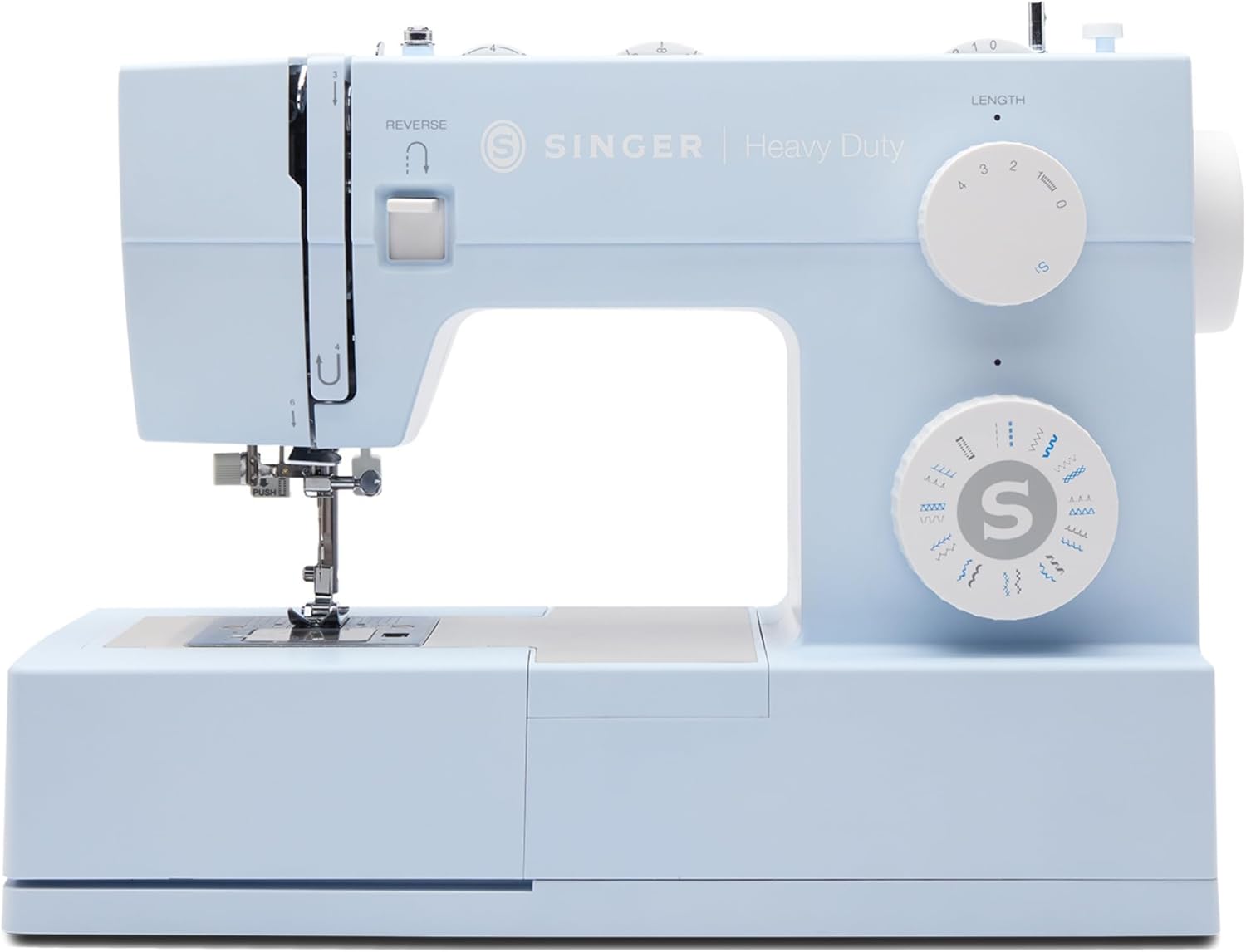
Current Price: $239 on Amazon
Same 23 stitches, same motor, same frame as the pricier 5523 — just without the $93 markup. The smarter buy for almost every home sewist.

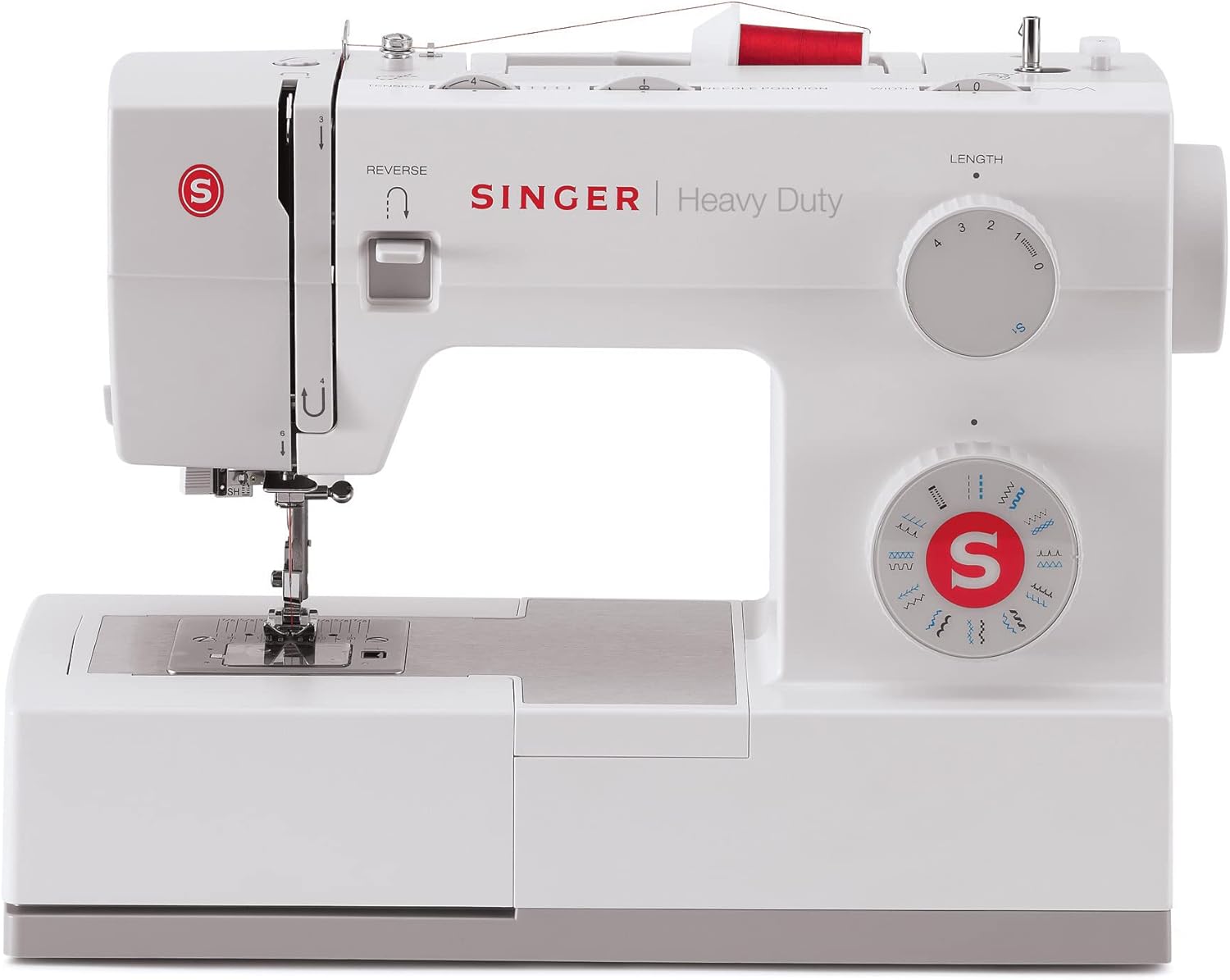
Current Price: $332 on Amazon
Built for shared/institutional use with extension-table compatibility. Pick this only if you need that table or the white finish — the internals match the 4423.
Introduction
While sewing a leather bag for my 10-year-old daughter, my Singer 4423 suddenly started birdnesting and bunching thread underneath the fabric.
Frustrated and defeated, I decided it was time to upgrade to a machine that could actually handle thick layers.
I went online, ordered a new model, and guess what? I accidentally bought the exact same machine all over again.
It had a different name and model number, but under the hood, it was the same old 4423.
I’m talking about the Singer 5523.
In this article, I’m putting these two machines side by side to show you if there is any real difference at all—or if it’s just a new coat of paint.
Table of Contents
Quick TL;DR:
The Singer 4423 and 5523 are the same machine internally — same motor, same 23 stitches, same metal frame. The only real differences are color, branding tier, and extension-table compatibility. Right now, that gets you a $100 price gap. Unless you specifically need the extension table or you’re buying for a classroom/institutional setting, the 4423 is the better buy at $239 vs. $332 for the 5523.
At-a-glance: Singer 4423 vs 5523
| Features | Singer 4423 | Singer 5523 |
|---|---|---|
| Series | Heavy Duty | Scholastic |
| Stitches | 23 | 23 |
| Max speed | 1,100 SPM | 1,100 SPM |
| Motor | Heavy-duty, metal interior frame | Heavy-duty, metal interior frame |
| Buttonhole | 1-step automatic | 1-step automatic |
| Needle threader | Automatic | Automatic |
| Bobbin | Top drop-in | Top drop-in |
| Color | Grey, Blue | White with grey accents |
| Extension Table | Not officially supported | Optional accessory available |
| Target market | Home sewists | Classrooms / institutional use |
| Where To Buy | Check On Amazon | Check On Amazon |
The Model Numbers Are Hiding the Real Story
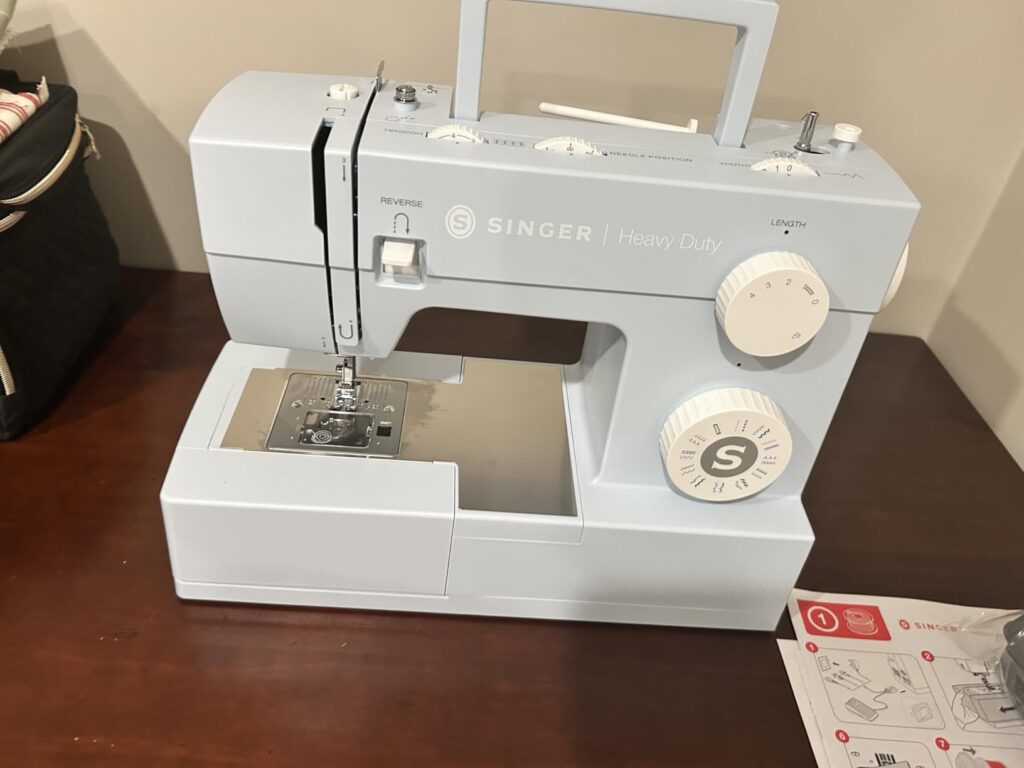
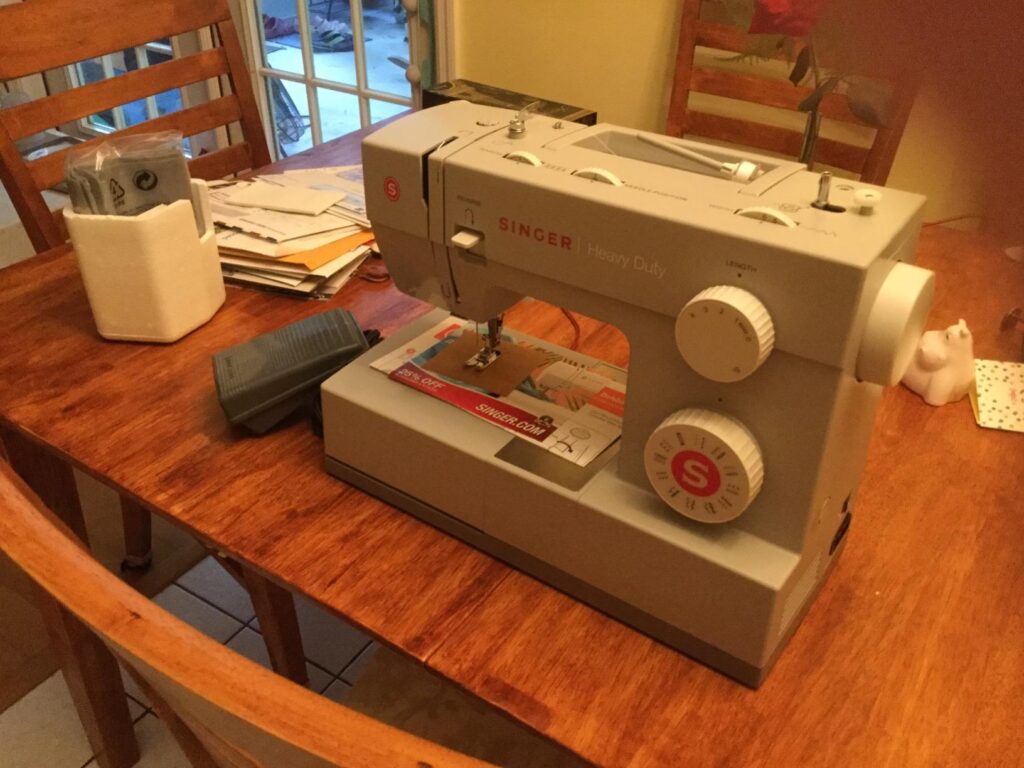
To see if the white-and-grey Singer 5523 “Scholastic” could actually handle heavy layers better than my old grey Singer 4423, I put them through a side-by-side torture test. I set up both machines on my work table, loaded them with the exact same heavy-duty thread, and fed them the ultimate test: four layers of thick denim upholstery fabric.
As I stepped on the pedals, the truth became instantly clear. Both machines roared with the exact same loud motor buzz, punched through the denim at the identical lightning-fast speed, and—sure enough—both jammed up with the exact same thread bunching when I tried to force them through a thick cross-seam too quickly.
When I stopped sewing and checked the official spec sheets, everything clicked. This isn’t a guess; Singer built the exact same machine twice. They have the same motor, the same internal metal frame, and the exact same 23 stitches. Retailers who sell these to schools even openly admit that the 5523 is just a 4423 with a fresh coat of white paint meant for classrooms.
So, before you waste time comparing their features online, take it from my hands-on test: you are buying the exact same machine. The only real difference is the plastic shell—and right now, that white paint job costs 39% more.
The Price Gap Nobody’s Explaining
Right now, the Singer 4423 costs $239, while the Singer 5523 costs $332. That is a approximately $93 difference for the exact same sewing machine.
Since the internal parts are identical, the higher price tag does not mean you are getting a stronger or better machine. Instead, you are paying extra for three simple reasons:
- School Branding: The 5523 is marketed to schools and classrooms under the “Scholastic” name. These institutional sellers don’t price items the same way normal retail stores do.
- Fewer Sellers: The grey 4423 is wildly popular and sold everywhere, which keeps the price low due to competition. The white 5523 is harder to find, so sellers can charge more for it.
What the Spec Sheet Won’t Tell You?
Because these are the same machine, they also share the same real-world weak points — and looking at what actually goes wrong tells you more than any stitch-count comparison.
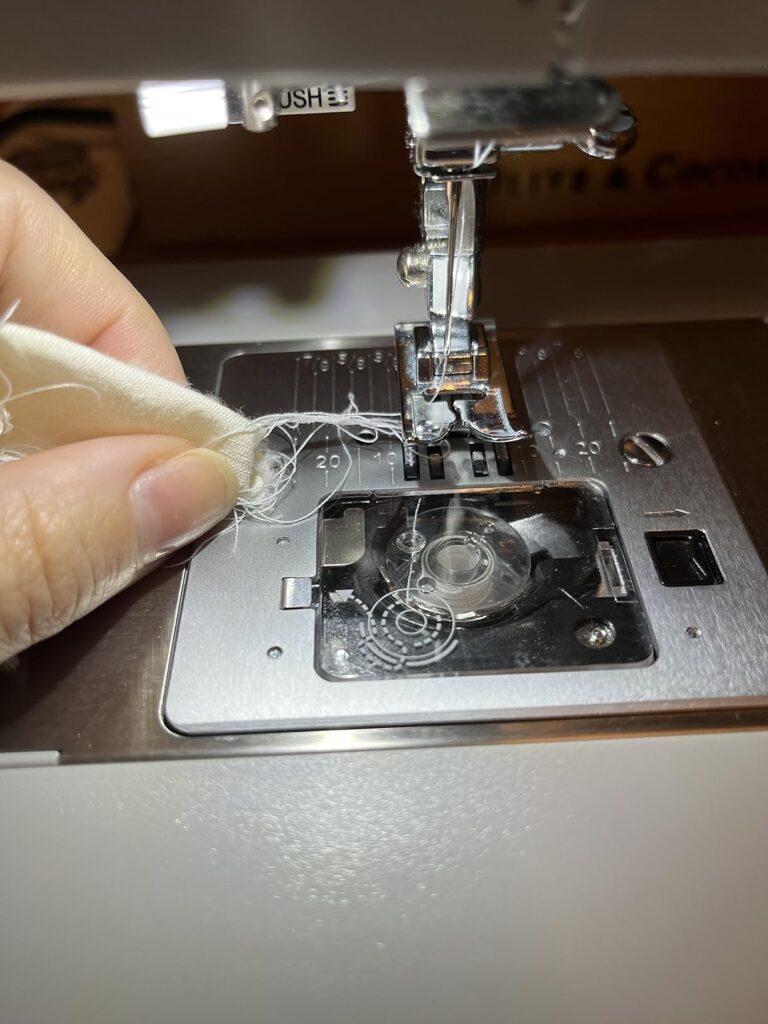
The Dreaded “Birdnesting” is Real
While sewing a hem on a pair of jeans, both machines suddenly jammed and created a massive ball of tangled thread underneath the fabric. I didn’t panic. I checked the top thread, and sure enough, I had threaded the machine with the presser foot down. On both models, the tension disks are identical. If you thread them wrong, they will both make a mess. Once I cleaned out the lint from the bobbin case and re-threaded them correctly, they both went right back to sewing perfectly.
The Stubborn Stitch Dial
Halfway through making a decorative pillow, I turned the big dial on the front to switch from a straight stitch to a zigzag. The dial clicked, but the needle kept sewing a straight line on both machines. I looked closely inside and found a tiny piece of stray thread stuck in the dial mechanism. A quick blast of canned air cleared it out, and the dial worked again. It’s a common issue on this specific frame: the dials get sticky if dust gets inside.
Busting the “Dual-Drive” Myth
I need to warn you about a big lie floating around the internet. People assume the white 5523 has a special “dual-drive feed system” that helps it grip fabric better than the grey 4423. To test this, I fed a piece of slippery silk through both machines at the same time. Guess what? They both handled the fabric exactly the same way, and the metal feed dogs underneath look identical. Singer’s own manuals confirm they use the exact same part. Don’t believe the hype—the 5523 does not grip fabric any better.
The Cheap Bobbin Problem
Lastly, when I was winding thread for a multi-colored quilt, I ran out of bobbins almost immediately. Both machines only come with three or four clear plastic bobbins in the box. That is barely enough to get started. No matter which machine you choose, you will need to buy a cheap pack of extra Class 15 bobbins right away.
Which One You Should Buy?
Current Price: $239 on Amazon
Same 23 stitches, same motor, same frame as the pricier 5523 — just without the $93 markup. The smarter buy for almost every home sewist.
Buy the Singer 4423 (Grey) if:
- You want the absolute best value: It does everything the 5523 does, but it saves you $93. That is extra money you can spend on fabric, heavy-duty needles, and extra bobbins.
- You want easy repairs: Because the grey 4423 is in almost every sewing room on the planet, finding replacement parts or YouTube repair tutorials is incredibly easy.
Buy the Singer 5523 (White) if:
- You sew huge projects: This is the only real reason to spend the extra cash. If you make large quilts, heavy curtains, or bulky winter coats, the 5523 lets you snap on a giant plastic extension table to hold the weight of your fabric. (Just remember, you have to buy that table separately!)
- You are running a classroom: If you are buying machines for a school, a fashion program, or a community center, the 5523 “Scholastic” model fits right into a classroom setup.
Final Verdict
At current pricing, the Singer 4423 is the smarter buy for nearly everyone. It’s the same machine as the 5523 — same stitches, same motor, same frame, same real-world quirks — for $93 less. The 5523’s only genuine advantages are extension-table compatibility and its institutional branding, both of which matter to a narrow slice of buyers (classrooms, programs, or anyone specifically wanting that table setup).
Unless one of those specific cases applies to you, you’re not choosing a better machine when you pick the 5523. You’re choosing a different color at a higher price.
Related Articles:
- Singer 4411 vs 4423!
- Singer 4423 vs 4452!
- Singer 4432 vs 4423!
- Singer 6380 vs 4423!
- Singer 4423 vs Brother ST371HD!
FAQs
Q1. Is the Singer 5523 actually a different machine from the 4423?
No. They share the same 23 stitches, motor, frame, and feature set. The differences are color, branding (“Heavy Duty” vs. “Scholastic”), and extension-table compatibility.
Q2. Why does the Singer 5523 cost more than the 4423 if they’re the same machine?
Likely retail/channel positioning and lower sales volume rather than any functional upgrade. The one real added feature — extension-table support — doesn’t fully account for the price gap.
Q3. Does the Singer 5523 have a better feed system than the 4423?
No — despite a claim circulating online, Singer’s own specs list identical feed mechanisms for both models. Treat that claim as inaccurate.
Q4. Which one should I buy for home use?
The 4423, in almost all cases — same capability for less money.
Q5. Which one should I buy for a classroom or shared setting?
The 5523, since it’s positioned and often stocked specifically for that use, and supports the optional extension table.