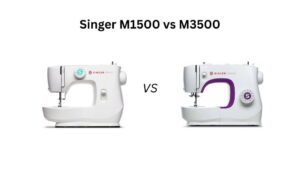
Singer M1500 vs Brother XM2701:
Which Beginner Machine Is Worth Your Money?
An in-depth, hands-on comparison of specs, ease of use, stitch variety, bobbin systems, and real-world performance — so you choose right the first time.
The Brother XM2701 is the better buy for most beginners. It offers 27 built-in stitches (vs 6 on the M1500), an automatic needle threader, a jam-resistant drop-in top bobbin, adjustable stitch length and width, and 6 included presser feet — all at a $15 higher price. The Singer M1500 wins on pure simplicity and portability, and is a solid pick for very young sewists or anyone who wants the most no-frills machine possible.
Singer M1500 vs Brother XM2701: The Short Version
Both are lightweight mechanical sewing machines designed for beginners. The Singer M1500 keeps things ultra-simple with 6 built-in stitches and preset stitch settings, making it a great first machine for children or occasional sewists. The Brother XM2701 offers significantly more features — 27 stitches, auto needle threader, drop-in bobbin, and adjustable stitch settings — at a modest $15 premium.
The key decision comes down to this: do you want pure simplicity, or do you want room to grow?
📋 In This Article
- Overview: Two Paths Into Sewing
- Side-by-Side Buy Options
- Full Specification Comparison Table
- Stitches & Stitch Applications
- Ease of Use & Setup
- Bobbin System & Threading
- Fabric Performance
- Key Feature Differences
- Pros & Cons of Each Machine
- Who Should Buy Each Model?
- Final Verdict
- Frequently Asked Questions
Two Paths Into Sewing: Understanding Each Machine
The Singer M1500 is Singer’s current entry-level flagship — the spiritual successor to the beloved Singer 1304 (Start). It was designed with one goal in mind: get a beginner sewing as quickly and simply as possible. There are no adjustable stitch length settings, no automatic needle threader, and no drop-in bobbin. What you get is a clean, dial-based mechanical machine that strips sewing down to its essentials.
The Brother XM2701 takes a different approach. Rather than stripping things back, Brother packed this machine with features that would normally cost significantly more — automatic needle threading, a jam-resistant top drop-in bobbin, 27 built-in stitches, and 6 quick-change presser feet. Yet it remains one of the top-selling beginner sewing machines on Amazon, praised for being easy to set up within 30 minutes of opening the box.
Both machines are low-shank mechanical sewing machines designed for light-to-medium weight fabrics. Neither is meant for heavy-duty work like thick canvas or multiple layers of denim — that’s a different category entirely. But within the beginner segment, they represent genuinely different philosophies, and understanding which one fits your needs makes all the difference.
“The Singer M1500 wins on pure simplicity. But if you prefer a top drop-in bobbin system, or if you’d benefit from an automatic needle threader, the Brother XM2701 might edge it out.” — Threaded Machines
Check Today’s Prices on Amazon
Both machines are available on Amazon with free Prime shipping. Prices are current at time of publishing — click through to verify the latest deal.
Singer M1500
- 6 built-in stitches, 57 stitch applications
- Preset stitch length & width (no guesswork)
- Lightweight & ultra-portable (~10 lbs)
- 4-step buttonhole
- Front-loading bobbin
- LED work light
- 3 included presser feet
- Metal interior frame
- 25-year limited warranty
Brother XM2701
- 27 built-in stitches, 63 stitch functions
- Adjustable stitch length & width
- Automatic needle threader
- Jam-resistant top drop-in bobbin
- 1-step automatic buttonhole
- 6 quick-change presser feet included
- Bright LED work area
- Free arm for sleeves & cuffs
- 25-year limited warranty + lifetime phone support
Full Specification Comparison Table
Every spec that matters, side by side. WIN badges show where one machine outperforms. TIE means they’re equal.
| Feature | Singer M1500 | Brother XM2701 |
|---|---|---|
| Price | $119 WIN | $134 |
| Machine Type | Mechanical TIE | Mechanical |
| Built-In Stitches | 6 | 27 WIN |
| Stitch Applications | 57 | 63 WIN |
| Buttonhole | 4-Step Manual | 1-Step Auto WIN |
| Adjustable Stitch Length | No (Preset) | Yes (up to 4mm) WIN |
| Adjustable Stitch Width | No (Preset) | Yes (up to 5mm) WIN |
| Automatic Needle Threader | No | Yes WIN |
| Bobbin System | Front-Loading | Top Drop-In WIN |
| Jam-Resistant Bobbin | No | Yes WIN |
| Included Presser Feet | 3 | 6 WIN |
| Adjustable Thread Tension | Yes TIE | Yes |
| Free Arm | Yes TIE | Yes |
| LED Work Light | Yes TIE | Yes |
| Reverse Stitch Lever | Yes TIE | Yes |
| Stitch Selector | Dial TIE | Dial |
| Max Sewing Speed | ~750 SPM | 800 SPM WIN |
| Presser Foot Shank | Low-Shank TIE | Low-Shank |
| Weight | ~10 lbs WIN | ~15 lbs |
| Interior Frame | Metal TIE | Metal |
| Warranty | 25-yr limited TIE | 25-yr + lifetime support |
| Best For | Children, ultra-beginners, casual use | Beginners to intermediate, growing sewists |
Sources: Singer Official Product Page · Brother Official Product Page · Sewing Machine Directory
Stitches & Stitch Applications: Where They Diverge Most
This is where the gap between these two machines becomes most obvious. The Singer M1500 includes 6 built-in stitches — straight, zigzag, blind hem, multi-step zigzag, scallop, and a 4-step buttonhole. Singer markets this as “57 stitch applications,” but that number counts the different uses of each stitch (e.g., straight stitch used for seams vs. topstitching vs. quilting). The actual number of unique stitches is 6. Stitch length and width are preset by Singer — you cannot adjust them. This makes the machine very beginner-friendly but limits flexibility as your skills grow.
The Brother XM2701 offers 27 built-in stitches with 63 stitch functions. This includes utility stitches, stretch stitches for knits, decorative stitches, blind hem, and quilting stitches — plus a convenient 1-step automatic buttonhole that creates perfectly consistent buttonholes every time. Crucially, stitch length (up to 4mm) and stitch width (up to 5mm) are both manually adjustable, giving you far more control over your sewing results as you develop as a sewist.
The bottom line on stitches: If you’re sewing hems, simple repairs, and basic crafts, 6 stitches is genuinely sufficient. But if you ever want to sew knit fabrics (you’ll need a stretch stitch), decorative applications, or more professional-looking garments, the Brother XM2701’s 27 stitches will serve you far better over the long run.
Ease of Use & Setup: Which Machine Gets You Sewing Faster?
Singer M1500: Simplicity is the Entire Point
The Singer M1500’s design philosophy is radical simplicity. The stitch selector is a single clearly marked dial. Stitch length and width are preset — you don’t need to think about them. Threading guides are printed directly on the machine body, and experienced reviewers report being ready to sew within 10 minutes of opening the box. The machine comes pre-threaded with sample fabric, a genuinely thoughtful touch for first-timers.
The main usability downside is the front-loading (oscillating) bobbin. This style requires removing the bobbin case, loading the bobbin correctly (orientation matters), and drawing up the bobbin thread manually using the handwheel before you can sew. For absolute beginners, this extra step takes time to learn.
There is also no automatic needle threader on the M1500. You thread the needle by hand, which is a small but daily friction point that can frustrate beginners with less-than-perfect eyesight.
Brother XM2701: Feature-Rich Without Being Overwhelming
The Brother XM2701 manages to offer significantly more features while remaining approachable for beginners. The automatic needle threader is a genuine quality-of-life upgrade — just swing it down, hook the thread, and it pulls it through the needle’s eye automatically. The top drop-in bobbin is even easier: drop the bobbin into the compartment from the top, follow the diagram, and the machine handles the rest without requiring you to draw up the thread manually.
Having adjustable stitch length and width does add two more controls to learn, but Brother’s intuitive dial layout keeps it simple. Multiple reviewers note that even complete beginners can start sewing within 30 minutes of opening the box.
Bobbin System Deep Dive: Front-Load vs. Drop-In Top
This is one of the most practical differences between these two machines — and it matters more in daily use than any spec sheet reveals.
Singer M1500’s front-load bobbin is the traditional style. You load the bobbin into a case, insert the case into the machine, then turn the handwheel to draw the bobbin thread up through the needle plate. It’s a skill that takes a few sessions to learn. The process is reliable once mastered, but the learning curve is steeper, and there’s no printed orientation guide on the machine to help beginners get it right.
Brother XM2701’s drop-in top bobbin is the modern standard for beginner machines. Brother engineered it to be jam-resistant, which means fewer frustrating mid-project thread tangles. You drop the bobbin in from the top, follow the arrows on the transparent cover, and the machine automatically picks up the bobbin thread when you start sewing. No handwheel dance required.
Important: Both machines use Class 15 bobbins — a common size available everywhere. This means you can stock up on generic bobbins from any craft store for both machines.
How Do They Perform on Real Fabrics?
Lightweight Fabrics (Cotton, Chiffon, Muslin)
Both machines perform excellently on light fabrics. The Singer M1500 produces even, well-tensioned stitches on lightweight cotton, and the XM2701 handles fine fabrics smoothly without skipping or puckering. For everyday cotton sewing projects, basic garments, and quilting with quilting cotton, either machine will serve you well.
Medium-Weight Fabrics (Denim, Linen, Canvas)
This is where the differences begin to show. The M1500 can handle light denim in 1–2 layers, but may struggle with thicker seam allowances. Singer themselves recommend the M1500 for light to medium-weight fabrics. The XM2701 is rated for fabrics from silk to denim, though both machines are standard home machines — not heavy-duty workhorses. Expect slow, careful sewing on denim with either one.
Stretch Fabrics (Jersey, Knits)
Here the Brother XM2701 pulls ahead meaningfully. It includes dedicated stretch stitches (like the lightning bolt stretch stitch) designed for knit fabrics, which bounce back without breaking. The Singer M1500 lacks dedicated stretch stitches — while you can technically sew knits with a zigzag, results are inconsistent. If you plan to sew t-shirts, athleisure, or any stretch fabric, the XM2701 is the clear choice.
Decorative & Craft Projects
The Brother XM2701’s 27 stitches include several decorative options that allow for more creative projects — appliqué, decorative borders, fabric crafts. The M1500’s 6 stitches cover the basics but nothing beyond. For quilting enthusiasts, the XM2701 also includes quilting stitches; the M1500 does not.
The 5 Key Differences That Actually Matter
1. Stitches: 6 vs. 27
The most visible difference. The M1500 has 6 stitches (sufficient for repairs, basic garments, and simple crafts). The XM2701 has 27 stitches including stretch, decorative, and quilting options. For beginners who plan to grow, the Brother’s stitch variety gives you room to explore without upgrading your machine.
2. Automatic Needle Threader
The Brother XM2701 includes an automatic needle threader — a small lever device that pulls thread through the needle eye automatically. The Singer M1500 does not include one. This sounds minor but becomes significant after threading the needle manually for the 500th time. The simplest Singer machine with a needle threader is the M3300, priced higher than the XM2701.
3. Bobbin System (Drop-In vs. Front-Load)
The Brother’s drop-in top bobbin is significantly easier to use — especially for complete beginners. The Singer’s front-load bobbin is reliable once mastered, but the learning curve is steeper. For a beginner’s first machine, this is a practical win for the Brother.
4. Presser Feet: 3 vs. 6
The Singer M1500 includes 3 presser feet (all-purpose, zipper, buttonhole). The Brother XM2701 includes 6 (zigzag, buttonhole, zipper, narrow hemmer, blind stitch, button sewing). The extra feet — especially the narrow hemmer and button sewing foot — save you from buying accessories separately and expand your project possibilities right out of the box.
5. Adjustable vs. Preset Stitch Settings
The Singer M1500 presets stitch length and width for you — no adjustment possible. The Brother XM2701 lets you manually set stitch length (up to 4mm) and width (up to 5mm). While presets help beginners get started, the inability to adjust means you cannot adapt to different fabrics, thread weights, or project requirements — a limitation you’ll feel as your skills improve.
Pros & Cons of Each Machine
✓ Pros
- Ultra-simple — zero overwhelm for absolute beginners
- Lightest machine in its class (~10 lbs) — easy to transport
- Preset stitch settings remove guesswork entirely
- $15 cheaper than the XM2701
- Solid metal interior frame for long-term stability
- Threading guides printed on the machine body
- 25-year limited warranty
- Great for children learning to sew
✗ Cons
- Only 6 built-in stitches — very limited variety
- No automatic needle threader
- Front-load bobbin has a steeper learning curve
- Stitch length and width cannot be adjusted
- Only 3 presser feet included
- No stretch stitches for knit fabrics
- 4-step buttonhole (vs 1-step on XM2701)
- Limited room to grow as skills improve
✓ Pros
- 27 stitches including stretch and decorative options
- Automatic needle threader saves time every session
- Jam-resistant drop-in top bobbin — beginner-friendly
- 1-step automatic buttonhole — consistent every time
- 6 presser feet included (vs 3 on M1500)
- Adjustable stitch length and width
- Free lifetime phone/chat support from Brother
- Scales with your skills — good for beginners AND intermediate
✗ Cons
- $15 more than the Singer M1500
- Heavier at ~15 lbs (vs M1500’s ~10 lbs)
- Needle threader can be fragile over time
- Bobbin can occasionally jam despite jam-resistant design
- Can feel slightly noisier at full speed
- No carrying case included (sold separately)
Who Should Buy Which Machine?
Buy the Singer M1500 if you are…
- A young child or teen just starting to learn sewing
- Someone who needs a machine only for occasional mending and repairs
- A sewist who wants a lightweight, ultra-portable backup machine
- On an extremely tight budget and need the lowest price
- Someone who wants absolutely no complexity — just sew
- Planning to work exclusively with light-to-medium woven fabrics
- A parent wanting a simple machine for a child that’s hard to break
Buy the Brother XM2701 if you are…
- A beginner who wants to actually learn and grow in sewing
- Someone who plans to sew knit or stretch fabrics
- Anyone frustrated by threading needles manually
- A sewist who will do garment construction, not just repairs
- Someone doing crafts, quilting, or decorative sewing
- Looking for the best long-term value under $150
- A parent wanting their child to learn on a machine with more to offer
The $15 Question: For just $15 more, the Brother XM2701 gives you 21 extra stitches, an automatic needle threader, a better bobbin system, 3 extra presser feet, and adjustable stitch control. Unless the Singer M1500’s lighter weight or lower price is a firm requirement, the XM2701 is the stronger value proposition for nearly every buyer.
Our Final Verdict
Two solid beginner sewing machines at similar price points — but they’re not equally matched in value. The Brother XM2701 outperforms the Singer M1500 in almost every feature category for just $15 more, making it the smarter choice for most buyers. The Singer M1500 earns its place for the youngest beginners or those who truly want the most stripped-back machine possible.
Singer M1500
For children, very casual sewists, or anyone who wants the simplest possible sewing machine with zero learning curve on settings.
Brother XM2701
For beginners who want to grow with their machine. More stitches, auto needle threader, drop-in bobbin, and 6 feet — the best beginner machine under $150.
Frequently Asked Questions
E-E-A-T Note: Specifications in this article are cross-referenced against official Singer and Brother product pages, Amazon listings, and multiple independent sewing community reviews. The comparison table reflects documented manufacturer specifications. Last verified: May 2026.