Current Price: $279 On Amazon
✅ Buy this if: You sew garments AND heavy fabrics and want one machine that handles both. You're setting up from scratch and want to be fully equipped on day one. You want the full first-year warranty with no labor asterisk.
❌ Skip this if: You need a walking foot — it's not in the box despite the generous bundle, so budget an extra $20–25 for one separately.
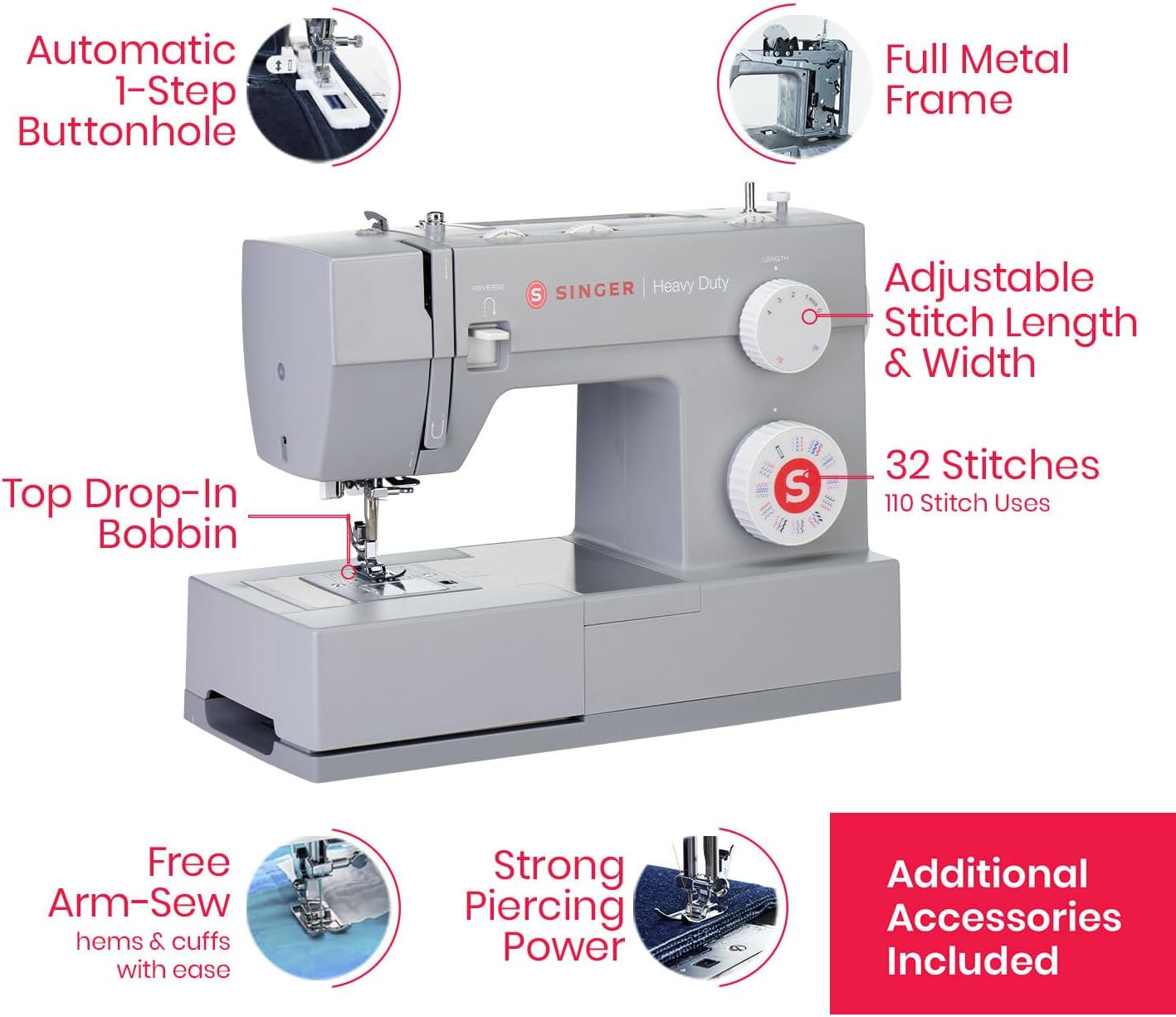

Current Price: $215 On Amazon
✅ Buy this if: Your sewing is purely utility — denim, canvas, bags, repairs. You already own an extension table and presser feet. You want the same mechanical performance for less.
❌ Skip this if: You sew large projects like quilts or curtains — the lack of an extension table will frustrate you fast. You'd eventually buy the table and feet separately anyway, because then the 4423 ends up costing more.
Introduction
I bought the Singer 6380 to handle the heavy stuff — denim, thick canvas, multiple layers. And honestly? It performed beyond my expectations.
But after a few weeks of using it, something felt familiar. The weight, the speed, the way it handled fabric — it all reminded me of my old Singer 4423 sitting on the shelf. So I pulled the 4423 out, set both machines side by side, and started running them through the same projects.
Same fabrics. Same thread. Same conditions.
What I found surprised me — and it’s something most comparison articles completely miss. These two machines are closer than Singer wants you to believe. But the differences that do exist? They actually matter depending on what you sew.
That’s what this article is about. No fluff, no spec sheet padding. Just what I found after putting both machines to work.
Table of Contents
Quick TL;DR:
The 4423 and 6380 are the same machine under the hood — same motor, same frame, same performance. The 6380 costs more but ships with an extension table, three extra feet, and a stronger warranty. If you’d buy those accessories anyway, the 6380 is actually cheaper overall. If you sew purely for utility and already own the extras, the 4423 is all you need.
At-a-glance: Singer 6380 vs 4423
| Features | Singer 4423 | Singer 6380 |
|---|---|---|
| Built-in Stitches | 23 | 110 |
| Max Speed | 1,100 SPM | 1,100 SPM |
| Frame | Heavy-duty metal | Heavy-duty metal |
| Extension Table | ❌ Not included | ✅ Included |
| Walking Foot | ❌ Not included | ❌ Not included |
| Blind Hem Foot | ❌ Not included | ✅ Included |
| Overcasting Foot | ❌ Not included | ✅ Included |
| Sew Easy Foot | ❌ Not included | ✅ Included |
| Buttonhole Styles | 1 (manual stop) | 1 (manual stop) |
| Warranty | 25yr head / 2yr parts only | 25yr head / 1yr full coverage |
| Best For | Utility sewing, heavy fabrics | Garments, quilts, creative work |
| Where To Buy | Check On Amazon | Check On Amazon |
The Problem With How This Comparison Is Usually Framed
Before I ran both machines through any real projects, I did what most buyers do — I read the comparison articles. And every single one said the same thing: 4423 is the heavy-duty workhorse, 6380 is the creative versatile machine. Pick your style, pick your machine.
So I went in expecting two noticeably different sewing experiences.
That’s not what I got.
When I placed both machines on my table and started sewing — same denim, same thread, same stitch settings — the performance gap I was expecting just wasn’t there. Same motor humming at 1,100 stitches per minute. Same heavy-duty metal frame that doesn’t budge when you’re pushing through thick layers. Same presser foot system — both use a standard low-shank foot, which means feet purchased for the 4423 are fully compatible with the 6380 and vice versa. Same bobbin drop-in, same threading path top to bottom.
I literally switched between the two mid-project. The fabric didn’t know the difference.
That’s when it clicked. These aren’t two different machines with two different personalities. They’re the same core machine sold at two different package levels. The 6380’s extra cost buys you an extension table, a blind hem foot, an overcasting foot, and a Sew Easy foot — a guide foot that feeds slippery or lightweight fabrics evenly without pins — plus 87 more stitch options on the dial. The engine underneath is identical.
Once I understood that, this whole comparison made a lot more sense. And the decision became much simpler.
What You’re Actually Comparing: A Breakdown That Matters
Stitches: 23 vs 110 — Does the Gap Actually Matter?
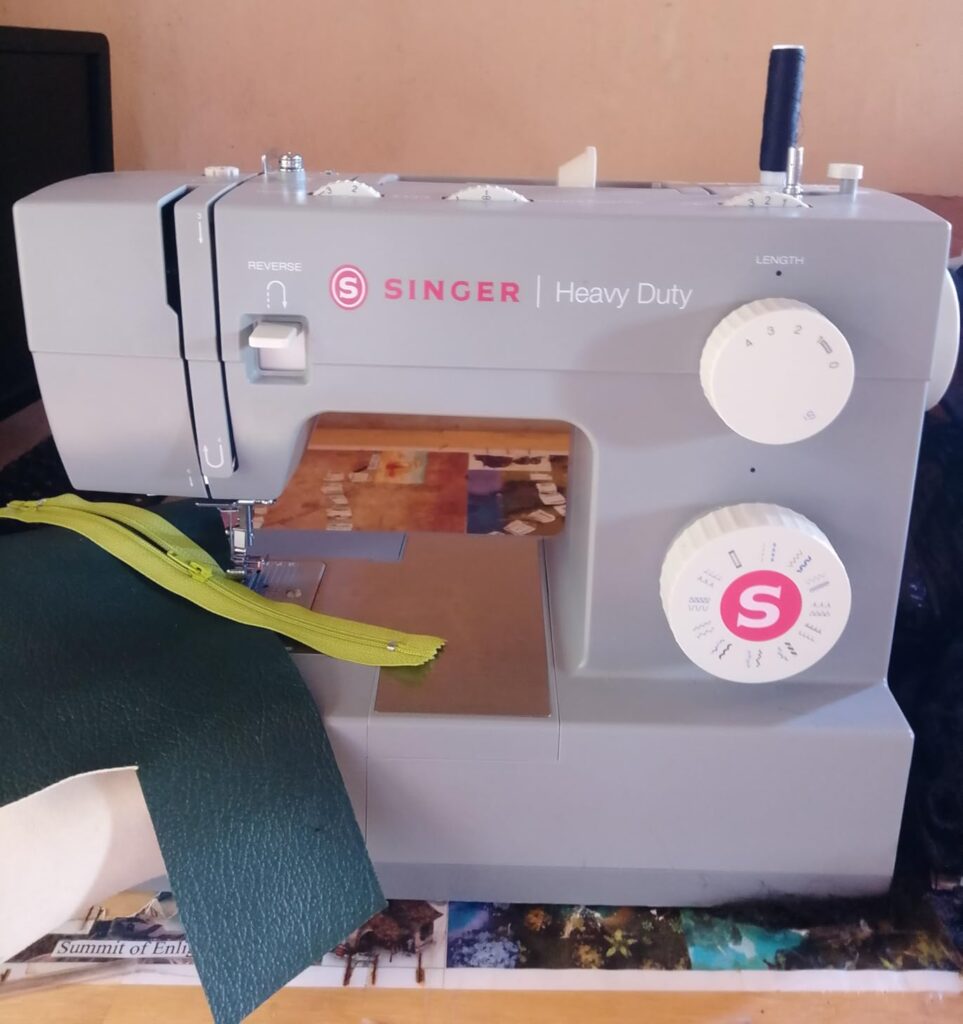
When I first saw 110 vs 23, I thought the 6380 was in a completely different league. That number looks massive on paper.
Then I actually started sewing.
For my first test, I ran both machines through a denim repair job — reinforcing the inner thigh area of a worn pair of jeans. On both machines, I used a straight stitch to secure the patch and a zigzag along the edges. The 4423 handled it perfectly. So did the 6380. Same result, different machines. The extra 87 stitches on the 6380 were completely irrelevant for that project.
Same story when I sewed a canvas tote bag. Straight stitch for the seams, zigzag for the edges, bartack at the handles. Done. The 4423’s 23 stitches covered everything without me ever feeling limited.
So I pushed further. I pulled out some cotton fabric and started working on a simple blouse — something with a decorative hem finish. This is where the 6380 started to pull ahead. I dialed into the honeycomb stitch for the cuff edge. Clean, professional-looking finish. Then tried a feather stitch along the collar. Again, looked great. The 4423 simply couldn’t do any of that. Its decorative options are thin, and for garment work where the finish matters visually, that limitation shows up fast.
Here’s the honest reality after testing both across multiple project types. If your sewing is mostly utility work — jeans, bags, repairs, canvas, upholstery — you will realistically use maybe 5 or 6 stitches on repeat. The 4423’s 23 covers you completely, and the 6380’s extra stitches just sit there untouched. But if you also do garment sewing or any decorative fabric work, the 6380’s stitch library stops being a spec number and starts being something you actually reach for. That’s a meaningful difference — just not one that applies to every sewer.
The Extension Table: Underrated Difference
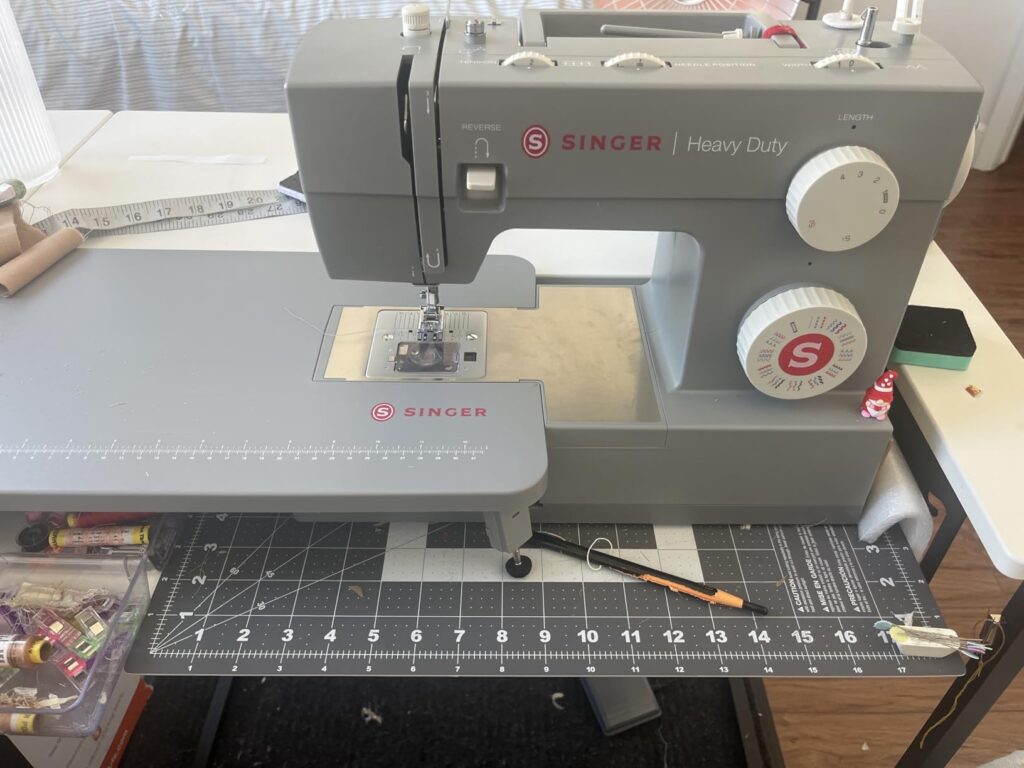
I’ll be honest — when I bought the Singer 6380, the extension table felt like a minor bonus. A nice-to-have. Not something that would actually change how I sew.
I was wrong.
Here’s where it hit me. I was working on a large quilted table runner — roughly 60 inches long. I started on the 4423 first. No extension table, just the standard workspace. Within the first few minutes, the fabric kept sliding off the edge and pulling to the left. I had to stop every few inches, reposition, and hold the trailing end with my left hand to keep tension even. It slowed everything down and the seam lines showed it — slight wobbles where the fabric had drifted.
Then I moved to the 6380 with the extension table attached. Same project, same fabric. The difference was immediate. The fabric had a flat, stable surface to glide across. I wasn’t fighting it anymore. I just sewed. The seam lines came out cleaner and the whole project took noticeably less time.
That one test changed how I think about this comparison.
For small projects — a zipper pouch, a pillowcase, a simple hem — you’ll never miss the extension table. The standard workspace is fine. But the moment your project gets large — quilts, curtains, wide bag panels, jacket backs — the 4423 starts working against you in a way that’s hard to describe until you’ve experienced it.
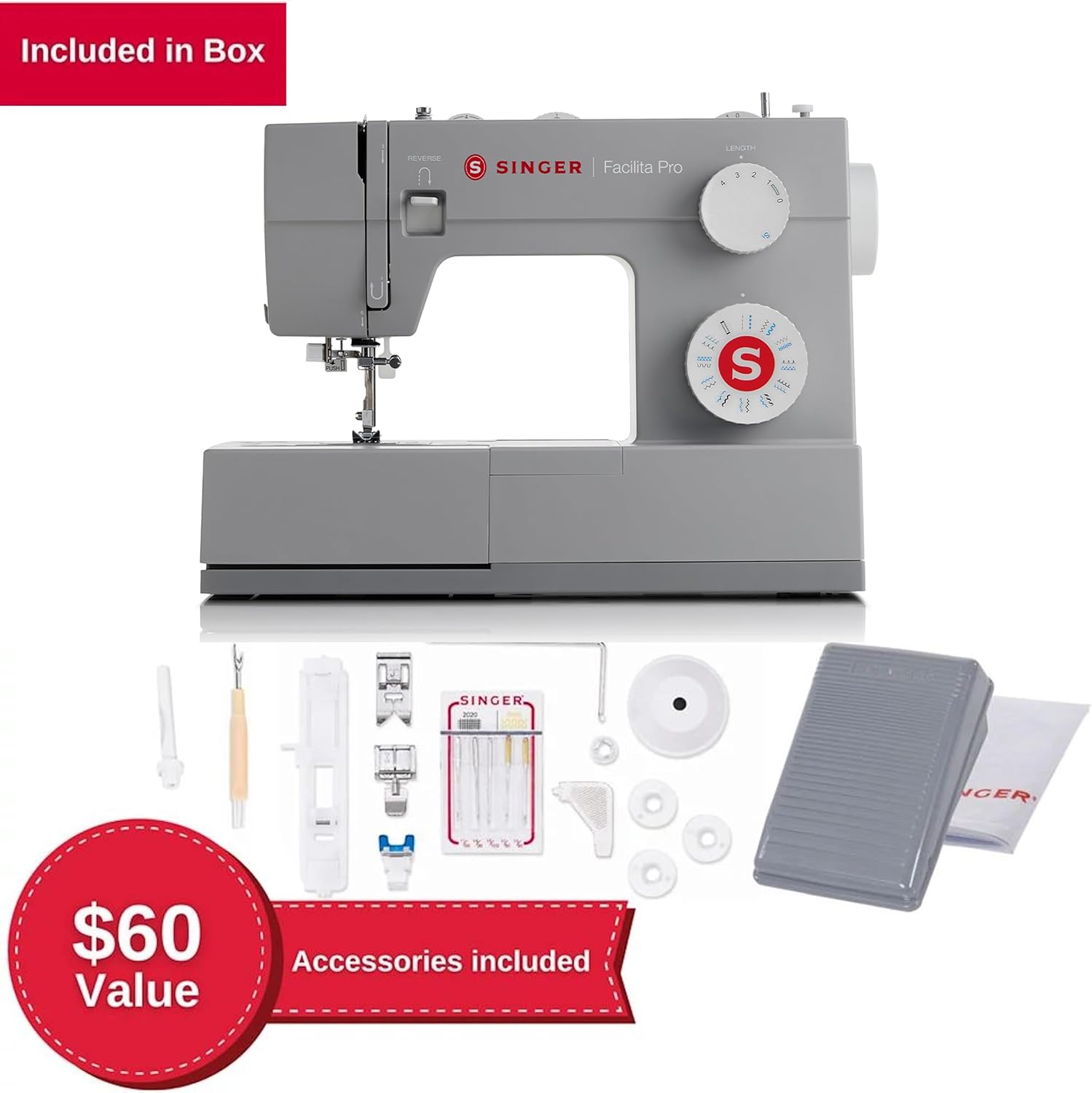
Here’s the part that reframes the entire price gap. The Singer extension table sold separately typically runs around $30–40 — though check current listings as prices shift. The 6380 also includes a blind hem foot, an overcasting foot, and a Sew Easy foot — each around $15–25 if bought individually. Add that up and the bundle the 6380 ships with is worth $70–100 in accessories that 4423 buyers will eventually purchase anyway.
So the real question isn’t whether the 6380 is worth the extra cost. It’s whether the 4423 is actually cheaper once you’re fully equipped to use it the way you want. For most sewers who’ll eventually need that extension table and those feet — it isn’t.
The Warranty Difference Singer Doesn’t Advertise
This is the section I wish someone had written before I bought my first Singer machine. Nobody covers this. And it genuinely matters.
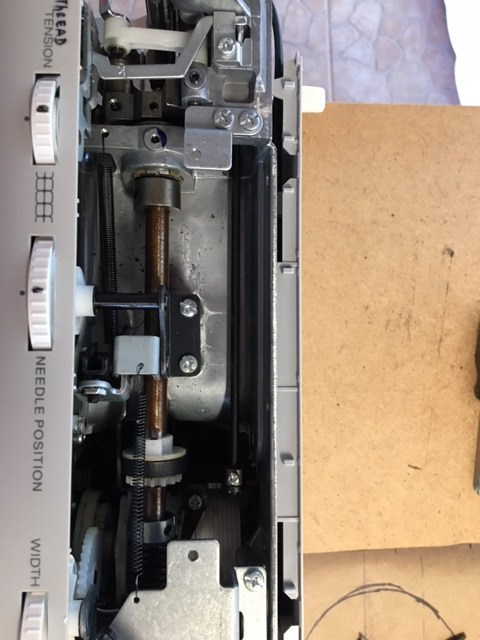
After running both machines through weeks of testing, I got curious about the fine print. I went directly to Singer’s official warranty page and compared exactly what each machine is covered for. What I found was a meaningful gap that no comparison article I’ve read ever mentions.
The Singer 4423 sits under Singer’s 25/2/90-day warranty — 25 years on the machine head, 2 years on motors and electronics but parts only with labor costs falling on you, and just 90 days on adjustments, belts, and attachments.
The Singer 6380 sits under Singer’s 25/1-year warranty — 25 years on the machine head and a full 1 year on motors, electronic components, and parts, with no labor asterisk attached.
The difference that jumped out: if something goes wrong with the motor or internal electronics between month 3 and month 12 on the 4423, you’re covering the labor bill yourself. On the 6380, that same failure is fully covered.
Why does that window matter? Because in my experience with sewing machines, the problems that aren’t user error tend to show up in the first year of regular use — not in year two or three. That’s when you’re really pushing the machine, finding its limits, logging real hours. The 6380 covers that entire first year more completely.
When you’re spending this much on a machine, the warranty isn’t a footnote. It’s part of what you’re buying. And on that front, the 6380 quietly wins in a way most buyers never discover until it’s too late. Verify the full terms on Singer’s official warranty page before purchasing — the details matter.
Where the Singer 4423 Actually Falls Short?
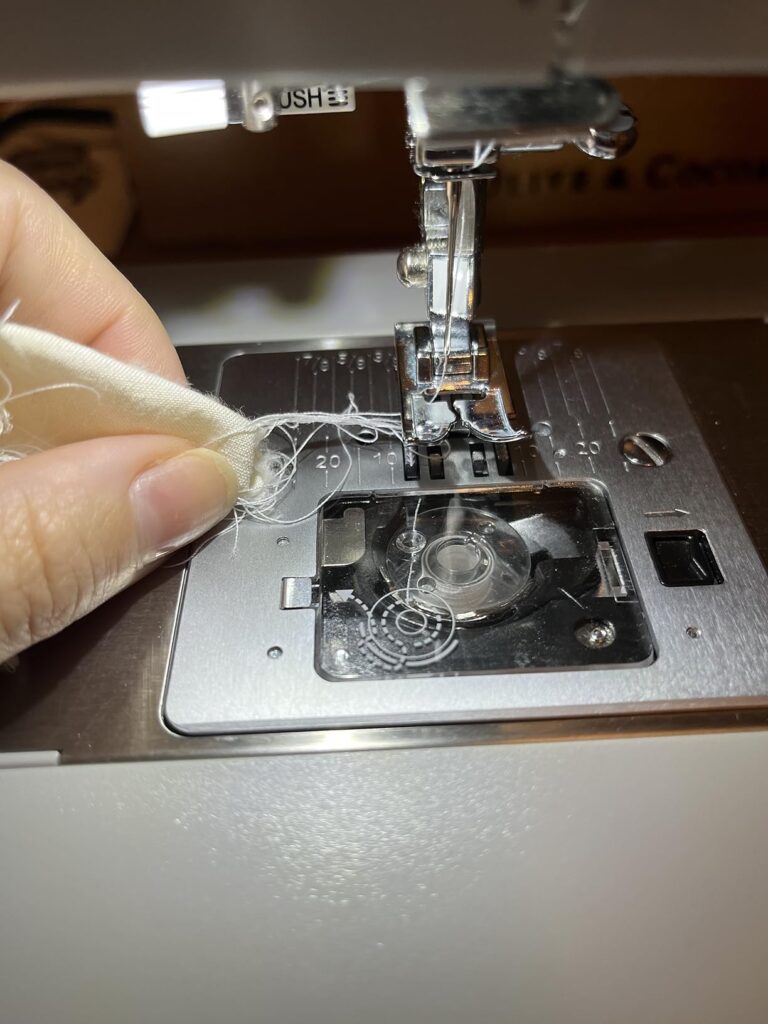
No machine is perfect. After spending real time with the 4423, a few frustrations showed up that every buyer deserves to know about before pulling the trigger.
Tension Was Never Quite Set-and-Forget
This one caught me off guard early on. I was sewing a straight seam on medium-weight cotton — my standard first test on any new machine — and noticed the stitch quality looked off. The top thread was too loose on one pass, then I adjusted the tension dial and suddenly the bobbin thread was pulling through to the top surface.
I spent more time adjusting tension on the 4423 than I ever expected to. Every time I switched fabrics — from cotton to denim to a light canvas — I had to stop and recalibrate. It wasn’t a dealbreaker, but it was a constant reminder that this machine needs your attention. If you’re used to a more precise machine that holds tension across fabric types, the 4423 will test your patience.
The Buttonhole Function Sounds Better Than It Is
I was sewing a simple shirt and needed six buttonholes across the front placket. Straightforward enough, I thought.
The first one came out fine. The second one I wasn’t watching closely enough when it finished — the machine kept going and thread bunched up at the end into a small knot. I had to unpick it and start over. By the fourth buttonhole I had the process down, but I was babysitting every single one. The 4423 doesn’t stop automatically when the buttonhole is complete, which means the moment your attention drifts, you’re unpicking thread.
For one or two buttonholes on a project, totally manageable. For a garment with a full button band? Genuinely tedious.
1,100 SPM With No Speed Safety Net
The first time I pressed the foot pedal on the 4423, it shot forward faster than I expected. This machine is fast — 1,100 stitches per minute with nothing to limit it except how gently you press the pedal.
On straight seams on familiar fabric, that speed is great. But on curves, corners, or any detail work, I found myself barely touching the pedal just to stay in control. It took a few sessions to really get comfortable with the sensitivity. If you’re a beginner or coming from a slower machine, expect a short but real adjustment period.
“Heavy-Duty” Has a Ceiling
The 4423 handles denim confidently — single layers, double layers, even triple layers with the right needle. I had no issues there. But I pushed it further. I tried sewing through six layers of heavy canvas for a bag bottom and the machine started struggling — stitches began skipping at the thickest point, thread tension dropped off, and the motor audibly strained before finally grinding through. It got there, but the result wasn’t clean. The 4423 is a strong domestic machine — just don’t let the “heavy-duty” label convince you it’s something close to industrial, because it isn’t. There’s a ceiling, and thick multi-layer projects will find it.
Where the Singer 6380 Actually Falls Short?
The 6380 impressed me in a lot of ways. But it also gave me a few genuinely frustrating moments worth being upfront about.
The Buttonhole Lever Situation — Nobody Warns You About This
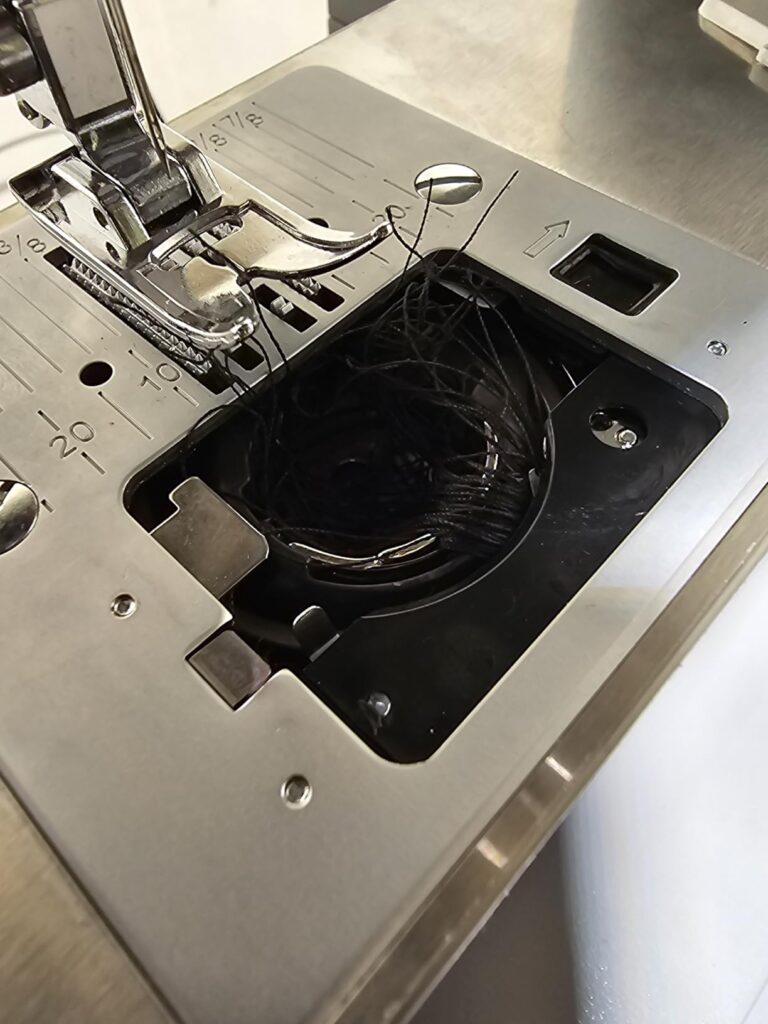
I finished sewing a buttonhole on a jacket front and moved on to the next seam. Two stitches in, the machine jammed hard. Thread tangled underneath, the needle sounded like it was hitting something solid, the machine basically stopped dead.
My first thought was that something had broken.
After a few minutes of checking everything, I figured out what happened. The buttonhole lever on the left side of the machine hadn’t fully returned to its home position after I finished the buttonhole. It was sitting just slightly down — barely noticeable — and that was enough to confuse the machine completely.
Once I pushed it fully back up until it clicked, everything worked perfectly again. But that moment of thinking I’d broken a brand new machine was genuinely stressful. The lever doesn’t snap back on its own. You have to make sure it’s fully up every single time after every single buttonhole. The manual doesn’t make this obvious enough, and nobody mentions it in any review I’ve seen.
Tension Took Time to Dial In
Right out of the box, my first few seams on the 6380 weren’t great. I was running a straight stitch on medium-weight cotton and the tension felt off — stitches looked uneven on the top, slightly loopy on the bottom. I rechecked the threading twice, thinking I’d made a mistake. The threading was fine. The tension dial just needed adjusting.
With 110 stitch options, the 6380 has more variables to manage than the 4423. Different stitches need different tension settings, and the machine doesn’t do that automatically. It’s mechanical, which means calibration is on you. Once I spent time dialing in the settings for each stitch type I was using regularly, it performed beautifully. But that initial setup period takes patience — especially if this is your first mechanical machine.
No Walking Foot — and That’s a Real Gap
Given how much Singer packs into the 6380’s accessory bundle, I genuinely assumed a walking foot was in there somewhere. It isn’t.
I found this out mid-project while working on a quilted piece with a slippery lining fabric. The layers kept shifting and feeding unevenly. A walking foot would have solved that instantly. Instead I had to order one separately, wait for it to arrive, and finish the project days later.
For quilters or anyone working with slippery, stretchy, or multiple mismatched fabric layers — the walking foot absence is a real inconvenience. It’s an extra purchase that feels like it should have been included given everything else in the box. Budget an additional $20–25 if quilting is part of your plan.
Which Machine Should You Buy?
After testing both machines across multiple projects and fabric types, here’s the clearest way I can break it down.
The Singer 6380 makes more sense if you sew both garments and heavy fabrics and need one machine that handles everything. If you’re setting up your sewing space from scratch and want to be fully equipped from day one, the 6380’s bundle eliminates the accessory shopping you’d otherwise do anyway. Anyone working on large projects — quilts, curtains, wide fabric panels — will feel the extension table’s absence on the 4423 almost immediately. Add in the stronger first-year warranty coverage and the more complete stitch library, and the 6380 is the better long-term investment for most sewers. If you’d eventually buy the extension table and extra feet separately, you’re likely spending more by starting with the 4423.
Current Price: $279 On Amazon
✅ Buy this if: You sew garments AND heavy fabrics and want one machine that handles both. You're setting up from scratch and want to be fully equipped on day one. You want the full first-year warranty with no labor asterisk.
❌ Skip this if: You need a walking foot — it's not in the box despite the generous bundle, so budget an extra $20–25 for one separately.
The Singer 4423 makes more sense if your sewing is purely utility — denim repairs, bags, canvas, basic alterations — and decorative stitching plays no role in your work. If you already own an extension table and a set of presser feet, you’re not paying for the bundle the 6380 offers. Experienced sewers who want a dedicated heavy-duty workhorse alongside a more versatile machine they already own will find the 4423 does exactly what it’s supposed to without extras they don’t need.
Current Price: $215 On Amazon
✅ Buy this if: Your sewing is purely utility — denim, canvas, bags, repairs. You already own an extension table and presser feet. You want the same mechanical performance for less.
❌ Skip this if: You sew large projects like quilts or curtains — the lack of an extension table will frustrate you fast. You'd eventually buy the table and feet separately anyway, because then the 4423 ends up costing more.
The Bottom Line
The fundamental insight most people leave this comparison without: the Singer 4423 and Singer 6380 are not two different machines. They’re the same core machine sold at two different accessory levels, with two different warranty tiers attached.
Once you frame it that way, the decision stops being about what kind of sewer you are and starts being about what you actually need in the box on day one.
If the 6380’s bundle matches what you’d eventually buy anyway — extension table, extra feet, warranty peace of mind — it’s the smarter purchase even at the higher price. If you’re already equipped or buying purely for heavy-duty utility, the 4423 gives you the same mechanical foundation for less.
Neither choice is wrong. But now at least you’re making it with the right information. Check current prices on both before deciding — the gap between them shifts, and the wider it gets, the more the math changes.
Related Articles:
FAQs
Is the Singer 6380 worth the extra money over the 4423?
For most sewers — yes. The 6380’s bundle includes an extension table, three extra presser feet, and a stronger first-year warranty. If you’d buy any of those accessories separately, the 6380 is likely cheaper overall. The only case where the 4423 wins on value is if you’re already fully equipped and sew purely for utility with no decorative work in your projects.
Are the Singer 4423 and 6380 the same machine?
Essentially yes — same motor, same metal frame, same core mechanical construction. The differences are the stitch count, the included accessories, and the warranty tier. Both use a standard low-shank presser foot system, so feet are interchangeable between the two machines.
Can the Singer 4423 sew denim?
Yes — confidently through single, double, and triple layers with the right needle (size 14 or 16 denim needle recommended). It starts to struggle beyond four or five thick layers, so for heavy multi-layer canvas or upholstery work, manage expectations. It’s a strong domestic machine, not an industrial one.
Does the Singer 6380 come with a walking foot?
No. Despite the generous accessory bundle, the walking foot is not included. If you plan to quilt or work with slippery or layered fabrics, budget an extra $20–25 for a compatible walking foot separately.
Which machine is better for beginners?
The 6380 — for two reasons. The wider stitch library gives you room to grow without buying a new machine, and the stronger first-year warranty covers you while you’re still learning the limits of the machine. The 4423’s 1,100 SPM with no speed control can be a steep learning curve for beginners coming from slower or entry-level machines.