Current Price: $254 On Amazon
✅ Best if you: Make personalized gifts, do decorative or heirloom stitching, or want the largest creative stitch library under $260.
❌ Skip if you: Primarily quilt — you'll need to buy the walking foot and piecing foot separately, which adds $30–45 to your real cost.

Introduction
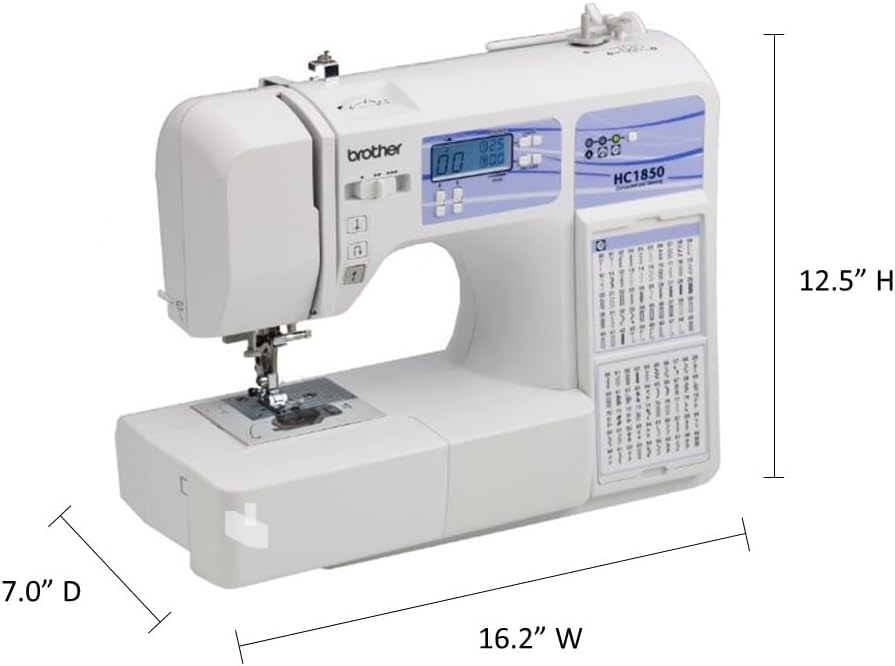
I’ve been sewing for years. And the Brother HC1850 was my go-to computerized sewing machine for a long time — 130 built-in stitches, smooth quilting performance, easy to use. I loved it.
Then I bought the CS7000X.
My first thought? Did I just waste $249?
On the surface, these two Brother sewing and quilting machines look almost identical. Similar price. Similar LCD screen. Same drop-in bobbin system. Same extension table. I genuinely couldn’t figure out why I’d bought a second machine that seemed to do the exact same thing.
But then I put them side by side — same fabric, same thread, same projects — and started noticing things. Small things at first. Then bigger ones. Differences that no comparison article I’d read had actually bothered to explain.
Things like: one machine ships with accessories the other charges you extra for. One has a metal frame; the other doesn’t. One can literally spell your name onto fabric; the other can’t do that at all. And one of them is secretly more expensive than its Amazon price suggests — depending entirely on what you sew.
This is my honest Brother HC1850 vs CS7000X review. Not a spec sheet. Not a “it depends on your needs” cop-out. A real, side-by-side breakdown from someone who has used both machines and wants to save you from buying the wrong one.
If you’re torn between these two Brother computerized sewing machines and just want a straight answer — keep reading. By the end of this, you’ll know exactly which one belongs on your sewing table.
Table of Contents
Quick TL;DR:
If you quilt, get the CS7000X ($249). It ships with the walking foot, piecing foot, and hard case you’d pay extra for on the HC1850 — making it the better deal by $60–90. If you do decorative sewing, garments, or personalized projects, get the HC1850 ($254). The monogramming font and 130-stitch library are things the CS7000X simply cannot offer.
At-a-glance: Brother HC1850 vs CS7000x
| Features | HC1850 | CS7000X |
|---|---|---|
| Built-in Stitches | 130 + 55 fonts = 185 | 70 |
| Monogramming Font | ✅ Yes | ❌ No |
| Frame | Plastic | Metal |
| Max Speed | 850 SPM | 750 SPM |
| Walking Foot Included | ❌ No | ✅ Yes |
| 1/4" Piecing Foot Included | ❌ No | ✅ Yes |
| Hard Case Included | ❌ No | ✅ Yes |
| Presser Feet Total | 8 | 10 |
| Backlit LCD Screen | ✅ Yes | ❌ No |
| Needle Threader | Older lever style | Improved push system |
| Buttonhole Styles | 8 (cleaner results) | 7 |
| Best For | Decorative / Garments / Monogramming | Quilting / Durability / Daily use |
| Where To Buy | Check On Amazon | Check On Amazon |
The Setup Problem: Why This Decision Feels Harder Than It Should
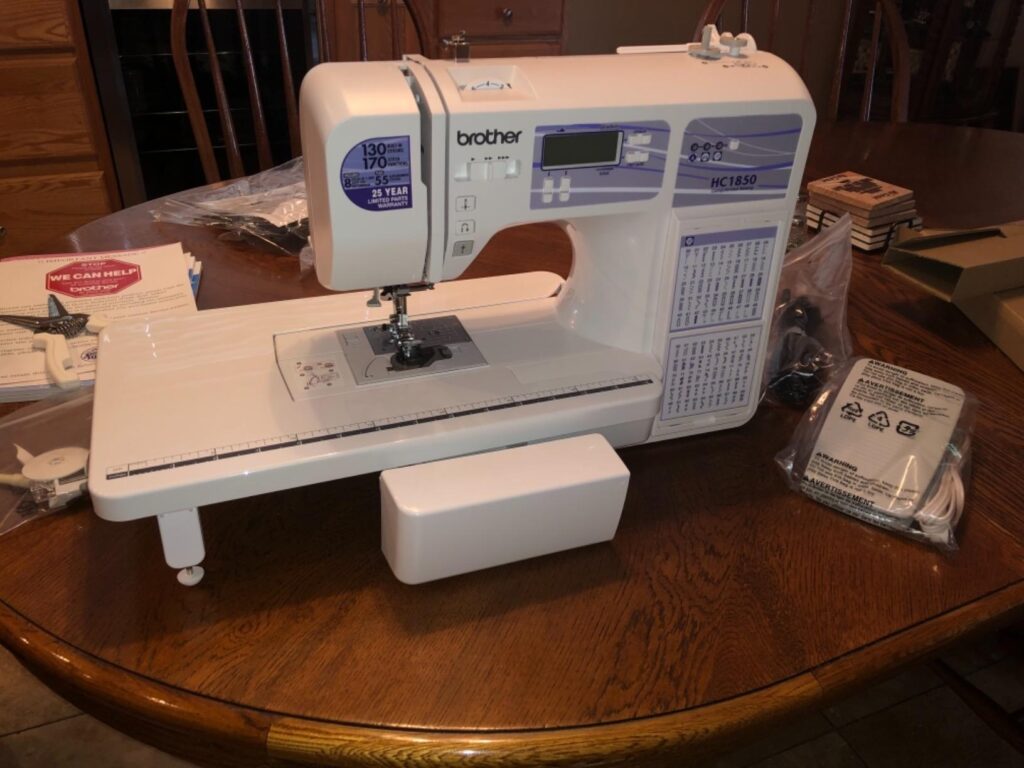
Both machines are made by Brother. Both have an LCD screen. Both come with an extension table. Both handle quilting, garment sewing, and general home projects.
If you closed your eyes and someone switched the machines on you — you honestly might not notice.
That’s exactly the problem.
Because when everything feels the same, you start comparing prices. HC1850 is $254. CS7000X is $249. Five dollar difference. You shrug and pick the cheaper one — or the one with more stitches — and call it a day.
That’s the mistake I almost made. And it’s the mistake most buyers do make.
The real differences between these two machines have nothing to do with how they feel in the first five minutes. They show up in what’s in the box, what’s missing from the box, and what you’ll end up spending extra — depending on what you sew.
That’s what this review is actually about.
Which Machine Is Actually Built for You?
This is the question I kept asking myself while testing both machines. And after finishing a table runner, two tote bags, and a set of quilted placemats on both machines, I finally figured out a clean way to answer it.
Grab the CS7000X if quilting is your main thing.
When I ran quilt batting through the HC1850, the layers shifted. Not dramatically — but enough to throw off my seam alignment on a table runner I was making. I was using a cotton-polyester batting sandwiched between two layers of quilting cotton — four layers total. The HC1850’s feed dogs moved the bottom layer faster than the top, and by the time I reached the end of a 12-inch seam, the top layer had crept forward almost half an inch. On a table runner where your border seams need to line up, that’s enough to ruin the finish.
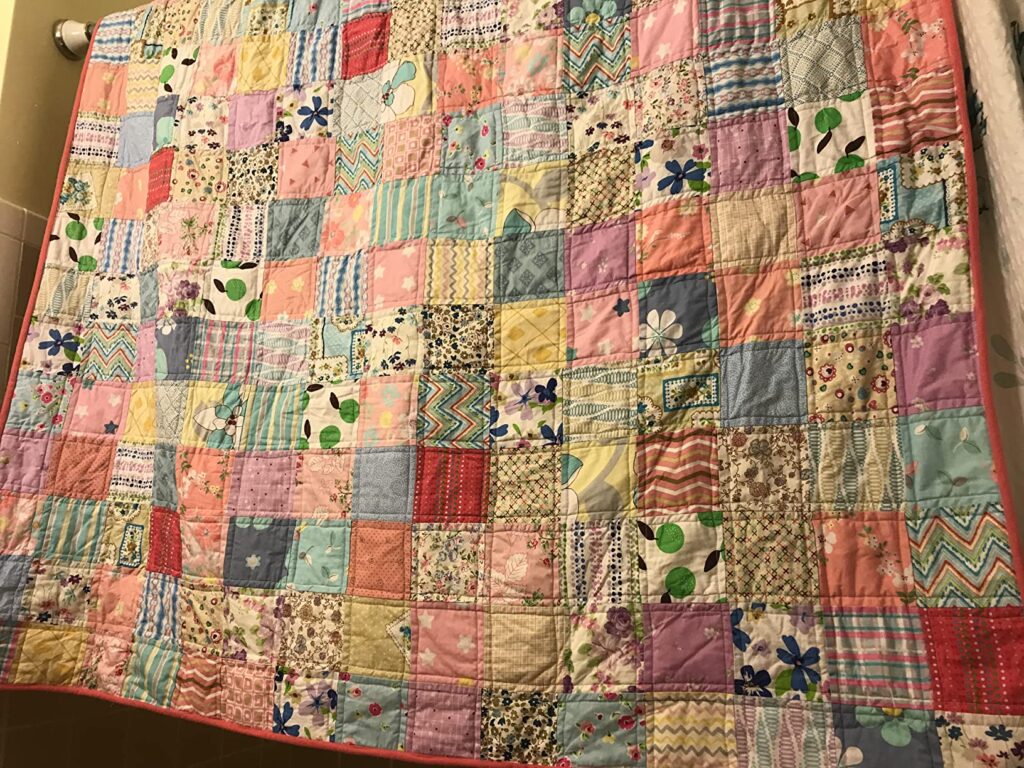
When I switched to the CS7000X and attached the walking foot that comes in the box, the shifting stopped completely. Same fabric, same batting, same speed. The walking foot grips both the top and bottom layers equally and moves them through at the same rate. I finished the rest of that table runner on the CS7000X. Clean, even stitches all the way through — no realignment needed.
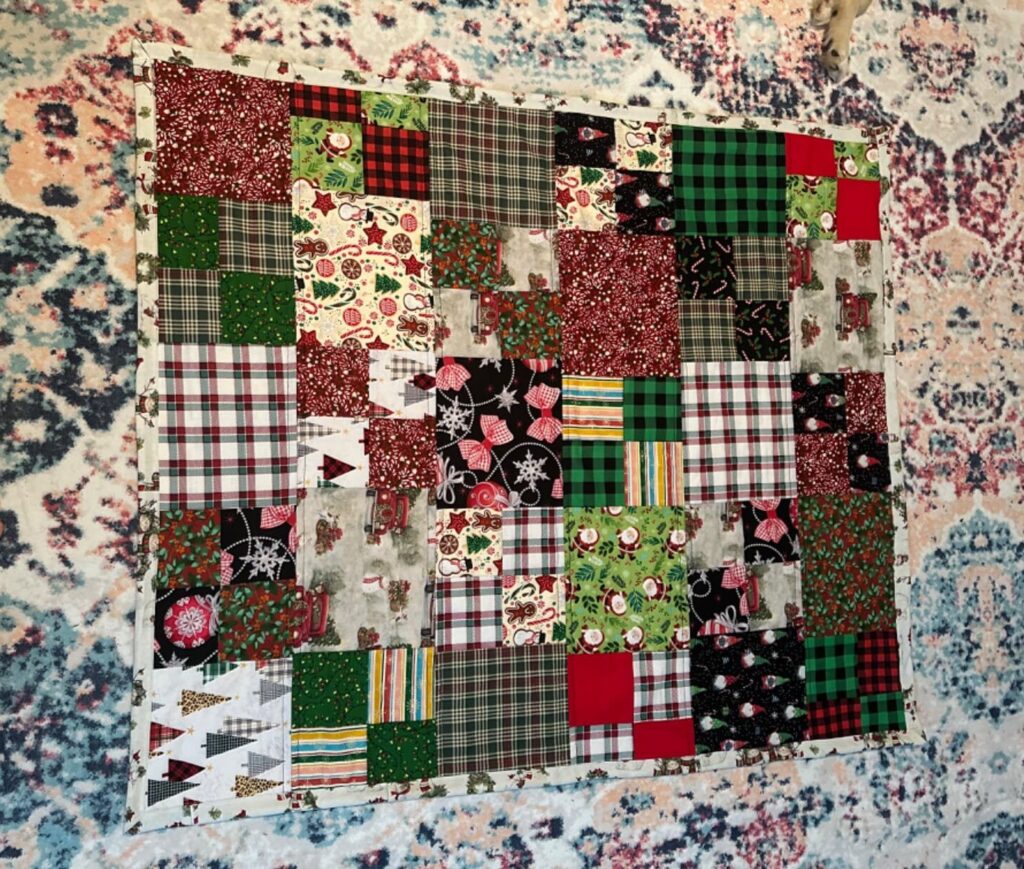
That one test alone told me something no spec sheet ever could.
The CS7000X also has a metal frame. I noticed this most when I cranked the speed up on thick denim. The HC1850 vibrated noticeably at high speed. The CS7000X stayed planted. Steadier machine, steadier stitches — especially on heavy projects.
And the needle threader? The CS7000X’s push-lever system threaded on the first try, every single time. The HC1850’s older side-lever threader? I bent it slightly on day three. Had to be extra careful with it after that.
Current Price: $249 On Amazon
✅ Best if you: Quilt regularly, sew multiple layers, take your machine to classes, or want a more durable build for daily use.
❌ Skip if you: Want monogramming or a large decorative stitch library — the CS7000X has neither.
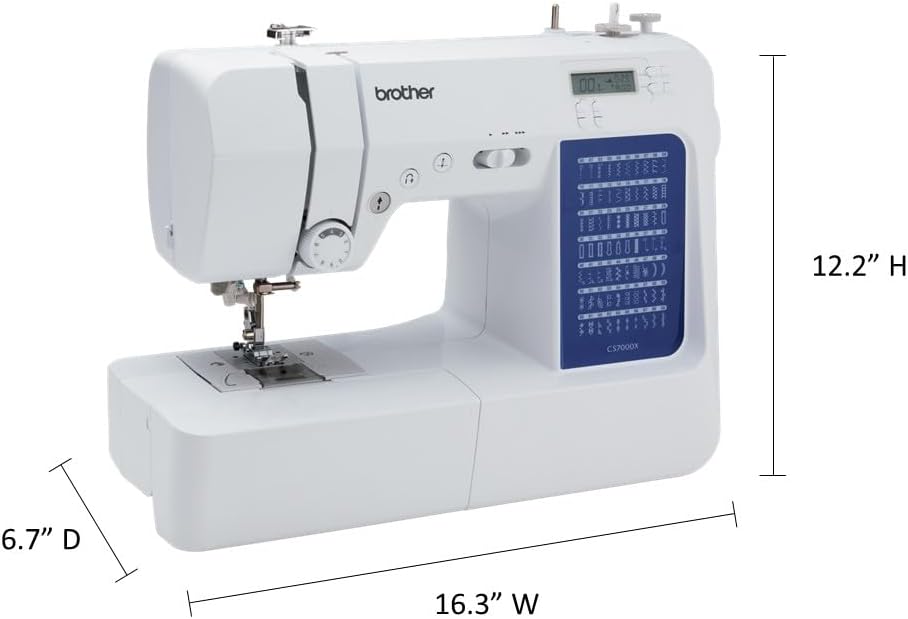
Grab the HC1850 if creative work and personalization matter more.
I made a baby gift during testing — a small lap quilt with a fabric label stitched with the baby’s name. Four letters. I used a cream cotton twill label, navy thread, and selected the letters one by one using the HC1850’s LCD screen and stitch selector. The process took about 8 minutes to set up and maybe 3 minutes to actually stitch. The result was clean, consistent lettering that looked intentional — not like a machine struggling with something it wasn’t designed for.
Then I tried the exact same thing on the CS7000X. Scrolled through every stitch option on the machine body. Nothing. No alphabets, no numbers, no symbols. The CS7000X simply does not have this capability — not as an add-on, not hidden in a submenu. It doesn’t exist on that machine. If personalized labels, monogrammed tote bags, or anything with a name or date stitched on it is part of your sewing — the CS7000X is a hard no, full stop.
It couldn’t do it. No fonts. No letters. Nothing.
That’s a hard stop for anyone who does personalized gifts, monogrammed tote bags, heirloom labels, or anything with a name or date stitched on it.
Beyond that, I spent an afternoon just exploring the HC1850’s decorative stitch library — 94 decorative options, heirloom patterns, ornate borders. The CS7000X’s 70 stitches are solid for practical work but they’re mostly utility. If you want your sewing to look beautiful and function well, the HC1850 gives you a lot more to play with.
One more thing: the HC1850 tops out at 850 stitches per minute versus 750 on the CS7000X. Honestly? Most home sewists — myself included — rarely push either machine to full speed. But when I was piecing blocks quickly, the HC1850 kept up a little better. Marginal difference, but real.
Current Price: $254 On Amazon
✅ Best if you: Make personalized gifts, do decorative or heirloom stitching, or want the largest creative stitch library under $260.
❌ Skip if you: Primarily quilt — you'll need to buy the walking foot and piecing foot separately, which adds $30–45 to your real cost.
185 Stitches vs 70 Stitches — The Number That Tricks Almost Everyone
When I first saw the HC1850’s stitch count, I was genuinely impressed. 185 stitches. Against the CS7000X’s 70. Felt like a no-brainer win for the HC1850.
Then I actually sat down and counted.
Here’s the thing nobody tells you: 55 of those 185 “stitches” are just letters, numbers, and punctuation. The alphabet. A through Z. Digits 0 through 9. They’re fonts — not sewing stitches. Take them away and you’re really comparing 130 functional stitches versus 70.
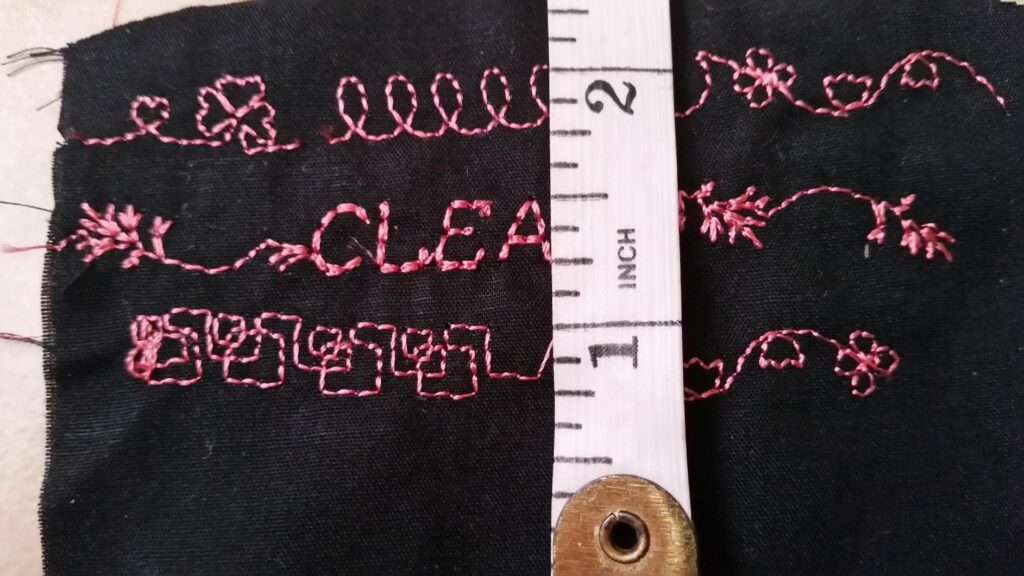
Still sounds like a big gap. But here’s what my actual testing revealed.
Across a garment repair, two quilting projects, a set of tote bags, and some home décor work — I tracked which stitches I actually used on both machines. The honest answer? Straight stitch. Zigzag. Blind hem. Buttonhole. One or two decorative options. That’s it. Maybe 12 stitches total.
The CS7000X has all of those. Comfortably.
So I ran a little experiment. I went through the HC1850’s full stitch chart — which, by the way, comes on a physical flip chart attached to the machine — and circled every stitch I could realistically see myself using in the next year. I got to about 18 before I started stretching.
If you’re a garment sewist or a quilter focused on clean construction, the extra stitches on the HC1850 will mostly sit there looking impressive and never get touched.
But — and this is important — there’s one type of sewist where those extra stitches genuinely matter.
When I switched to decorative and heirloom work during testing, the HC1850 came alive in a way the CS7000X simply couldn’t match. Scalloped borders. Ornate vine patterns. Intricate geometric fills. The HC1850 has 94 decorative stitches and 12 heirloom options. I spent a whole afternoon just playing with them on a practice cloth. They’re beautiful. And the CS7000X doesn’t come close in this department.
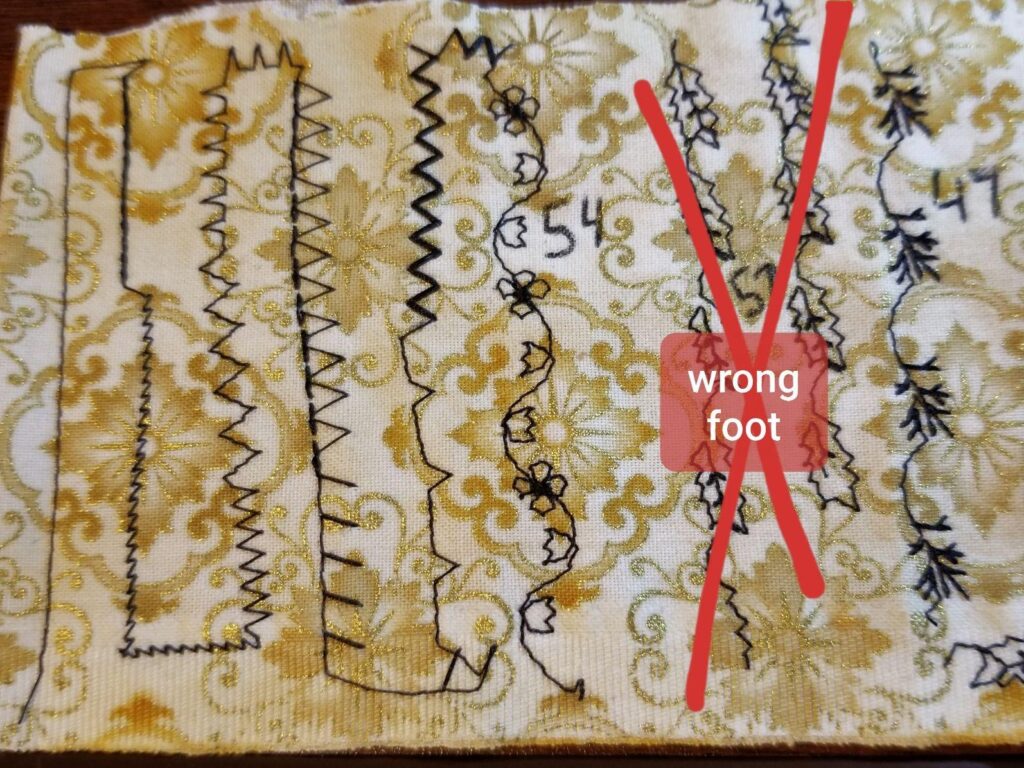
So here’s the honest verdict from someone who tested both:
If your sewing is mostly practical — seams, hems, quilts, garments — the 185 vs 70 gap means almost nothing to you. The CS7000X covers everything you need.
If you love making your work look special — decorative topstitching, heirloom borders, embellished edges — the HC1850’s library is genuinely worth having. You’ll actually use it.
One last thing I noticed during testing: finding a specific stitch on the HC1850 is easier than it sounds, because of that flip chart. When I was hunting for stitch #87 mid-project, I flipped to it in seconds. On the CS7000X, the stitches printed on the machine body work perfectly fine — but only because there are just 70 of them. Try navigating 130+ printed on a machine body and you’d be squinting all afternoon.
Which Machine Will Last Longer?
Both machines come with the same Brother warranty — 1 year full coverage, 2 years on electrical parts, 25 years on the machine body. On paper, identical.
But the warranty doesn’t tell the whole story.
The needle threader is where I noticed the first real difference.
I mentioned earlier that I bent the HC1850’s threader on day three. That wasn’t clumsiness — that’s just how the older lever-style mechanism works. It’s thin, it’s exposed, and it doesn’t take much to knock it out of alignment.
The CS7000X’s threader is built differently. The hook mechanism sits deeper and has noticeably more material around it — whatever the engineering reason, it feels more protected than the HC1850’s exposed lever. After daily use across multiple projects, the CS7000X’s threader still worked exactly like day one. No bending, no misalignment, no babying required.
Here’s the part that stings: Brother doesn’t cover needle threaders under warranty. Either machine, if the threader bends or breaks, you’re paying to fix it yourself. So the better-designed threader isn’t just a convenience — it’s real money saved over time.
The metal frame is the other long-term difference.
When I pushed the HC1850 to full speed on a long quilting session, I could feel the vibration through the table. The CS7000X, running slightly slower at 750 SPM, stayed noticeably steadier. Less vibration means less stress on internal parts over years of regular use.
If you sew occasionally — a few projects a month — both machines will serve you well for years. But if you sew most days, the CS7000X is simply built to hold up longer.
The Hard Case Nobody Factors Into the Decision
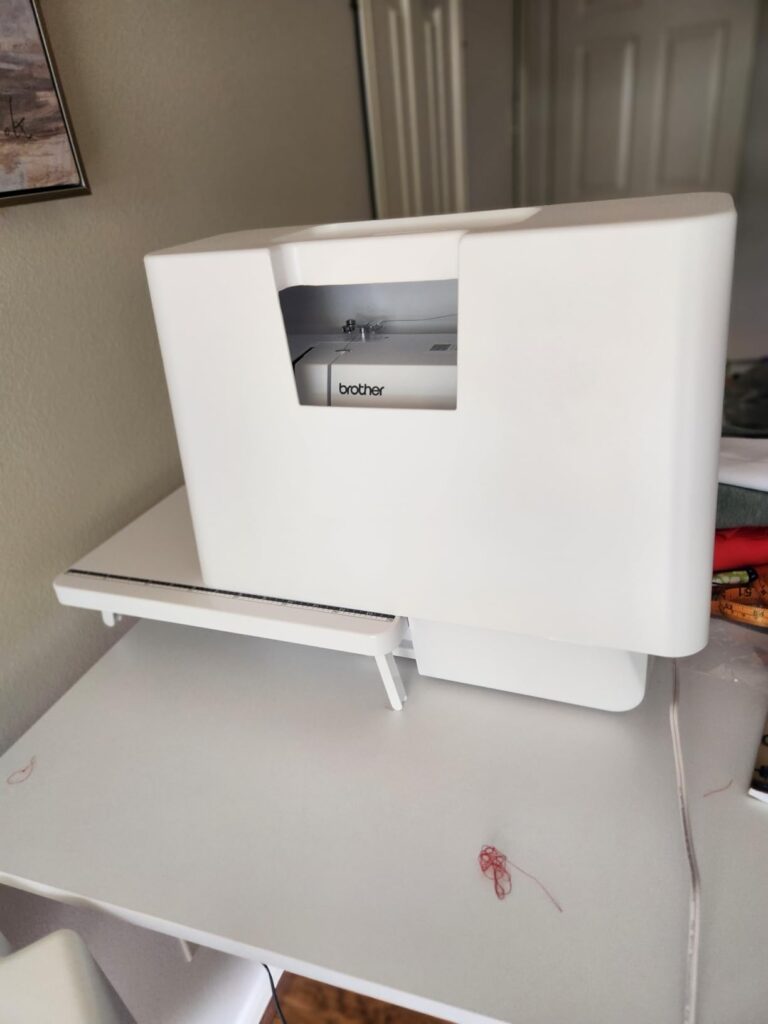
The CS7000X ships with a protective hard case. The HC1850 does not.
This matters if you take your machine to classes, guild meetings, retreats, or anywhere outside your home. A compatible hard case for the HC1850 sold separately runs $30–50. Add that to the accessory gap and the total-cost gap between these machines widens further.
If your machine lives permanently on your sewing table and never travels, this is a non-issue. If you’re the sewist who loads up for Friday night sewing circles or monthly guild meetings, the CS7000X ships ready to travel. The HC1850 does not.
The Small Differences That Actually Annoyed Me During Testing
The screen.
My sewing space isn’t the brightest room. So when I was working late one evening and switched between both machines, the difference was immediately obvious. The HC1850’s backlit LCD was easy to read. The CS7000X’s screen — not backlit — was noticeably harder to see in low light. I had to lean in to confirm which stitch I’d selected.
Small thing. But when you’re mid-project and squinting at a screen, it stops feeling small.
The buttonholes.
I sewed buttonholes on both machines using the same fabric and the same settings. The HC1850’s came out clean, sharp edges, professional looking. The CS7000X’s were noticeably messier — slightly ragged edges that I wouldn’t be happy with on a finished shirt or jacket.
The HC1850 has 8 buttonhole styles. The CS7000X has 7. But it’s not about the number — it’s about the execution. If you make garments with visible buttonholes, this difference will show up in your finished work.
Finding stitches quickly.
The HC1850 comes with a physical flip chart for its stitch library. The CS7000X has its stitches printed directly on the machine body. With 70 stitches, printed-on-body works fine. But when I was working on the HC1850 and hunting for a specific decorative stitch mid-project, that flip chart saved real time. Flipped to it in seconds. No stopping, no squinting, no frustration.
None of these three things will make or break your decision alone. But they add up — especially if you sew regularly and these machines will be part of your daily routine for years.
The Bottom Line
The $5 price gap between these machines is genuinely meaningless. What’s not meaningless is the $60–95 accessory gap hiding underneath it — and that gap only shows up if you quilt.
Quilters: the CS7000X at $249 is the better financial decision, a better-built machine, and it ships with the exact feet you’ll need to do the work you love.
Creative sewists and monogrammers: the HC1850 at $254 gives you a stitch library and lettering capability the CS7000X cannot match. The $5 premium is nothing. Pay it.
Both machines are good. The decision isn’t about which one is better — it’s about which one is built for the way you actually sew. Now you know.
Related Articles:
- Brother HC1850 vs CS7205!
- Brother HC1850 vs XR9550!
- Brother CS5055 vs CS7000X!
- Brother XR9550 vs CS7000X!
FAQs
Does the HC1850 come with a walking foot?
No. The HC1850 ships with 8 presser feet, and a walking foot is not among them. You’ll need to purchase one separately, which typically costs $20–30. The CS7000X includes a walking foot in the box.
Can the CS7000X do monogramming or letters?
No. The CS7000X has no built-in alphanumeric stitches or fonts. If you want to stitch names, dates, or initials directly onto fabric, the HC1850 is the only option between these two machines.
Which machine is better for a complete beginner?
Both are beginner-friendly, but the CS7000X’s improved needle threading system makes one of sewing’s most frustrating daily tasks significantly easier. If threading a needle is your biggest anxiety about starting, the CS7000X removes most of that friction.
Is the HC1850 still being made?
As of 2026, the HC1850 remains a production model and is widely available. Brother has not discontinued it.
Which is better for sewing denim?
Both machines handle denim with the right needle (size 14 or 16). The CS7000X’s metal frame provides slightly better stability through thick seams at higher speeds, but the HC1850 manages denim competently. Either machine works — neither is a heavy-duty replacement.