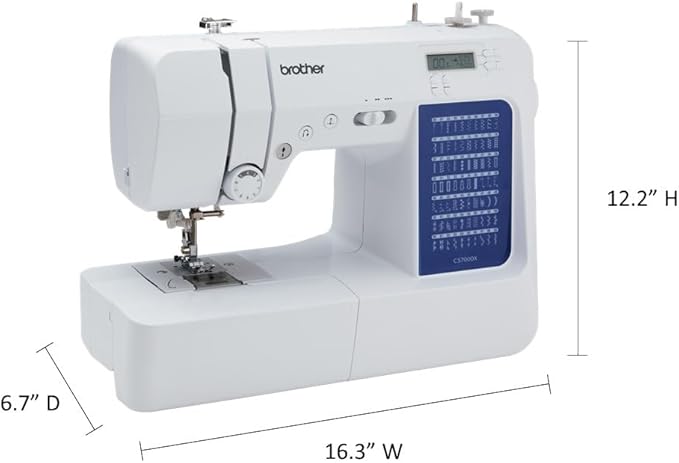
Current Price: $249 On Amazon
✅ Best if you: Sew primarily for utility — garments, quilts, repairs, home décor. Want the largest beginner community and YouTube support available for any machine at this price.
❌ Skip if you: Make garments with visible buttonholes regularly, or want decorative stitch variety beyond the basics.

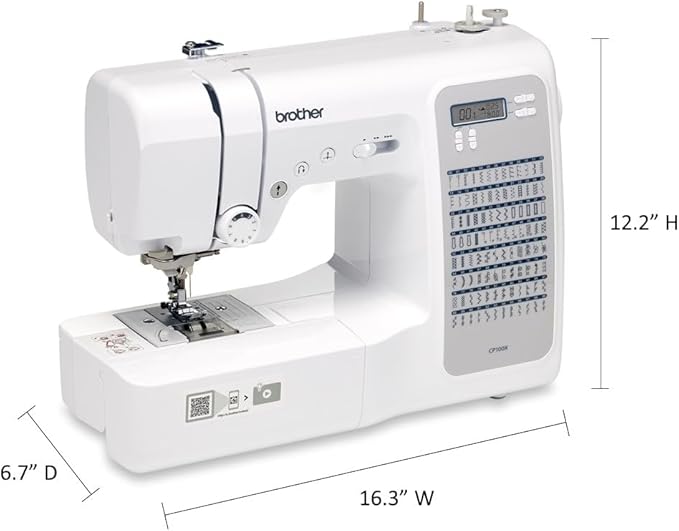
Current Price: $259 On Amazon
✅ Best if you: Make garments with buttonholes, enjoy decorative or craft sewing, or want Brother's more current generation machine at essentially the same price.
❌ Skip if you: Expected the "monogramming foot" to actually stitch letters — it doesn't. For real lettering you need a dedicated embroidery machine.
Introduction
Picking a sewing machine in the $250 range feels like it should be easy.
Two machines. Similar price. Same brand. You pull up both product pages, and they look almost identical. Then you start digging — and suddenly you’re 45 minutes deep into forum threads, YouTube comments, and spec tables that all say the same vague thing: “the CP100X has more stitches.”
That’s not helpful. You already knew that.
What you actually want to know is: will I notice the difference while I’m actually sewing? Does the extra money buy something real, or is it just a bigger number next to “built-in stitches”? And is there anything about either machine that reviewers aren’t telling you — the quirks that only show up after you’ve run a few hundred feet of thread through it?
I tested both machines for 30 days side by side — sewing garments, quilts, tote bags, and home décor projects — and here’s what I found.
These two machines are not the same machines with different stitch counts. They have genuinely different strengths, a couple of real weaknesses that almost no comparison covers, and one thing about the CP100X that has genuinely confused me right out of the box.
Table of Contents
Quick TL;DR:
Get the CS7000X if you sew garments, quilts, or home décor and want the biggest beginner community behind you. Get the CP100X if you make garments with buttonholes regularly or want room for decorative work — at a few dollars more, it’s the stronger all-round machine. Either way, check current Amazon prices before deciding as these shift regularly.
At-a-glance: Brother CS7000X vs CP100X
| Features | CS7000X | CP100X |
|---|---|---|
| Built-in Stitches | 70 | 100 |
| Max Speed | 750 SPM | 750 SPM |
| Buttonhole Styles | 7 (inconsistent results) | 8 (cleaner results) |
| Decorative Stitches | Basic | 30 extra options |
| Monogramming | ❌ No | ❌ No (foot is misleading) |
| Bobbin Winding | Uneven fill | Even fill |
| LCD Screen | ✅ Yes (not backlit) | ✅ Yes (not backlit) |
| Walking Foot Included | ✅ Yes | ✅ Yes |
| Hard Case Included | ✅ Yes | ✅ Yes |
| Frame | Metal interior, plastic exterior | Metal interior, plastic exterior |
| Best For | Beginners, quilters, utility sewing | Garment sewists, decorative work |
| Where To Buy | Check On Amazon | Check On Amazon |
Both Machines Run at 750 SPM — But There’s a Catch
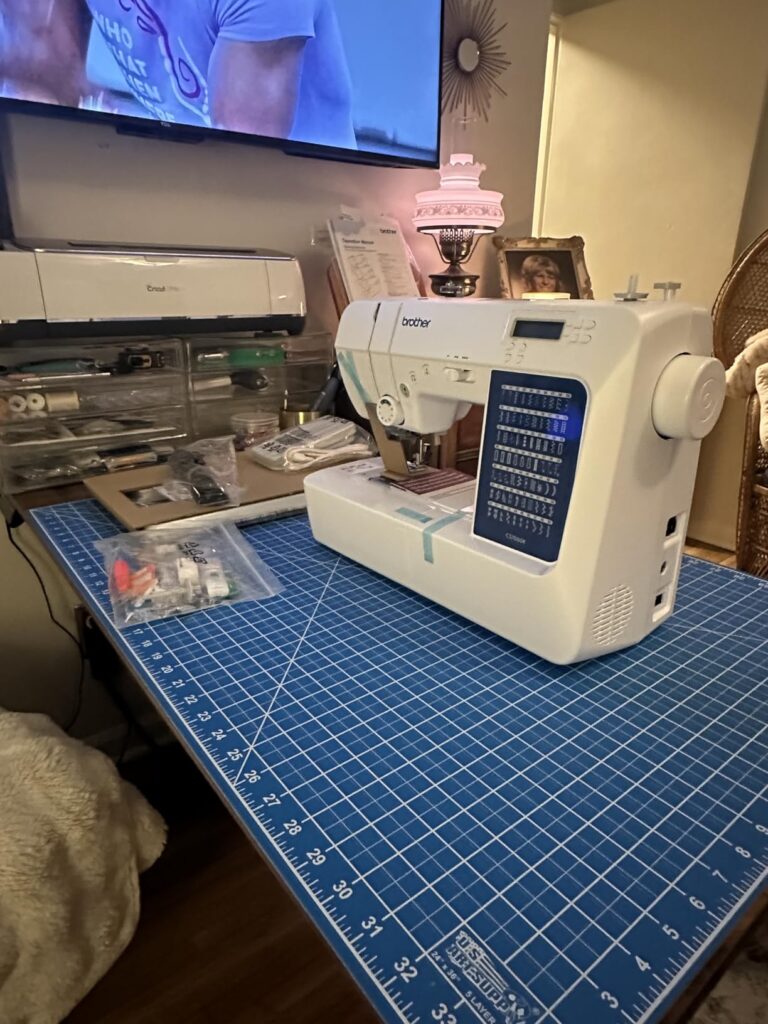
The CS7000X does not run at the same speed as Brother’s older machines. Its predecessor — the CS7000i — maxed out at 850 stitches per minute. When Brother released the CS7000X, they quietly dropped the ceiling to 750 SPM. No announcement. No note in the specs. Just a quieter, slower machine.
The CP100X also runs at 750 SPM.
So both machines are equal here — but that’s not the whole story.
When you’re coming off a CS6000i or CS7000i you’ve been sewing on for a few years. You upgrade to the CS7000X expecting a step forward. You sit down, press the foot pedal, and something feels off. The machine feels slower. Less snappy. Like it lost some energy somewhere.
It did. That’s not a feeling — it’s a 100 SPM reduction that Brother made without telling anyone.
Does 750 SPM hurt you in real use?
For most home sewists — no. Sewing a straight seam on a cotton dress, piecing quilt blocks, hemming curtains — 750 SPM handles all of it without you ever wishing for more speed. In fact, for anyone new to sewing, the lower ceiling is quietly helpful. Speed is one of the hardest things to control when you’re learning, and a machine that physically can’t run away from you gives you more room to develop good habits.
But if you’re upgrading from an older Brother model and the new machine feels sluggish — now you know exactly why. It’s not a defect. It’s a deliberate change that no one bothered to explain.
The Stitch Count Debate, Settled
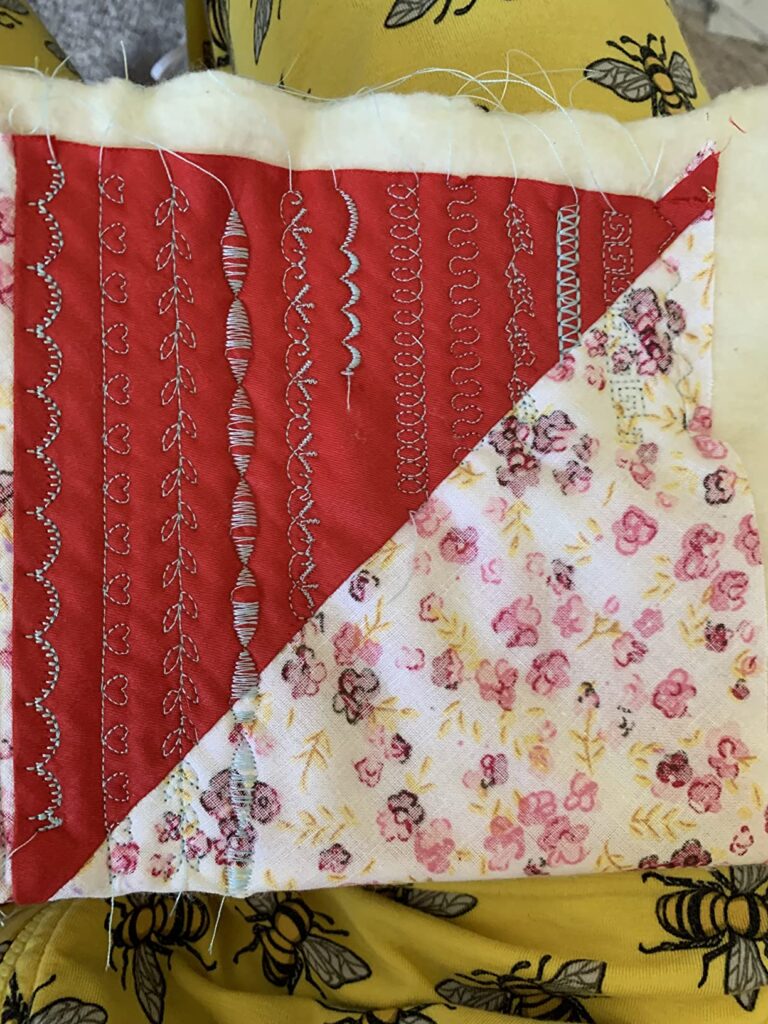
Every comparison article leads with this: “CP100X has 100 stitches, CS7000X has 70.”
And every time you read it, it tells you nothing useful.
So let’s talk about what those numbers actually mean when you sit down to sew something.
When I pulled up the CS7000X’s stitch menu and scroll through the 70 options. What I found was it has every stitch I will realistically ever need — straight stitch, zigzag, blind hem, overcast, several stretch stitches for knit fabrics, and 7 buttonhole styles. Sewing curtains? Covered. Hemming jeans? Covered. Making a quilt? Covered. Sewing a stretchy t-shirt? Covered. Repairing a torn seam on a jacket? Covered.
In a full day of sewing clothes and home projects on this machine, I did not open the stitch menu and thought: I wish I had more options.
Now when I pulled up the CP100X’s menu. The first 70-ish stitches were nearly identical to the CS7000X. The extra 30 stitches that Brother added are almost entirely decorative — honeycomb patterns, scallop edges, vine designs, heirloom-style stitches. Beautiful on a decorative pillow. Lovely along the hem of a child’s dress. Genuinely fun if you make personalized gifts, embellished tote bags, or anything where the stitching itself is part of the design.
But if your week looks like sewing a blouse, fixing a zip, hemming school trousers, piecing a quilt — those extra 30 stitches will sit unused.
Now here’s the thing that genuinely caught me off guard.
The CP100X comes with something called a monogramming foot. It’s right there in the box. And if you’re like most buyers, you see “monogramming foot” and think: great, I can stitch names and initials onto things.
You cannot.
The monogramming foot on the CP100X is designed for decorative stitches only. This machine does not do actual monogramming or lettering. If you want to stitch someone’s initials onto a towel or a bag, you need a dedicated embroidery machine — a completely different product category that starts at a higher price point.
This has genuinely confused me. I unboxed the CP100X, looking for the lettering function, and spent an hour convinced something was wrong with my machine. Nothing was wrong. The foot is just named in a way that overpromises what it actually does.
Where the stitch count question actually lands:
The CS7000X is all you need if your projects are clothing, repairs, quilts, or home décor. Not once will 70 stitches feel limiting.
The CP100X earns its extra stitches if you regularly make crafts, decorative pieces, or anything where you want the stitching itself to look like embellishment.
Everything else is just a number on a spec sheet.
The Buttonhole Problem on the CS7000X
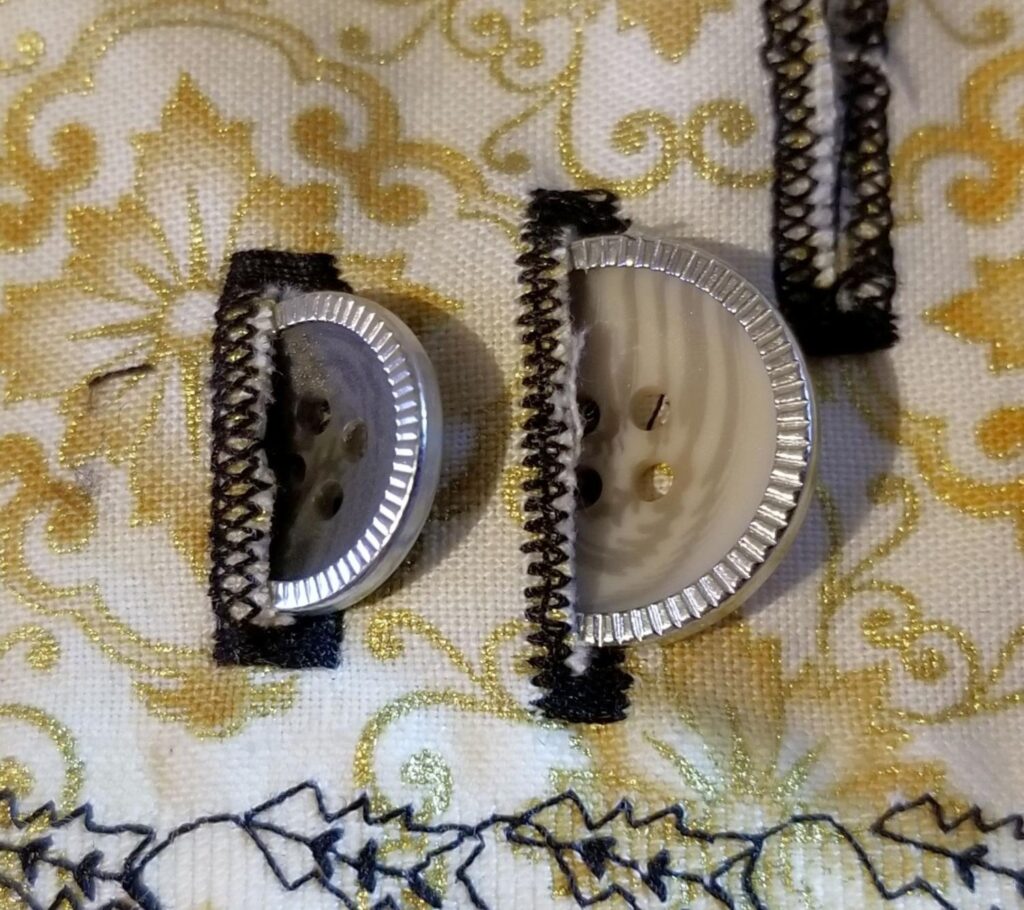
This is where the CS7000X genuinely let me down.
To test this, I grabbed a medium-weight cotton fabric — the kind you’d use for a shirt or a light jacket — and ran a series of buttonholes on both machines using their default settings. Same fabric. Same thread. Same size buttonhole.
On the CP100X, the results were clean. The edges were tight, the corners were defined, and the overall finish looked like something you’d see on a store-bought shirt. Run five in a row, and all five look consistent.
On the CS7000X, the first one came out okay — not great, but acceptable. The second looked slightly different. By the third, it was clear something was inconsistent — the satin stitch on the sides wasn’t uniform, and one end of the buttonhole had a slightly ragged finish compared to the other.
Not broken. Not unusable. But not the clean result you want on the front of a blouse you spent three hours sewing.
The CS7000X has 7 one-step auto-size buttonhole styles. The CP100X has 8. The extra style isn’t really the point though — the point is that the CP100X’s buttonhole foot and mechanism produce more consistent results, stitch after stitch.
If you regularly make shirts, blouses, jackets, or cushion covers with button closures — this is worth knowing before you buy. If your sewing is mostly quilts, home décor, curtains, or repairs where buttonholes almost never come up — this weakness will never affect you, and the CS7000X will perform beautifully for everything else you throw at it.
The Bobbin Issue Nobody Talks About
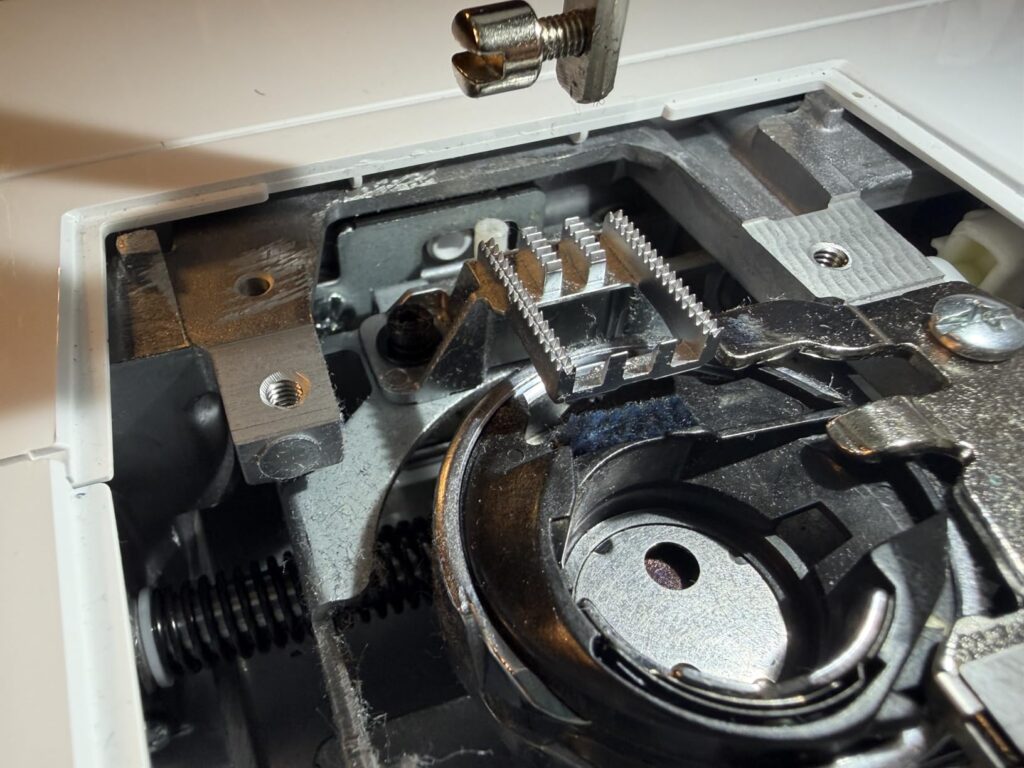
This one is small. But once I noticed it, I could not un-notice it.
When I was winding bobbins on the CS7000X, the thread didn’t distribute evenly across the bobbin. It piled up toward the bottom half, leaving the top half noticeably thinner. Every single time.
Winded a bobbin on the CP100X and it came out evenly packed — thread distributed cleanly from top to bottom, just like it should be.
And you know why it matters?
Imagine you’re halfway through piecing a quilt. You’re in a rhythm, seams are lining up, everything is going well. Then the bobbin runs out. You stop and wind another one — but because the CS7000X’s bobbins only fill properly on the bottom half, you’re effectively loading less thread per bobbin than you should be. Which means you’re stopping to rewind more often than necessary.
On a small project — a pillowcase, a tote bag, a simple hem — you’ll never notice or care. On a large quilt with hundreds of seams, that extra interruption starts to feel like death by a thousand cuts.
It doesn’t affect stitch quality. Your seams will look fine. It’s purely a workflow inconvenience — but it’s a real one, and nobody mentions it.
Thread Tension: Mostly Great, With One Asterisk
On everyday sewing — straight seams, zigzag edges, blind hems — both machines handled tension well right out of the box. Thread the machine, drop in the bobbin, start sewing. The stitches look even, the tension feels balanced, and you don’t need to touch the dial.
That held true across cotton, denim, and several layers of quilt batting on both machines. No loops on the underside, no pulling on top. Just clean, consistent stitches.
But here’s where the CS7000X showed a small crack.
I switch to a decorative stitch on the CS7000X — the kind you’d use to embellish a child’s dress or add a decorative border to a cushion cover — and the top thread started misbehaving. It pulled through to the underside of the fabric, leaving the front of my stitch looking loose and unfinished.
The fix was simple: I adjusted the tension dial down a notch. But, I discovered that after I had already sewn a few inches and flipped the fabric over to check.
It’s not a dealbreaker. But it’s an extra step the CP100X doesn’t ask of you in the same situations. If 90% of your sewing is practical — garments, repairs, quilts, home décor — you will never run into this. But if decorative stitching is a regular part of your workflow, expect a small learning curve with the CS7000X’s dial that the CP100X largely avoids.
What Happens When You Sew Heavy Fabrics?
Both machines have a metal interior frame with plastic exterior housing — so neither is “all metal” in the way the marketing sometimes implies. In real use, both handle the everyday definition of “heavy fabric” without complaint.
On the CS7000X, I ran a four-layer 12oz denim hem — the folded kind where you’re stitching through the full thickness of a waistband join. The machine powered through without skipping a stitch, though I dropped the speed to about 60% to give it a fighting chance at the thick point.
I didn’t run the same dedicated denim test on the CP100X during my 30 days — most of my heavy fabric work landed on the CS7000X first. What I can say from general use is that both machines share the same 750 SPM ceiling and similar internal construction, so their behavior on thick fabrics should be comparable.
The honest caveat for both machines is this: they’re computerized home machines that handle heavy fabrics with the right needle and controlled speed. If you’re regularly sewing canvas bag straps, multiple layers of upholstery fabric, or leather, neither machine is the right tool — and no comparison article should suggest otherwise.
The LCD Screen Nobody Explains Properly
Both machines have an LCD screen. Neither is backlit — and that frustrated me because my room isn’t brightly lit.
What the screen does show is genuinely useful for beginners: the recommended presser foot for your selected stitch. When you select stitch number 47, the screen tells you which foot to attach. This removes one of the most common sources of beginner confusion — the “wait, which foot do I use for this?” problem that sent me to YouTube at 10pm.
Both machines have this feature, and neither gets proper credit for it.
The Hard Case: What It Actually Means
Both machines include a hard protective case in the box — a genuine convenience that similarly-priced machines from other brands don’t always offer.
For most home sewists, this means one practical thing: you can transport the machine to a class, a guild meeting, or a friend’s house without worrying about damage. It also keeps dust off the machine between projects.
These are 10-pound desktop machines, not travel-optimized tools. But for home use and occasional portability, the included case on both models is worth having.
Which One Should You Buy?
Get the CS7000X if: your sewing is primarily practical — garments, quilts, repairs, home décor. You don’t need decorative stitching beyond the basics. Buttonholes aren’t a regular part of your projects. You’re a beginner who wants the larger community of tutorials and YouTube walkthroughs that exist for this specific machine.
Current Price: $249 On Amazon
✅ Best if you: Sew primarily for utility — garments, quilts, repairs, home décor. Want the largest beginner community and YouTube support available for any machine at this price.
❌ Skip if you: Make garments with visible buttonholes regularly, or want decorative stitch variety beyond the basics.
Get the CP100X if: you make crafts, personalized pieces, or decorative projects where extra stitch variety genuinely adds creative options. You make garments with buttonholes regularly and want more consistent results. You want Brother’s more current generation machine at essentially the same price.
Current Price: $259 On Amazon
✅ Best if you: Make garments with buttonholes, enjoy decorative or craft sewing, or want Brother's more current generation machine at essentially the same price.
❌ Skip if you: Expected the "monogramming foot" to actually stitch letters — it doesn't. For real lettering you need a dedicated embroidery machine.
The Bottom Line
The CS7000X vs CP100X isn’t really a competition between a good machine and a better one. It’s a choice between two versions of the same idea, built for slightly different sewists.
The CS7000X is the machine to buy if utility sewing, beginner-friendliness, and community support matter most. It handles everything a home sewist needs, and the limitations — the bobbin winding quirk, the decorative stitch tension adjustment, the slightly inconsistent buttonholes — only surface in specific situations that many sewists will never encounter.
The CP100X is the machine to buy if creative variety, better buttonhole consistency, and Brother’s more current design are priorities. At a price difference of a few dollars, it’s the stronger machine for anyone who sews garments regularly or wants room to explore decorative work.
Check the current price of both on Amazon before deciding — prices on these models shift regularly, and the gap between them matters more the wider it gets.
Pick the one that matches how you sew. Then get to sewing.
Related Articles:
FAQs
Is the CP100X actually worth the extra money over the CS7000X?
At the typical price gap, yes — if you make garments with buttonholes or enjoy decorative stitching. The CP100X delivers more consistent buttonhole results and 30 extra decorative stitches for what amounts to a very small price difference. If you only sew quilts, home décor, or basic repairs, the CS7000X handles all of it just as well.
Can the CP100X do actual monogramming or embroidery?
No. Despite including a monogramming foot in the box, the CP100X cannot stitch letters, names, or embroidery designs. The foot is for decorative stitches only. If you want to embroider initials onto fabric, you need a dedicated embroidery machine — a completely different product category.
Is the CS7000X good for beginners?
Yes — it’s one of the stronger beginner machines at this price point. The LCD screen shows you which presser foot to use for each stitch, the threading diagram is printed directly on the machine, and the 750 SPM speed limit gives new sewists room to learn without the machine running away from them.
Which machine is better for quilting?
Both are capable quilting machines. Both include a walking foot, quarter-inch piecing foot, spring-action quilting foot, and wide extension table. The main practical difference for quilters is the CS7000X’s uneven bobbin winding — you’ll need to rewind bobbins slightly more often on long projects. For most home-scale quilts, either machine works well.
Do both machines come with a hard case?
Yes. Both the CS7000X and CP100X include a hard protective case in the box — something not every machine at this price point offers.