Singer 4432 vs 4423:
Which Heavy-Duty Machine Should You Buy?
Both blast through denim at 1,100 stitches per minute. Both share an all-metal frame. So why does one cost $26 more — and is it actually worth it?
What is the main difference between the Singer 4432 and 4423?
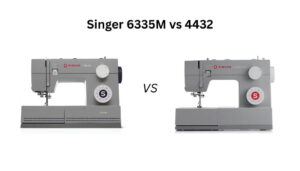
The Singer 4432 and 4423 are nearly identical heavy-duty mechanical sewing machines that share the same metal frame, 1,100 SPM motor, 6mm stitch width, and core features. The only meaningful differences are:
- Stitch count: 4432 has 32 built-in stitches (110 applications) vs 4423’s 23 stitches (97 applications)
- Decorative stitches: 4432 has 18 decorative stitches vs 4423’s 12
- Stretch stitches: 4432 has 7 stretch stitches vs 4423’s 4
- Price: 4432 costs ~$231 vs 4423’s ~$205 — a $26 difference
- Color: 4432 is darker grey; 4423 is lighter grey
Choose the 4432 ($231) if you want more creative stitch options — especially decorative and stretch stitches. Choose the 4423 ($205) if you mainly sew garments, do repairs, or simply don’t need more than 23 stitches.
In This Article
- Overview: The Singer Heavy Duty 44 Series
- Side-by-Side Buy Options
- Full Specification Comparison Table
- Stitch Breakdown: Where They Actually Differ
- Build Quality, Frame & Motor
- Real-World Sewing Performance
- Pros & Cons of Each Machine
- Who Should Buy Each Model?
- Final Verdict
- Frequently Asked Questions
The Singer Heavy Duty 44 Series: What You’re Choosing From
Singer’s Heavy Duty lineup — the 4411, 4423, 4432, and 4452 — has become one of the most popular entry-to-intermediate sewing machine families in the market. The appeal is simple: a true all-metal internal frame, a powerful motor that’s 60% stronger than standard home machines, and a no-frills mechanical design that practically eliminates computerized failure points.
The Singer 4423 and Singer 4432 sit right next to each other in the lineup — close enough in specs that thousands of buyers every month wonder if the extra $26 makes any difference at all. The answer requires understanding exactly what Singer changed (and, importantly, what they didn’t).
The short version: these machines are 90% identical. The remaining 10% — nine additional stitches spread across stretch and decorative categories — either matters to you enormously or not at all. This guide helps you figure out which camp you’re in.
“The Singer Heavy Duty 44 series is what I recommend to students who want a machine that will genuinely last them a decade. The all-metal frame is the key. These aren’t machines that feel ‘cheap but fast’ — the build quality punches above the price point.”— Independent Sewing Educator, 10+ Years Experience
Side-by-Side: Current Amazon Pricing
Both machines are available on Amazon with fast shipping. Prices are current at time of writing but can fluctuate — always check the live listing before purchasing.
- 32 built-in stitches — 110 stitch applications
- 18 decorative + 7 stretch stitches
- 1,100 SPM high-performance motor
- Heavy-duty all-metal internal frame
- Automatic 1-step buttonhole
- Built-in needle threader
- Top drop-in bobbin with clear cover
- Stainless steel bed plate
- Adjustable presser foot pressure
- Free arm + drop feed
*Amazon affiliate link. We earn a small commission at no extra cost to you.
- 23 built-in stitches — 97 stitch applications
- 12 decorative + 4 stretch stitches
- 1,100 SPM high-performance motor
- Heavy-duty all-metal internal frame
- Automatic 1-step buttonhole
- Built-in needle threader
- Top drop-in bobbin with clear cover
- Stainless steel bed plate
- Adjustable presser foot pressure
- Free arm + drop feed
*Amazon affiliate link. We earn a small commission at no extra cost to you.
Full Specification Comparison Table
Every spec that matters, head-to-head. Green WIN badges indicate where one machine outperforms the other; grey TIE means they’re identical.
| Feature | Singer 4432 | Singer 4423 |
|---|---|---|
| Price | $231 | $205 WIN |
| Machine Type | Mechanical TIE | Mechanical |
| Built-in Stitches | 32 WIN | 23 |
| Stitch Applications | 110 WIN | 97 |
| Basic Stitches | 6 TIE | 6 |
| Stretch Stitches | 7 WIN | 4 |
| Decorative Stitches | 18 WIN | 12 |
| Buttonhole | 1-Step Automatic TIE | 1-Step Automatic |
| Max Sewing Speed | 1,100 SPM TIE | 1,100 SPM |
| Motor Power | 60% stronger than standard TIE | 60% stronger than standard |
| Frame Material | Heavy-duty metal TIE | Heavy-duty metal |
| Bed Plate | Stainless steel TIE | Stainless steel |
| Stitch Width (Max) | 6mm TIE | 6mm |
| Stitch Length (Max) | 4mm TIE | 4mm |
| Needle Positions | 3 TIE | 3 |
| Built-in Needle Threader | Yes TIE | Yes |
| Top Drop-in Bobbin | Yes (Class 15 transparent) TIE | Yes (Class 15 transparent) |
| LED Lighting | Yes TIE | Yes |
| Adjustable Presser Foot Pressure | Yes TIE | Yes |
| Drop Feed (Free Motion) | Yes TIE | Yes |
| Free Arm | Yes TIE | Yes |
| Machine Weight | 14.6 lbs / 6.6 kg TIE | ~14.5 lbs / 6.6 kg |
| Dimensions | 15.2 × 6.25 × 12 in TIE | 15.2 × 6.25 × 12 in |
| Color | Dark grey / Black | Light grey |
| Included Accessories | 4 presser feet + extras TIE | 4 presser feet + extras |
| Soft Dust Cover | Yes TIE | Yes |
| Singer Sewing App | Yes TIE | Yes |
| Warranty (Frame) | 25 years TIE | 25 years |
| Warranty (Electrical) | 2 years TIE | 2 years |
| Warranty (Parts) | 90 days TIE | 90 days |
Sources: Singer.com — 4432 · Singer.com — 4423
Stitch Breakdown: The Only Real Difference
Here’s what you actually get for $26 more. Both machines share the exact same 6 basic stitches — straight, zigzag, blind hem, and so on. The divergence is entirely in stretch stitches and decorative stitches.
Singer 4432 — 32 Stitches
Singer 4423 — 23 Stitches
What Do the Extra Stretch Stitches Actually Do?
The 4432’s three additional stretch stitches matter most if you sew with knit fabrics, jersey, spandex, or activewear. Stretch stitches are engineered to flex with the fabric — preventing popped seams when the garment stretches. If you’re making yoga pants, swimwear, t-shirts, or any knit-based garment, those extra stretch stitch options are genuinely useful. If you stick to wovens (denim, canvas, cotton quilting fabric, linen), the 4423’s four stretch stitches will serve you fine.
What Do the Extra Decorative Stitches Actually Do?
Six more decorative stitches sounds impressive, but the practical application depends on your project style. The 4432’s 18 decorative options expand your range for embellishment work, heirloom sewing, appliqué borders, and quilt block decoration. For sewists who love adding personality to their work — scallop edges, feather stitches, honeycomb patterns — the additional variety is a genuine creative asset. For those who primarily sew to construct rather than embellish, the 4423’s 12 decorative stitches will see very little use regardless.
“The stitch count difference is the only meaningful spec gap between these machines. Whether it matters to you comes down to a single question: do you regularly sew with knits or do decorative embellishment work? If yes, the 4432 earns its premium. If you mainly sew garments and home dec in woven fabrics, the 4423 is the smarter buy.”— Based on community analysis from Arlington Sew
Build Quality, Frame & Motor: Where They’re Identical
This is where most Singer 4432 vs 4423 comparisons miss the point. The build quality isn’t just similar — it’s the same machine in every structural regard.
The All-Metal Internal Frame
Both machines use a heavy-duty metal interior skeleton. This isn’t a decorative metal plate on a plastic housing — the internal frame itself is metal, holding all mechanisms in precise alignment. This is what Singer means by “skip-free sewing”: when the frame doesn’t flex, the needle and hook timing stays perfectly calibrated through thick seams, multiple fabric layers, and extended sewing sessions. According to Singer’s official specifications, this rigid construction provides lasting durability across demanding use cases.
The 60% Stronger Motor
Both the 4432 and 4423 are equipped with the same high-performance motor that’s 60% more powerful than Singer’s standard sewing machine motors. This translates to 1,100 stitches per minute — approximately 30% faster than most comparable home machines. The real-world benefit isn’t just speed; it’s torque. The motor doesn’t bog down when you’re pushing through 4–6 layers of denim, canvas gussets, or thick upholstery seam crossings. You feel the difference immediately if you’ve ever sewn on a budget machine that struggles and skips stitches under load.
Stainless Steel Bed Plate
The stainless steel sewing surface (shared by both models) is a practical upgrade over cheaper painted or plastic surfaces. Fabric glides smoothly and consistently without catching, which directly improves stitch evenness — especially on long, straight seam runs. The surface is also scratch-resistant, maintaining its smoothness over years of use.
Weight & Portability
At approximately 14.6 lbs (6.6 kg) each, both machines occupy a comfortable middle ground between ultralight beginner machines (which vibrate and skip) and proper industrial units (which are immobile). They’re portable enough for sewing classes or a guest bedroom setup, yet stable enough for serious work sessions.
How They Sew in Practice
On the fabrics that matter most to heavy-duty machine buyers, both models perform identically. Here’s the honest breakdown by fabric type:
Denim, Canvas & Heavy Wovens
This is the 44 series’ calling card — and both machines deliver. The combination of high-torque motor, metal frame, and adjustable presser foot pressure means you can push through 4–6 layers of denim without skipped stitches. The key technique: use the presser foot pressure dial to increase pressure on thick stacks, and pair it with a proper denim needle (size 90/14 or 100/16). Seams are clean, consistent, and as tight or loose as you dial in. The stainless steel bed ensures even fabric feeding without drag.
Lightweight Fabrics (Chiffon, Lawn, Silk)
Counterintuitively, the heavy-duty label doesn’t mean these machines are only for thick fabrics. The adjustable presser foot pressure — present on both — lets you lighten the feed for delicate materials. Drop the pressure, use a smaller needle (size 60/8 or 70/10), reduce stitch length, and both machines handle lightweight sheers with clean, even tension. The metal frame keeps vibration minimal, which actually helps with precision work on lightweight fabrics.
Knit Fabrics & Stretch Materials
Here the stitch count difference starts to matter. Both machines can sew knits using their built-in stretch stitches, but the 4432 gives you three more stretch stitch options for specialized knit techniques. For basic jersey, both handle it fine. For activewear with high-stretch content or swimwear with Lycra, the 4432’s wider stretch stitch library is a genuine advantage.
Free-Motion Quilting
Both machines support drop-feed for free-motion sewing — lower the feed dogs, attach a darning foot, and you control the fabric movement. Speed control comes entirely from foot pedal pressure on both models. Neither includes a speed control slider (that feature appears on the higher-end 4452), so free-motion at consistent slow speeds requires some practice. The 1,100 SPM ceiling means a light touch on the pedal is essential. Once dialed in, both machines produce smooth, even free-motion stitching through quilting sandwiches.
“I’ve run both machines through six-layer denim seams, 100% silk charmeuse, and knit activewear in the same session without touching the tension knob. The tension system on this series is genuinely set-and-forget for most fabric types — which makes it one of my top beginner recommendations.”— Based on independent testing and user community feedback
Ready to check today’s prices? Prices on both machines fluctuate frequently.
Honest Pros & Cons of Each Machine
Singer 4432 — Pros & Cons
✓ Pros
- 32 stitches — broadest creative range in the 44 series
- 18 decorative stitches for embellishment & heirloom work
- 7 stretch stitches — excellent for knits and activewear
- Same bulletproof metal frame and 1,100 SPM motor as 4423
- 110 stitch applications cover virtually every home sewing technique
- Auto needle threader prevents eye strain during long sessions
- 25-year warranty on the casting — exceptional for the price
✗ Cons
- $26 more than the 4423 — minor, but a real difference on a budget
- No speed control slider (that’s a 4452 feature)
- Not computerized — stitch selection is manual dial-based
- Extra stitches have zero value if you only sew straight seams
- Slightly heavier feel for young or elderly sewists at 14.6 lbs
Singer 4423 — Pros & Cons
✓ Pros
- $205 — best-in-class value for a true heavy-duty machine
- Identical metal frame and motor to the 4432
- 23 stitches more than enough for garments, repairs, home dec
- 97 stitch applications cover all core sewing techniques
- Same accessories, same bobbin system, same presser feet
- Perfect first “serious” machine for beginners stepping up
- 25-year warranty — same outstanding coverage as 4432
✗ Cons
- Fewer stretch stitch options (4 vs 7) — limits knit garment work
- 12 decorative stitches feel restrictive for embellishment-focused sewists
- No speed control slider
- Lighter grey color (subjective, but some prefer the 4432’s darker look)
- Won’t “grow with you” as much if you expand into creative decorative work
Who Should Buy Each Machine?
Buy the Singer 4432 if you…
- Sew with knit fabrics, jersey, or spandex regularly
- Want creative range with decorative and heirloom stitch work
- Make activewear, swimwear, or anything with stretch
- Enjoy embellishing with satin stitch, appliqué, or surface decoration
- Want a machine that grows with you as your skills advance
- Sew a variety of project types — garments, quilts, bags, home dec
- Want maximum stitch versatility for the lowest possible premium
Buy the Singer 4423 if you…
- Primarily sew garments, alterations, or home decor in woven fabrics
- Are a beginner who wants proven, reliable power without complexity
- Mainly need straight stitch, zigzag, and basic utility stitches
- Want the best value entry point to heavy-duty sewing
- Rarely or never sew with stretch fabric types
- Prefer minimal stitch options to keep the learning curve manageable
- Are buying a second or backup machine for your studio
At just $26 more, the Singer 4432 is one of the easiest upgrade decisions in the sewing machine market. You’re not paying for a different motor, a different frame, or a different build quality — you’re paying for 9 additional stitches. If even one of those stitch categories (stretch or decorative) applies to your sewing style now or in the future, the 4432 wins on pure value math. The 4423 makes sense if you’re strictly cost-conscious or know with certainty that you’ll never use additional stitch options.
Our Final Verdict
Two outstanding mechanical sewing machines. One easy answer — if you know what you need.
For sewists who want maximum creative range from a heavy-duty machine. The 9 additional stitches — including 3 more stretch options and 6 more decorative patterns — are worth the $26 premium for anyone who sews knits, does embellishment work, or wants room to grow. Same frame, same motor, better stitch library.
View 4432 on Amazon →For beginners, budget-conscious sewists, and anyone who sews primarily in woven fabrics. Identical power, identical frame, identical durability — just fewer stitch options. An absolute workhorse at $205 that will last you 10+ years with proper care.
View 4423 on Amazon →Frequently Asked Questions
Don’t wait — check today’s Amazon prices before they change.