Current Price: $529 On Amazon
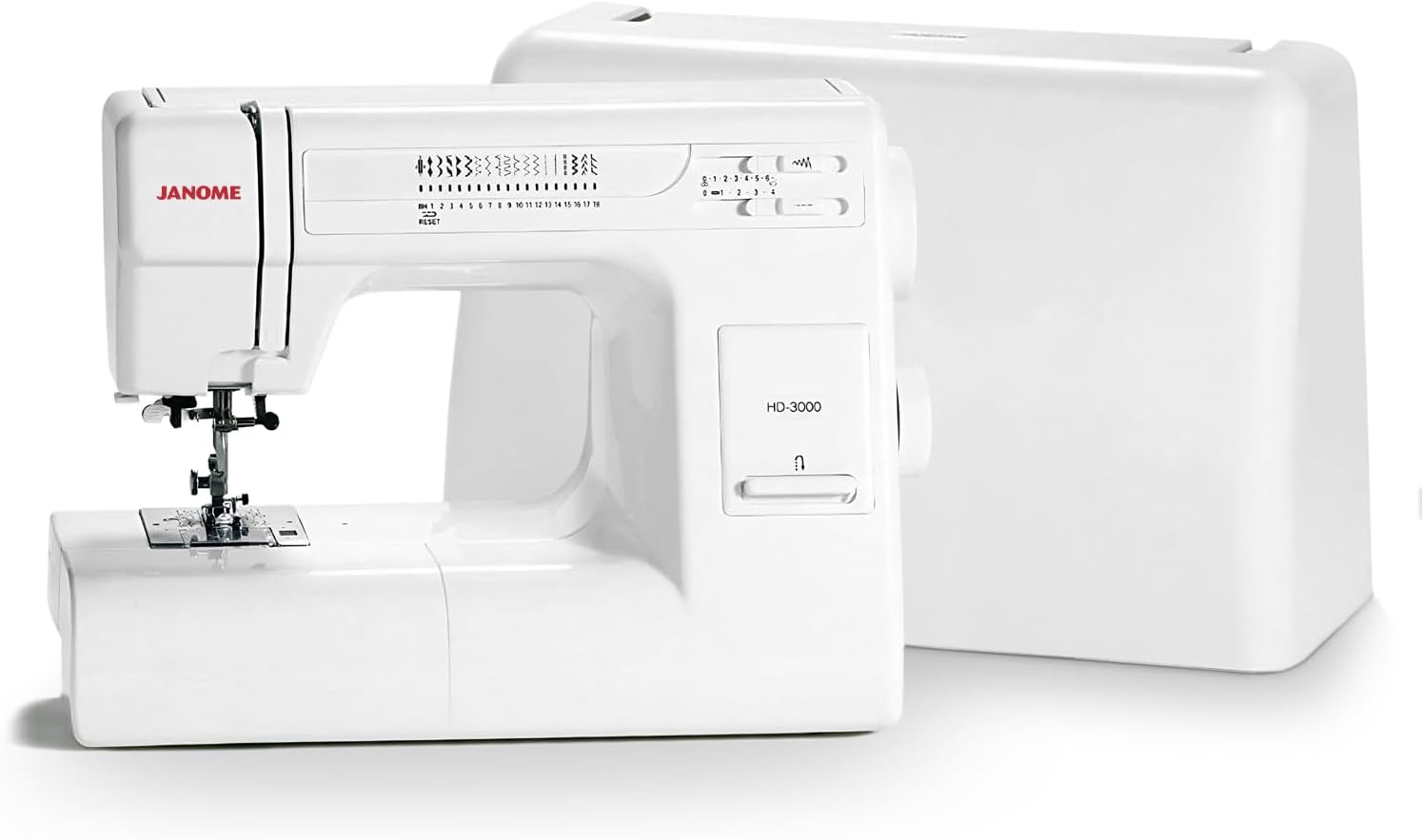
Best for: denim, canvas, leather, heavy-duty projects Why buy it: A stronger frame and feed system built to push through fabric other machines can't.

Current Price: $369 On Amazon
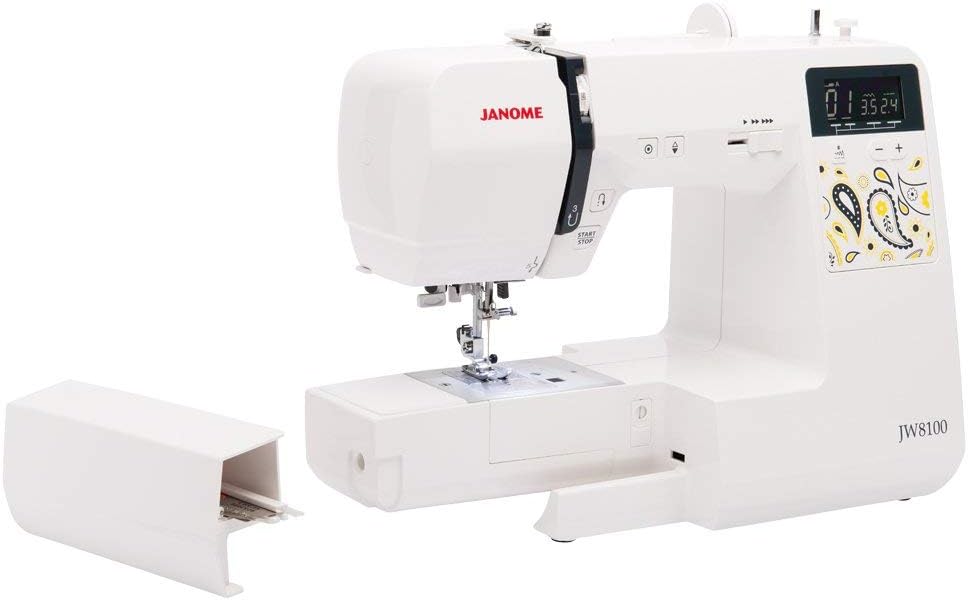
Best for: garments, quilting, everyday sewing Why buy it: 100 stitches, computerized ease, and more built-in features than machines twice its price.
Introduction
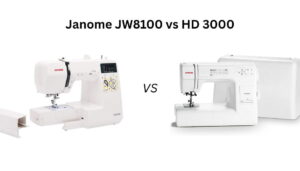
I love my electronic JW8100 for sewing beautiful clothes and customizing quilts, but that frustrating of it jamming, and refusing to push the needle through the thick fabrics made me realize it just didn’t have the raw muscle for heavy-duty projects.
That is exactly why I went out and bought the fully mechanical Janome HD3000 Heavy Duty.
Putting them side-by-side on my workspace, I realized these two machines are built for two completely different types of sewists.
One is a computerized brain packed with fancy stitches, while the other is a pure metal workhorse built to punch through anything.
Look at my hands-on testing to find out whether you need the high-tech features of the JW8100 or the unstoppable power of the HD3000.
Table of Contents
Quick TL;DR:
The JW8100 ($369) gives you more stitches and features for less money — good for garments, quilting, and everyday sewing. The HD3000 ($529) trades stitch variety for a tougher frame built for denim, canvas, and leather. Pick based on your fabric, not the price tag.
At-a-glance: Janome JW8100 vs HD 3000
| Features | Janome JW8100 | Janome HD3000 |
|---|---|---|
| Type | Computerized | Mechanical |
| Stitches | 100 | 18 |
| Buttonholes | 7, one-step | 1, four-step |
| Needle threader | Built-in | Built-in |
| Speed | 850 stitches/min | 860 stitches/min |
| Weight | ~12.7 lbs | ~18.7 lbs |
| Frame | Aluminum interior | Aluminum, full body |
| Best For | Garments, quilting cottons, general sewing | Denim, canvas, leather, thick layers |
| Where To Buy | Check On Amazon | Check On Amazon |
Will it actually get through my fabric, or bog down halfway?
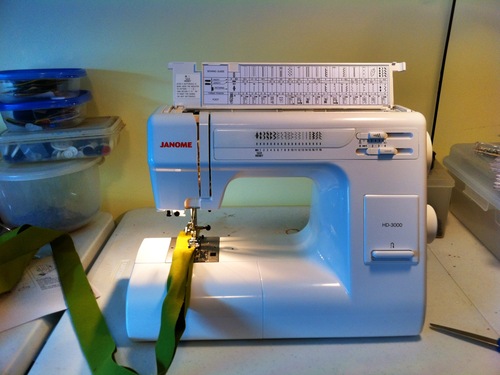
To find the breaking point of these machines, I put them through a brutal stress test using a thick six-layer stack of heavy denim and tough leather straps.
When I stepped on the pedal of the Janome HD3000, its heavy aluminum frame stayed rock solid.
Thanks to its extra-high foot lift and aggressive feed dogs, it glided right through the thick layers without a single hesitation, bunch, or bent needle.
It is an absolute beast for canvas, leather, or thick quilts.
But when I fed that exact same denim and leather stack into the computerized Janome JW8100, the motor immediately groaned, threw an error code on the screen, and stalled out halfway through.
It simply wasn’t engineered for that kind of abuse.
However, the moment I switched the JW8100 back to normal projects—like sewing cotton summer dresses, standard quilts, and doing basic alterations—it performed beautifully and precisely.
The takeaway is simple: if your hobby room is full of heavy canvas, denim, and leather, the HD3000 is the only machine that won’t bog down.
If you mostly sew clothing, crafts, and lightweight cottons, the JW8100 has more than enough muscle for the job.
Everyone mentions skipped stitches — is that a real flaw, or user error?
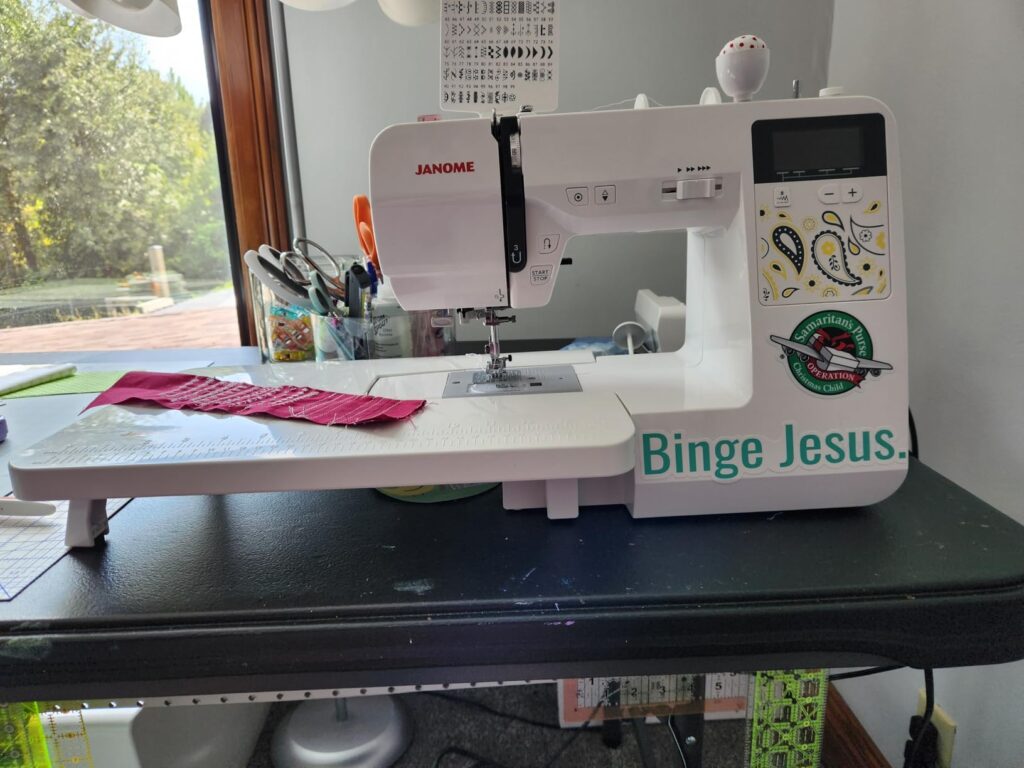
When I was buying these machines, I saw a lot of angry reviews complaining about skipped stitches.
To see if these machines were actually defective, I grabbed a tricky, stretchy piece of ponte knit fabric and ran a wide zigzag stitch on both models.
At first, the computerized JW8100 made an absolute mess, skipping every third stitch and leaving uneven loops.
But instead of panicking, I realized the JW8100 has very tight electronic tolerances and is incredibly picky about its setup.
I threw away the cheap, old needle I was using, popped in a fresh stretch needle, and re-threaded the top path.
The change was like night and day—the machine immediately went back to sewing flawless, perfect stitches.
The mechanical HD3000 is a bit more forgiving of old needles, but it will still skip stitches on heavy canvas if you don’t use a thick denim needle.
So, skipped stitches aren’t a mechanical flaw at all; it’s just user error.
The JW8100 isn’t unreliable, it just won’t let you get away with using “whatever needle is already in the machine.”
If you buy either model, just keep a small pack of different needles on hand—universal for cotton, stretch for knits, and denim for thick layers—and you will completely avoid this headache.
Is the HD3000 still actually ‘heavy duty,’ or is that just the name at this point?
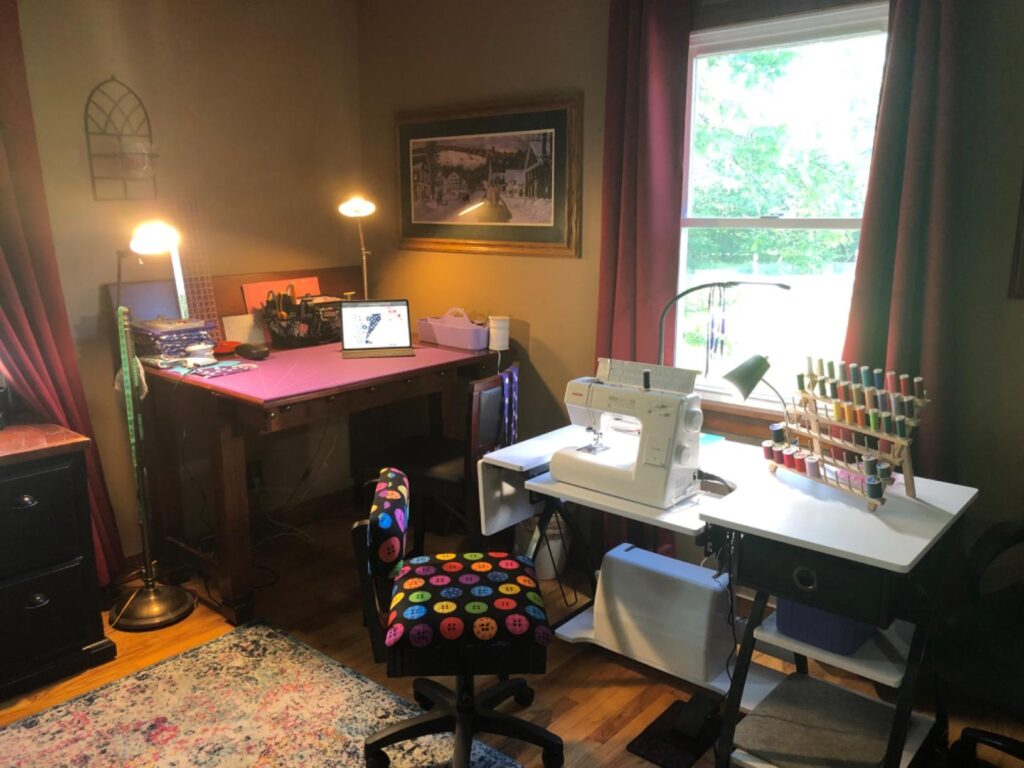
To find out if the Janome HD3000 still earns its name, I put a newer model through a strict real-world stress test.
The big secret with this machine is under the hood.
Janome quietly changed the old 1.0-amp motor to a weaker 0.5-amp motor.
They claim the new motor matches the old power by spinning faster.
To see if that is true, I tested it on the exact projects you would buy a heavy-duty machine for.
The Stress Tests
- The Denim Test: I folded a pair of heavy jeans to sew over the thick side seams. When sewing fast, the machine punched through. But when I slowed down to carefully guide the fabric, the motor hummed, struggled, and stalled.
- The Leather & Upholstery Test: I tried stitching three layers of thick vinyl couch fabric. At slow, controlled speeds, the needle got stuck halfway down. I had to turn the handwheel by hand to help the motor finish the stitch.
The branding on the box is no longer a guarantee. If you sew fast, the new 0.5-amp motor does okay. But for tricky, thick fabrics where you must sew slowly and carefully, it lacks the muscle of the original model.
What Do These Machines Look Like After a Year?
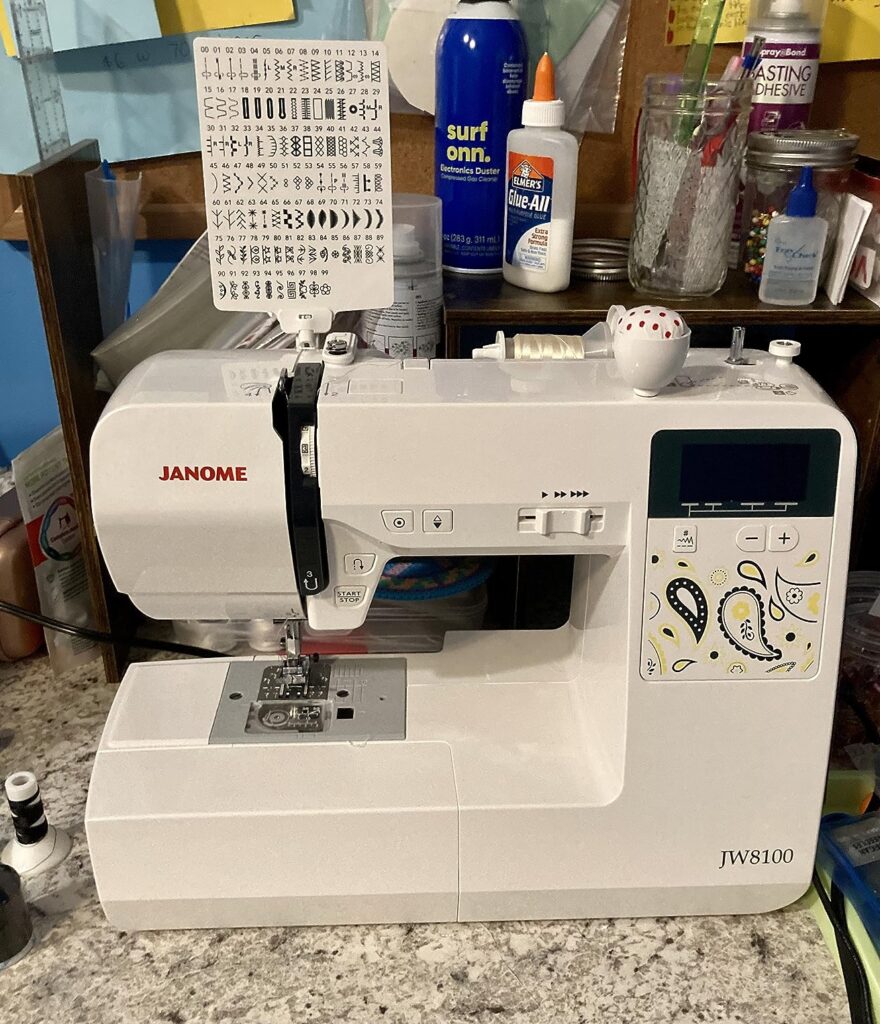
After months of sewing cotton quilts and canvas bags, the JW8100 works perfectly. It only has small cosmetic flaws:
The built-in work light is too dim. I had to use a cheap desk lamp to see my stitches clearly at night.
The small plastic box for needles and bobbins is frustrating to open and poorly designed. I just use a separate plastic container instead.
Even though the HD3000 looks tough, my long-term testing hit a major roadblock. Around the 30-hour mark of sewing heavy denim jackets, the machine broke down:
The needle suddenly stopped going all the way down into the fabric.
At the exact same time, the lever that lowers the feed dogs jammed and stopped working.
Am I Paying for 100 Stitches I’ll Actually Use, or Not?
This is the question everyone asks but nobody really tests. So I sat down with both machines and actually used the stitches — not just counted them.
I picked three projects on purpose:
- A basic cotton tote bag (straight stitch, zigzag, hem)
- A stretchy knit t-shirt (needs stretch stitches)
- A decorative pillow cover (wanted a fun edge stitch, just for fun)
The JW8100 has 100 stitches, 7 one-step buttonholes, a lit-up screen, computer controls, a start/stop button, needle up/down memory, and a speed slider.
Here’s what surprised me: I didn’t use 100 stitches. Not close. For the tote bag and the t-shirt, I stuck to about 10 stitches the whole time.
But on the pillow project, I went looking for a decorative edge stitch just to try something new. And it was there. On the HD3000, it simply wouldn’t have been an option.
The needle up/down memory also mattered more than I expected. When I was sewing curves on the pillow, the needle stayed exactly where I left it every time I stopped. Small thing. But over two hours of sewing, it saved me a lot of manual adjusting.
The HD3000 has 18 stitches, dial controls (no screen), a top-load bobbin, and a built-in needle threader.
For the tote bag, it did the job with no issues. Straight stitch, zigzag, buttonhole — all there, all solid.
For the t-shirt, it had basic stretch stitches, and they worked fine on light knit fabric.
For the pillow project, though, I hit a wall. I wanted a decorative stitch. The HD3000 doesn’t have one. Not a flaw — just not what it’s built for.
You’re not paying the extra $160 for the HD3000 to get more stitches or fancier controls. You’re paying for fabric-handling strength — the metal frame, the feed system, the presser foot lift.
Which Should You Buy?
Current Price: $529 On Amazon
Best for: denim, canvas, leather, heavy-duty projects Why buy it: A stronger frame and feed system built to push through fabric other machines can't.
Ask yourself one question: what will you sew most often — thin/medium fabric, or thick/tough fabric?
- Thin or medium fabric (cotton, garments, quilting): Buy the JW8100 ($369). It does more, costs less, and has an easier learning curve.
- Thick or tough fabric (denim, leather, canvas, multiple layers): Buy the HD3000 ($529). Its frame is built to push through fabric the JW8100 can’t handle well.
- Not sure yet: Buy the JW8100. It’s cheaper, and you can always get a heavy-duty machine later once you know you need one.
Current Price: $369 On Amazon
Best for: garments, quilting, everyday sewing Why buy it: 100 stitches, computerized ease, and more built-in features than machines twice its price.
Final Verdict
The JW8100 is the smarter buy for most people. It gives you more stitches, more control, and an easier experience — for $160 less.
The HD3000 only makes sense if your projects truly need its strength. And if you go that route, don’t just trust the name — test it on your toughest fabric right away, while you can still return it.
In one line: buy the JW8100 unless your fabric is too tough for it. Then, and only then, pay for the HD3000.
Related Articles:
- Janome 3160 vs 4120!
- Janome HD1000 vs HD3000!
- Janome HD1000 vs HD5000!
- Janome HD5000 vs HD3000!
- Janome HD3000 vs Singer 4423!
- My Janome 2212 Review!
- Janome CoverPro 1000CPX Review!
FAQs
Q1. Is the HD3000 really “heavy duty,” or just the name?
Mostly yes, but a motor change on later units made it slightly less powerful than early models. Test it on your thickest fabric right after buying.
Q2. Can the JW8100 sew denim or leather?
It can handle a single layer, but it’s not built for thick, stacked, or tough fabric the way the HD3000 is.
Q3. Why does the JW8100 skip stitches?
Almost always the wrong needle or loose tension — not a broken machine. Match the needle to your fabric and it usually stops.
Q4. Is the HD3000 worth $160 more than the JW8100?
Only if you regularly sew heavy fabric. If not, the JW8100 gives you more features for less money.
Q5. Which one is better for a beginner?
The JW8100. It’s cheaper, has more guided features, and is easier to learn on.