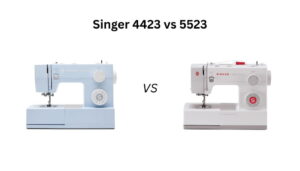
Built for sewers who refuse to compromise.
Adjustable presser foot pressure. ½" foot lift clearance. All-metal construction. Hard case included. 18 precision stitches that outperform most machines' 30. This is the machine you buy once and never replace.
Perfect for: Mixed fabrics, intensive use, canvas, bags, denim, long-term investment.

The workhorse that punches way above its price.
1,100 stitches per minute. Metal frame. 23 built-in stitches. Drop-in bobbin. Automatic needle threader. Handles denim, canvas, and thick fabrics without flinching — and it does it for $215. Over 18,000 Amazon reviews averaging 4.6 stars don't lie.
Perfect for: Beginners, casual sewers, garment repair, everyday projects.
Introduction
You already know the spec difference by heart. The Singer has 23 stitches, the Janome has 18. The Singer runs at 1,100 stitches per minute, the Janome at 860. Every comparison article on the internet gives you this list and then ends with “it depends on your needs.”
That’s not helpful. That’s not even honest.
Because there’s one question sitting underneath all of this that nobody directly answers: Is the Janome HD3000 worth $314 more than the Singer 4423? That’s a 146% price premium. And the answer — a real answer, not a diplomatic dodge — depends entirely on understanding three specific problems that separate these two machines in ways the spec sheet never shows you.
Let’s get into it.
Table of Contents
Quick TL;DR
The Singer 4423 ($215) wins on price, speed, and stitch variety — perfect for beginners and casual sewers. The Janome HD3000 ($529) wins on precision, durability, and fabric versatility — worth every extra dollar if you sew intensively or across mixed fabric weights. If budget isn’t the constraint, get the Janome. If it is, the Singer won’t disappoint you.
At-a-glance: Janome HD3000 vs Singer 4423
| Features | Singer 4423 | Janome HD3000 |
|---|---|---|
| Motor Speed | 1,100 SPM | 860 SPM |
| Built-in Stitches | 23 | 18 |
| Presser Foot Pressure Adjustment | ❌ No | ✅ Yes |
| Presser Foot Lift | 9.5mm (⅜") | 12mm (½") |
| Stitch Width Max | 6mm | 6.5mm |
| Machine Weight | 14.5 lbs | 18.7 lbs |
| Storage | Bottom compartment only | Upper + bottom compartments |
| Case Included | Soft cover | Hard cover |
| Bobbin Winder Reliability | Consistent | Inconsistent (known quirk) |
| Best For | Light-to-medium, beginners, volume sewing | Mixed fabrics, intensive use, long-term |
| Where To Buy | Check On Amazon | Check On Amazon |
The Problem Most Buyers Walk Into Without Knowing It
When I bought the Singer 4423 thinking it’s affordable, well-reviewed, and marketed as “heavy duty.” A few months later, I was back online asking why it’s struggling with thick denim layers, why the tension keeps going erratic, or why a part broke faster than expected. I didn’t buy the wrong machine. I bought the wrong machine for my use case.
Both machines are heavy duty compared to budget beginner machines. But they are NOT equivalent in how they handle sustained heavy use. The Singer 4423 is a heavy-duty machine built for a light-to-moderate workload. The Janome HD3000 is a heavy-duty machine built for moderate-to-intensive use over a long time horizon. That distinction matters more than any stitch count.
The Singer 4423’s “Heavy Duty” Label Doesn’t Mean What You Think
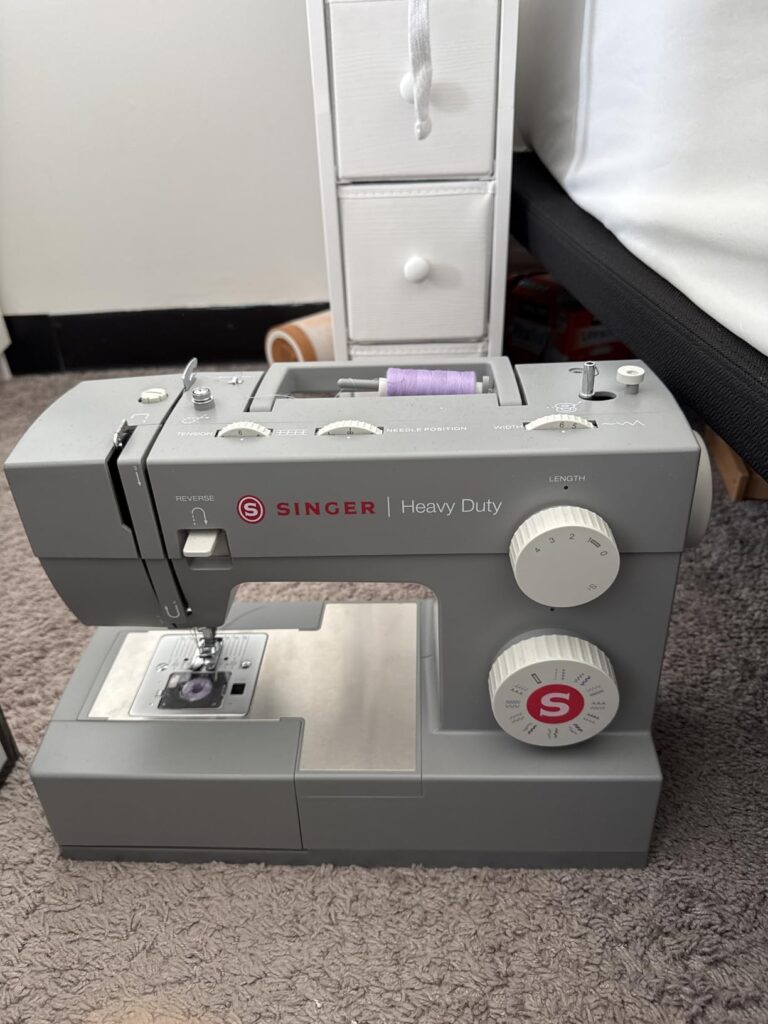
The tension and consistency problem under stress. In the very first test I found that the 4423’s long straight stitch can suffer from inconsistent tension across different fabric weights — sometimes too loose, sometimes pulling the bobbin thread through entirely. On standard and medium-weight fabrics, this evens out. On heavy multiple-layer projects (think: 6+ layers of denim, upholstery corners, thick canvas seams), it becomes more noticeable and harder to correct.
The “not as heavy duty as advertised” complaint. This isn’t just forum noise. Multiple real-world buyers have found the 4423 struggling with exactly the heavy fabrics its marketing highlights — multiple layers of denim being the most commonly cited example. The motor is fast (1,100 SPM is genuinely impressive), but speed and power under load are different things. The Singer’s motor excels at speed; it’s less consistent under prolonged, high-resistance conditions.
If your projects are predominantly light-to-medium fabrics with occasional heavy work, the 4423 handles it reliably. If you sew thick fabrics regularly — bags, canvas, multiple denim layers, upholstery — the 4423’s reliability under those specific conditions is genuinely less consistent than its marketing suggests.
The Feature That Actually Matters Most Is Buried on Line 9 of the Spec Sheet
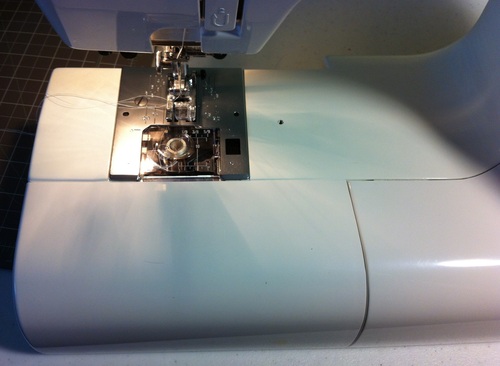
The Janome HD3000 has adjustable presser foot pressure. The Singer 4423 does not.
This sounds like a minor technical detail. It isn’t. Here’s why it actually matters:
Presser foot pressure is how hard the machine pushes down on your fabric as it feeds through. For heavy fabrics — denim, canvas, leather — high pressure is exactly what you want. The fabric feeds evenly, the stitches are consistent, and the machine performs the way you expect.
But what about when you switch to lighter fabrics? Knits, chiffon, silk, jersey, lightweight linen? High presser foot pressure on these materials causes the fabric to stretch, distort, or develop irregular tension. Your stitches pucker. The fabric warps. You spend more time adjusting than sewing.
On the Singer 4423, you cannot change this pressure. You’re working with whatever the machine delivers, and you compensate through technique — slower speed, different needles, tissue paper under delicate fabrics, lighter touch on the foot pedal. Experienced sewers know these workarounds. But they are workarounds, not solutions.
On the Janome HD3000, you dial in the pressure to match the fabric. Heavy canvas? High pressure. Lightweight jersey? Reduce it. The machine adapts to your materials instead of requiring you to adapt to the machine.
This is the single most underrated advantage of the HD3000. If you sew across a range of fabric weights — and most sewers do — this feature alone changes the experience of using the machine in a way that 5 extra built-in stitches never will.
3: The Presser Foot Lift Gap Has Real Consequences
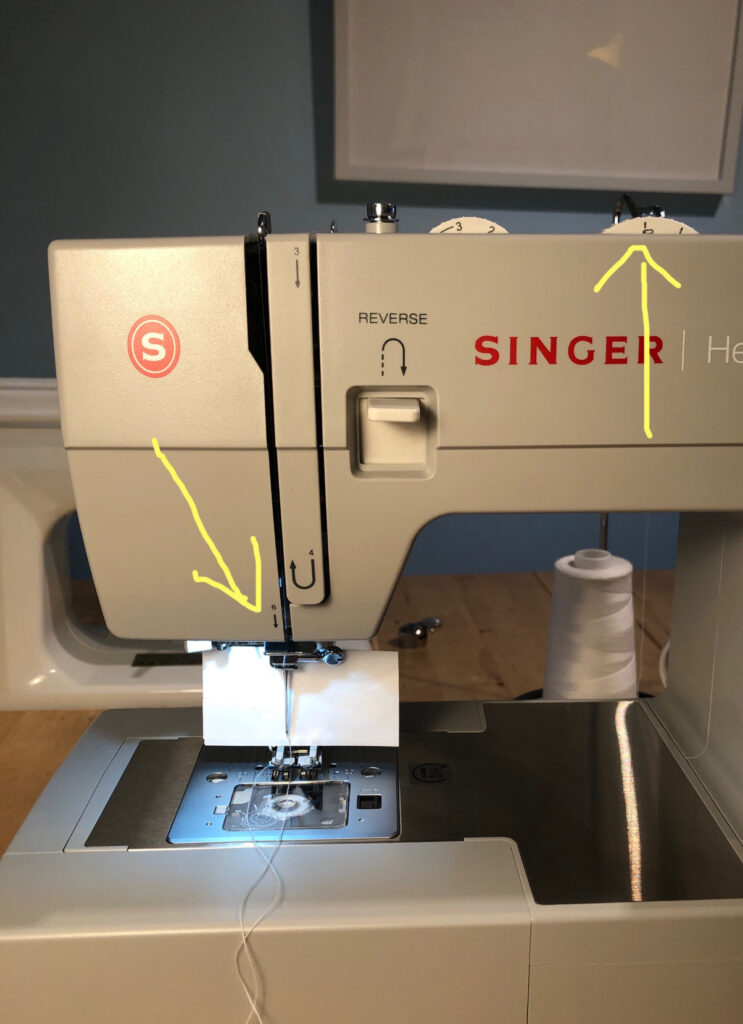
The Janome HD3000 has a presser foot lift height of 12mm (½ inch). The Singer 4423’s is 9.5mm (⅜ inch). A 2.5mm gap. On paper it barely registers.
In practice, here’s when that gap shows up:
Quilted layers. Thick bag straps. The corner of a denim jacket where five seams converge. That moment when you’re positioning thick material under the foot and the foot physically won’t rise high enough to accommodate it without contortion. The Singer’s 9.5mm clearance is sufficient for most tasks. But “most” isn’t “all,” and the specific tasks where it falls short tend to be exactly the heavy-duty projects the machine is marketed for.
The HD3000’s 12mm lift handles these moments without drama. The material slides under, you position it correctly, and you sew. It’s one of those features you notice only when the other machine makes it harder than it should be.
Additionally: the HD3000 also has an upper storage compartment for extra presser feet. The 4423 has only a bottom compartment, which experienced sewers describe as getting disorganized quickly when you’re working with multiple feet. Not a dealbreaker — but another small quality-of-life edge that adds up.
The Warranty Truth (Read This Before It Influences Your Decision)
Both machines advertise a 25-year limited warranty. If you’re using that as a tie-breaker or a justification for a purchase, you need to know what it actually covers.
The 25-year warranty on both Singer and Janome machines covers the “head” or “chassis” — meaning the structural frame, essentially the machine’s skeleton. It does not cover the motor, electrical components, gears, feed dogs, tension mechanisms, or any of the parts most likely to actually fail.
The Bobbin Winder Problem Nobody Warns You About on the HD3000
The HD3000 uses a horizontal spool pin as its default. The bobbin winding mechanism is connected to how the thread feeds off this horizontal pin. But the bobbin winder is inconsistent — sometimes winding cleanly, sometimes producing uneven tension on the bobbin thread depending on whether you’re using the horizontal or the optional vertical spool pin.
A common workaround I have landed on: use a separate machine or a standalone bobbin winder to prep bobbins, and use the HD3000 exclusively for sewing. That’s a minor inconvenience, not a dealbreaker — but it’s a real one, and you deserve to know about it before you buy.
The Singer 4423 doesn’t have this specific issue. Its bobbin system is more straightforward and the winding mechanism is consistently reliable.
So Is the Janome HD3000 Worth $314 More?
The Singer 4423 at $215 is the right machine if:
You’re a beginner or casual sewer who wants to build skills without a large upfront investment. You primarily sew light-to-medium fabrics — garments, home décor, basic repairs — with occasional heavier projects. You don’t need to switch between dramatically different fabric weights in the same session. You want the fastest motor in this class (1,100 SPM is genuinely fast, and for volume sewing on consistent fabrics, that matters). You want more built-in stitch variety — the 4423’s 23 stitches vs the HD3000’s 18 gives you more decorative options out of the box.
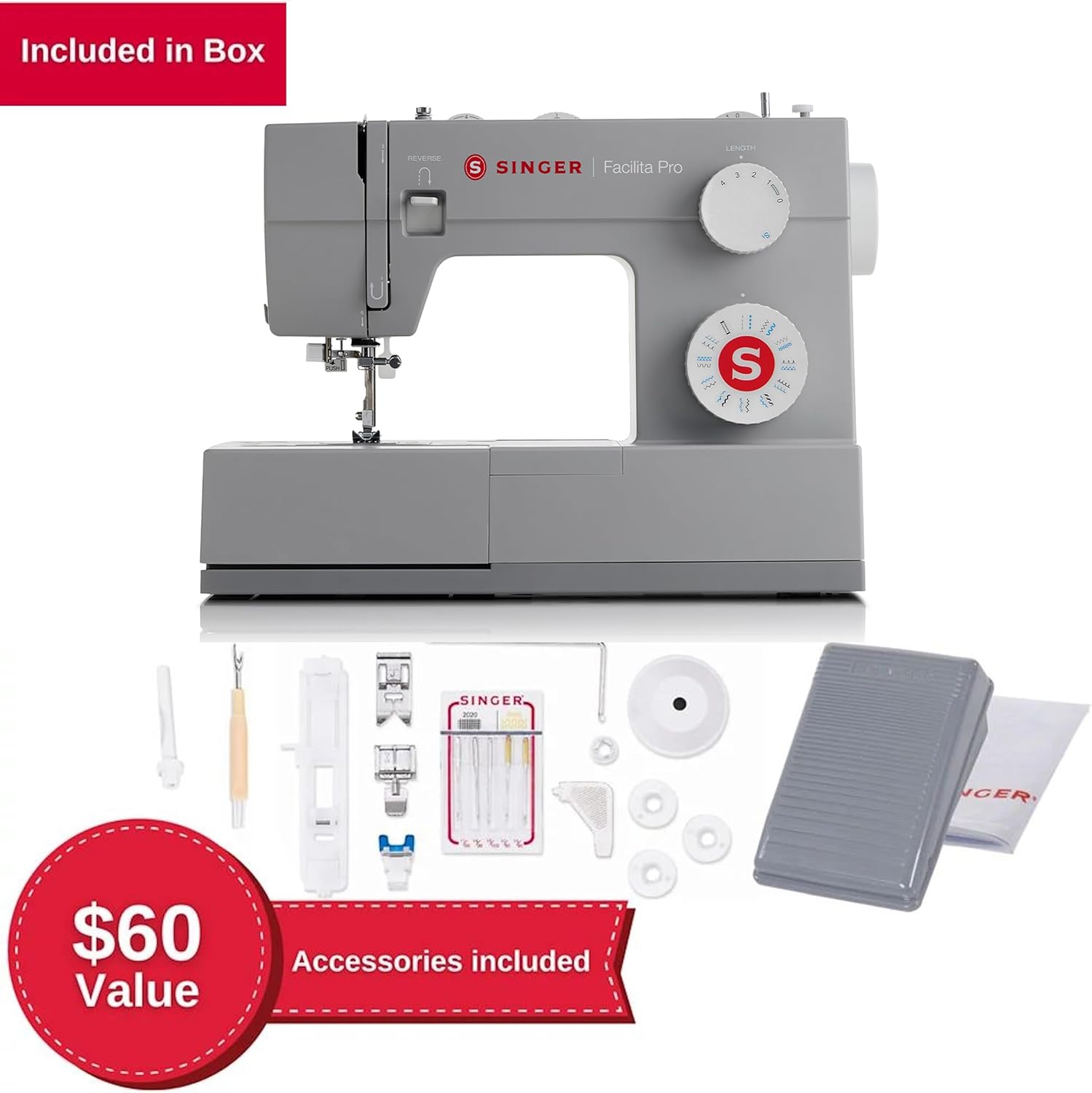
The workhorse that punches way above its price.
1,100 stitches per minute. Metal frame. 23 built-in stitches. Drop-in bobbin. Automatic needle threader. Handles denim, canvas, and thick fabrics without flinching — and it does it for $215. Over 18,000 Amazon reviews averaging 4.6 stars don't lie.
Perfect for: Beginners, casual sewers, garment repair, everyday projects.
The Janome HD3000 at $529 is the right machine if:
You sew regularly across a wide range of fabric weights — from delicate materials to thick canvas or multiple denim layers — and you need the machine to handle both without fighting it. You plan to sew intensively and want a machine built for sustained heavy use rather than occasional bursts of it. Presser foot pressure adjustment isn’t a nice-to-have for your work — it’s how you get consistent results on varying fabrics. You’re thinking long-term: the HD3000 holds its resale value better, and its all-metal construction is genuinely more durable for intensive use over years, not months.
The one scenario where the Janome is an unambiguous answer: If you sew heavy fabrics regularly — bags, canvas goods, denim projects, upholstery repairs — and you also sew lighter fabrics in the same workflow, the HD3000 isn’t just better. It’s the only one of these two machines that won’t frustrate you in that specific combination.
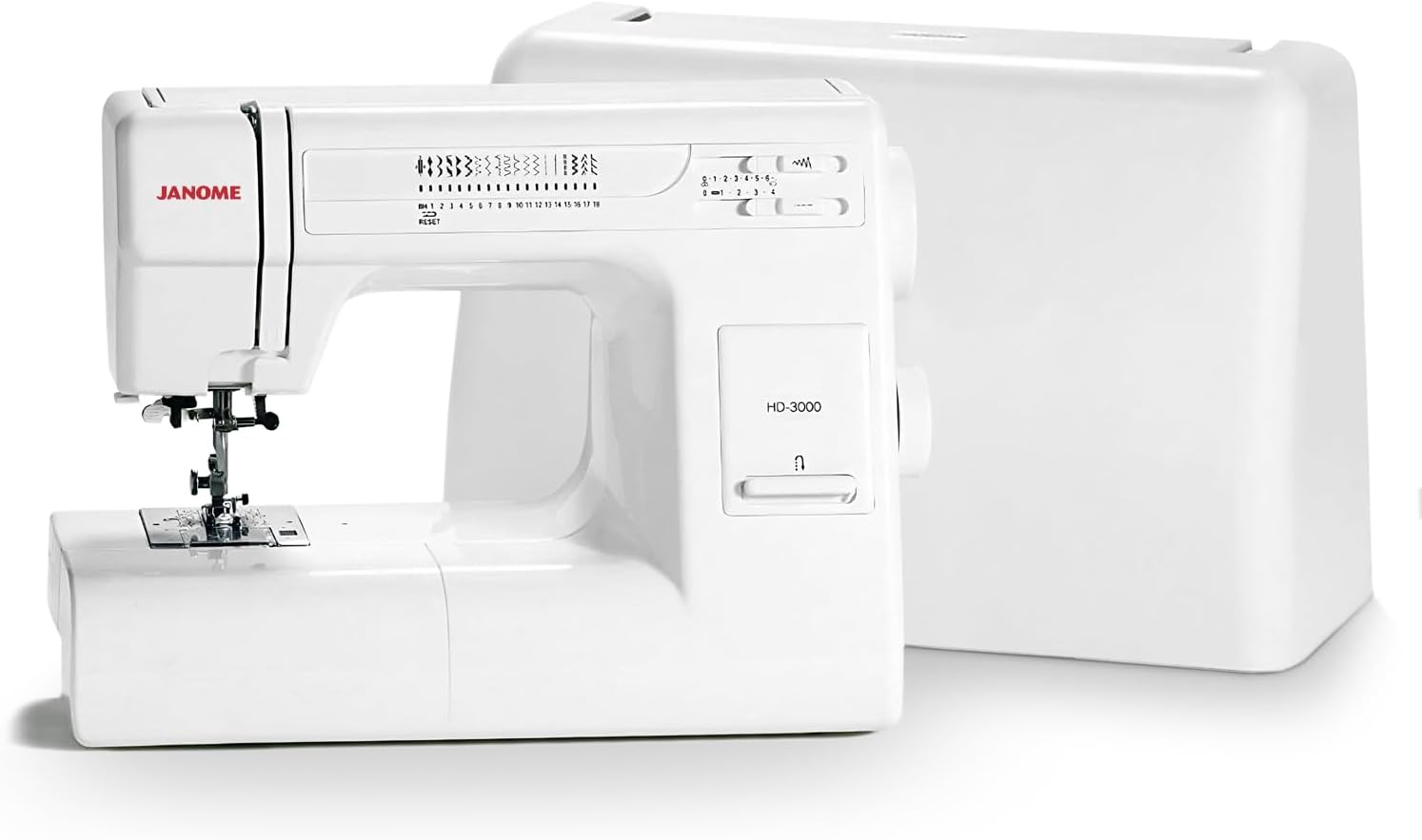
Built for sewers who refuse to compromise.
Adjustable presser foot pressure. ½" foot lift clearance. All-metal construction. Hard case included. 18 precision stitches that outperform most machines' 30. This is the machine you buy once and never replace.
Perfect for: Mixed fabrics, intensive use, canvas, bags, denim, long-term investment.
Final Verdict
Buyers searching this comparison aren’t actually torn between these two machines in terms of what they need. They’re torn because they want the Janome but are looking for permission to spend $215 instead.
If that’s you — if you’re primarily sewing garments, crafts, and light home projects and you’d be stretching to spend $529 — the Singer 4423 is genuinely good at what it does. Its 4.6-star average from 18,000+ reviews isn’t a statistical accident. It’s a machine that satisfies the vast majority of the people who buy it.
But if you keep coming back to the Janome because something in the description matches how you actually sew — heavy fabrics, precision work, mixed materials, long sessions — trust that instinct. The $314 gap is real money. It’s also a machine you won’t outgrow, fight with, or replace in three years.
Related Articles:
FAQs
Is the Singer 4423 actually heavy duty?
Yes — compared to standard home machines. Its metal frame and high-speed motor genuinely outperform entry-level machines on thick fabrics. The caveat is that “heavy duty” in the sewing machine world is a spectrum, and the 4423 sits at the lighter end of that spectrum when compared to machines like the HD3000.
Can the Singer 4423 sew through denim?
Usually yes for single or double layers. Where it runs into trouble is multiple denim layers — 4, 5, 6 layers at a thick seam, particularly at intersecting seams. The HD3000 handles these with more consistency.
Why does the Janome HD3000 have fewer stitches if it costs more?
Because the HD3000’s value isn’t in stitch variety — it’s in mechanical precision, build quality, and the adjustable presser foot pressure system. More stitches sound better on a spec sheet. What matters in actual use is how well the machine executes the stitches you rely on, under the conditions you sew in.
Is the Singer 4423 good for beginners?
It’s one of the best beginner-to-intermediate heavy-duty options at this price. The 4423 is intuitive, fast, and capable. If you’re new to sewing and want a machine you won’t immediately outgrow, it’s a strong choice.
What’s the Singer 4423’s biggest weakness?
The lack of presser foot pressure adjustment and the inconsistent performance under sustained heavy-fabric use. For most sewers, neither of these will be daily issues. For sewers who work with thick materials across varied projects, both become noticeable relatively quickly.