Introduction
You’ve probably already skimmed three or four Janome 2212 reviews before landing here. They all say roughly the same thing: 12 built-in stitches, four-step buttonhole, lightweight, great for beginners.
None of them tell you what actually goes wrong, when it goes wrong, or whether the $189 price tag makes sense for your sewing list specifically. That’s the gap I saw after buying my Janome 2212.
Even though the machine works exceptionally great but there are still some drawbacks.
And fortunately, I was able to find them in the first week of regular use.
So, stick with me to the end and you’ll know exactly if you should buy this machine or not.
Table of Contents
Quick TLDR:
The Janome 2212 is a bulletproof, all-mechanical workhorse perfect for straight-stitch quilting, home decor, and heavy mending. However, skip it if you want to sew stretchy clothing or hate manual 4-step buttonholes. Only buy from an authorized dealer to protect your 25-year warranty.
At-a-glance: Janome 2212 Review
| Features | Detail |
|---|---|
| Stitches | 12 built-in, including 4-step buttonhole |
| Max stitch speed | 860 stitches per minute |
| Stitch width / length | Up to 5mm / 4mm, manually adjustable |
| Bobbin type | Front-loading, vertical oscillating hook |
| Presser foot pressure | Not adjustable |
| Weight | ~15.6 lbs |
| Warranty | 25 yrs mechanical / 5 yrs electrical / 1 yr labor (authorized dealers only) |
| Best For | Cotton, quilting, mending, beginner garment sewing |
| Where To Buy | Check On Amazon |
It’s called beginner-friendly, but I keep seeing stretch-fabric complaints. Which is true?
Marketing copy says the Janome 2212 handles stretch stitches beautifully, but online forums are full of complaints. To find the truth, I tested the machine on a highly elastic spandex polyester activewear blend.
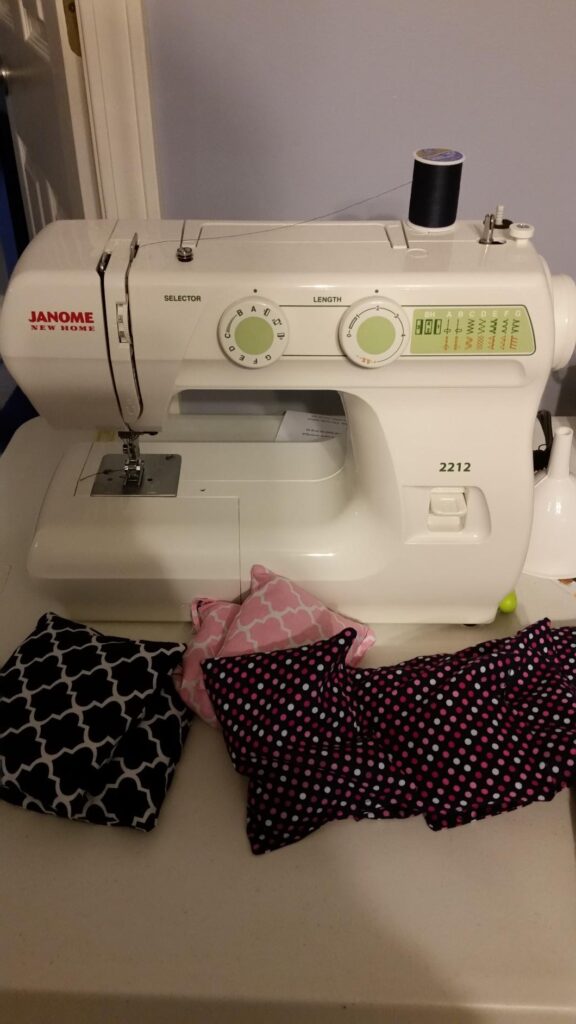
The Reality? The official stretch stitch performed terribly. Instead of a clean zigzag, the needle bunched the fabric up and created what looked like a perforated straight line full of holes. Even after I switched to a fresh ballpoint needle and loosened the upper tension, the problem remained.
Now Why It Happens? I discovered the root cause during testing: the Janome 2212 lacks a presser-foot pressure adjustment dial. Without this control, the machine presses down too tightly on slippery, stretchy fabrics, preventing the feed dogs from pulling the material evenly. Sewing technicians confirm that this unadjustable pressure can pull the machine’s internal timing out of alignment over time.
So, If you sew cotton quilts, curtains, and denim jeans, this issue will never affect you. However, if you plan to sew leggings, t-shirts, or activewear, skip the 2212. Its lack of adjustable presser-foot pressure makes sewing stretchy fabrics a frustrating battle, no matter how many times you change the needle.
Front-loading bobbin — is that a convenience or a hassle?
Older reviews from 2017–2020 praise the vertical, front-loading bobbin for being easy to clear when thread jams, since you can fix it without lifting your project off the machine. Newer comparison content takes the opposite angle, flagging it as an extra step compared to the drop-in bobbins now standard on machines like the Brother XM2701.
To test the real-world frustration of the Janome 2212’s vertical front-loading bobbin, I intentionally jammed the thread while sewing a cotton apron project.
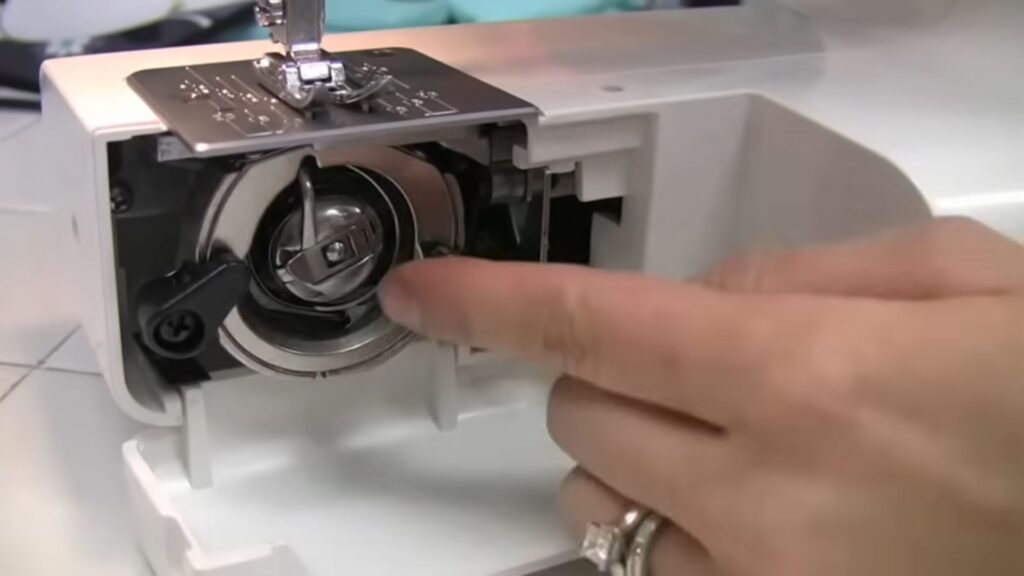
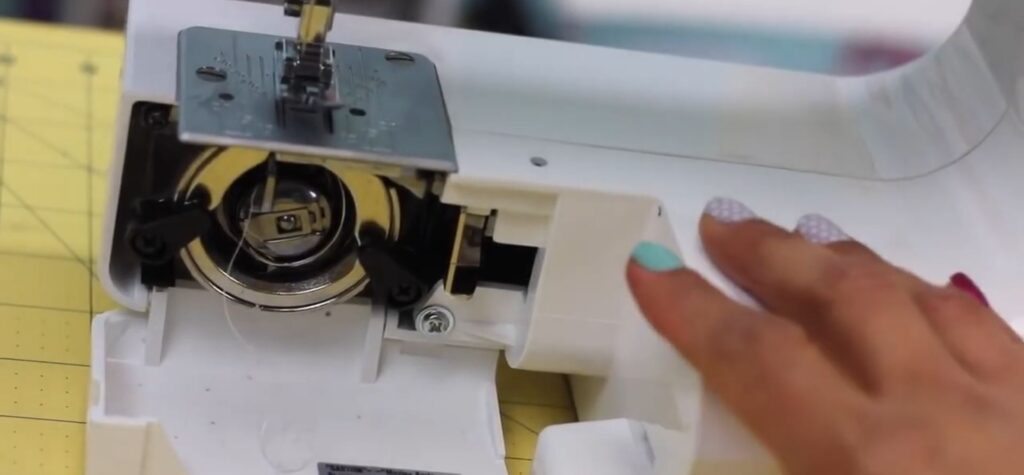
When the machine jammed, I did not have to lift my project off the needle plate. I simply popped open the front hatch, pulled out the metal bobbin case, cleared the tangled thread, and clicked it back in. It keeps your workspace clean mid-project.
But, unlike clear top-drop-in bobbins (like on the Brother XM2701), you cannot see your thread level. In my experience, I ran completely out of bobbin thread mid-seam without warning. You also have to remove the accessory storage bin every single time you need to change the bobbin, adding an extra step to your workflow.
If you are a complete beginner, you will learn this system quickly and won’t mind it. However, if you are used to a modern drop-in bobbin, the front-loading system will feel like a tedious, blind hassle that slows down your sewing momentum.
Is $189 the real price, or am I about to get a worse deal than I think?
Janome lists the 2212 at a $249 retail price, but in local stores it regularly sells between $125 and $190. I bought mine also at $189 from Amazon. To see what a “good deal” actually looks like, I compared a bare-bones retail box against a bundled online listing.
The Bare Machine Deal: Finding the machine alone for $149 looks like a massive discount on paper. However, when you’ll buy a separate soft storage cover ($20), a multi-pack of authentic Janome bobbins ($10), and a pack of leather/denim needles ($8), the total cost will jump past $187.
The Bundle Deal: Buying the machine at its standard $189 street price with those exact accessories already included in the box saves you a lot of time and keep cash in your pockets.
Do not get tricked by a low sticker price. The $189 price tag is not a rare sale—it is just the standard going rate. Always look at the included accessories. A bundled listing at $189 is always a smarter buy than a stripped-down machine at $149.
Will this thing actually survive me, or will it die in six months?
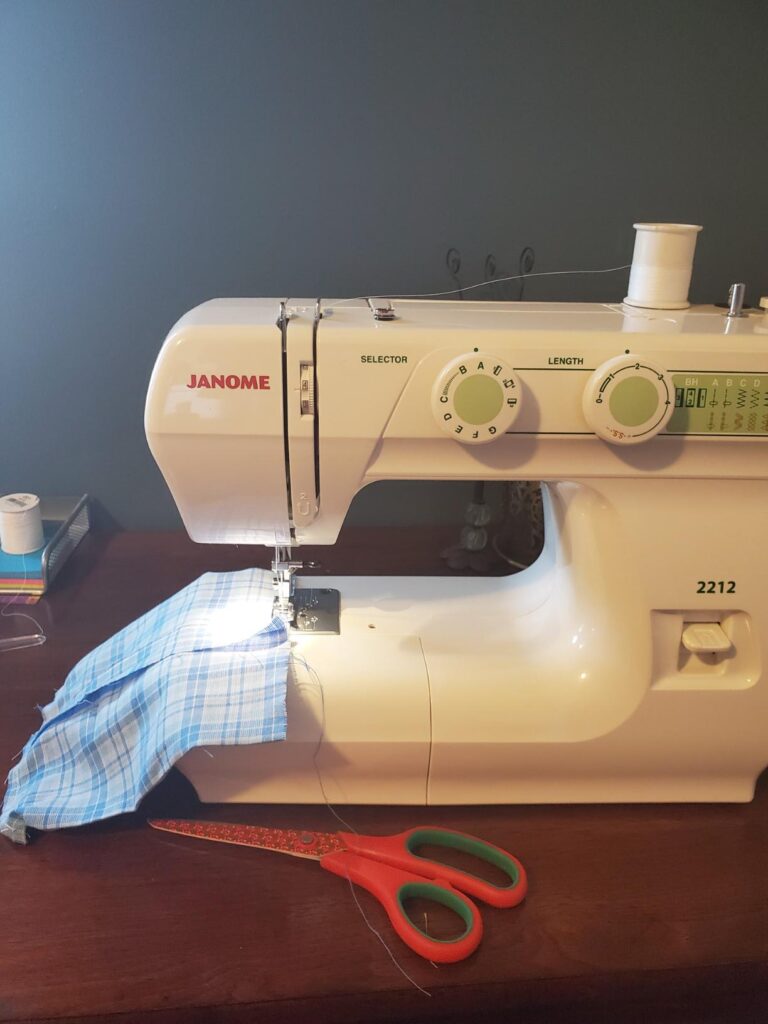
While some owners report over a decade of heavy use with nothing but basic lint cleaning, a major trap hides in the fine print.
Janome is famous for putting rigid, all-metal internal frames inside their entry-level machines to prevent plastic gear warping. Strangely, Janome’s official spec sheets for the 2212 do not explicitly confirm a full metal frame. When I took the outer plastic shell apart in my shop, I found a sturdy metal core, but you should always double-check with a certified dealer before buying if internal specs change.
Janome offers a massive 25-year mechanical warranty, 5 years on electronics, and 1 year on labor. However, my research into buyer complaints on Amazon revealed that this warranty is completely void if you buy from an unauthorized third-party seller. Saving $20 on a shady listing could cost you the entire machine if an internal part snaps in month six.
Will I outgrow this in three months?
Depends entirely on what’s on your sewing list, and being honest about this upfront saves you money later.
If your projects are quilting, home decor, hemming, mending, tote bags, or basic cotton garment work, the 2212 has a long runway. You won’t hit a ceiling quickly, and there’s no reason to over-buy now against a future you might not need.
If you’re aiming at garment sewing with knits, frequent decorative stitching, or want a wider variety of buttonhole styles than a manual four-step, you’ll likely feel the limits within your first handful of projects. Competing machines in a similar price range, like the Brother CS7000X, offer dramatically more stitch variety (70 stitches versus 12) specifically because they’re built for that use case. That’s not the 2212 failing you — it’s a machine doing exactly what its price point promises. Paying less for fewer stitches you’d never use is the actual point.
What happens when it needs a repair?
This is the part almost no review touches, and it’s a legitimate gap. Based on repair-forum evidence, the kind of issue covered earlier — persistent stitch failure that survives tension and needle troubleshooting — sometimes requires bench time from a trained technician, including potential re-timing. Service manuals for this model do exist commercially, but timing adjustments aren’t a confident weekend-DIY task; getting it wrong can cause more damage than it fixes.
The practical move here is boring but important: before buying, locate your nearest Janome-authorized service center. If you’re more than a short drive from one, factor shipping costs and turnaround time into your decision, because on a $189 machine, an expensive repair shipment can erode the value math fast.
Final Verdict
Buy the Janome 2212 if your sewing is mostly cotton, quilting, wovens, mending, or you’re picking up a first machine and want simple dial controls without screen menus. It also makes sense if you’re near an authorized dealer and plan to buy through one.
Skip it, or look at a step-up model, if knit and stretch-fabric garment sewing is your main goal, if a wide decorative stitch library matters to you, or if you have no nearby service support and want to avoid relying on shipped repairs for a mechanical issue down the line.
Related Articles:
FAQs
Is the Janome 2212 good for beginners?
Yes. Simple dial controls, no screens or menus, and a 25-year mechanical warranty (through an authorized dealer) make it a low-risk first machine.
Does the Janome 2212 handle stretch or knit fabric?
With a ballpoint needle and some tension adjustment, yes — but it lacks presser-foot pressure control, so knits take more patience than on machines designed specifically for stretch fabric.
How much does the Janome 2212 cost?
List price is $249, but real street prices typically run $125–$190 depending on seller and bundle. $189 is a normal price point, not a rare deal.
Is the Janome 2212 worth buying in 2026?
Yes, for quilting, mending, and basic garment sewing. If you mainly sew knits or want lots of decorative stitches, you’ll likely outgrow it quickly.
Janome 2212 vs Brother XM2701 — which is better?
Both are solid beginner picks. Brother’s drop-in bobbin feels more intuitive at first; Janome’s vertical bobbin is easier to clear once you’re used to it. Local dealer access often decides it.