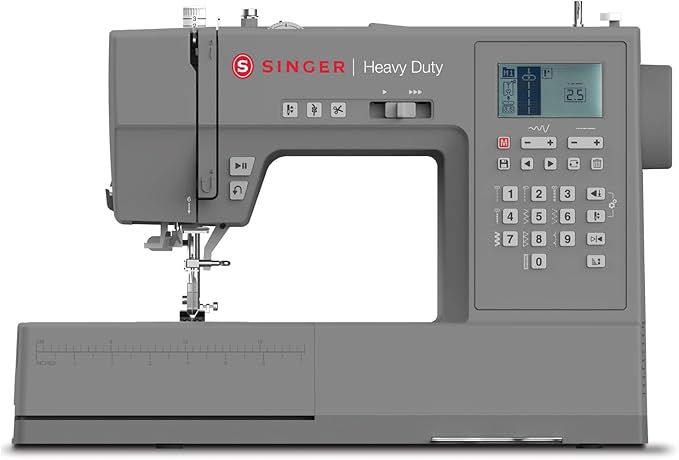
Current Price: $379 On Amazon
More stitches, built-in lettering, and a screen that guides you every step. Great for creative projects and beginners who want extra help.

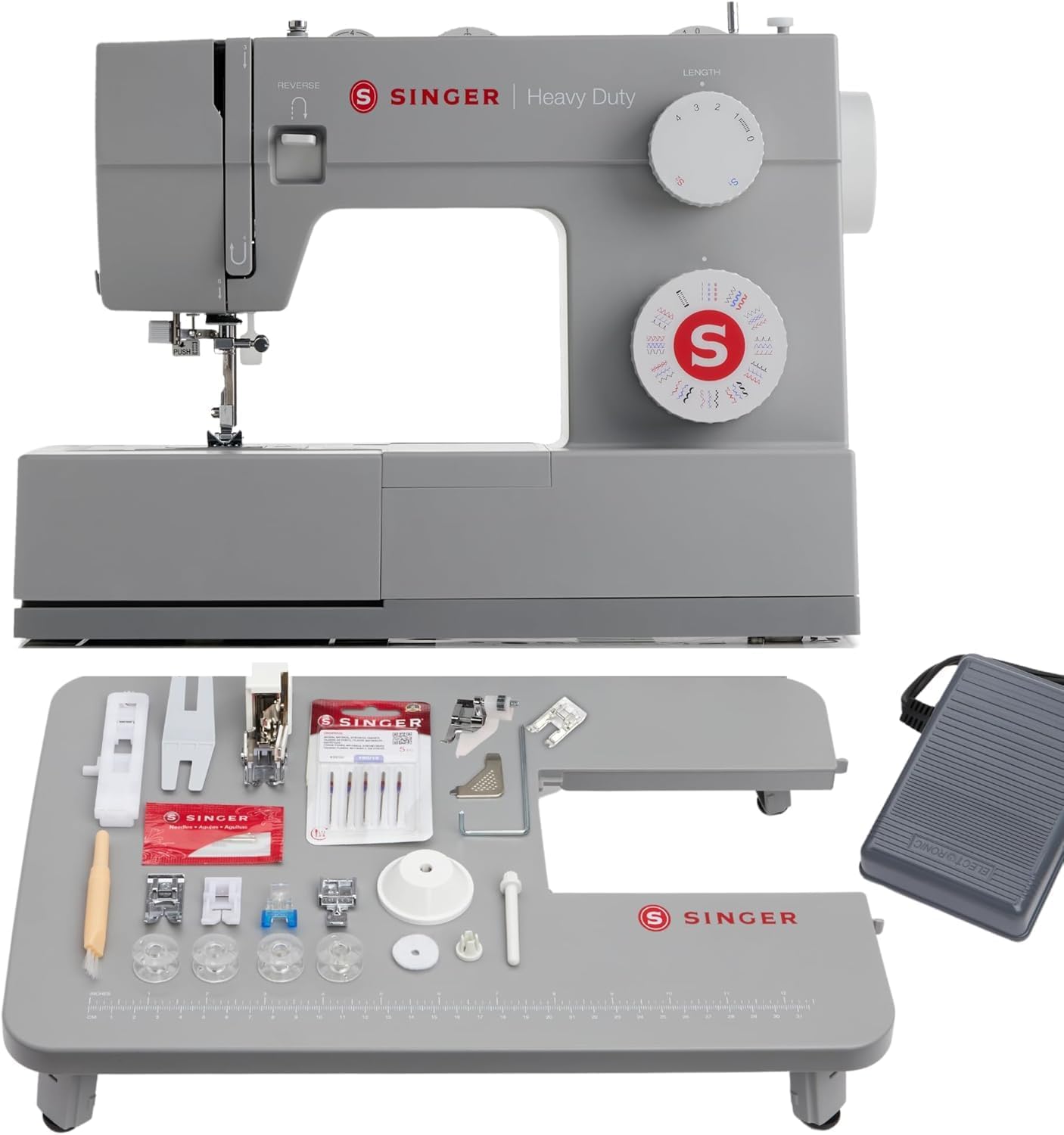
Current Price: $314 On Amazon
The no-fuss workhorse. Metal frame, strong motor, cuts through denim like butter. Built to last, nothing fancy to break.
Introduction
If you’ve spent any time researching these two machines, you’ve probably hit the same wall: every article tells you the 6800C has 586 stitch applications and the 4452 has 110, slaps a spec table on the page, and calls it a day. Great — now you know one machine has more numbers. But that’s not actually your problem, is it?
Your real problem sounds more like mine:
“I don’t sew often enough to need 586 stitches — am I paying for stuff I’ll never touch?”
“I’ve read horror stories about computerized machines glitching out. Is the simpler one actually the smarter buy?”
None of those questions get answered by a stitch-count comparison. So after testing these machines completely I’m going to tell you which of these machines will make you happy — and which one might end up in your closet after three frustrating months.
Table of Contents
Quick TLDR:
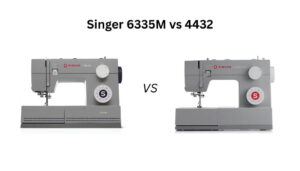
Both machines share the same heavy-duty frame, motor, and 6.4″ throat space — the real difference is convenience vs. simplicity. Pick the 4452 for a reliable, no-frills workhorse. Pick the 6800C for extra stitches, lettering, and on-screen guidance, with the trade-off being a thread cutter that’s known to act up.
At-a-glance: Singer 6800c vs 4452
| Features | Singer 4452 | Singer 6800C |
|---|---|---|
| Price | ~$314 | ~$379 |
| Type | Mechanical | Computerized |
| Stitches | 32 (110 applications) | 300 (586 applications) |
| Throat space | 6.4" | 6.4" |
| Auto thread cutter | No | Yes (common complaint) |
| Lettering/monogram | No | Yes |
| Best For | Reliability, basics, heavy fabric | Variety, beginners, decorative work |
| Where To Buy | Check On Amazon | Check On Amazon |
The Real Difference Nobody Talks About: What Happens When Something Goes Wrong
Here’s something worth knowing before you spend a dollar: the feature that makes the 6800C feel “premium” is also the feature that frustrated me the most.
The 6800C’s automatic thread cutter — press a button, and the machine snips your thread for you — sounds like exactly the kind of small convenience that makes a machine feel modern. And for a lot of users, it works fine.
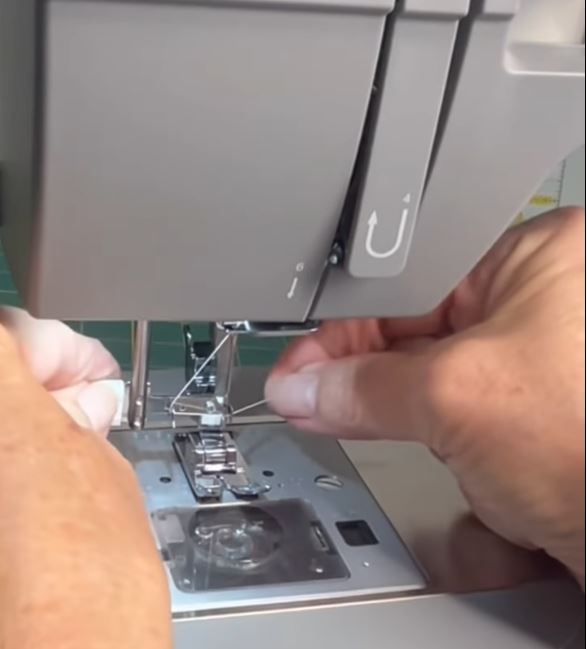
But just after 3 weeks of use a pattern started repeating: the auto-cutter buzzes, jams, or simply doesn’t cut, sometimes pulling the bobbin partway out of its housing in the process.
The 4452 doesn’t have this feature. It has a small built-in blade on the side of the machine — the kind of “feature” that’s really just a piece of metal. You pull the thread across it. It cuts. It cannot jam, buzz, or malfunction, because there’s nothing to malfunction.
This matters because of what it tells you about the bigger picture: every electronic convenience feature is also a new point of failure. That’s not a knock against computerized machines in general — but it reframes the question you should be asking. It’s not “which machine has more features?” It’s “how many of these features am I actually going to use, and am I comfortable with the trade-off if one of them stops working?”
With that lens, let’s work through the decisions that actually matter.
Problem #1: “I’m Not Sure I’ll Use 586 Stitches — Am I Paying for Bloat?”
This is probably the single biggest source of buyer’s remorse with the 6800C, and it’s worth being honest about.
The 6800C’s headline number — 586 stitch applications — sounds enormous next to the 4452’s 110. But “stitch applications” isn’t quite what it sounds like. It’s not 586 visually distinct stitches; it’s closer to 300 underlying stitch patterns, with the “applications” count including variations like different stitch lengths and widths for the same pattern, plus two built-in lettering fonts for monogramming and labeling.
So what does that actually mean for your sewing?
As my projects are mostly straight stitches, zigzags, basic stretch stitches for knits, and the occasional buttonhole — which describes the overwhelming majority of home sewing, repairs, bag-making, and heavy-duty projects like denim or canvas — the 4452’s 32 built-in stitches and 110 applications cover essentially everything I do.
The “missing” stitches on the 4452 are mostly decorative and lettering options that look impressive in a spec table but rarely make it into actual projects when I’m working with thick fabrics.
Where the 6800C’s stitch library genuinely earns its keep when I do decorative work, monogramming, quilting with varied stitch patterns, or simply enjoy experimenting with different stitch styles as part of the my creative process.
If that’s not really “you” — if you think of sewing machines as tools to get a job done rather than a creative playground — the extra 470-something stitch applications are likely to sit unused, which means part of that $65 premium is buying you a feature you won’t open more than once.
Problem #2: “Will This Machine Actually Get Through Denim, Canvas, and Multiple Layers?”
Good news here — this is the one area where both machines are essentially tied.
Both the 4452 and the 6800C are built around the same heavy-duty core: a full interior metal frame, a stronger motor designed for high piercing power, and a stainless steel bedplate that lets thick fabric glide rather than drag. And because of that both machine become heavy to lift.
As I move my machines a lot between rooms so I becomes really difficult to lift such a heavy machine.
Both machines claim top speeds over 1,100 stitches-per-minute (SPM), but speed means nothing without fabric control. To test this, I used their adjustable presser foot pressure dials and fed 8 layers of 12oz denim under the needles.
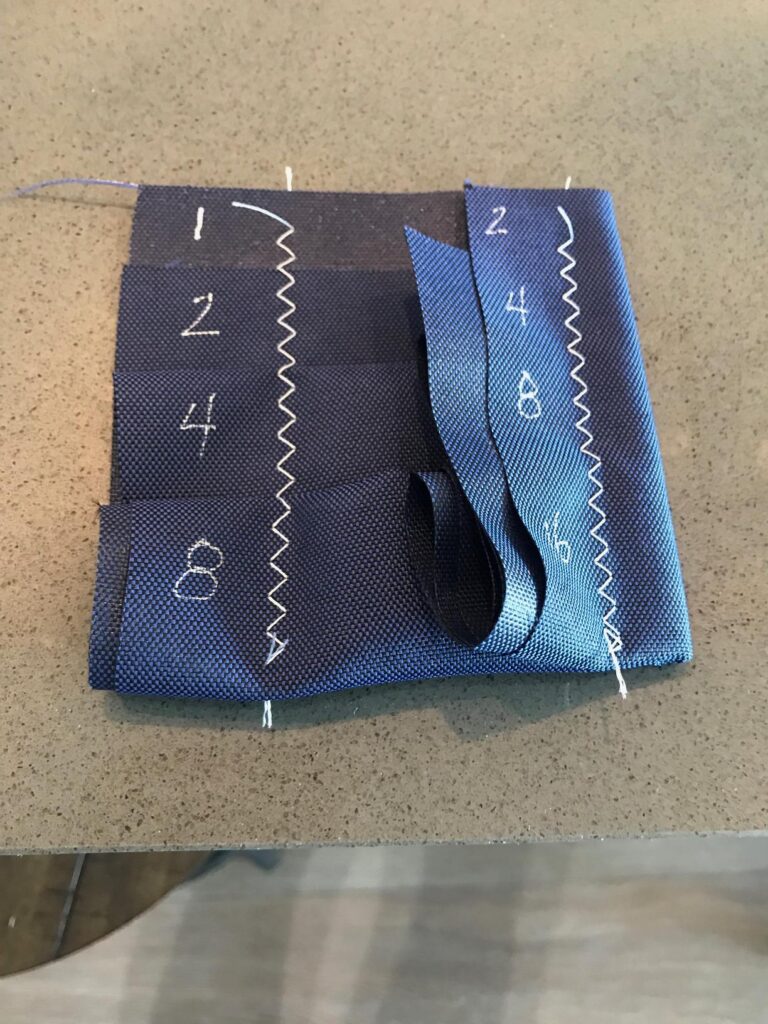
I cranked the presser foot pressure to max. The Singer 4452 heavy mechanical motor bit into all six layers of denim immediately. It maintained a steady, fast pace without lagging, making it a true heavy-duty champion for thick hems.
Despite having the exact same speed rating, this machine struggled on the heavy cross-seams. Even with the presser foot pressure tightly adjusted, the electronic computer brain slowed the needle down to protect its internal motor, occasionally dropping stitches on the thickest folds.
Where this changes is throat space — but maybe not in the direction you’d expect. Both machines have the exact same 6.4-inch throat space (the opening to the right of the needle).
But both machines failed to handle the bulk comfortably. By the time I rolled the quilt layers to the center seam, I had less than 2 inches of room to move the fabric under the needle.
Problem #3: “I’m a Beginner — Will the Computerized One Be Easier, or Will It Confuse Me?”
This is where the two machines genuinely diverge, but maybe not along the lines you’d guess.
The 4452 is fully mechanical: two turn knobs on the front control stitch selection and stitch length, a separate knob on top adjusts stitch width, and a physical lever handles reverse stitching.
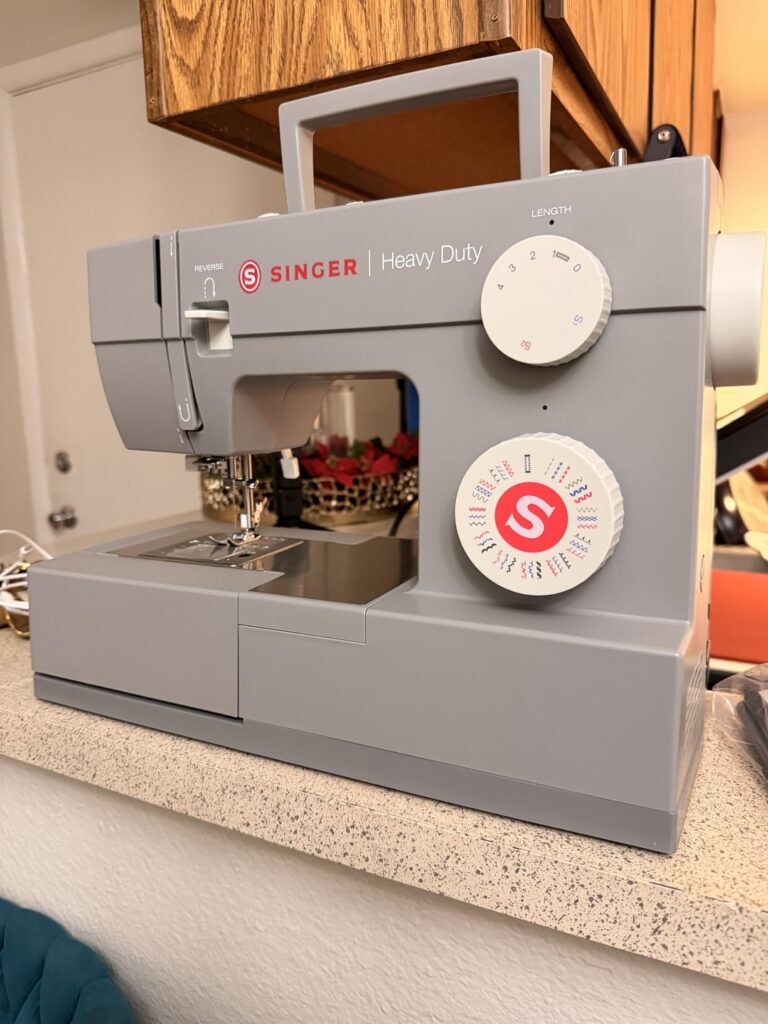
There’s no screen, no menu, no settings to navigate — what you see is what you get, and every control does exactly one thing.
The trade-off is that there’s a small learning curve to understand what each knob does and how they interact, particularly for the reverse-stitch lever and tension dial, which a few reviewers note can take some getting used to for first-time sewers.
The 6800C replaces those knobs with an LCD screen that displays your selected stitch along with recommended settings for length, width, and presser foot — essentially giving you a built-in cheat sheet for each stitch. For a true beginner who doesn’t yet have an intuition for “this fabric needs a longer stitch length,” that guidance can shortcut a lot of trial-and-error.
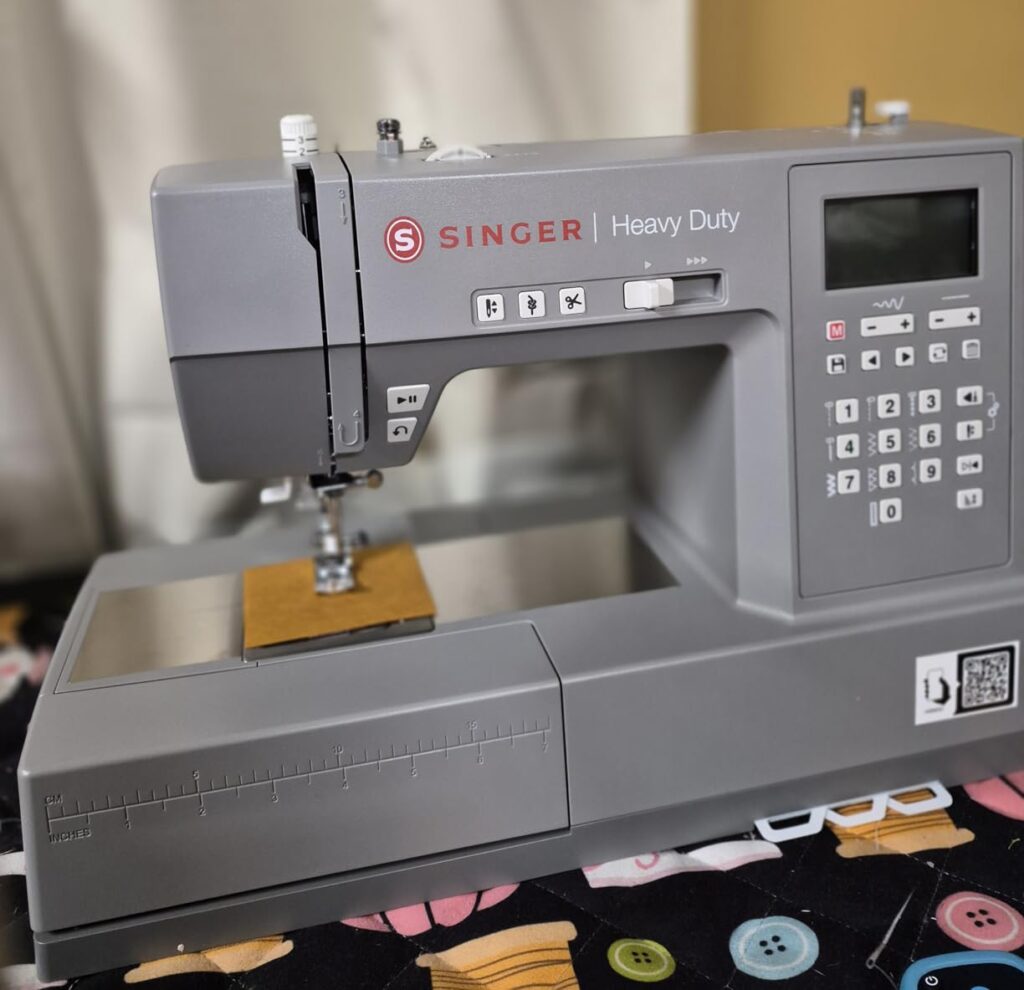
But that same LCD screen, the digital stitch selector, and the electronic thread cutter are the components most likely to be the source of a problem if something goes wrong — and computerized machines are generally less DIY-repairable than mechanical ones. If a knob on the 4452 gets stiff, you can often see and access the mechanism. If the digital display or electronic buttonhole sensor on the 6800C glitches, you’re looking at a manufacturer repair or a technician, not a five-minute fix.
Problem #4: “How Long Will Either of These Actually Last Me?”
This is the question that’s hardest to answer honestly, because “longevity” depends so much on use and care — but there are a few structural things worth knowing that don’t show up in spec tables.
Mechanical machines like the 4452 have a long track record of lasting for decades with basic maintenance — occasional oiling, lint cleaning around the bobbin and feed dogs, and belt checks.
Computerized machines like the 6800C are newer territory in terms of long-term track record, simply because affordable computerized home machines haven’t been around as long. The mechanical core — frame, motor, feed mechanism — should hold up similarly to the 4452’s, since it’s built on the same heavy-duty platform.
But the electronic components (the LCD screen, the digital stitch selector, the auto-cutter sensor) are the parts where failure, if it happens, tends to be less predictable and less user-fixable.
Common troubleshooting threads for the 6800C cover issues like uneven stitch length, jamming or “thunking” noises from the feed dog mechanism, and buttonholes that come out smaller than expected or start with unwanted backward stitches — issues that are often fixable with cleaning and lubrication, but that a 4452 owner is statistically less likely to encounter given the simpler mechanism driving the same stitches.
None of this means the 6800C is fragile — most owners use these machines for years without major issues. But if “how long will this last and how easy will it be to keep alive” is genuinely one of your deciding factors, the honest answer is that the 4452’s simplicity gives it a structural edge, not just a price one. You’re not just buying a cheaper machine; you’re buying a machine with a shorter list of things that can eventually need a repair technician.
Problem #5: “What If I Outgrow Whichever One I Pick?”
Worth thinking through, because it changes how “risky” either purchase feels.
Both machines hold their value reasonably well on the secondhand market — Singer’s Heavy Duty line has strong brand recognition, so a used 4452 or 6800C in good condition typically resells for a meaningful fraction of its original price, which softens the blow if either one turns out not to be the right fit.
If you’re genuinely torn and suspect you’ll eventually want more features, there’s a case for starting with the 4452: it’s the lower financial commitment, it teaches you what you actually use a machine for, and if you later want stitch variety or on-screen guidance, you can sell the 4452 and put the proceeds toward a 6800C — at which point you’d be choosing based on real experience instead of a spec sheet.
The reverse path is rarer. People who start with more features rarely feel the need to “downgrade” to a simpler machine. So if budget is tight right now, the 4452 tends to be the lower-regret starting point regardless of which direction your needs eventually go.
Which Machine Should You Buy?
Choose the Singer 4452 if your priority is reliability, simplicity, and getting full heavy-duty fabric handling without paying for features you’re unlikely to use — especially if this is your first machine, you do mostly practical or functional sewing, or you’d rather have fewer components that could eventually need a repair visit.
Current Price: $314 On Amazon
The no-fuss workhorse. Metal frame, strong motor, cuts through denim like butter. Built to last, nothing fancy to break.
Choose the Singer 6800C if decorative stitching, monogramming, or lettering genuinely matter to your projects, you’d benefit from on-screen guidance while you’re still learning settings, and you’re comfortable with the trade-off that its electronic conveniences — particularly the automatic thread cutter — are also its most commonly reported weak points.
Current Price: $379 On Amazon
More stitches, built-in lettering, and a screen that guides you every step. Great for creative projects and beginners who want extra help.
Final Verdict
If you just want a machine that works without thinking about it, get the 4452 — it does everything most people actually need, and there’s barely anything in it that can break.
If you want extra stitches, lettering, and a screen that helps guide you while you sew, the 6800C is worth the extra money — just know the auto thread cutter is the one part that tends to act up. Simple sewing, simple machine. Fancy sewing, fancy machine. That’s really the whole decision.
Related Articles:
FAQs
Is the 6800C worth $65 more than the 4452?
Only if you’ll actually use the extra stitches, lettering, or screen guidance. Otherwise, no.
Which one is more durable?
The 4452 — fewer electronic parts means fewer things that can fail.
Can the 4452 handle denim and thick fabric?
Yes, just as well as the 6800C. Same motor, same frame.
Is the 6800C good for beginners?
Yes, the screen helps with settings — but the 4452 is just as easy once you learn the knobs.
Does the 6800C have more workspace for quilting?
No. Both have the same 6.4″ throat space.