Current Price: $1199 On Amazon
Best for: free-motion quilting, detail work

Current Price: $899 On Amazon
Best for: bags, garments, multi-layer piecing
Introduction
When I bought these two machines, I thought I made a mistake.
There was a misconception in my head that these two machines are identical.
But when I actually used them side by side the differences shocked me.
Both of these machines are amazing performers and both of these have problems too.
So, you’re also planning to buy any of these machines this article is for you.
Let’s get into the details to know how they perform in real life.
Table of Contents
Quick TL;DR:
Brother PQ1600S: pick it for bags, layered fabric, and slippery material — its pin-feed system does the heavy lifting. Juki TL2010Q: pick it for controlled, detailed free-motion quilting — its speed dial and needle up/down button do the heavy lifting. Both sew a straight stitch only, both hit 1,500 SPM.
At-a-glance: Brother PQ1600s vs Juki TL2010q
| Features | Brother PQ1600S | Juki TL2010Q |
|---|---|---|
| Max sewing speed | 1,500 SPM | 1,500 SPM |
| Speed Control | Foot pedal only | Foot pedal + variable speed dial (200–1,500 SPM) |
| Needle up/down button | No | Yes |
| Feed system | Pin-feed + 4-level feed dog adjustment | Standard feed dogs, drop-feed for free motion |
| Max stitch length | Not spec'd (straight stitch, fixed) | 6mm |
| Stitch type | Straight stitch only | Straight stitch only |
| Knee lifter | Yes, built-in | Yes, included |
| Automatic thread cutter | Yes, push-button | Yes, push-button + pedal-activated |
| Sewing table size | 11.1" x 23.3" | Up to 23" with auxiliary table attached |
| Needle-to-arm space | 5.7" x 8.7" | 8.5" throat (per manufacturer listing) |
| Unit weight | 23.8 lbs | ~37.6–38 lbs |
| Needle type | Standard high-shank | HAx1 (705H) |
| Where To Buy | Check On Amazon | Check On Amazon |
Which One Will Actually Handle What I Sew?
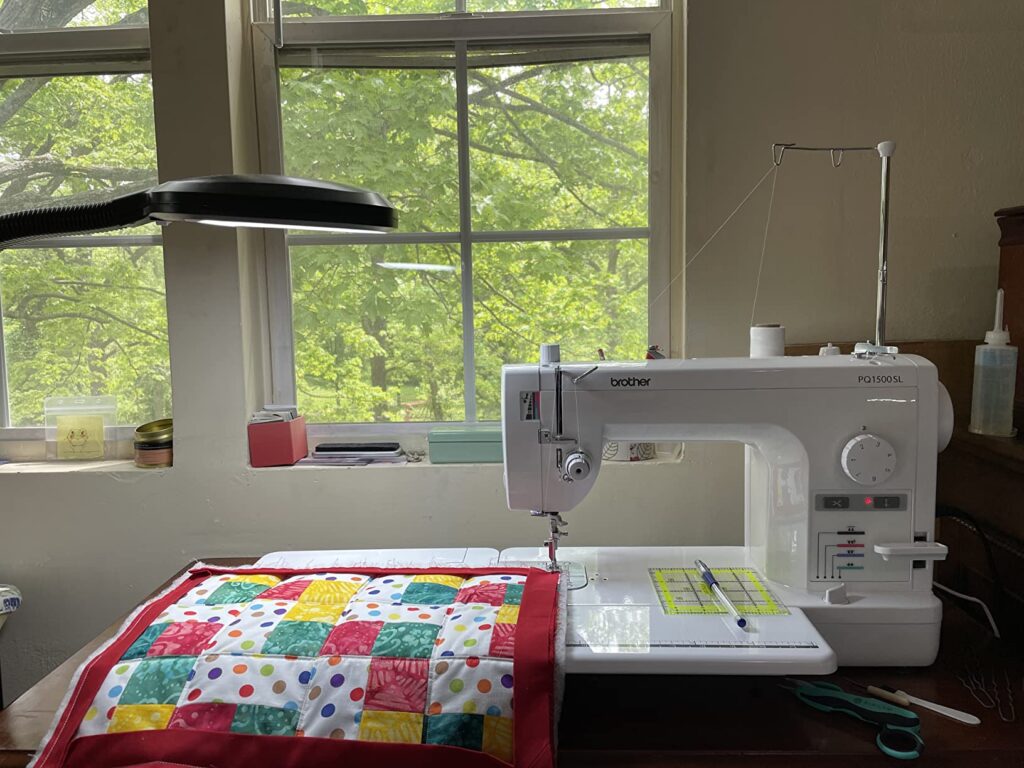
This is the question that matters more than any spec. The two machines are built around genuinely different philosophies, and I figured this out the hard way.
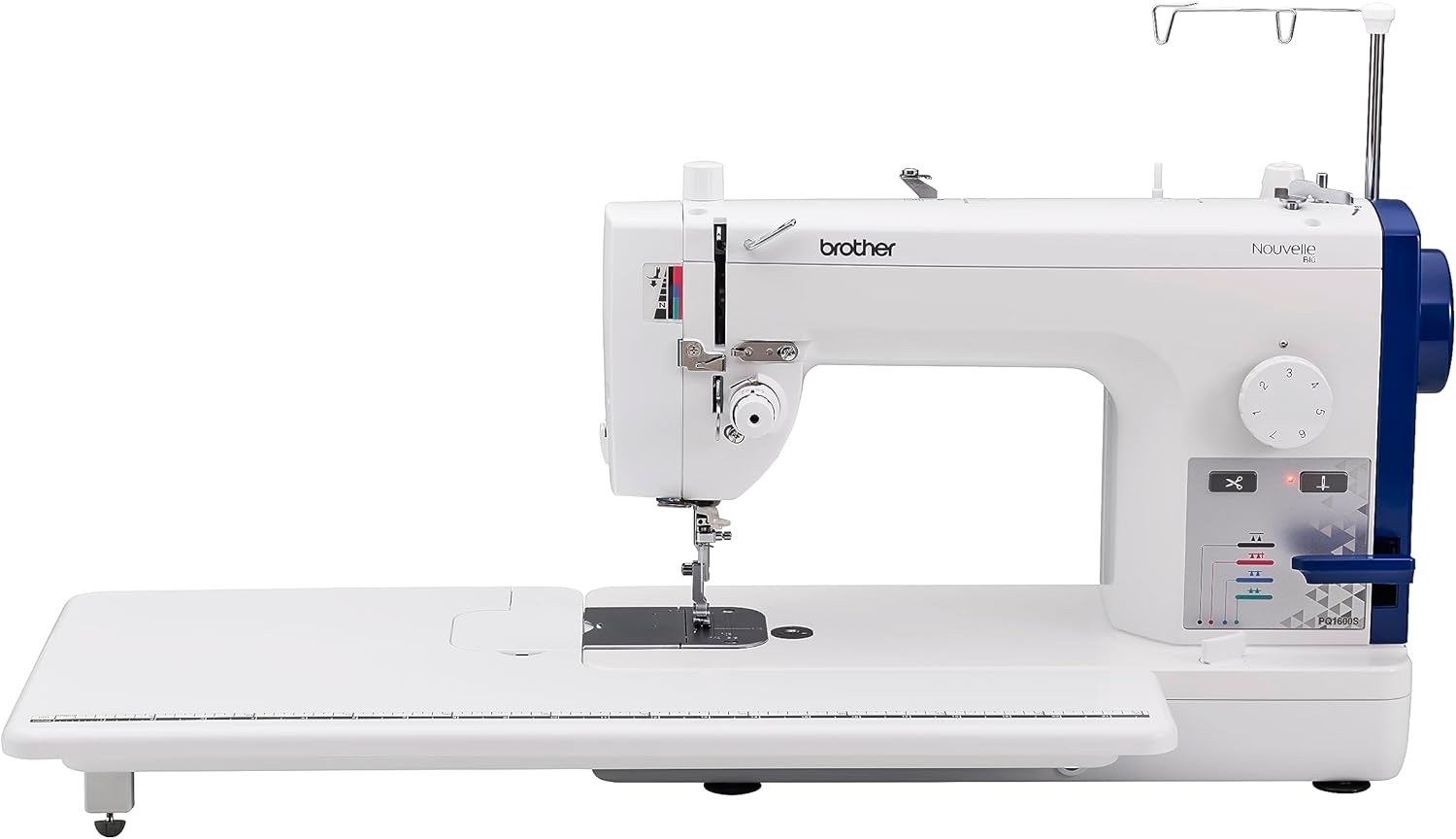
The Brother PQ1600S is built around its pin-feed system. Instead of relying purely on feed dogs, a single pin drops down and drives all fabric layers together. That’s a real advantage on slippery or napped fabric — velvet, vinyl, and multi-layer bags feed through without the top layer creeping ahead of the bottom one. I make a lot of totes bags, work with faux leather, and sew heavy multi-layer projects and this is the feature that actually does the work for me, not the stitch speed number on the box.
Where it struggles: the machine always fights me on free-motion quilting with flannel specifically — tension drifting and stitches shrinking down mid-project, even after checking needle and thread choice. If most of your quilting is free-motion on flannel or minky, that’s worth knowing before you buy, not after.
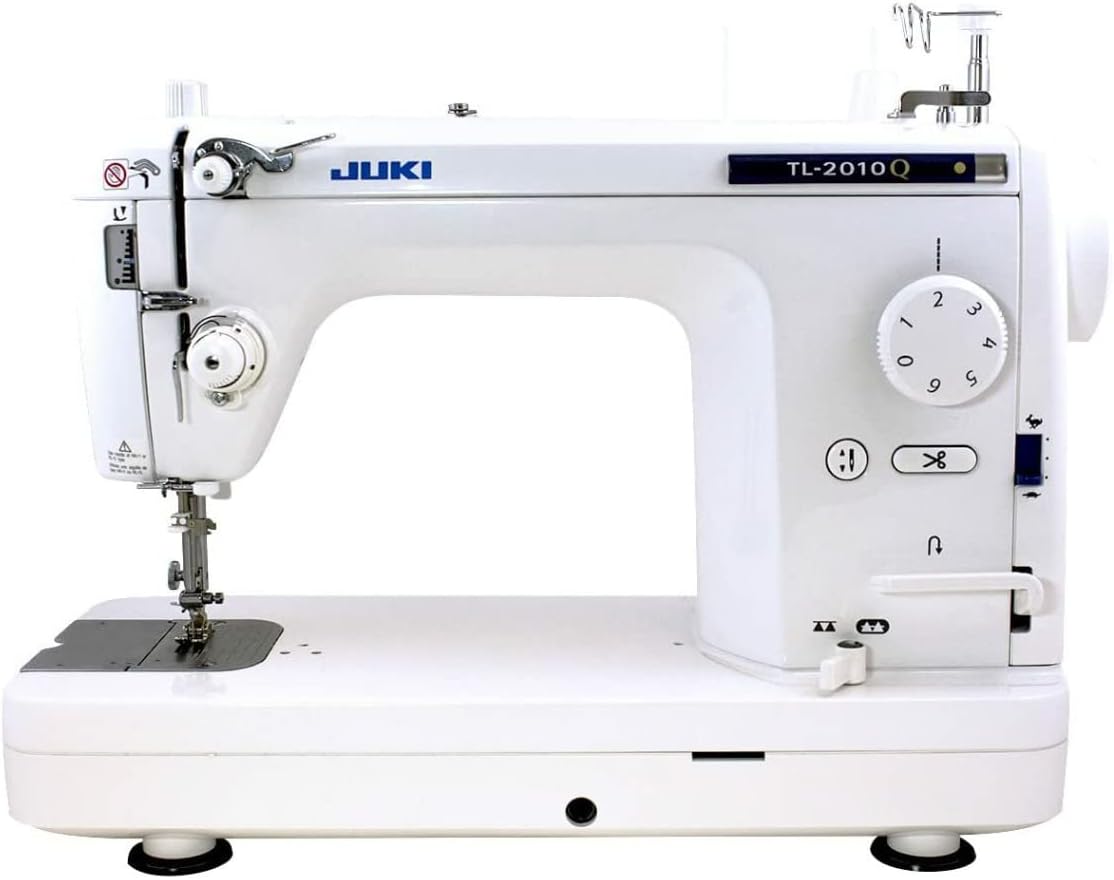
The Juki TL2010Q is built around control. The needle up/down button and true variable speed dial (not just a foot-pedal ceiling) matter most when you’re doing free-motion work and need to slow down for detail or stop precisely mid-seam. This is the feature I’d miss most if I switched machines.
Where it struggles: the included walking foot. It’s a recurring issue. I had to sew a batch of cotton shirts and fond it bunches fabric and leaves faint marks on cotton specifically, and it takes real trial and error with foot pressure to dial in. If your projects lean on the walking foot heavily (garment topstitching over uneven seams, for example), budget time to tune it, or plan to buy a different walking foot foot separately.
The practical read: Brother’s strength is multi-layer, mixed-texture piecing (bags, garments, heavy fabric). Juki’s strength is controlled, detailed free-motion work. Pick based on what you actually make most, not which one “wins” on paper.
Is the Extra Money for the Juki Actually Justified?
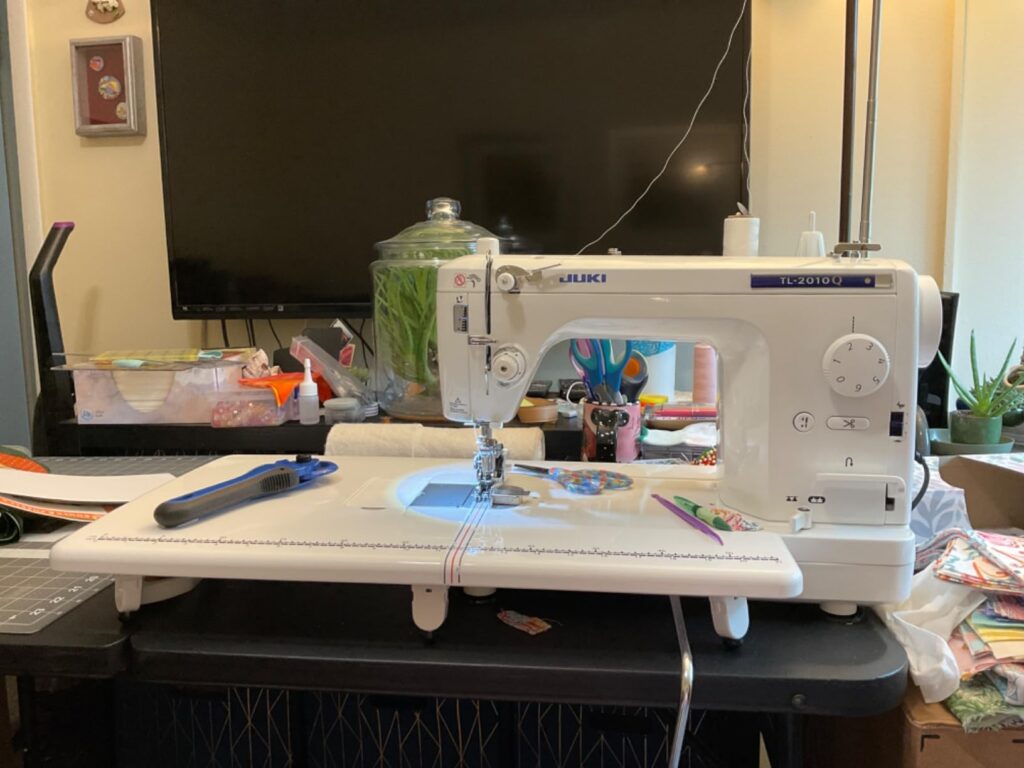
Right now the Brother PQ1600S runs around $899 and the Juki TL2010Q around $1,199 on Amazon — roughly a $300 gap.
Here’s what most articles won’t tell you: this isn’t a temporary pricing quirk. Looking back through years, Juki has priced this machine a few hundred dollars above the comparable Brother consistently since at least the mid-2010s. This isn’t a sale ending soon or a supply issue — it’s where these two machines have always sat relative to each other. So don’t treat the price gap as a “deal to catch.” Treat it as a standing question: is speed control and needle up/down worth $300 to you, permanently?
Where that $300 is going, concretely:
- A needle-position button and true variable speed control (not present on the Brother)
- A widely reported reputation for tension consistency once dialed in
- A more industrial build feel — the TL2010Q is noticeably heavier at roughly 38 lbs
Where the Brother earns its lower price:
- The pin-feed system, which the Juki doesn’t have at all
- A larger sewing table out of the box
- A knee lifter and cone thread stand built in as standard
Neither machine is “the budget option” in a bad way — they’re priced for what they emphasize.
I Don’t Want to Fight This Machine for the Next 5 Years
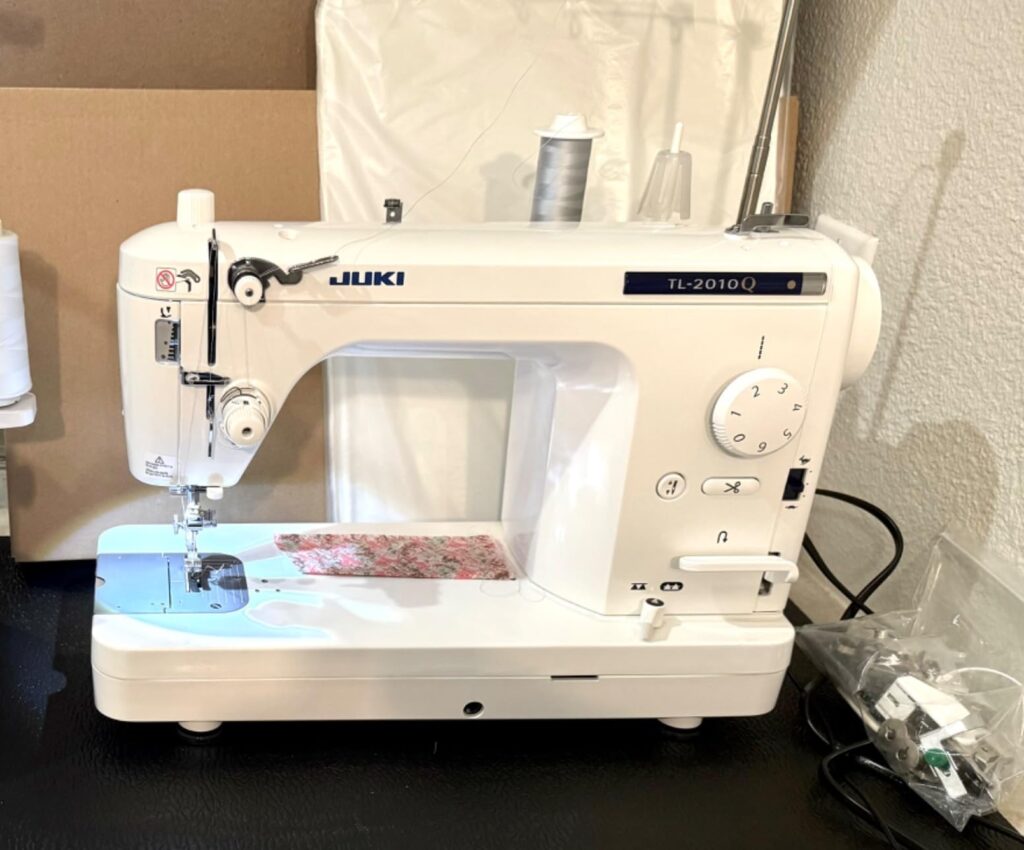
This is the question I asked myself even after months of using both machines.
What showed up repeatedly for the Brother PQ1600S:
- Tension and stitch-length drift over time, sometimes traced back to needle dullness or presser-foot pressure needing adjustment as fabric thickness changes.
- Regular oiling is required — this is a mechanical, non-self-lubricating machine, and skipping maintenance shows up in performance.
What showed up repeatedly for the Juki TL2010Q:
- Occasionally skips stitches that I trace back to the walking foot rather than the machine itself.
- A small number of electrical faults (the machine cutting out mid-seam) — in the cases discussed, Juki’s own repair service resolved it, but it means factoring in potential downtime.
- Needle breakage when I was sewing the denim jacket for my son, generally tied to needle type/fabric mismatch rather than a design flaw.
Neither machine has a dealbreaker defect. What differs is the type of upkeep: the Brother asks for more hands-on tension babysitting; the Juki asks for more patience getting the walking foot dialed in and, occasionally, a repair-service interaction.
The Decision, Without the Fluff
Choose the Brother PQ1600S if:
Current Price: $899 On Amazon
Best for: bags, garments, multi-layer piecing
- You work with multiple fabric layers, slippery fabrics, or heavy mixed-material projects (bags, upholstery, garments)
- You want a larger work table without buying an add-on
- You’re comfortable doing routine maintenance (oiling, tension checks) yourself
- The $300 saved matters more to you than needle-position control
Choose the Juki TL2010Q if:
Current Price: $1199 On Amazon
Best for: free-motion quilting, detail work
- Free-motion quilting is a significant part of what you do, and precise speed control matters
- You want the needle up/down button — owners who have it say they wouldn’t go back
- You’re willing to spend time tuning the walking foot rather than expecting it to work out of the box
- You’d rather pay more upfront for a machine with over a decade of consistent owner track record
If you’re still torn: the honest tiebreaker isn’t stitch speed (both hit 1,500 SPM) — it’s whether your projects are piecing/multi-layer-heavy (Brother’s pin feed wins) or free-motion/detail-heavy (Juki’s speed control wins).
Final Verdict
Stop thinking of this as Brand A vs Brand B. Think of it as a question about your hands. Some sewists like to feel every layer moving under the needle and adjust as they go.
Others want the machine to hold a steady pace so their hands can focus on guiding the fabric, not fighting the pedal.
The Brother rewards the first kind of sewist.
The Juki rewards the second. Neither one is the “safe” choice — the safe choice is the one that matches how you already work, not the one with the higher price tag or the longer feature list.
Buy for your hands, not for the spec sheet, and you won’t second-guess this purchase a year from now.
Related Articles:
FAQs
Q1. Is the Brother PQ1600S the same as the PQ1500SL?
No. It’s the direct successor, with a built-in (not removable) knee lifter, a dedicated tension dial, and a larger table. If a comparison you’re reading doesn’t mention these differences, it’s likely reviewing the older model.
Q2. Does the Juki TL2010Q need a walking foot for quilting?
It comes with one, but plan on adjusting foot pressure to avoid the bunching and skipped-stitch issues some owners report — it’s not usually plug-and-play out of the box.
Q3. Which machine is better for garment sewing versus quilting?
The Brother’s pin-feed system tends to be more useful for garment and bag construction with mixed fabric layers. The Juki’s speed control and needle-position button tend to matter more for free-motion quilting.
Q4. Is the price difference likely to change?
Based on years of pricing history between these two machines, the Juki has consistently sat a few hundred dollars above the Brother — this looks like standard positioning rather than a temporary gap.