Current Price: $269 On Amazon
165 built-in stitches, an automatic needle threader, and a wide quilting table included in the box — not sold separately like on most machines this price. Backed by Brother's 25-year limited warranty. Ships with everything needed to start sewing same-day: bobbins, needle set, hard case, and manual included.

Introduction
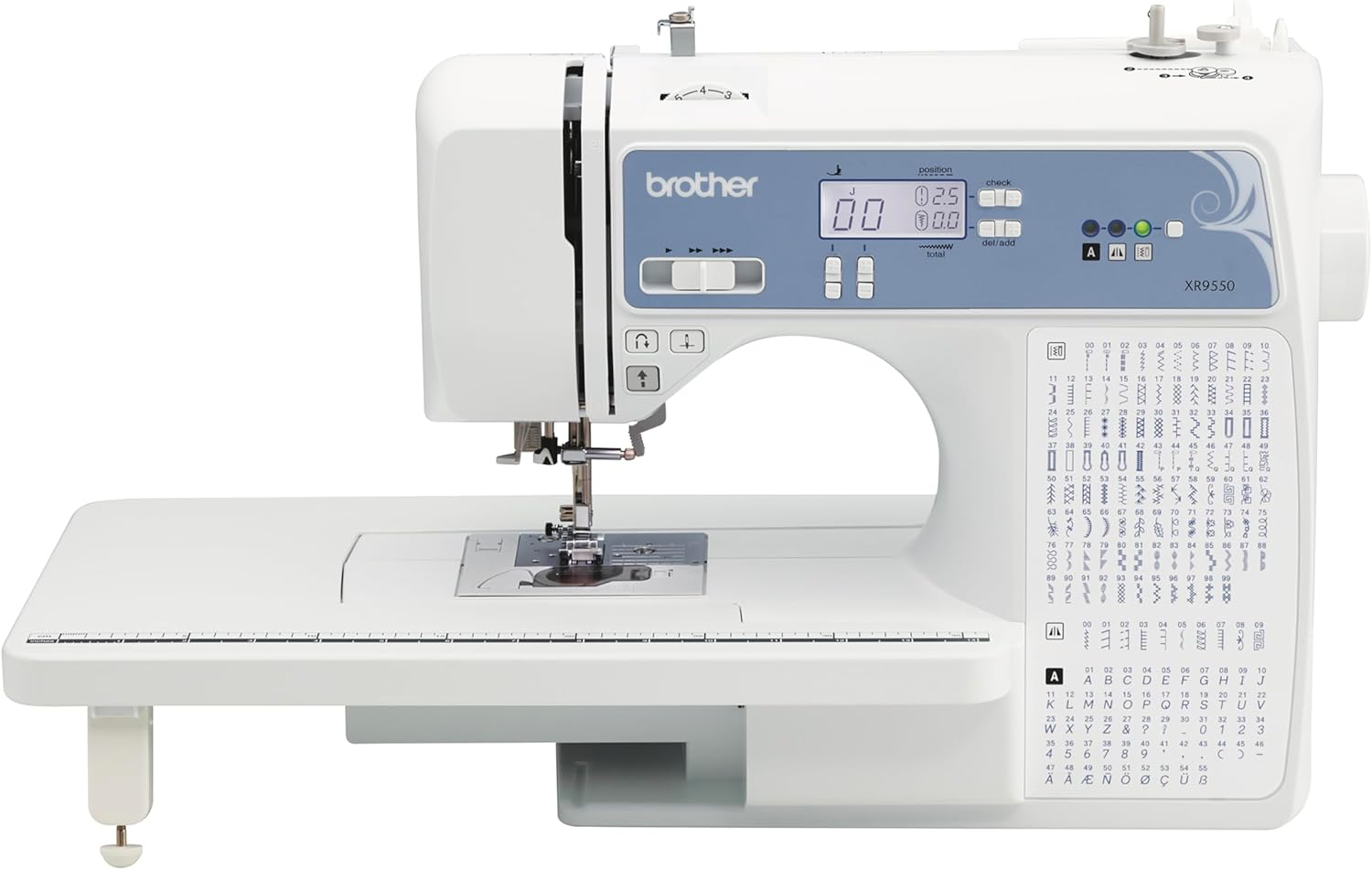
Brother XR9550 is no doubt one of the best sewing + quilting machines I own.
Even after months of regular use the machine proved itself.
But, it has some flaws too.
So, if you’re also considering this machine for your daily projects I suggest read this article to the end.
You’ll know exactly either you should buy this one of skip.
Table of Contents
Quick Summary
- It’s needle-position-sensitive. Press needle up/down twice first.
- Use plastic SA156 Class 15 bobbins only, or risk hook race wear.
- Test swatch first, especially on the largest buttonhole size.
- For hobbyist/occasional quilting — not industrial daily use.
- 165 total stitches; 110 are utility/decorative, 55 are alphanumeric.
- Better if you want more stitches and lettering. CS7000X if you want fewer decisions as a first-time buyer.
At-a-glance: Brother XR9550
| Features | Details |
|---|---|
| Built-in Stitches | 165 total (110 utility/decorative/heirloom + 55 alphanumeric) |
| Buttonhole Styles | 8, one-step auto-size |
| Weight | 10.14 lbs |
| Dimensions | 16.26" x 7.01" x 12.48" |
| Bobbin System | Quick-Set drop-in top bobbin (SA156 Class 15, plastic only) |
| Needle Threading | Advanced automatic threading system |
| Display | Backlit LCD screen |
| Lighting | LED work area |
| Presser Feet Included | 8 (buttonhole, blind hem, zipper, overcasting, monogramming, zigzag, spring-action quilting, button sewing) |
| Where To Buy | Check On Amazon |
The needle threader is supposed to save me time — will it actually work?
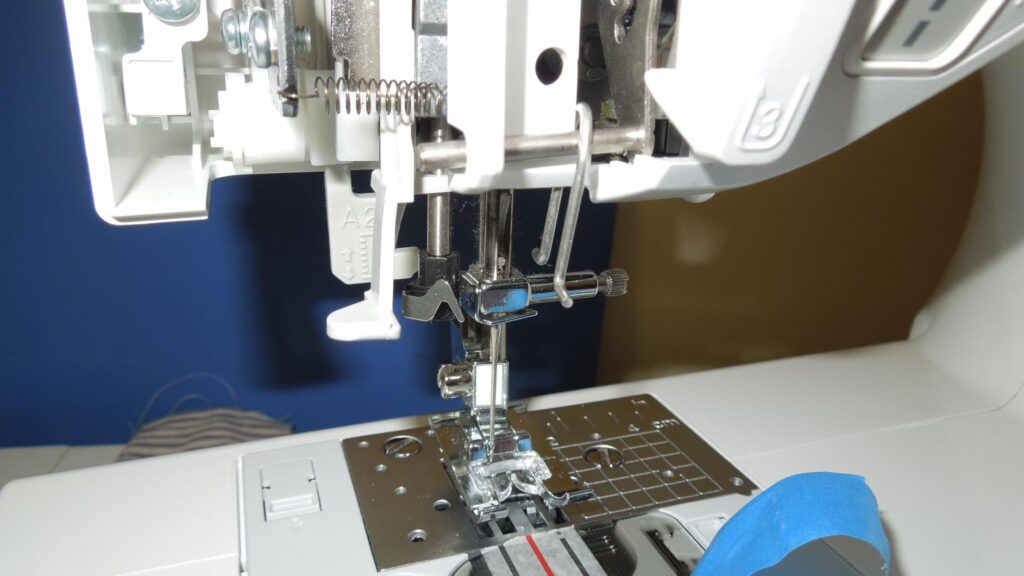
This was the single most repeated issue I faced when using the needle threader. The needle isn’t in its highest position when the threader is engaged. The automatic threader is mechanically timed to that exact needle height, and if it’s even slightly off, the hook won’t catch the thread and the whole mechanism jams or misses.
The fix that actually works: press the needle up/down button twice before engaging the threader, every time, until it becomes automatic.
What this means for you: if you’re buying this machine specifically because a threader promises to solve your eyesight or dexterity issues, know that it has a learning curve, not a guarantee. It’s not broken — it’s timing-sensitive.
Can I use the bobbins I already own?
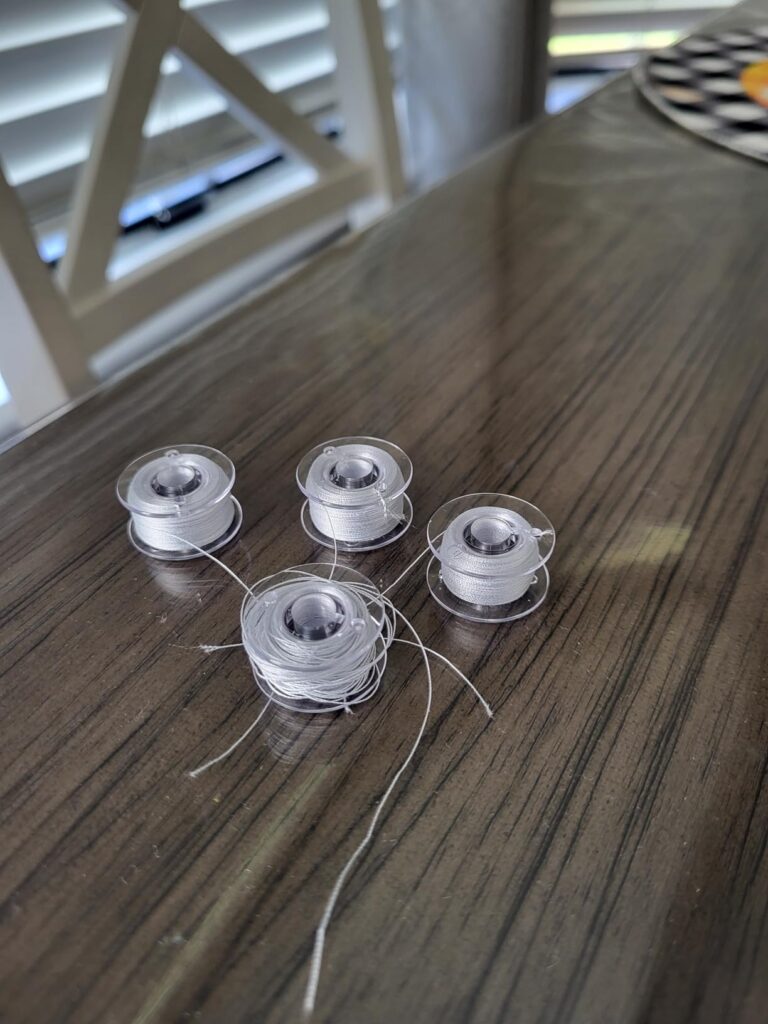
Here’s a durability issue, not a convenience one that I literally found in the first few minutes after setting this up. I used my metal bobbin (which everyone would do at first attempt) and the machine did not accept it. The XR9550 is built for SA156 Class 15 plastic bobbins specifically.
Metal bobbins — which a lot of people default to out of habit from older machines — don’t just fit poorly; they can wear down or damage the hook race over time, because the plastic bobbin is sized and weighted for this machine’s tension system.
The fix: buy a multi-pack of the correct plastic bobbins before you start your first project, not after something goes wrong. This is a five-dollar problem to prevent and an expensive one to fix if the hook race gets damaged.
Will my buttonholes actually come out clean?
This is where the machine’s reputation gets a little uneven. When I was finishing a silk shirt for my husband and the machine ruined it. The buttonhole stitching started developing tension inconsistency. Tighter at the top, looser at the bottom — particularly on the largest buttonhole setting used on slippery or delicate materials like silk. On sturdier fabrics like cotton, this isn’t an issue.
The fix: always run a test buttonhole on a fabric scrap before committing to the final piece, and size buttonholes conservatively on delicate fabrics rather than maxing out the setting. This is standard practice for any computerized machine, but it matters more here specifically on slippery fabrics.
What this means for you: if your projects are mostly garments in stable fabrics (cotton, quilting cotton, denim), this is a non-issue. If you sew a lot of silk or other slippery fabric with large buttonholes, budget extra test time.
Is this actually a quilting machine, or is that just marketing?
Legitimately yes, within limits. The included wide extension table and drop-feed mechanism for free-motion work are the two things that make this more than a “sewing machine that also does quilting” — they’re accessories some competing machines in this price range charge extra for. The feed system is rated to handle medium-to-thick fabrics like denim and upholstery-weight material without issue, provided the correct needle is used.
Where it actually stops: this is not an industrial machine. Daily heavy-duty work — leather, multiple layers of canvas — will strain the motor over time. Occasional thick seams (jean hems, quilt binding) are fine; that’s a different workload than daily heavy fabric.
The practical takeaway: if quilting is an occasional hobby alongside general sewing, the included table and drop-feed genuinely deliver more value than the price suggests. If you need a dedicated heavy-duty or industrial machine, this isn’t that, and no amount of technique will change that.
Is it 110 stitches or 165?
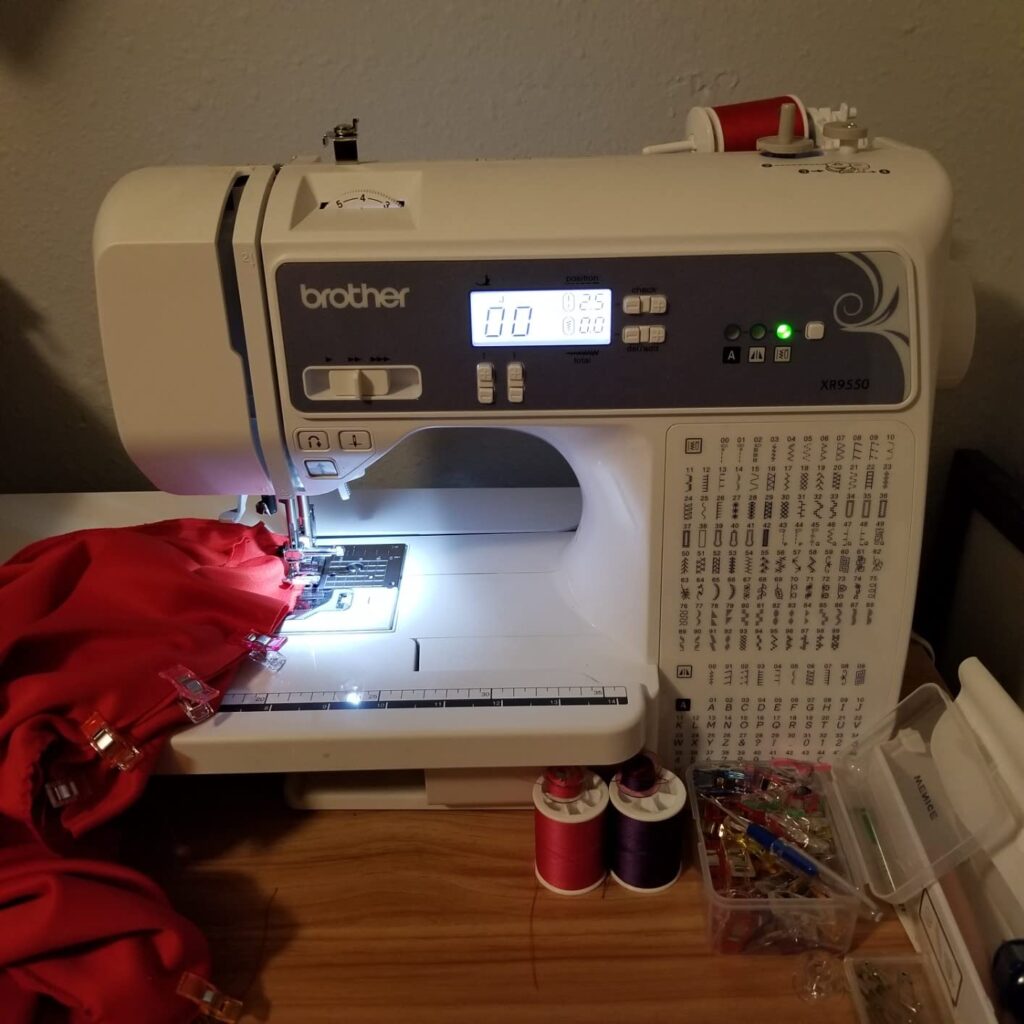
Lettering and monogramming was the only reason why I considered this machine.
The 165 figure is the full built-in stitch count. Within that, 110 are utility, decorative, and heirloom stitches (including the 8 one-step buttonhole styles), and the remaining 55 are alphanumeric stitches for basic lettering and monogramming.
Articles quoting “110” are describing only the non-lettering subset and mislabeling it as the total.
At ~$270, am I actually getting a good deal — or is a different Brother model the smarter buy?”
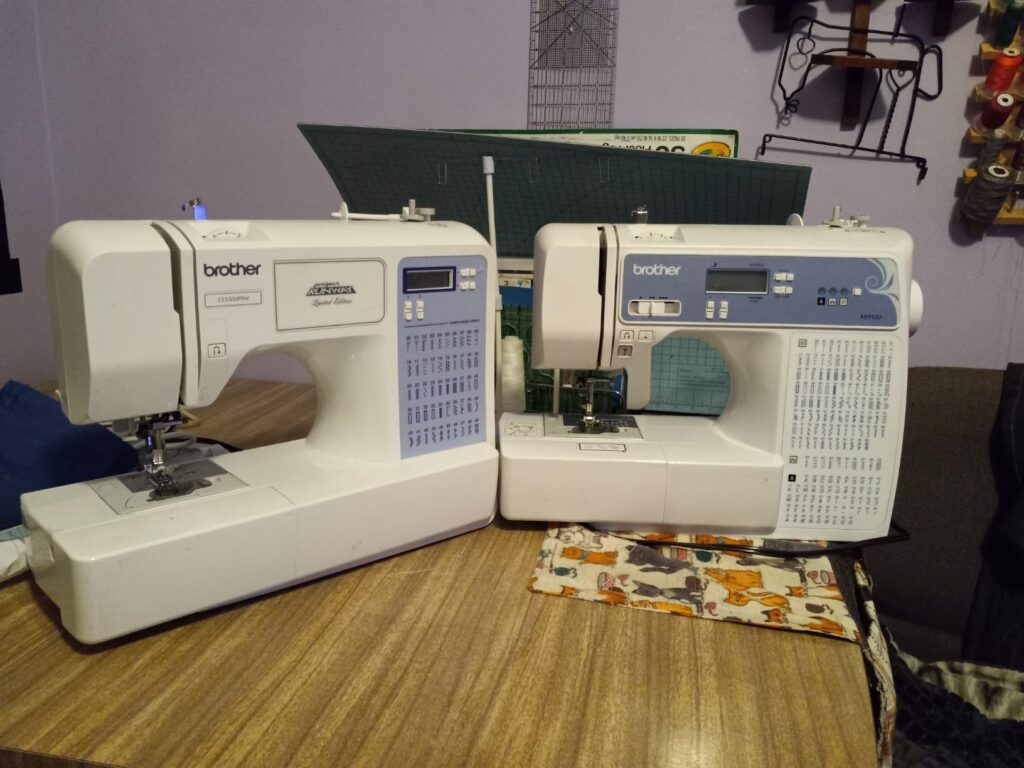
This is the comparison people actually want, and it’s usually reduced to a generic spec table. Here’s the real trade-off:
- Vs. the Brother CS7000X: the CS7000X has fewer built-in stitches (70) and no alphanumeric lettering, but is often positioned as the more streamlined, less overwhelming option for an absolute first-time buyer. If you know you want more stitch variety and lettering capability, the XR9550’s stitch library is the better value at a similar price point.
- Vs. the Brother HC1850: similar stitch count territory, but the XR9550’s included wide table and quilting-focused accessories give it an edge specifically for quilting use — the HC1850 doesn’t bundle the same quilting-oriented extras standard.
The actual decision framework: this isn’t “which is objectively best” — it’s which specific trade-off matches your project mix. More stitches and lettering + quilting accessories included → XR9550. Simpler, fewer-decision-points machine for a total beginner → CS7000X. Neither is wrong; they’re solving different problems.
Current Price: $269 On Amazon
165 built-in stitches, an automatic needle threader, and a wide quilting table included in the box — not sold separately like on most machines this price. Backed by Brother's 25-year limited warranty. Ships with everything needed to start sewing same-day: bobbins, needle set, hard case, and manual included.
Bottom Line
The XR9550 isn’t a machine with hidden defects — it’s a machine with predictable friction points that most reviews either skip or bury in a generic cons bullet.
The needle threader and bobbin-type issue are the two that catch people off guard, and both are fully avoidable once you know they exist.
If your sewing involves regular quilting, lettering, or a mix of fabric weights, the trade-offs land in your favor.
If you need daily heavy-duty capacity, look elsewhere — no amount of correct bobbin use changes what the motor is built for.
Related Articles:
FAQs
Can the Brother XR9550 do hoop embroidery?
No. The 55 alphanumeric stitches allow in-line lettering and monogramming, but this is a sewing and quilting machine, not a dedicated embroidery machine — there’s no embroidery hoop or design software involved.
Does it come with a walking foot?
Most current bundles include one. It’s the accessory that keeps multiple fabric layers feeding evenly during quilting, so check the specific listing before buying if that’s a must-have.
Is the frame metal or plastic?
Internal frame is metal for structural stability; the exterior housing is lightweight plastic, which is why the machine stays under 11 lbs despite the internal metal components.
Is $269 actually competitive?
Based on current retailer listings, that price sits in line with — and sometimes slightly below — comparably specced Brother computerized machines in this stitch-count range. Treat any specific number you see as a snapshot, since Amazon pricing shifts.