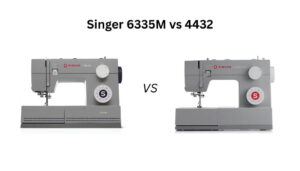
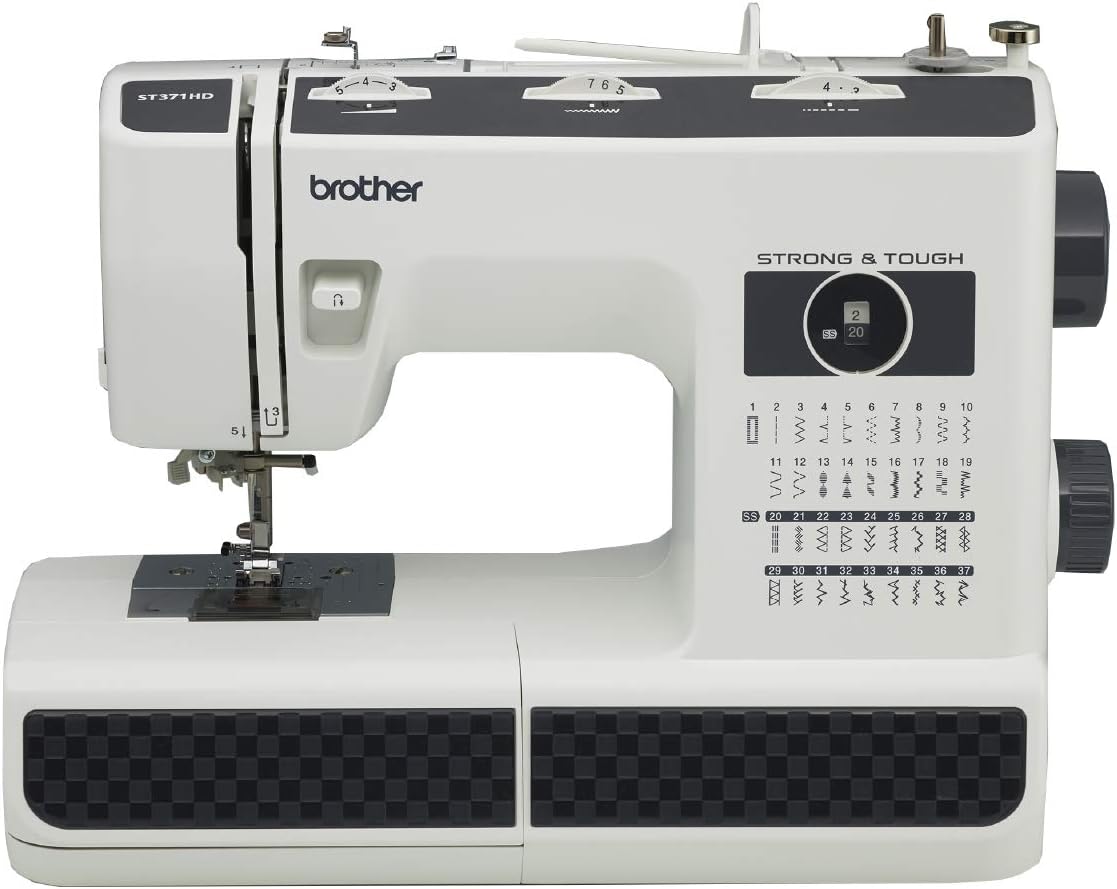
Current Price: $239 On Amazon
110 stitch applications, 60% stronger motor, 1,100 stitches per minute, full metal frame. Built for speed and power through denim, canvas, and multiple thick layers.
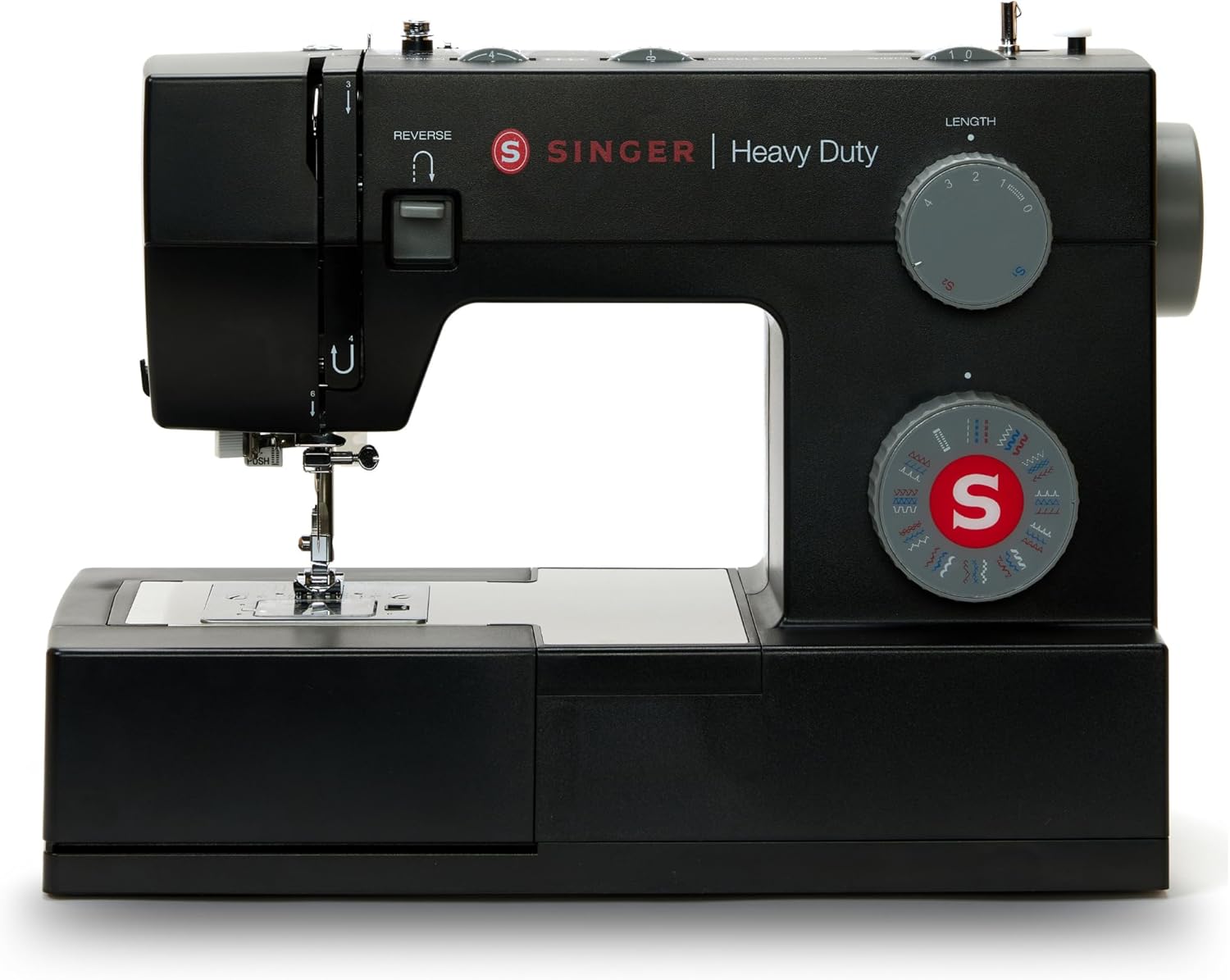

Current Price: $213 On Amazon
37 built-in stitches, metal needle plate, 6 sewing feet included, automatic needle threader. A quiet, beginner-friendly machine built for everyday sewing and light-to-mid heavy fabrics.
Introduction
I put these two machines through the same six weeks I put the last pair through — not swatches on a table, but actual projects with actual deadlines, because that’s the only way the real differences show up. And with this pair, the differences showed up fast. Within the first two projects, one machine had already made me redo a buttonhole three times, and the other had jammed its bobbin mid-seam on something that shouldn’t have been difficult at all.
Table of Contents
Quick TL;DR:
Brother ST371HD is $26 cheaper right now, quieter, and has more stitch variety — but the needle threader takes a minute to get used to. Singer 4432 sews faster and punches through thick layers better — but watch the bobbin case over time. Check today’s price before you decide; it might flip again.
At-a-glance: Brother ST371HD vs Singer 4432
| Features | Brother ST371HD | Singer 4432 |
|---|---|---|
| Stitches | 37 | 32 |
| Speed | 800 SPM | 1,100 SPM |
| Noise | Quieter | Louder |
| Common gripe | Needle threader takes practice | Bobbin case can jam over time |
| Best For | Varied projects, lighter fabrics, beginners | Heavy layers, denim, canvas |
| Where To Buy | Check On Amazon | Check On Amazon |
The Real Question Isn’t “Which Has More Stitches” — It’s “Which Flaw Can You Live With”
Both of these are heavy-duty, mechanical, no-frills machines aimed at the same buyer: someone who wants to sew denim, canvas, and thicker fabrics without babying a delicate machine. Neither one is going to wow you with computerized features. So the decision isn’t really about stitch count or speed on paper — it’s about which machine’s specific weak point you can work around, because both of them have one, and neither is advertised anywhere.
The Buttonholes Aren’t Equally Reliable, and That’s Not on Any Spec Sheet
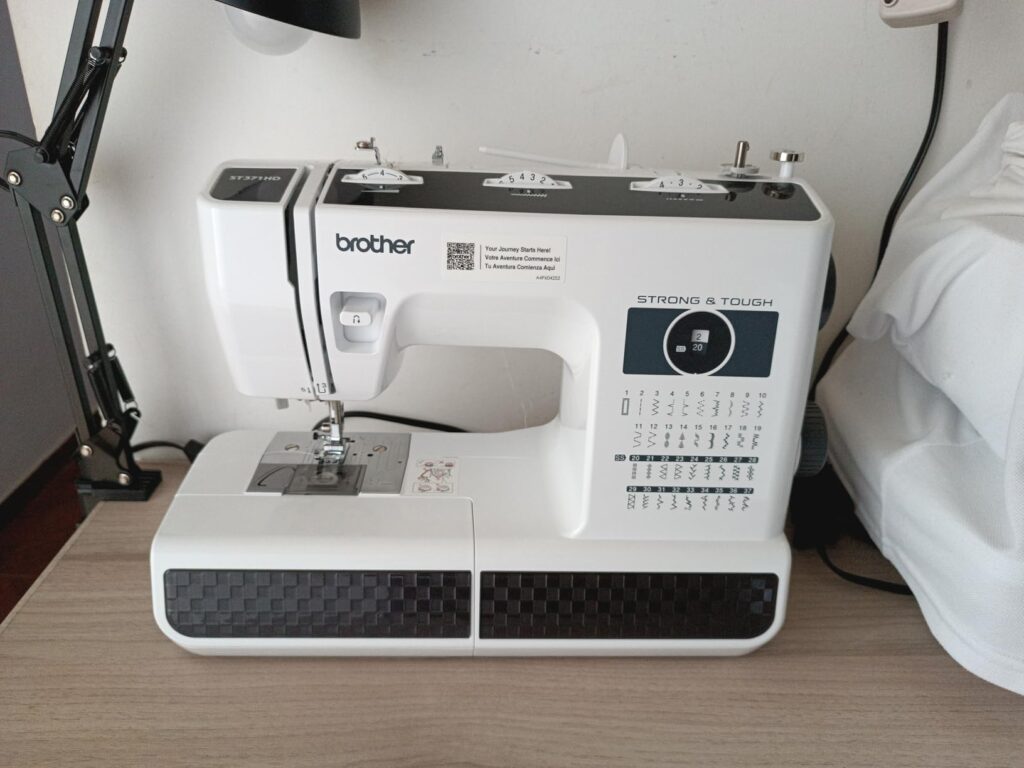
I found this out the hard way on a set of pillowcases with button closures — a simple project, four buttonholes per pillowcase, nothing that should have taken more than twenty minutes total.
On the ST371HD, the first buttonhole came out uneven, with the stitch density bunching slightly on one side. I assumed it was fabric drag and tried again with a stabilizer underneath. Same result — noticeably inconsistent spacing compared to the rest of the machine’s stitch quality, which had been fine on straight seams. I went looking to see if this was a known thing, and it turns out it is: this machine ships with only one buttonhole style, and it’s a recurring complaint that the buttonhole quality specifically doesn’t match the rest of the machine’s performance. Once I knew that, I compensated by slowing down and manually guiding the fabric through the buttonhole stitch instead of trusting the automatic function to do it cleanly — which worked, but that’s an extra step you shouldn’t need on a “heavy duty” machine built for garment and repair work.
The Singer 4432, on the same project, ran its 1-step buttonhole function and produced four clean, evenly spaced buttonholes without any adjustment from me. I didn’t expect much of a difference here going in — a buttonhole function felt like the kind of thing that would just work on any decent machine — but this was the first moment in testing where one machine clearly outperformed the other on something a lot of buyers will actually use regularly: shirts, pillowcases, duvet covers, anything with a button closure.
If your projects involve buttonholes with any regularity, this is worth knowing before you buy, not after your third uneven one.
The ST371HD’s Straight Stitch Has a Real, Fabric-Specific Flaw
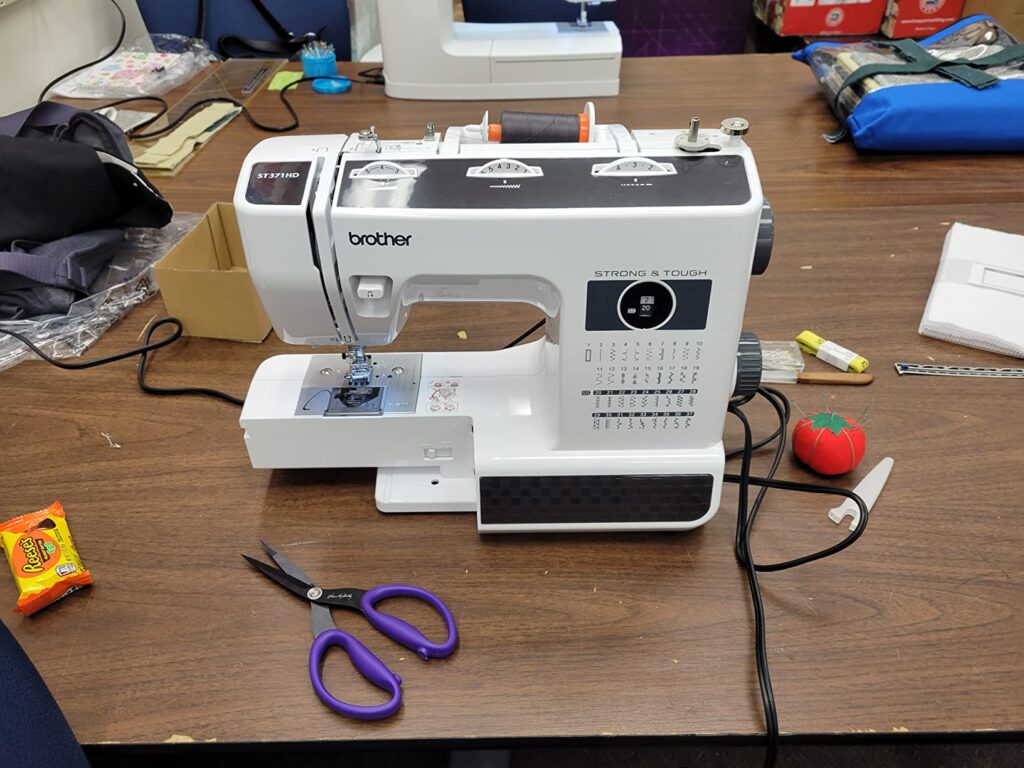
I used this on multiple layers of fabrics I actually use: mid-weight quilting cotton, canvas tote fabric, and a stretch jersey knit remnant. On the quilting cotton and canvas, I saw a slight but visible pucker along longer straight seams, the kind that shows up more once you press the seam open. It wasn’t dramatic, and it didn’t happen on shorter seams, but on a longer tote bag side seam it was noticeable enough that I went back and re-pressed it twice trying to get it to lie flat. On the jersey knit, the stitch was genuinely clean — better than I expected, and it matched what the independent testing found.
The Singer 4432 didn’t show this pattern on any of the same three fabrics. Straight seams on canvas and quilting cotton came out flat and even without extra pressing.
Practical takeaway: if your projects are mostly knits — t-shirts, stretchy costumes, athletic wear — the ST371HD’s weak spot barely matters, because that’s exactly where it performs best. If you’re doing woven fabric work with longer seams — bags, home décor, garment construction — this is a real, fabric-specific limitation worth factoring in.
The Singer’s Bobbin Area Jammed on Me Mid-Project, and It Wasn’t a One-Off
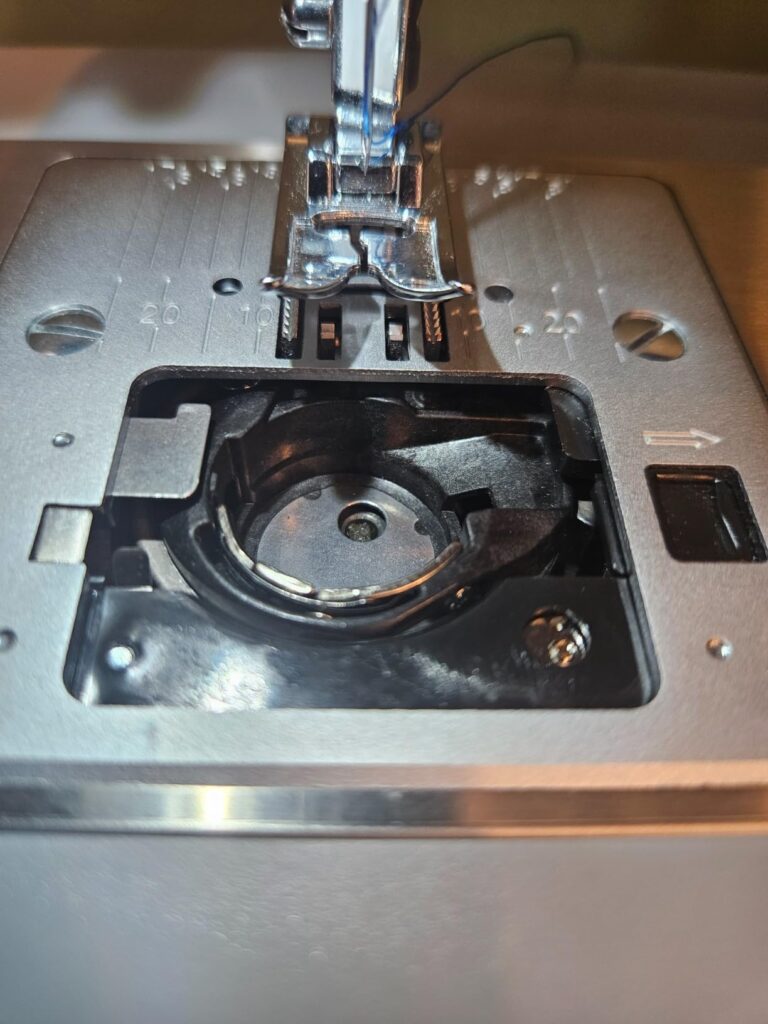
This happened on a tote bag lining, of all things — not a heavy fabric, not multiple layers, just a straightforward straight seam. The machine caught mid-stitch, the thread bunched up underneath in a dense knot, and I had to stop, pull the fabric out, clear the bobbin area, and rethread from scratch. I assumed I’d wound the bobbin wrong and tried again carefully. It happened a second time about a week later, on an unrelated project.
It’s not constant — most of my sewing on the 4432 was jam-free, including the buttonhole project above — but it happened often enough over six weeks that I started doing a visual check of the bobbin area before starting anything I couldn’t afford to redo. If you go with the Singer, that’s a habit worth building early rather than discovering the hard way on something with a deadline.
The Flaw Neither Machine Advertises: You’ll Need Your Own Light Source
This one isn’t a point in either machine’s favor or against it — it’s a shared blind spot. Both machines’ built-in work lights are dim enough that I ended up clipping a small desk lamp to my sewing table for anything requiring precision, like guiding fabric through a buttonhole or following a marked seam line. The light casts a shadow and isn’t bright enough to be a sole light source. Neither machine solves this. If you’re buying either one, budget five minutes and a cheap clip lamp before your first evening project, because you’ll want it regardless of which machine comes home with you.
What Actually Changes When You’re Sewing a Batch, Not a Single Project
The Singer’s higher stitch speed sounds like a marketing number until you’re making multiples. I sewed a batch of eight identical tote bags — four on each machine — timing myself loosely just to see if the speed difference was noticeable in practice, not just on a spec sheet.
It was. The Singer’s faster top speed (1,100 stitches per minute) meant longer straight seams went by noticeably quicker, and over four bags that added up to real time saved — not dramatic, but enough that I’d feel it over a full afternoon of batch sewing. The ST371HD’s speed (800 stitches per minute) felt perfectly fine for a single project, but slower and more deliberate across repeated identical seams. If you’re doing craft fair inventory, gift batches, or anything repetitive, the Singer’s speed advantage is one of the few spec-sheet numbers that actually translated into a real difference at my sewing table.
Threading and Working the Corners
Both machines have needle threaders, but they’re not equivalent in practice. The Singer’s threader is a fully automatic mechanism — hook the thread, pull the lever, done, consistently, every time I used it. The ST371HD’s threader is semi-automatic, meaning it guides the thread partway but still needs a manual finishing step. It wasn’t difficult once I got used to the motion, but it’s an extra beat every single time you rethread, and if you’re someone who breaks thread often on heavier fabric, that adds up across a project.
The other thing I missed on the ST371HD, specifically while topstitching around corners on the tote bags, was a needle up/down button. Without it, pivoting cleanly at a corner means manually turning the handwheel to make sure the needle is exactly where you want it before you lift the presser foot — a small habit to build, but one more manual step than the Singer required for the same motion.
Build, Noise, and Handling Heavier Fabric
Both machines use a metal interior frame, and both felt solid and stable on the table — no flexing or shifting during heavier fabric work, unlike lighter plastic-bodied machines I’ve used before. Where they differ is noise: the Singer runs noticeably louder at higher speeds. I noticed it most while running the machine at full speed on longer seams. The ST371HD stayed quieter throughout, which matters if you’re sewing somewhere noise-sensitive, like a shared living space in the evening.
On genuinely heavy material — I ran both through a folded canvas edge, roughly six layers where a tote bag base meets its sides — neither machine stalled or skipped, though the ST371HD needed a slightly slower, steadier hand to get through cleanly without the same puckering issue mentioned earlier.
First Impressions: Unboxing and Setting Up Both Machines
I set both machines up back to back the same afternoon, threading each from scratch without referring to the manual first, since that’s realistically how most people start with a new machine.
The ST371HD’s built-in carrying handle made it noticeably easier to move from the box to my sewing table one-handed — a small thing, but I appreciated it immediately, especially knowing I’d be switching it between my table and a storage shelf between sessions. The included accessory pouch held six sewing feet, extra bobbins, a spare spool pin, and a screwdriver, everything organized and easy to find rather than loose in the box.
The Singer’s accessory set was comparable — general purpose, zipper, buttonhole, and button-sewing feet, plus an edge/quilting guide, needles, bobbins, and a soft dust cover — but it didn’t include a carrying handle, so moving it required a two-handed grip under the base each time. Not a dealbreaker, but if you’re tight on space and plan to store your machine between projects rather than leaving it out permanently, that’s a real day-to-day difference.
Winding the first bobbin went smoothly on both machines. The Singer’s top drop-in bobbin let me see at a glance how much thread was left mid-project, which came in handy on the tote bag batch — I caught a bobbin running low before it ran out mid-seam, rather than after. The ST371HD’s bobbin system is similarly a top-load, jam-resistant design, and I didn’t run into any winding issues with it directly, separate from the buttonhole and stitch-quality points already covered.
Adjustable Pressure and Handling a Genuine Mix of Fabric Weights
One feature I didn’t expect to matter as much as it did: the Singer 4432’s adjustable presser foot pressure. I tested this specifically by sewing a lightweight chiffon scarf hem immediately after a canvas tote seam, without changing any other settings besides the pressure dial. The chiffon fed through cleanly without the fabric bunching or getting pulled unevenly under the foot, which is a common problem when a machine’s default pressure is calibrated for heavier fabric. Being able to dial that down between projects, rather than needing a different machine or a specialty foot, made switching between lightweight and heavy projects in the same afternoon far less fiddly than I expected.
The ST371HD doesn’t have an equivalent adjustable pressure control in the same way, and I noticed it most on that same chiffon test — the fabric had a slight tendency to get pulled a touch unevenly at the very start of a seam until I got the fabric moving steadily by hand. It wasn’t a serious problem, and once the seam was underway it settled in fine, but it’s the kind of small friction you notice specifically when you’re moving between fabric weights often, which is common if you sew both garments and heavier accessories.
If your projects stay mostly in one fabric-weight lane — always denim, always quilting cotton — this won’t matter much either way. If you bounce between lightweight and heavy fabrics regularly, the Singer’s pressure adjustment is a genuinely useful, underrated feature that none of the spec-sheet comparisons I found even mention.
So Which One Should Actually Come Home With You?
Current Price: $239 On Amazon
110 stitch applications, 60% stronger motor, 1,100 stitches per minute, full metal frame. Built for speed and power through denim, canvas, and multiple thick layers.
At the time of writing, the Brother comes in a bit cheaper than the Singer on Amazon — usually a $20–30 gap, though it moves around. Here’s how I’d actually decide, based on six weeks of using both rather than a spec sheet.
Choose the Singer 4432 if buttonholes are a regular part of your projects, you do a lot of batch or repetitive sewing where the speed difference adds up, and you’re willing to develop the habit of checking your bobbin area before starting something important.
Choose the Brother ST371HD if your projects lean toward knits and stretch fabric — where it genuinely performs best — you want a quieter machine, and you don’t mind a semi-automatic threader and manually finishing your buttonholes for a cleaner result.
Either way, budget for a clip-on lamp. Neither machine’s built-in light is going to cut it once the sun goes down.
Final Verdict
This isn’t a “better machine” debate — it’s a “better fit” one. Buy the Singer if your projects regularly fight back (denim, canvas, upholstery) and you want speed on your side. Buy the Brother if you want quieter sessions, more stitch variety, and — at today’s price — you’ll pay less for it. Whichever way you lean, the smart move is checking the live price before checkout, since the “budget pick” title has already changed hands once.
Related Articles:
FAQs
Q1. Is the ST371HD actually “heavy duty,” or is that just a name?
It has a genuine metal interior frame and handled canvas and multiple denim layers without stalling in my testing. The buttonhole and straight-stitch puckering issues on woven fabric are real limitations, but they’re specific weak points, not a sign the machine can’t handle heavy fabric generally.
Q2. How many stitches does each machine actually have?
The ST371HD has 37 built-in stitches. The Singer 4432 has 32 built-in stitches (marketed by Singer as “110 stitch applications,” which counts width and length variations of those base stitches). A few other comparison articles online get one or both of these numbers wrong, so it’s worth double-checking against the manufacturer listing if you see a different figure elsewhere.
Q3. Does the Singer’s bobbin jamming happen constantly?
No — in my testing it happened twice over six weeks of regular use, not on every project. It’s frequent enough to be a documented pattern across other owners, not frequent enough to make the machine unusable, but worth checking your bobbin area before starting time-sensitive work.
Q4. Which one is better for a total beginner?
The Singer’s fully automatic threader and more reliable buttonhole make it slightly more forgiving for a first machine. The ST371HD isn’t hard to learn, but it asks a little more manual attention in both of those areas.
Q5. Is the price difference worth it?
If you’re doing mostly knit and stretch projects, the cheaper ST371HD is arguably the better machine for you, not just the cheaper one — it performs best exactly where you’d be using it. If buttonholes and batch sewing speed matter more to your projects, the Singer’s premium buys you a real, tested advantage in both.