Current Price: $269 On Amazon
Best For: Beginner-friendly sewing machine with 150 built-in stitches, automatic needle threader, and a jam-resistant drop-in bobbin. Includes a wide extension table for quilting and larger projects. Best for everyday sewing, light-medium fabrics, and beginner-to-intermediate quilting.

Introduction
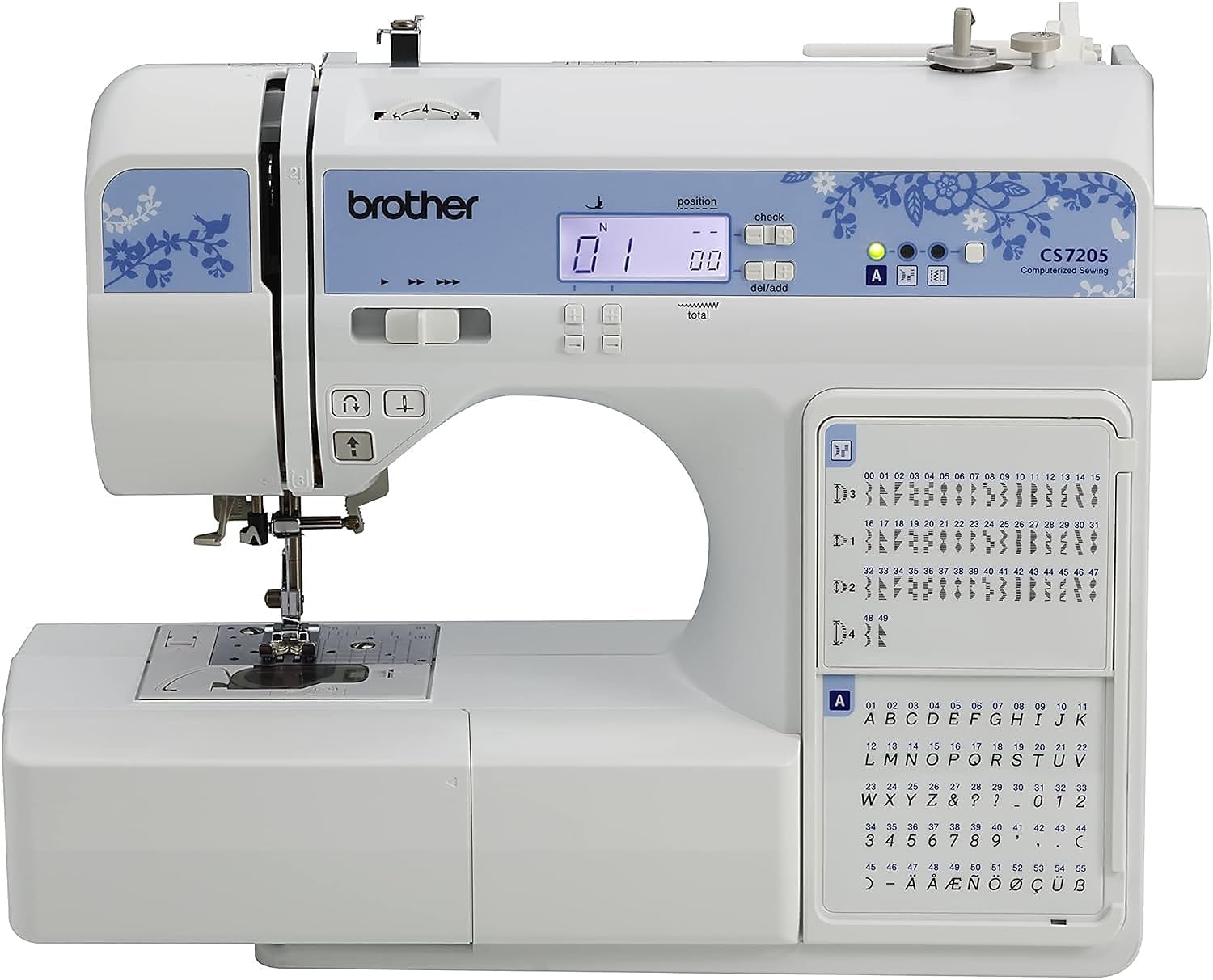
When I bought the Brother CS7205, the first thing that caught my eye was the 150 built-in stitches and 8 buttonhole styles. That’s what made me pick it over other machines. But here’s what I didn’t expect — after testing it on thick fabric and using it for weeks, I realized the stitch count wasn’t even the best part of this machine.
In fact, after weeks of real use, I only use about 5-6 stitches on a regular basis. Everything else — the decorative stitches, the monogramming fonts — I barely touch them. So if you’re thinking about buying this machine just because of the “150 stitches” number, let me save you some time: that should not be your main reason to buy it.
There are other features on this machine that matter a lot more in everyday use, and most reviews don’t talk about them enough. So in this article, I’m going to walk you through my full hands-on testing of the Brother CS7205 — what worked, what didn’t, and what I wish someone had told me before I bought it.
Table of Contents
Quick TL;DR:
The Brother CS7205 is light, beginner-friendly, and gives clean stitches on most fabrics — but only if you use the right needle and foot. Great for everyday sewing and quilting projects, not for heavy multi-layer denim.
At-a-glance: Brother CS7205
| Features | Details |
|---|---|
| Built-in Stitches | 150 (including 8 buttonhole styles) |
| Weight | ~10.4 lbs |
| Dimensions | 7.01" W x 12.48" H |
| Throat Space | 3.9" x 5.75" |
| Stitch Length/Width | 0-5mm / 0-7mm |
| Needle Threader | Automatic |
| Bobbin | Drop-in, jam-resistant, auto-winding |
| Thread Trimmer | Automatic (top + bobbin) |
| Free Arm | Yes |
| Best For | Beginners, everyday sewing, quilting |
| Not Ideal For | Heavy multi-layer denim |
| Where To Buy | Check On Amazon |
Unboxing Brother CS7205: What’s Included In The Box?
When I opened the box, I was honestly surprised by how many accessories came with it. Here’s what you get:
- Zigzag foot “J” (already installed on the machine)
- Buttonhole foot “A”
- Overcasting foot “G”
- Walking foot (great for thick layers like quilts)
- Spring-action quilting foot (for free-motion quilting)
- Seam ripper
- Cleaning brush
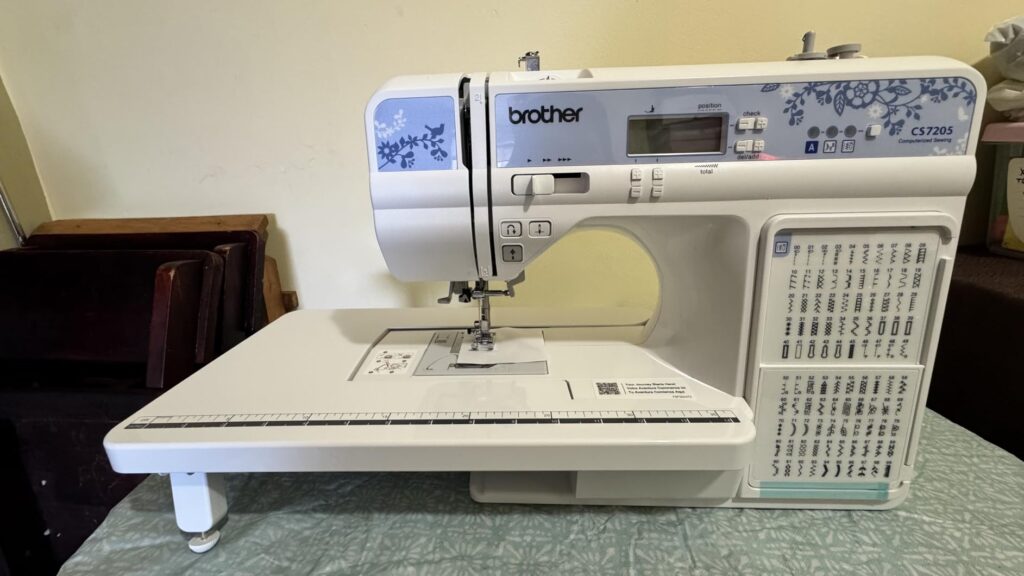
But the accessory that stood out the most to me wasn’t a foot or a tool — it was the wide extension table. If you bought this table separately on Amazon, it would cost you almost as much as a decent sewing accessory kit on its own. So getting it included is a big deal.
Here’s why it matters: when I was working on a large quilting project, I needed more flat surface area to support the fabric while it moved through the machine. Without the table, the fabric kept slipping off the edge and pulling out of shape. Once I attached the wide table, the extra surface held the fabric flat and steady, and my stitches came out much more even.
Weight & Size: Is It Easy To Carry Around?
The Brother CS7205 weighs about 10.4 lbs and its size is 7.01 inches wide by 12.48 inches tall. The throat space (the area where the fabric moves) is 3.9 x 5.75 inches — which is on the smaller side, so it can feel a bit tight if you’re working on large quilts.
I found the weight to be just right. It’s light enough that I could pick it up and carry it to a sewing class without feeling tired halfway there. But once I put it down on my table, it didn’t feel cheap or shaky either — it stayed put and felt solid while I was sewing.
Here’s why that happens: inside the machine, there’s a metal frame that holds everything together, but the outer body (the shell) is made of plastic. This combo is actually smart — the metal frame gives it strength, while the plastic shell keeps the overall weight low. But it also comes with a downside: because the outer shell is plastic, the machine tends to vibrate more when you push the speed up.
I noticed this myself when I was sewing a long straight seam on a quilt backing and wanted to finish it fast, so I ran the machine at full speed. The vibration got bad enough that the machine started shifting slightly on my table, and I had to stop, reposition it, and slow down to keep my stitch line straight.
So my advice: this machine is great for portability, but if you’re working on something that needs long, fast, high-speed stitching, go a little slower to keep things steady.
Brother CS7205 Core Features
Current Price: $269 On Amazon
Best For: Beginner-friendly sewing machine with 150 built-in stitches, automatic needle threader, and a jam-resistant drop-in bobbin. Includes a wide extension table for quilting and larger projects. Best for everyday sewing, light-medium fabrics, and beginner-to-intermediate quilting.
1. Stitch Count & Quality
The Brother CS7205 comes with 150 built-in stitches. But like I mentioned earlier, most of them are decorative stitches and monogramming fonts. For the price of this machine, I found the variety of decorative and quilting stitches to be more than I expected — even the buttonhole styles felt like a nice bonus.
In my testing, when I used the correct needle and the correct foot, the stitches came out clean and even. I tried this across different fabrics — cotton, layered denim, quilting cotton, and even silk — and the machine handled all of them well, with consistent stitch quality every time.
But here’s something important I learned the hard way: if you use the wrong needle or the wrong foot, this machine does not forgive you. When I tested it with a mismatched needle, the stitch quality fell apart completely. The bottom thread started bunching up into a messy tangle (often called a “bird’s nest”), and the thread jam got so bad that it actually cracked the bobbin cover.
So the lesson here is simple: this machine can give you great, even stitches on almost any fabric — but only if you’re using the right needle and foot for the job. Skip that step, and you’re asking for trouble.
2. Automatic Needle Threader
This little lever threads the needle for you, so you don’t have to squint and poke thread through a tiny hole. On my first try, it took me just under two minutes to get it right. After that, it got easier, but I noticed it wasn’t always a smooth, one-shot success — sometimes I had to try it more than once to get the thread through properly.
One thing worth knowing: the threader only works with regular home-machine needles (sizes 110/18 to 100/16). It won’t work with thinner 65/9 needles, twin needles, wing needles, or with thick, metallic, or slippery monofilament thread. So if you’re using anything outside that range, you’ll need to thread the needle by hand.
The biggest tip that helped me get consistent results: push the threader lever all the way down first, then bring the thread to the needle — not the other way around. When I lowered the lever while also trying to guide the thread at the same time, it failed more often. Once I did it in the right order, it worked much more reliably.
Also, keep an eye on lint and thread bits building up around the threader — I noticed that small buildup alone was enough to make it fail sometimes.
3. Drop-In Bobbin & Automatic Bobbin Winding
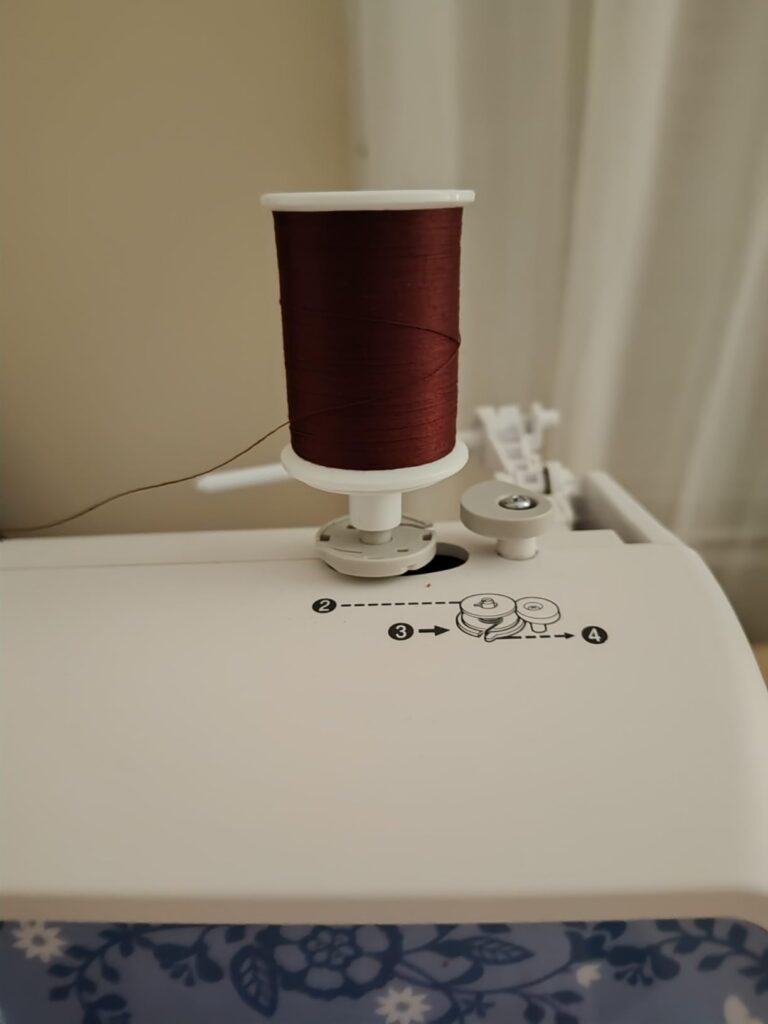
The bobbin sits in a drop-in system, meaning you just drop it in from the top instead of fiddling with a bobbin case. It stayed jam-resistant most of the time, and the automatic bobbin winding feature made refilling thread fast and simple.
Automatic Thread Trimmer
This one cuts both the top thread and the bobbin thread for you at the press of a button. It saved me a good amount of time, especially when I was sewing multiple short seams back to back and didn’t want to reach for scissors every time.
Adjustable Stitch Length & Width
You can adjust stitch length from 0 to 5mm and width from 0 to 7mm. I found this useful when switching between fine detail work and looser, more decorative stitching — I didn’t have to guess, I could just dial it in exactly how I wanted.
Free Arm
The free arm lets you sew tricky, tube-shaped areas like cuffs and sleeves. This made a real difference when I was working on sleeve hems — it was much easier to sew around a curved, narrow area than trying to force it flat under the machine.
4. LCD & Controls
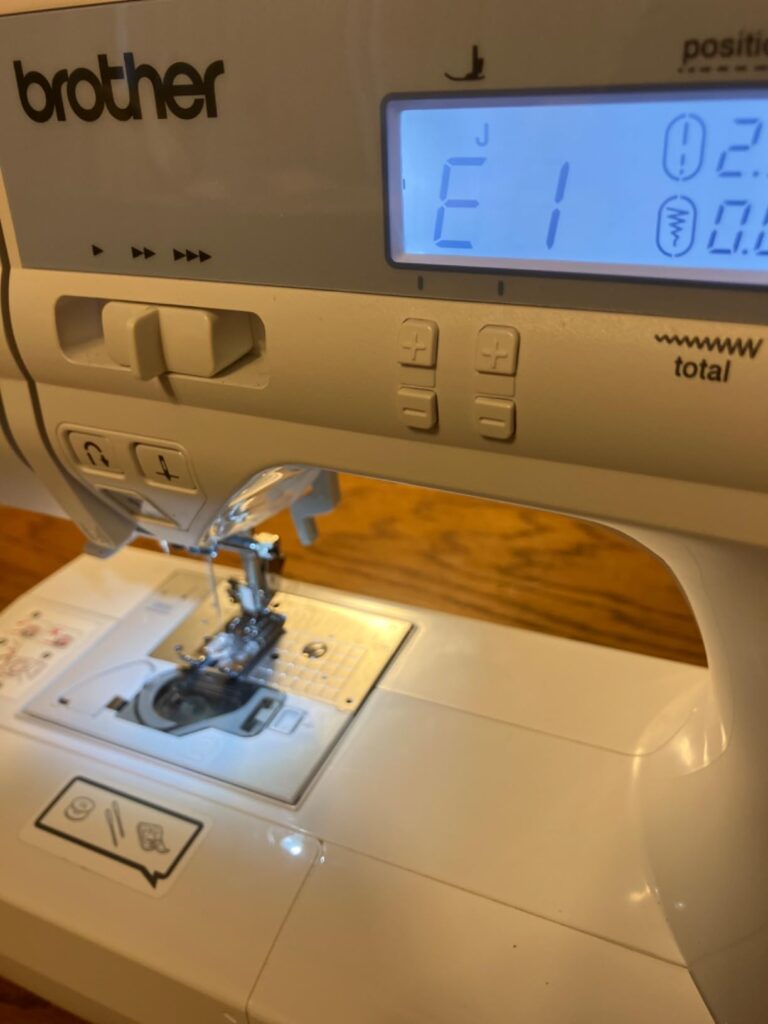
The Brother CS7205 has a small LCD screen, and it stayed clear, backlit, and easy to read even in low light. I didn’t struggle to see it while sewing at night or in a dim room.
The screen shows the stitch number, stitch width, stitch length, and — this is the part I really liked — it also tells you which presser foot to use for the stitch you picked. For someone still learning, this is genuinely helpful. It’s not just a nice extra; it actually saves you from guessing or flipping through the manual to check which foot goes with which stitch.
That said, I did run into one layout issue. The screen is placed in the middle of the machine’s housing, but the printed stitch-selection chart (the one you look at to pick your stitch) is off to the side. So the natural flow of “check the chart, then check the screen” feels a little disconnected — your eyes have to jump back and forth more than they should.
Also, while the backlight worked fine in low light, I felt it could be a bit brighter. And the overall color scheme on the screen looked a little old-fashioned compared to some newer machines.
Can It Handle Think Fabrics Like Denim?
“Yes, but only with the right setup.”
When I used a proper denim/jeans needle and switched to the included walking foot, the machine sewed through thick denim like butter. It didn’t skip stitches or struggle, and the fabric fed through smoothly instead of bunching up.
But there’s a limit. When I tried stacking up 4 to 8 layers of denim at once — like you’d get at a thick seam or hem — the machine just couldn’t push through it. It’s not built for that kind of heavy-duty, multi-layer work.
So here’s my honest advice: if you mostly sew regular clothes, occasional jeans repairs, or single-to-double layer denim, the CS7205 will handle it just fine. But if thick, multi-layer denim is something you work with often, I’d skip this machine and go for something built specifically for heavy fabric, like the Brother ST371HD.
Pros & Cons Of Brother CS7205
Pros
- Lightweight and easy to carry to classes or retreats
- Feels solid and doesn’t shift around once placed on a table (at normal speed)
- Great stitch variety for the price, including buttonhole styles
- Clean, even stitches across cotton, denim, quilting cotton, and silk (with the right needle/foot)
- “Which foot to use” readout on the screen is genuinely helpful for beginners
- Comes with a wide extension table included — useful for quilting and larger projects
- Handles single-layer denim and thick fabric well with the right needle and walking foot
- Automatic thread trimmer and drop-in bobbin save time during sewing
Cons
- Vibrates noticeably at high speed, which can cause the machine to shift on the table
- Very unforgiving with the wrong needle/foot — can jam badly and even crack the bobbin cover
- Needle threader isn’t always a one-try success and needs a bit of technique
- Threader doesn’t work with thin needles, twin/wing needles, or thick/metallic thread
- Screen backlight could be brighter, and the layout doesn’t match up well with the printed stitch chart
- Can’t handle 4-8 layers of thick denim — not built for heavy-duty multi-layer work
- Small throat space, which limits how comfortably you can work on large quilts
Final Verdict
Current Price: $269 On Amazon
Best For: Beginner-friendly sewing machine with 150 built-in stitches, automatic needle threader, and a jam-resistant drop-in bobbin. Includes a wide extension table for quilting and larger projects. Best for everyday sewing, light-medium fabrics, and beginner-to-intermediate quilting.
If you’re new to sewing or need a machine for everyday projects, quilting, and light-to-medium fabric work, the Brother CS7205 is a smart pick — it’s easy to carry, easy to use, and gives you more than you’d expect for the price.
But this machine has a personality: it rewards you for doing things right and punishes you fast when you don’t. Use the correct needle and foot, and it’ll treat you well for years.
Skip that step, and you’ll be dealing with jams and frustration. So the real question isn’t “is this machine good?” — it’s “are you willing to learn its small quirks?”
If yes, this machine will likely become the one you reach for again and again. If you’re after a heavy-duty workhorse for thick, multi-layer fabric, look elsewhere — this one was never built for that job.
Related Articles:
FAQs
Q1. Is the Brother CS7205 good for beginners?
Yes. The screen shows which foot to use for each stitch, and the machine is light and simple to set up.
Q2. Can the Brother CS7205 sew through denim?
Yes, with a denim needle and the included walking foot. It struggles with 4-8 stacked layers of thick denim.
Q3. Does the Brother CS7205 vibrate a lot?
It can vibrate at high speed due to its plastic outer shell, sometimes shifting slightly on the table. Slowing down fixes this.
Q4. How many stitches does the Brother CS7205 have?
150 built-in stitches, though most people only regularly use 5-6 of them for everyday sewing.
Q5. Does the Brother CS7205 come with an extension table?
Yes, it includes a wide extension table, which is normally a separate purchase and very useful for quilting.