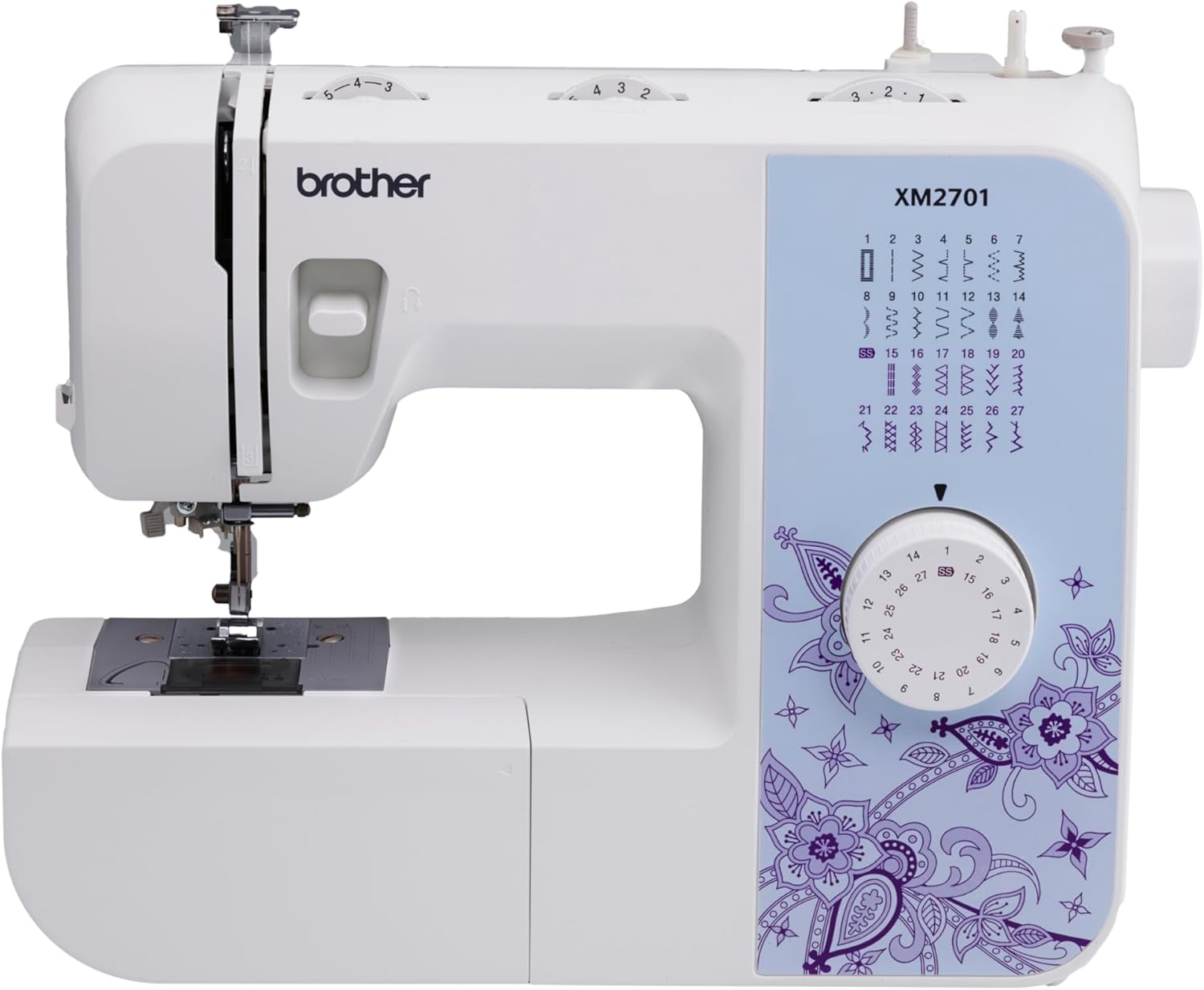
Current Price: $149 On Amazon
More stitch variety for quilting, appliqué, and decorative work. A solid pick if you want room to grow.
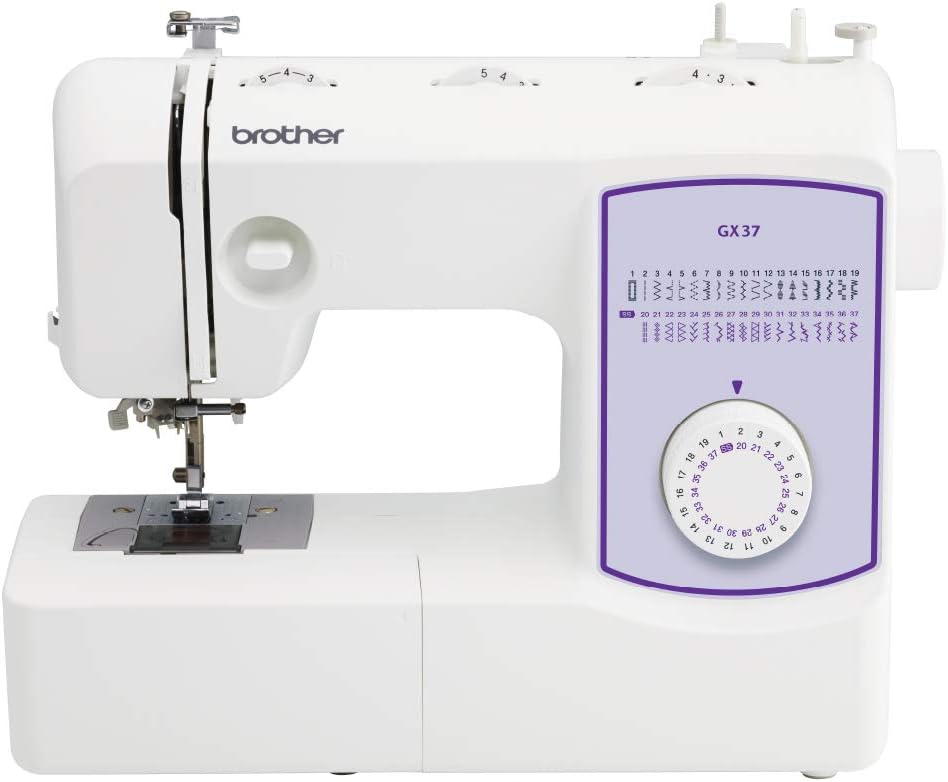

Current Price: $132 On Amazon
Simple, reliable, and built for everyday sewing without extra decision-making. A great starting point for beginners.
Introduction
My old sewing machine died right in the middle of hemming curtains for my sister’s new apartment. No warning. Just stopped working, and I needed a new one fast.
So I did what most people do. I opened Amazon, typed “beginner sewing machine,” and landed on two Brother models that looked almost the same: the GX37 and the XM2701. Same brand. Same price range. Both said “beginner friendly.” Both had good reviews. I sat there for way too long trying to figure out the real difference, and every article I found just repeated the spec sheet back to me.
So I bought both. Used them for real projects, not just test swatches. And what I found out is that the “right” choice depends on something most articles never ask you: what kind of sewing are you actually going to do next week, not someday?
If you’re stuck the way I was, this is the comparison I wish I’d found.
Table of Contents
Quick TL;DR:
Both machines handle everyday sewing the same way — the real difference is 10 extra decorative/quilting stitches on the GX37. Pick the XM2701 if you just want simple and reliable. Pick the GX37 if you know you’ll use fancier stitch patterns.
At-a-glance: Brother GX37 vs XM2701
| Features | Brother GX37 | Brother XM2701 |
|---|---|---|
| Built-in stitches | 37 | 27 |
| Stitch functions | Not published by Brother | 63 |
| Buttonhole type | 1-step automatic | 1-step automatic |
| Needle threader | Automatic | Automatic |
| Bobbin system | Jam-resistant drop-in top bobbin | Jam-resistant drop-in top bobbin |
| Included feet | 6 (zigzag, buttonhole, zipper, button sewing, blind stitch, narrow hemmer) | 6 (buttonhole, zipper, zigzag, narrow hemmer, blind stitch, button sewing) |
| Free arm | Yes | Yes |
| Automated needle-stop / auto-trim / auto-backtack | Not featured | Not featured |
| Brother lifetime support | Yes (At Your Side) | Yes (At Your Side) |
| Where To Buy | Check On Amazon | Check On Amazon |
The Test That Actually Told Me Something
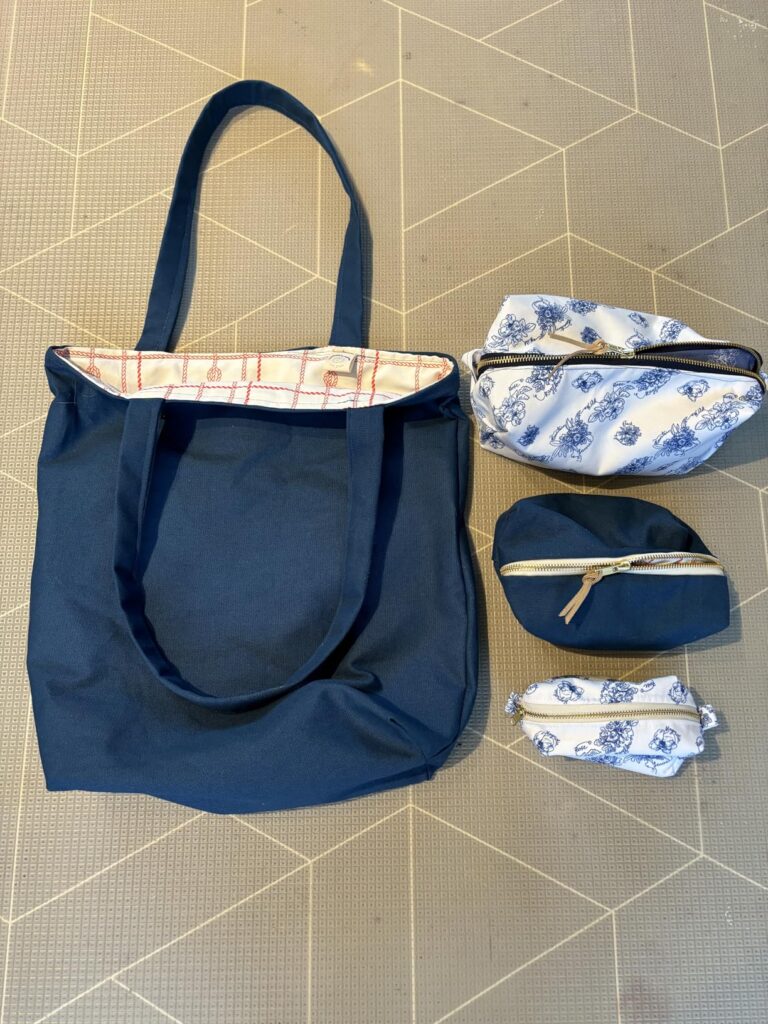
I didn’t compare these two machines with a scrap of fabric and a checklist. I compared them with a real order.
A friend of mine was opening a small market stall and asked me to sew forty reusable product bags — plain drawstring pouches, nothing fancy, but forty of them, back to back, in one weekend.
That’s when the differences actually showed up.
On the GX37, I ran the same straight stitch on bag after bag with zero drama. I didn’t touch the dial once. All those extra decorative stitches just sat there unused the whole weekend — because a product bag doesn’t need embroidery, it needs a strong, repeatable seam.
The XM2701 did the exact same job, just as well. Same seam strength, same speed, same result bag after bag.
So where did the two machines actually feel different? The casing at the top of each bag, where the drawstring runs through. That part is sewn in a tight circle, and both machines make you stop, lift the needle out by hand, and turn the fabric — neither one does this automatically. It’s a small thing, but after forty bags, “small” adds up. It’s not a flaw in one machine over the other. It’s just something nobody tells you about machines in this price range until you’ve sewn the same seam forty times in a row.
That weekend taught me the real lesson of this whole comparison: the extra stitches on the GX37 aren’t what separates these two machines in daily use. What separates them is how a machine feels on repetition — on the tenth bag, the twentieth, the fortieth — not on the first pretty sample you sew to take a photo for a review.
Will I Actually Use the Extra 10 Stitches, or Am I Paying for a Number?
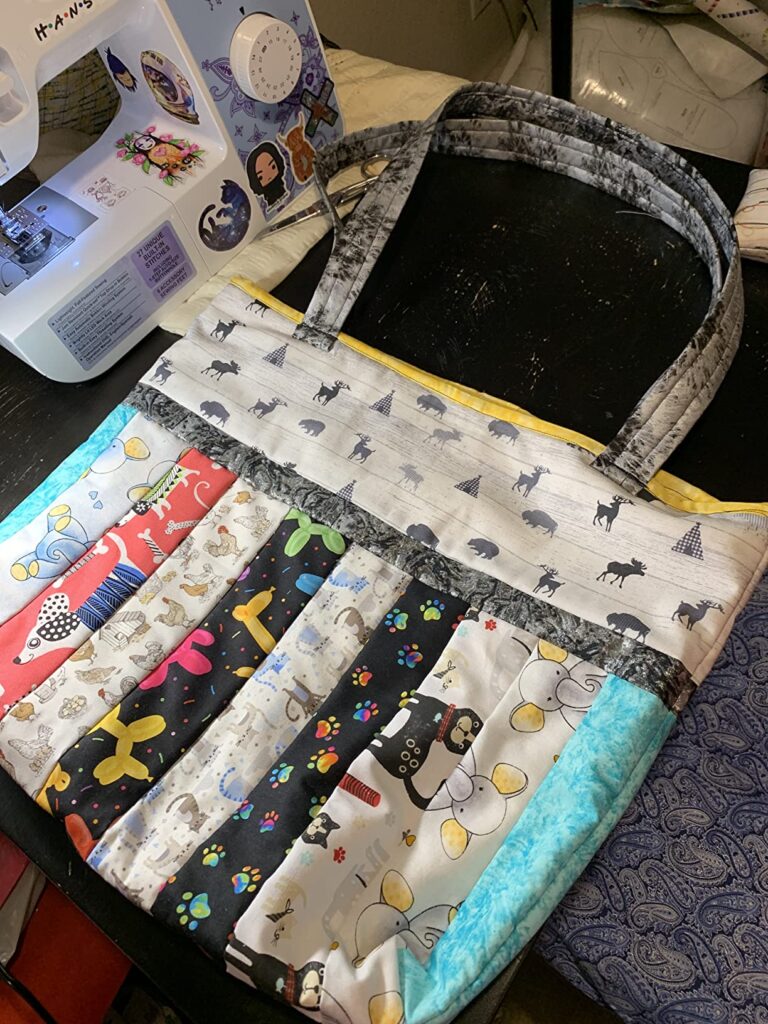
I wanted to know if 37 stitches on GX37 actually mean something, or if it’s just a bigger number on the box. So I tried both machines on two real things: a plain tote bag and a baby blanket edge.
For the tote bag, I used straight stitch and zigzag on both machines. No difference. Same strong seam, same clean finish. This is basic sewing, and both machines do it the same way.
Then I turned to the blanket. I wanted a soft, decorative edge instead of a plain hem. On the GX37, I flipped through the extra stitches and found a scallop-style pattern. It gave the blanket a nice finished look, almost like a store-bought one. I tried to find something similar on the XM2701, but its 27 stitches don’t go into that kind of decorative territory. It’s built for straight stitch, zigzag, blind hem, stretch stitch, and buttonholes — the stuff you use every day, not extra pattern work.
So here’s what I learned. For daily sewing — hems, seams, repairs, buttonholes — both machines do the exact same job. You won’t feel a difference. But the moment you want to add a decorative touch, like a fancy edge on a blanket or a pattern on a quilt, the GX37 gives you room to do that. The XM2701 simply doesn’t have those options.
If you don’t know yet what kind of sewing you’ll enjoy, don’t stress over this. You won’t miss those extra stitches for a long time. But if you already know you like making things look a little fancy, the GX37’s extra stitches are worth having.
The Buttonhole Question (Because It’s the One Mistake You Can’t Hide)
A bad hem disappears once you’re wearing the shirt. A bad buttonhole doesn’t. It sits right on the front, for everyone to see.
So I tested this properly. I made a plain cotton shirt with five buttons down the front. Both the GX37 and the XM2701 have the same setup: a one-step buttonhole foot that measures the button and sews the whole shape in one go. No guessing, no doing it in stages by hand.
First round, I didn’t add any interfacing under the fabric. Just the plain cotton, straight off the bolt. On both machines, the buttonholes came out a little loose and uneven on one side. Not a machine problem — a fabric problem. Thin fabric moves around under the needle, and a buttonhole needs something firm underneath to hold its shape.
Second round, I added a small piece of interfacing under each buttonhole spot before sewing. Same shirt, same thread, same settings. This time, both machines gave me clean, even buttonholes. Neither one pulled ahead of the other. Once the fabric was properly backed, both handled it the same way.
That’s the real lesson here. It’s tempting to blame the machine when a buttonhole looks bad, but in my test, the fix had nothing to do with which Brother model I was using. It was the interfacing. So before you sew a whole row of buttons on a real garment, always test on the exact same fabric with the same backing you’ll actually use. Skip that step, and either machine can give you a buttonhole you’re not happy with.
What Actually Breaks on a Machine Like This? (and What’s Just Normal)
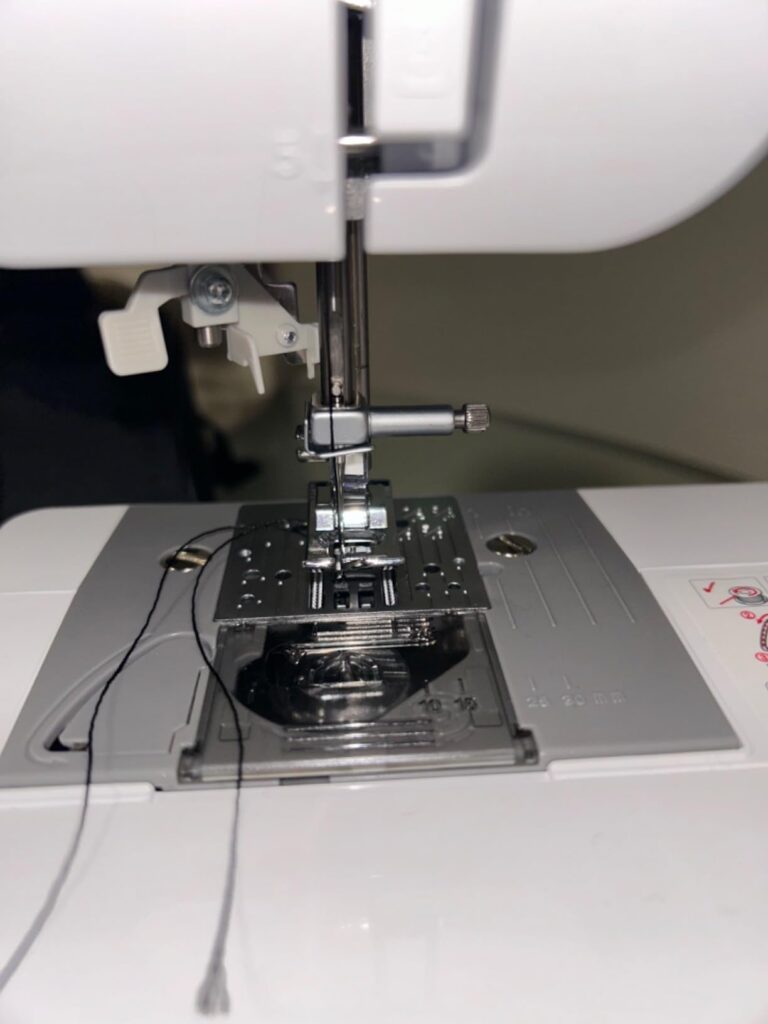
Machines at this price don’t use metal gears inside. They use plastic ones. That’s true for both the GX37 and the XM2701 — it’s not a flaw in one, it’s just how any beginner machine at this price is built.
I paid close attention to the needle threader on both machines, since that little wire hook is usually the first thing to wear out on any low-cost machine. I made sure to guide it gently instead of forcing it down, and it held up fine on both. That’s really the only trick — treat it softly, and it lasts.
One thing I noticed on both machines: after every seam, I had to turn the handwheel by hand to lift the needle back up. Neither machine does this on its own. Same with backstitching at the start and end of a seam — you do it manually on both. If you’ve used a fancier machine before, this will feel basic. But it’s not one machine losing to the other. They’re built the same way here.
Something worth knowing if you ever get stuck: both machines come with free lifetime support from Brother — phone, chat, or online. I used this once when I couldn’t figure out a tension issue, and it actually helped.
One honest note: if you read somewhere that a machine “breaks at exactly six months” or gives some very specific failure date, don’t take that at face value unless they show you how they know that. What I can tell you for sure is simpler — these are plastic-gear machines, so they need a little care. Clean out the lint under the bobbin area now and then, oil it as the manual says, and don’t expect either one to take the daily abuse a heavier, more expensive machine would.
Fabric Reality Check: What These Machines Are Actually For?
I tried these machines on more than just cotton. I sewed a knit t-shirt hem, a light home-décor cushion cover, and — just to see what would happen — a folded seam on an old pair of jeans.
The t-shirt and the cushion cover? No problem, on either machine. Clean stitches, no skipped stitches, no fuss.
The jeans seam was a different story. Where the denim folded over itself a few times, both machines slowed down and struggled to push through. On the GX37, the needle hit a thick spot and I had to turn the handwheel by hand to get past it. The XM2701 did the same thing. Neither one handled it well, and neither one was better than the other here.
So, if your sewing list is things like jean hems, bag straps, canvas, or leather, stop comparing these two machines. Neither is made for that kind of work, and no amount of picking between them will fix it. You’d need a heavier machine for that job.
But for everyday stuff — cotton, knits, cushion covers, light garment repairs — both machines handled it just fine. And the free arm on both made hemming the t-shirt sleeve easy, since I could slide the sleeve right onto it instead of fighting with the flat sewing bed.
So — Is the $17 Worth It?
Here’s how I’d actually break the decision down, based on what you already know about your own sewing habits rather than a generic verdict:
Get the XM2701 if:
Current Price: $132 On Amazon
Simple, reliable, and built for everyday sewing without extra decision-making. A great starting point for beginners.
- You’re brand new and want the simplest possible starting point — fewer stitch options means less decision fatigue while you’re still learning what a zigzag stitch is even for.
- You mostly repair, hem, and sew straightforward garments and home items.
- The $17 matters more to you right now than stitch variety you’re not sure you’ll use.
Get the GX37 if:
Current Price: $149 On Amazon
More stitch variety for quilting, appliqué, and decorative work. A solid pick if you want room to grow.
- You already know you like decorative work, appliqué, or quilting embellishment, and you’d genuinely use the extra 10 stitches rather than just having them.
- You’re buying this as a machine you expect to grow into over a year or two, not just get started on.
- The $17 difference is genuinely inconsequential to your budget, so the only question left is “which one has more room to grow with me.”
If you’re still not sure which camp you’re in, here’s the deciding question I’d actually ask a friend: have you ever finished a sewing project and wished you’d had a fancier stitch option, or have you only ever wished the machine had been easier to use? Whichever answer feels more honest tells you which machine matches how you actually sew, independent of the $17.
Related Articles:
Final Verdict
Both machines sew the same for 90% of what you’ll ever make. The real question isn’t which one is “better” — it’s which one matches what you already know about yourself. If you’ve never sewn much and just want something that works without extra choices to think about, get the XM2701.
If you already know you like adding a little flair — a fancy edge, a pattern, something that makes a project feel finished — get the GX37. Don’t buy based on the stitch count. Buy based on which sentence sounded more like you.
FAQs
Is the price gap likely to close again?
Amazon pricing on both machines has shifted before — they were nearly identical a few months ago — and it can move again in either direction. The functional differences covered here don’t change with the listing price, so they’re worth weighing regardless of what you see when you’re shopping.
Do both machines really have the same buttonhole feature?
Yes — both use a one-step automatic buttonholer with a dedicated foot, confirmed on Brother’s own product pages for each model. The quality of the result on either machine depends more on fabric stabilization and tension setup than on which model you’re using.
Which one is better for a total beginner?
The XM2701 has a slightly gentler learning curve simply because there are fewer stitch options to sort through while you’re building basic muscle memory. The GX37 isn’t harder to use — it just gives you more choices before you necessarily know what you want.
Can either handle knits or stretch fabric?
Yes, both include stretch-appropriate stitches, but stretch fabric is more about needle choice (a ballpoint or stretch needle) and tension setup than which of these two machines you’re using.
Do I need to buy separate presser feet, or do they share parts?
Both use a low-shank, press-on foot system, which is the most common style — feet designed for that shank type will generally fit either machine, though it’s worth confirming compatibility with the specific accessory before buying.