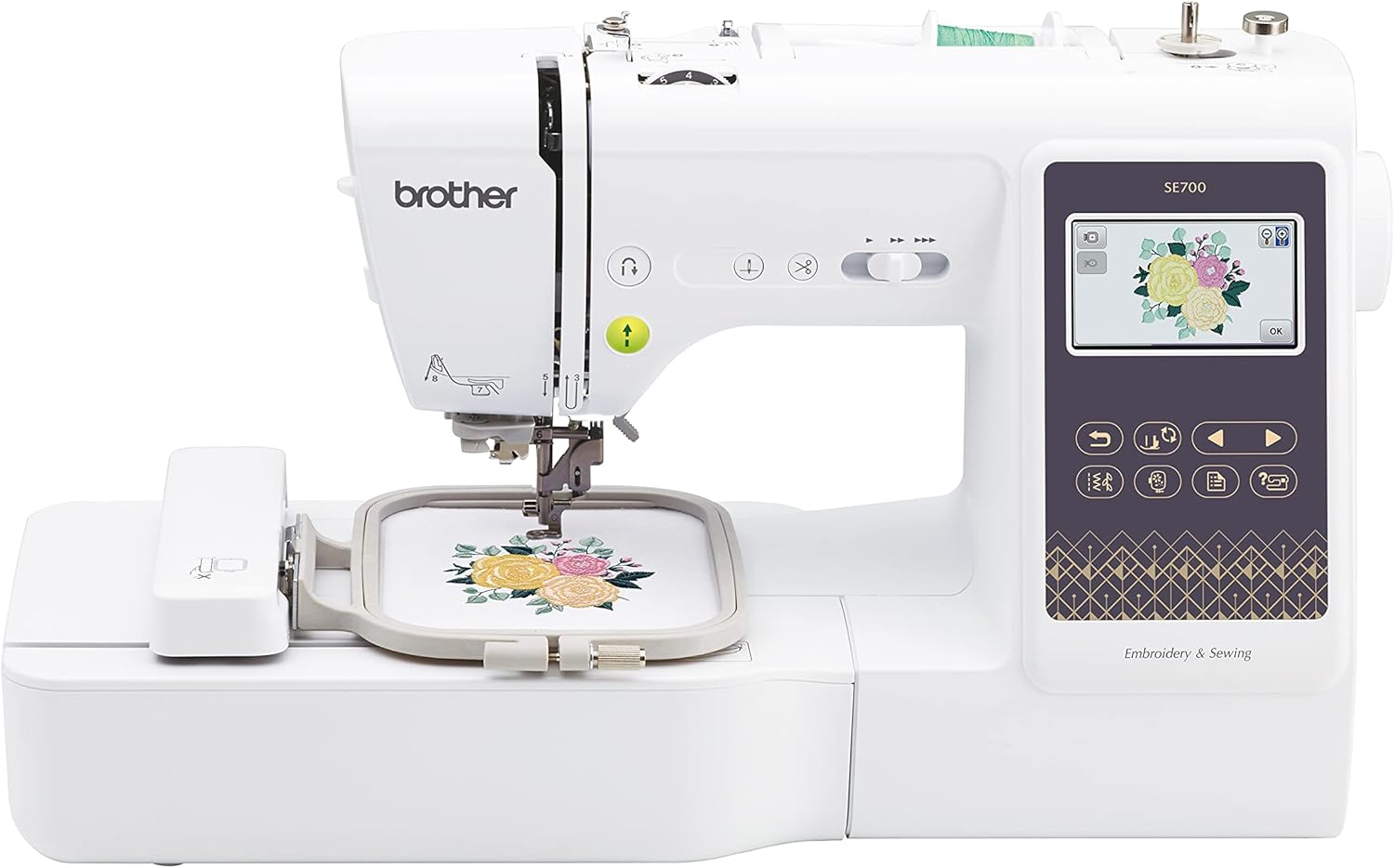
Current Price: $429 On Amazon
Best if: you only decorate finished goods (towels, hats, tote bags, patches) and don't need to construct or hem fabric.
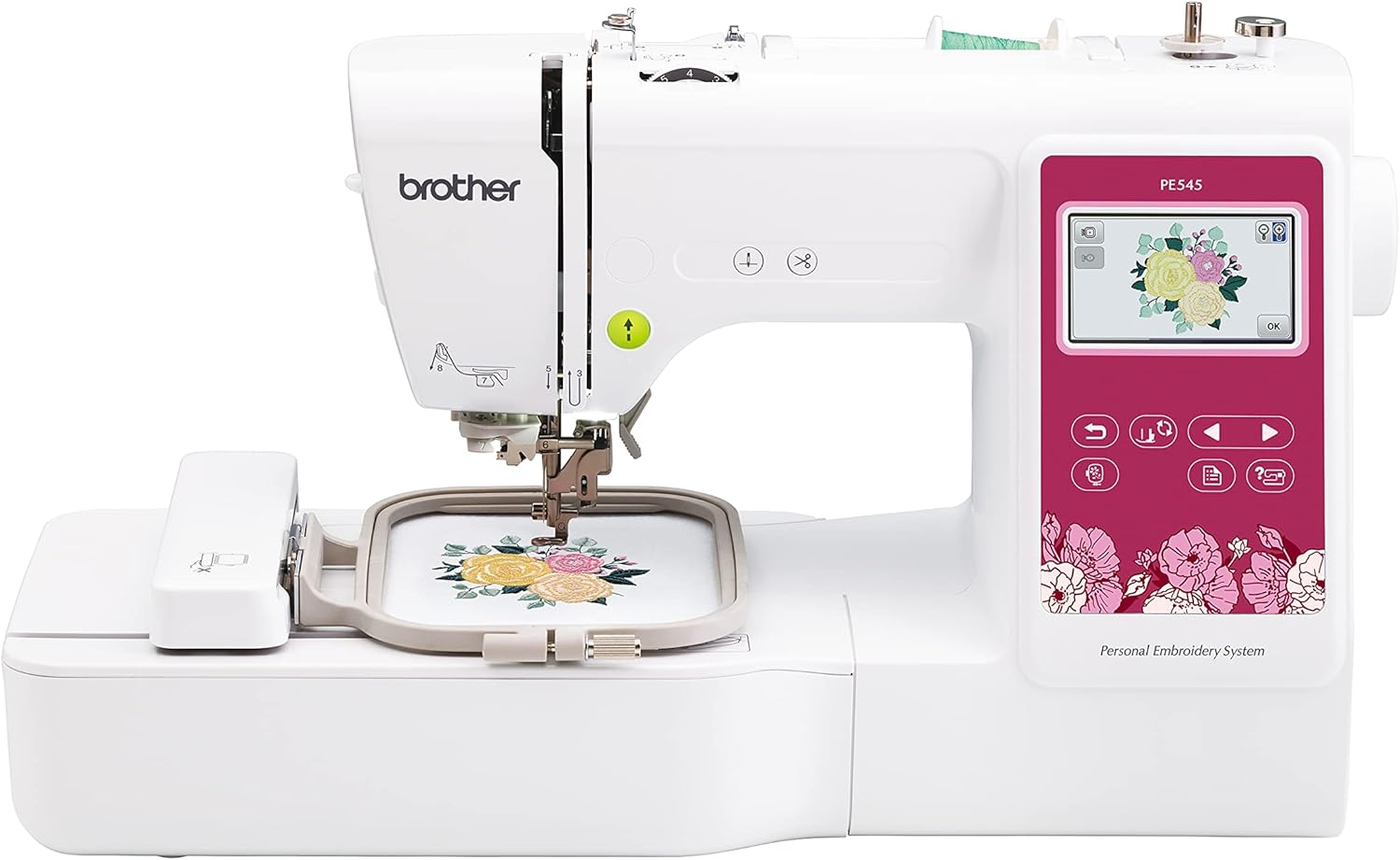

Current Price: $492 On Amazon
Best if: your projects involve seams, hems, zippers, or buttonholes in addition to embroidery.
Introduction
I didn’t set out to compare these two machines. I set out to buy one embroidery machine, ended up owning both within four months, and now I can’t stop noticing how differently people talk about this decision online versus how it actually plays out at your sewing table.
Here’s the moment that started it: I’d already clicked “buy” on the PE545. Cart, checkout, confirmation email — done. Then a friend sent me a screenshot of the SE700 sitting barely $60 higher, and I remember thinking, wait, that’s basically nothing for a machine that also sews. Two days later I checked again and the gap had widened back out to over $100. Same machines, same week, completely different math.
That’s the thing nobody tells you about this decision: it’s not really “PE545 vs SE700.” It’s “what do I actually need to happen when fabric goes under that needle,” and separately, “what is the price doing on the day I’m ready to buy.” Almost every article treats those as one question. They’re not.
Table of Contents
Quick TL;DR:
These two machines embroider identically — same hoop, same designs, same hardware. The only real question is whether you also need to sew fabric together (SE700) or just decorate finished goods (PE545). The ~$60 price gap moves around often enough that it’s worth checking both listings again before you buy, not just once.
At-a-glance: Brother PE545 vs SE700
| Features | Brother PE545 | Brother SE700 |
|---|---|---|
| Machine type | Embroidery-only | Sewing + embroidery combo |
| Embroidery hoop area | 4" x 4" | 4" x 4" (identical) |
| Built-in embroidery designs | 135 | 135 |
| Built-in lettering fonts | 10 | 10 |
| Built-in sewing stitches | None | 103 |
| One-step buttonholes | None | 10 styles |
| Max sewing speed | N/A | Up to 710 stitches/min |
| Wireless design transfer | Yes (Artspira app, Wi-Fi/USB) | Yes (Artspira app, Wi-Fi/USB) |
| Touchscreen display | 3.7" LCD | 3.7" LCD |
| Where To Buy | Check On Amazon | Check On Amazon |
The Question I Should Have Asked Before I Ever Opened a Spec Sheet
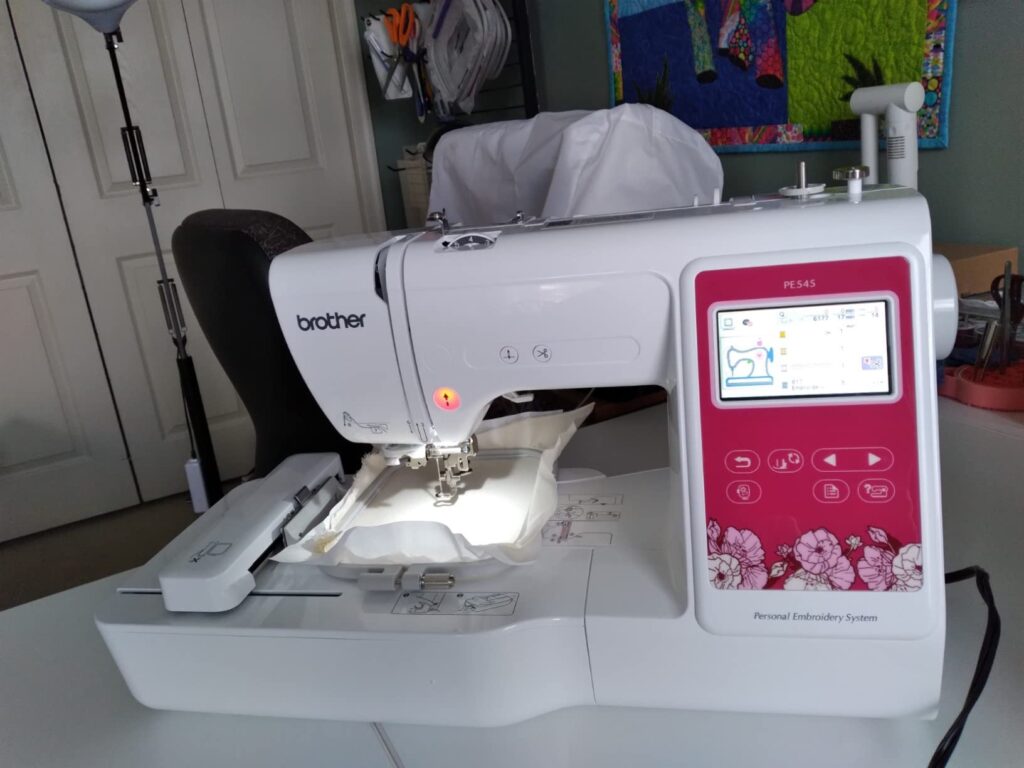
The embroidery side of these two machines is, for practical purposes, the same machine. Same 4″x4″ hoop area. Same 135 built-in designs. Same 10 lettering fonts. Same Wi-Fi transfer through the Artspira app. If you set both machines side by side and only ever embroider, you would be hard pressed to tell them apart in the final stitch-out.
I know because I ran the identical design — a simple monogram I use to test tension on any new machine, three letters plus a small frame — on both. Same stabilizer, same hoop, same thread weight. The results were close enough that I had to check the tags on the finished patches to remember which machine made which one. That’s not a knock on either machine. It’s the actual point: you are not paying extra for better embroidery when you buy the SE700. You’re paying for a second capability bolted onto identical embroidery hardware.
So the question that actually matters isn’t “which one embroiders better.” It’s this: in the next twelve months, will you need to construct a garment — hem it, sew a seam, attach a zipper — or will everything you make be surface decoration on something already finished? That single answer resolves about 80% of this decision before you even think about price. Everything else is refinement.
What Happened When I Actually Needed to Sew Something?
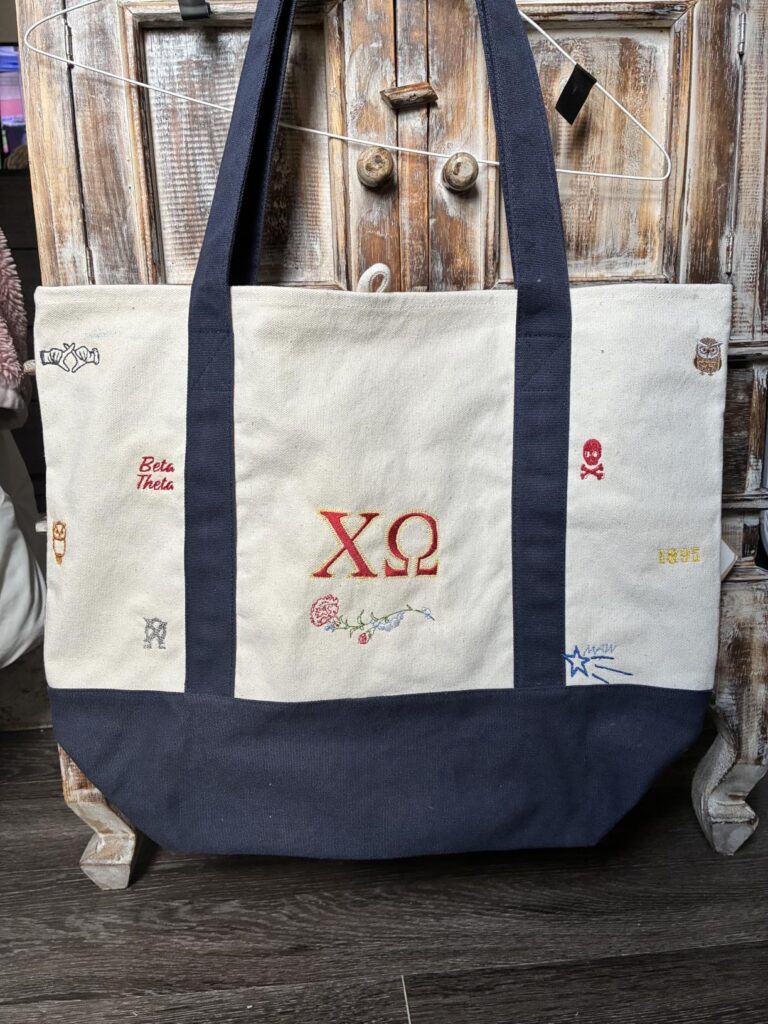
Where it flips is the day you have an actual sewing task in front of you — not a hypothetical one. Mine came from a tote bag order: a customer wanted a monogram on the front panel and wanted me to finish the raw edge of the strap I’d cut from canvas. I had the PE545 at that point, plus a decade-old mechanical sewing machine in the closet that I dug out for the job. It worked, but it was two machines, two different workflows, and honestly, remembering how to thread the old machine took longer than the sewing itself.
That’s the exact scenario the SE700 is built to remove. It carries over the same 135 embroidery designs and Wi-Fi transfer, but adds 103 built-in sewing stitches, 10 one-step buttonhole styles, and a sewing speed rated up to 710 stitches per minute — noticeably quicker than the PE545’s embroidery pace of roughly 400 stitches per minute, though that number applies to the sewing side, not to how fast it embroiders (the embroidery speed is unchanged between the two machines, since the mechanism is identical).
The buttonhole feature is the one I didn’t expect to care about and now genuinely do. One-step buttonholes sound like a minor convenience until you’ve done six of them by hand-cranking a dial on an older machine, second-guessing whether this one will match the last one. On the SE700, you set the size once and it repeats. For anyone making garments — baby clothes, aprons, anything with a closure — that single feature quietly saves more frustration than the entire spec sheet suggests it should.
The Repair Call I Didn’t Expect to Make
I want to be direct about something most reviews gloss over: these are inexpensive computerized machines, and computerized machines occasionally throw errors that have nothing to do with user mistakes. A few weeks after I’d settled into a rhythm with my PE545, I hit an error code mid-project that wouldn’t clear no matter how many times I re-threaded, cleaned the bobbin case, or restarted the machine — the exact troubleshooting steps in the manual and the tutorial video, followed step by step, twice. It turned out to be a tension disc issue that a quick call to Brother support resolved by walking me through a reset sequence that wasn’t in the printed manual at all.
I’m not telling you this to scare you off either machine — computerized sewing and embroidery machines at this price point all carry some risk of this, and mine was resolved without needing a repair shop. I’m telling you because it changed how I shop for these machines now: I check what the return window and warranty terms look like at whatever retailer has the better price that week, not just the sticker price itself. A $60 savings on the SE700 means very little if the seller has a stricter return policy than wherever the PE545 is listed. That’s a genuinely useful thing to check before you buy, and it’s not something a spec sheet will ever tell you.
The Cost That Doesn’t Show Up in Either Column
Whichever machine you land on, there’s a recurring expense that has nothing to do with the lower price-versus-higher price decision and everything to do with actually running either one: stabilizer, bobbins, and needles. Both machines use the same hoop size, so your stabilizer consumption per project is identical. Both burn through bobbins at the same rate for a design of the same stitch density. Neither machine changes this math — the ongoing cost of feeding the machine is the same no matter which one you buy, and it will, within a few months of regular use, add up to more than the price difference between the two machines themselves.
I mention this because when people ask me “is the SE700 worth the extra money,” they’re usually only doing the math on the purchase price, not the cost of actually running either machine for a year. If you’re weighing $60, it’s worth knowing that $60 will disappear into stabilizer and thread within your first couple months regardless of which machine you chose. The real decision is still the sewing-versus-embroidery-only question from earlier — not the sixty dollars.
Threading, Touchscreens, and the Small Stuff That Actually Affects Your Day
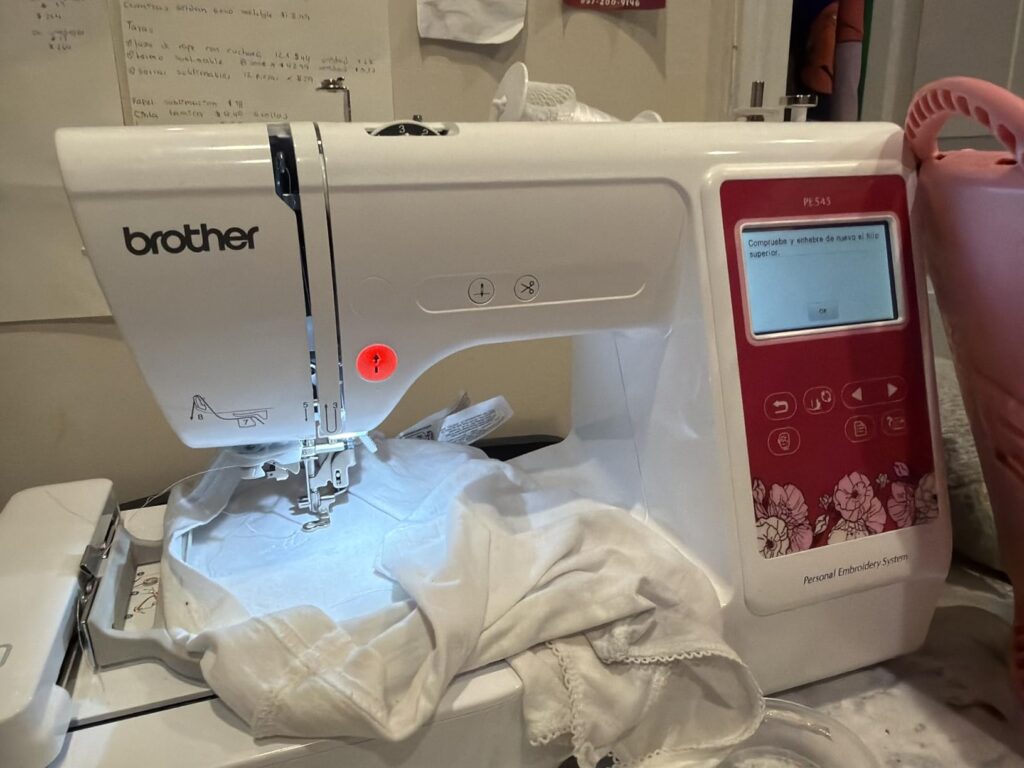
A few smaller things stood out in day-to-day use that I think matter more than they get credit for:
The automatic needle threader on both machines works well once you get the hoop or fabric out of the way of the mechanism — my first few attempts failed not because the threader is unreliable, but because I hadn’t cleared the workspace enough for the arm to swing through. That’s a five-minute learning curve, not a design flaw, but it’s exactly the kind of thing that gets buried in one-star reviews from people who hit it once and never came back to update their rating.
The touchscreen on both machines is genuinely good for previewing a design in color before you commit thread to fabric — I use this constantly to catch color-order mistakes before they become an unpicking job. It’s a small thing that saves real time across dozens of projects, and it’s identical on both machines, so it’s not a factor in choosing between them — just worth knowing you’re not giving anything up by going with the cheaper one.
The App Feature I Was Skeptical About, Then Actually Relied On
Both machines connect to the Artspira app over Wi-Fi, and I’ll admit I assumed this was a marketing checkbox rather than something I’d use. I was wrong. The scenario where it mattered: I was at my kitchen table sketching a simple line design for a client who wanted something more personal than the built-in library — a rough outline of their dog. I drew it directly in the app on my phone, sent it wirelessly to the machine, and had it hooped and stitching within the same sitting, no USB stick, no transferring files between a laptop and the machine like I’d done with older Brother models years ago.
This works identically on both machines, so again, it’s not a factor in choosing between them — but it is a factor in choosing either of them over an older or off-brand alternative that doesn’t have wireless transfer.
Noise, Workspace, and the Stuff You Only Notice After Week Three
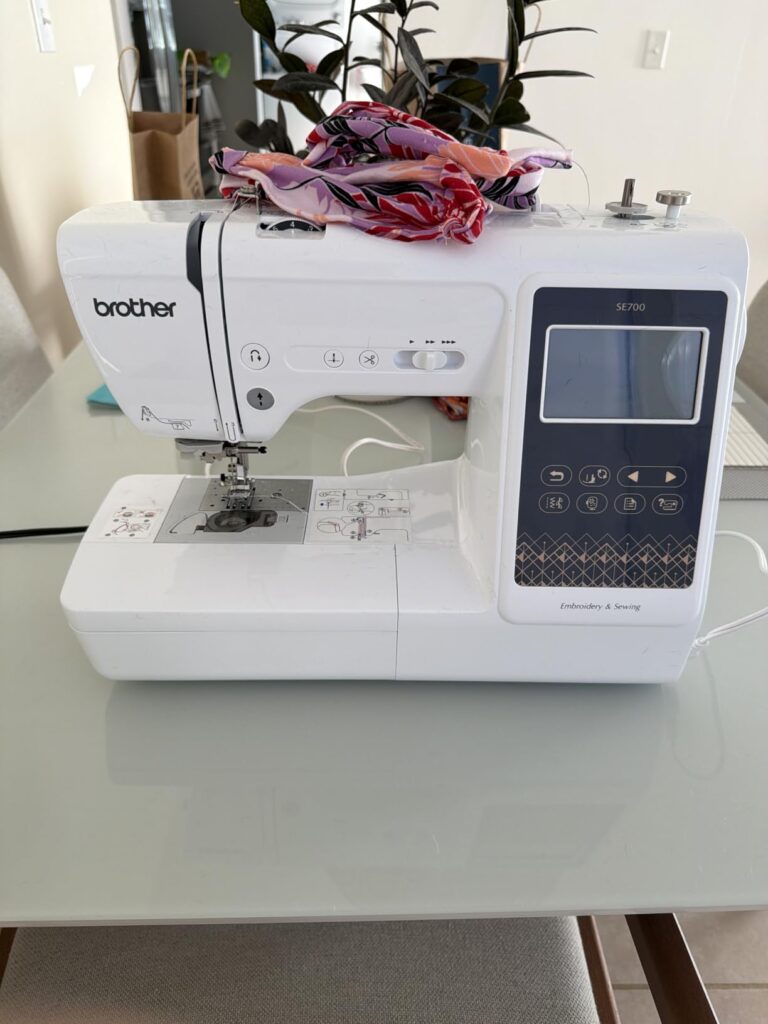
By the week three of daily use, the things that started to matter to me were the small ergonomic details rather than the stitch count. Both machines are loud enough that I stopped running mine late at night after my first attempt woke up the rest of the house — not deafening, but a consistent mechanical hum plus the rhythmic thud of the needle that carries through thin walls. If you’re planning to work embroidery orders after everyone else has gone to bed, that’s worth knowing regardless of which model you pick, since the embroidery mechanism — and therefore the noise it makes — is the same on both.
So Which One Do You Actually Need?
Current Price: $429 On Amazon
Best if: you only decorate finished goods (towels, hats, tote bags, patches) and don't need to construct or hem fabric.
Strip away the spec sheet and here’s the decision, the way it actually played out for me and for the people I’ve talked through this with:
If your work is embroidery on finished goods — shirts, towels, bags, hats, blankets — and you don’t have a garment-construction task sitting in front of you right now, the PE545 gets you identical stitch quality for less money, and the sewing features on the SE700 would sit unused. That was true for me for the first two months I owned one, and it would still be true today if my order mix hadn’t shifted.
If you already have a sewing task on your plate — hemming, seams, buttonholes, anything that requires constructing fabric rather than decorating it — the roughly $60 gap for the SE700 stops being a real decision at all. You’re getting a genuine sewing machine layered onto the same embroidery hardware for less than the cost of a nice dinner out, and the buttonhole feature alone will save you real frustration on your first garment project.
Current Price: $492 On Amazon
Best if: your projects involve seams, hems, zippers, or buttonholes in addition to embroidery.
Final Verdict
Neither machine is the “safe” choice or the “better” one — they’re solving two different problems that just happen to share a hoop. If I were advising a friend today, I’d tell them to ignore the price gap until they’ve answered the sewing question, because that’s the only variable that doesn’t fluctuate week to week. Buy the PE545 if decoration is genuinely your whole workflow — it’s not a stripped-down version of anything, it’s the right tool fully realized. Buy the SE700 the moment sewing enters your project list even once, because retrofitting that capability later means buying a second machine entirely, not upgrading this one.
Related Articles:
FAQs
Q1. Is the SE700 basically a PE545 that can also sew?
Yes — the embroidery hardware, hoop size, design library, and app connection are the same. The SE700 adds a sewing mechanism on top.
Q2. Will I get better embroidery quality from the SE700 since it costs more?
No. Stitch quality on identical designs was indistinguishable in my testing — the extra cost pays for sewing capability, not embroidery performance.
Q3. Can I upgrade from the PE545 to sewing later instead of buying the SE700 now?
Only by buying a separate sewing machine — the PE545 has no sewing mechanism to unlock or add later.
Q4. Do both machines need the same stabilizer and bobbins?
Yes, since the hoop size and embroidery mechanism are identical, ongoing supply costs are the same regardless of which one you choose.
Q5. Is the price difference between them always around $60?
No — I’ve seen it shrink to nearly nothing during sales and widen past $100 depending on the retailer and bundle. Check current listings before assuming a fixed gap.