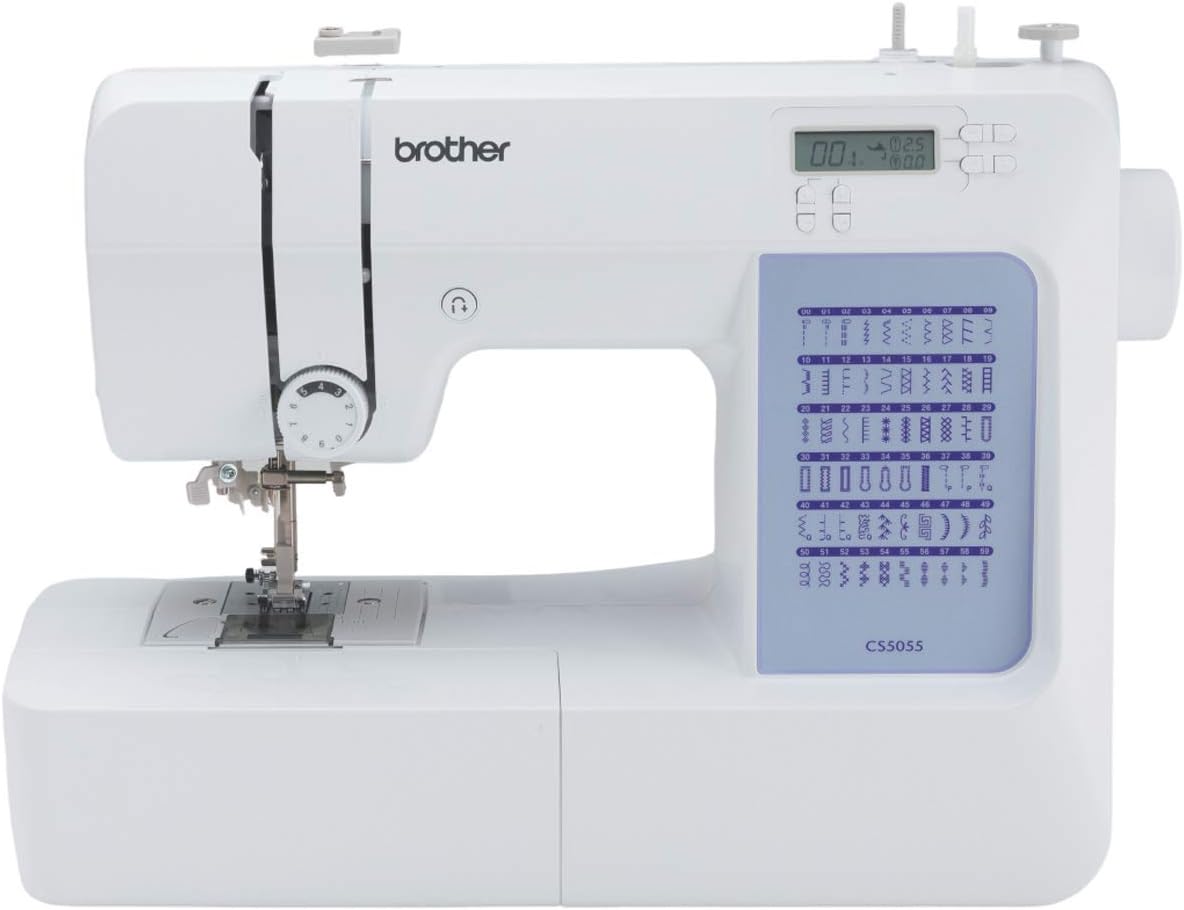
Current Price: $169 On Amazon
- 60 stitches
- Metal frame
- 7 buttonhole styles
- Best value pick

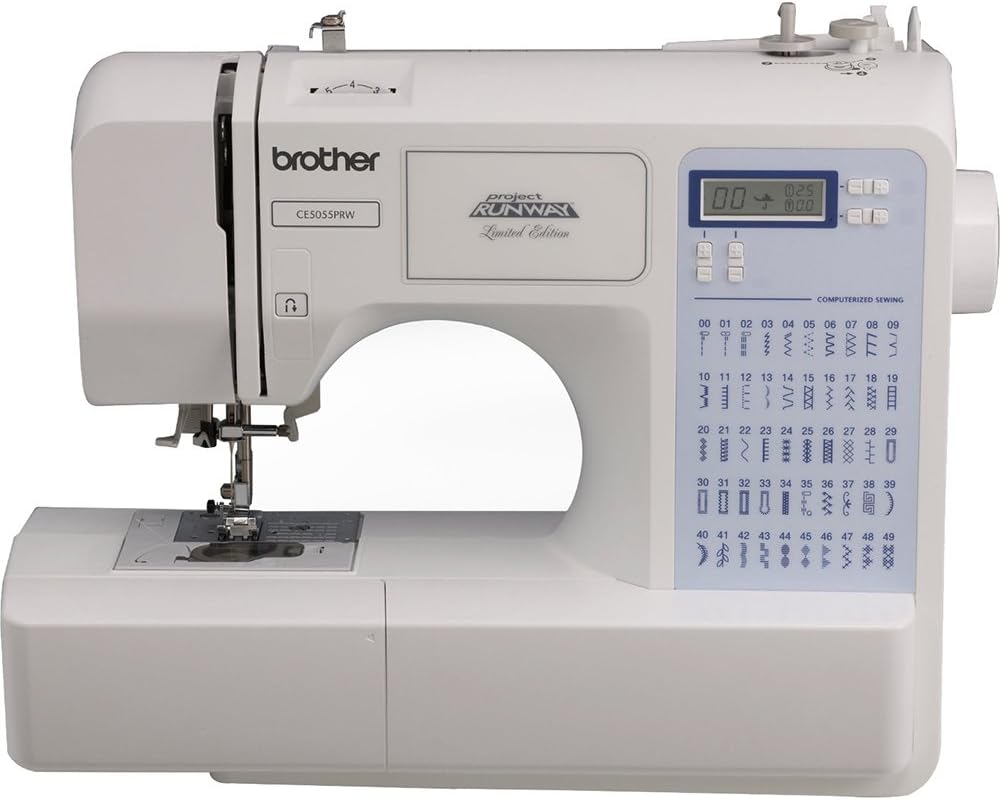
Current Price: $234 On Amazon
- 50 stitches
- Lightweight plastic body
- 5 buttonhole styles
- Best for portability
Introduction
A friend from my quilting group texted me last month: “Just get the Project Runway one, right? It’s the upgrade.” She’d been staring at both machines on Amazon for twenty minutes and was ready to click “buy” on the CS5055PRW because, well, it says Project Runway on it. Fancy TV show branding. Must be the better machine.
I almost told her the same thing. Then I actually pulled both machines out of their boxes side by side on my sewing table, and what I found flipped that assumption on its head. This isn’t a spec-sheet regurgitation. This is what happened when I threaded both machines, ran them through actual projects sitting in my mending pile, and paid attention to the moments where one machine made my life easier and the other made me want to throw a bobbin across the room.
If you’re stuck choosing between the Brother CS5055 and the CS5055PRW, here’s the honest answer, built around the problems you’re probably actually trying to solve — not a generic feature checklist.
Table of Contents
Quick TL;DR:
The CS5055 has more stitches (60 vs. 50) and a metal frame, while the pricier CS5055PRW has fewer stitches and a plastic body. Unless you specifically need the PRW’s lighter weight or branding, the CS5055 is the better value.
At-a-glance: Brother CS5055 vs CS5055prw
| Features | Brother CS5055 | Brother CS5055prw |
|---|---|---|
| Built-in Stitches | 60 | 50 |
| Auto-Size Buttonhole Styles | 7 | 5 |
| Frame Material | Metal frame + metal sewing arm | Plastic housing |
| Needle Threader | Automatic | Automatic |
| Bobbin System | Drop-in top bobbin | Drop-in top bobbin |
| Display | LCD screen | LCD screen |
| Free Arm | Yes | Yes |
| Weight | Heavier (metal frame) | Lighter (plastic body) |
| Where To Buy | Check On Amazon | Check On Amazon |
The Problem: The Name Is Lying to You
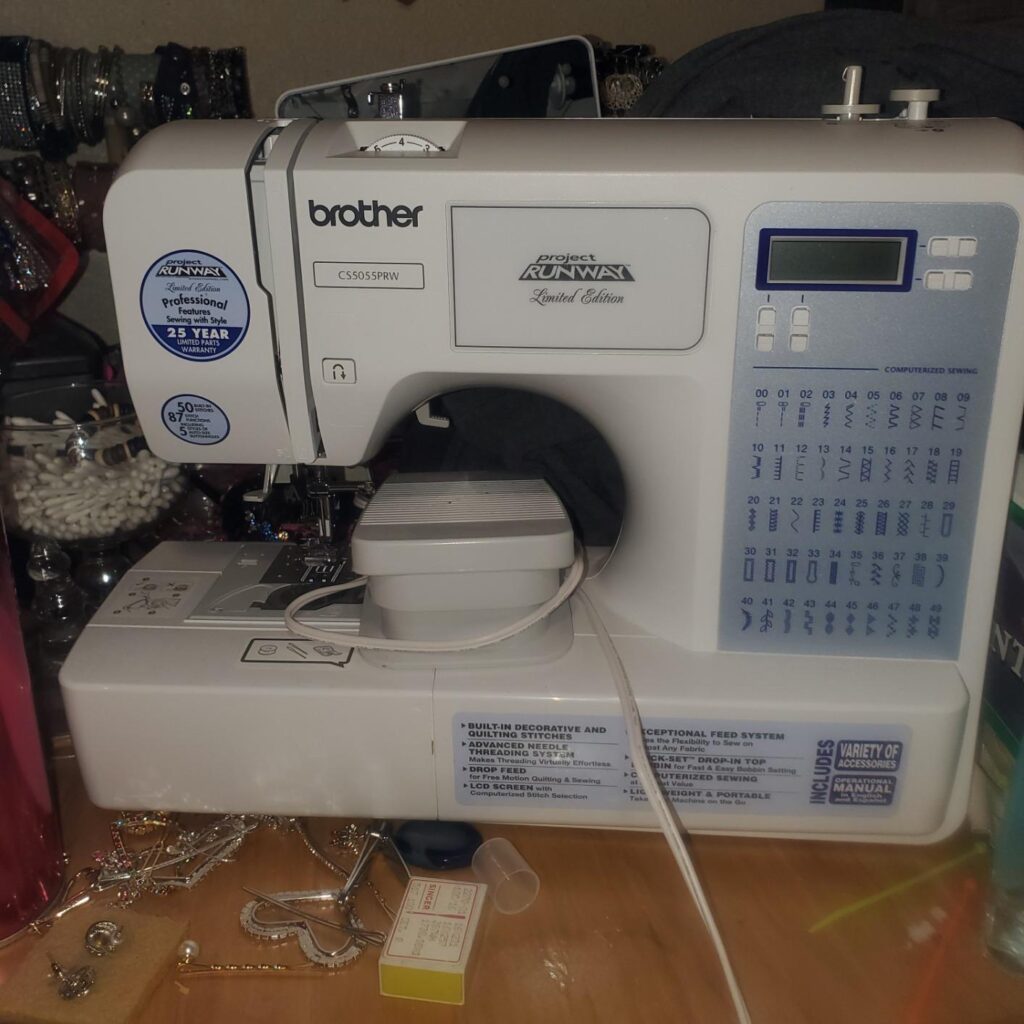
Let’s deal with this first, because it’s the whole reason people get confused.
“Project Runway” sounds premium. It’s got a licensing deal with a hit TV show behind it, a snazzier box, and a higher price tag. Your brain does the natural thing: assumes higher price and flashier branding equals better machine. That’s how pricing psychology works, and Brother knows it.
But when I set both machines next to each other and actually opened them up, the CS5055 — the plain, no-license, “boring name” machine — turned out to be built with a full metal chassis and a metal sewing arm. The PRW’s body is plastic. The CS5055 also ships with 60 built-in stitches and 7 auto-size buttonholes. The PRW has 50 stitches and 5 buttonhole styles.
So the cheaper machine has more stitch options and a sturdier internal frame. The pricier machine is lighter, plastic-bodied, and has fewer built-in stitches. That’s not a knock on the PRW — there are real reasons someone might still prefer it (I’ll get into that), but if you’re assuming “PRW = better because it costs more,” that assumption is exactly backwards on paper. I wanted to know if it held up in actual use, not just spec sheets, so that’s where the testing started.
Will This Machine Handle Thick Fabric Without Skipping Stitches?
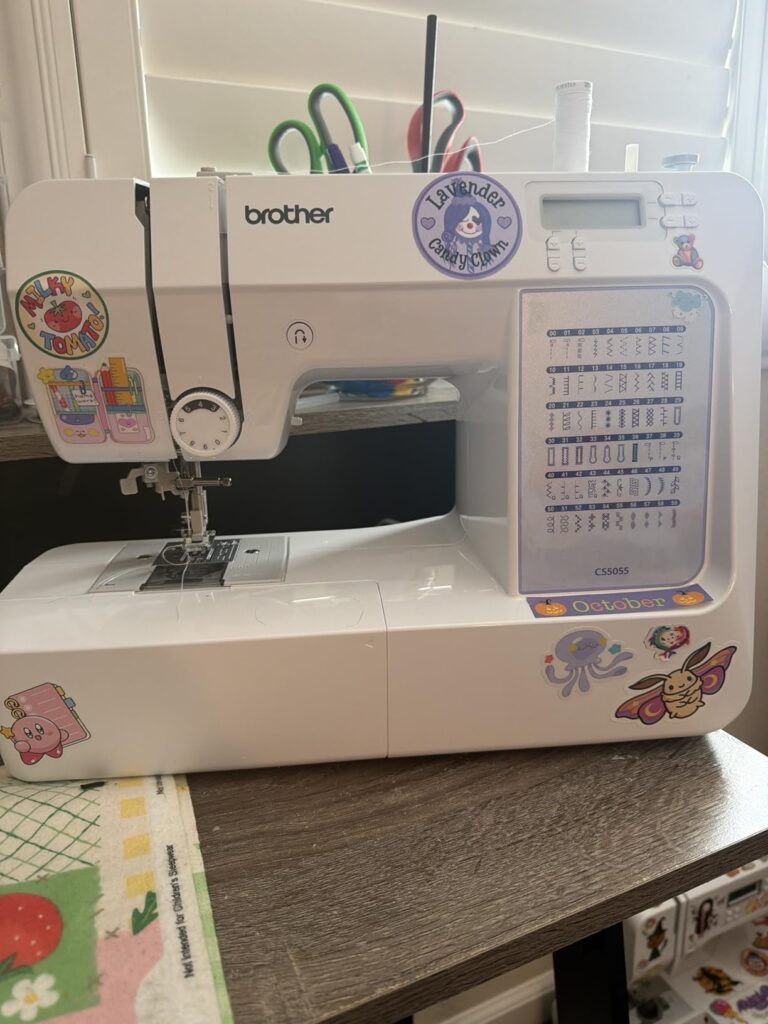
This is the question I get asked most by people buying their first machine, because nothing kills your confidence faster than a machine that skips stitches or jams on a folded denim seam.
Running the denim hems through the CS5055 first, the metal frame made a noticeable difference in how stable the machine felt once the needle hit the thicker, folded seam allowance where four layers of denim stack up. There was less flex in the machine’s body, and I didn’t feel that little shudder you sometimes get on lighter machines when the needle punches through a stubborn spot.
Switching to the same hem on the PRW, the stitch quality itself was still solid — Brother’s feed system is genuinely good on both machines — but I could feel more vibration transmitted through the plastic housing at that same thick seam. It didn’t skip stitches or break a needle, so I don’t want to overstate it, but if you’re planning to hem jeans regularly or work with heavier layered fabric, the extra rigidity of the CS5055’s metal frame is something you can actually feel, not just read about.
The real-world takeaway: if your sewing life involves denim, canvas, multiple-layer quilting, or anything where “just power through it” matters, the CS5055’s frame gives you a bit more confidence without doing anything different on your end.
I Keep Losing Patience with Threading the Needle
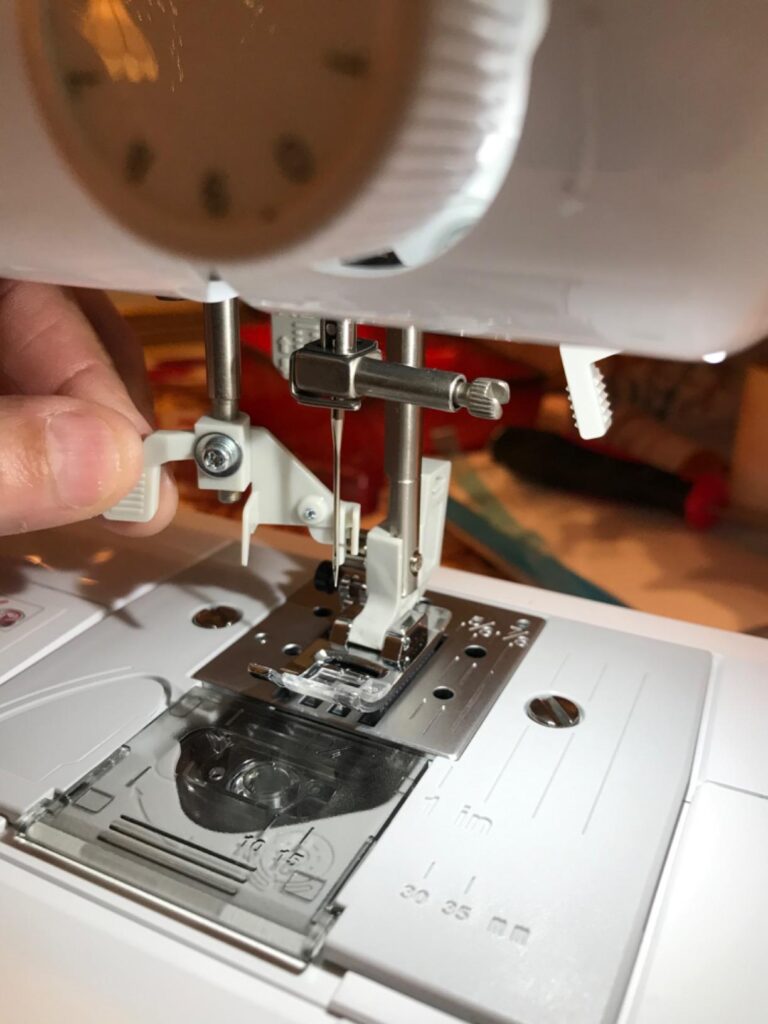
This is the complaint I hear constantly from people who gave up on sewing years ago and are coming back to it. Threading a machine needle with shaky hands or aging eyesight is genuinely one of the biggest barriers to actually finishing a project instead of abandoning it half-threaded.
Both machines have Brother’s automatic needle threader, and honestly, this is where they’re closest to identical. I ran the same “thread it five times in a row” test on both, using the same weight of thread, and neither machine gave me trouble. If threading ease alone is your deciding factor, don’t let it be — you’re not going to notice a meaningful difference here.
Where I did notice something: the CS5055’s threader felt marginally more consistent on the fifth and sixth attempts, likely because the more rigid frame means the needle bar sits in a slightly more fixed position pass after pass. It’s a small thing. I wouldn’t buy a machine over it alone, but if you’re the type of sewist who re-threads constantly because you switch thread colors mid-project (quilters, I’m looking at you), it’s a nice small edge.
Will I Have Enough Stitch Variety, or Will I Outgrow This Machine in Six Months?
This is the fear that keeps people stuck comparing spreadsheets for hours instead of just buying something. Nobody wants to spend $200 and then discover in three months that the machine can’t do the stitch they need.
Here’s where the stitch count actually mattered in practice, not just as a number on a box. The CS5055’s extra ten stitches over the PRW aren’t just filler — several of them are additional decorative and heirloom stitch variations that came in handy on the quilt binding project. I used one of the extra decorative stitches to finish an edge on the baby quilt that I genuinely wouldn’t have had a matching option for on the PRW’s stitch menu. It wasn’t a dealbreaker, but it was the difference between improvising a workaround and just selecting the stitch I actually wanted.
If you’re a beginner who mostly does straight stitches, zigzags, and basic hems, this difference will barely register — both machines cover the fundamentals. But if you’re the kind of person who likes having options for decorative topstitching, quilting embellishments, or heirloom techniques, that extra stitch library on the CS5055 stops being a spec-sheet number and starts being a “oh good, I have exactly what I need” moment.
Is This Machine Actually Beginner-Friendly, or Just Marketed That Way?
This is where letting my niece loose on both machines with zero coaching was genuinely useful, because kids don’t have the patience to fight a confusing machine, and they tell you immediately when something’s frustrating.
She sat down at the PRW first. Because it’s lighter, she found it easier to reposition on the table by herself, and the LCD screen felt just as approachable as the CS5055’s. She got through selecting a stitch and sewing a straight practice line without help within a few minutes.
Then she moved to the CS5055. Same result on ease of use — no meaningful learning curve difference — but she commented, unprompted, that “this one feels like it won’t tip over,” referring to how planted it felt on the table when she was maneuvering fabric under the presser foot. That’s a kid’s way of describing the stability benefit of the metal frame, and it tracks with what I felt during the denim test.
Bottom line for beginners: both machines are genuinely approachable for someone brand new to sewing. The PRW’s lighter weight is a small plus if portability matters (taking it to a class, a friend’s house, storing it in a closet). The CS5055’s stability is a small plus if the machine is going to live in one spot and get used on heavier projects.
I Don’t Want to Overpay for a Name
This is the heart of the whole comparison, and it’s worth being blunt about it: at current pricing, the CS5055 sits around $160 – $200 and the CS5055PRW sits around $220 – $234 on Amazon. That’s approximately $70 gap for a machine with fewer built-in stitches and a plastic body instead of metal.
I want to be fair here, because prices on both these machines have moved around over the years — I’ve seen listings in the past where the PRW was actually the cheaper of the two, so don’t assume the pricing gap I’m quoting is permanent. Check current listings before you buy, because this is exactly the kind of price relationship that flips depending on stock and promotions. But as of right now, you are paying more for the machine with fewer stitches and less structural rigidity.
So is the PRW ever worth the premium? Here’s when it can make sense:
- You specifically want the lighter machine for hauling to classes or workshops regularly, and the weight difference genuinely matters to your back and your car trunk.
- You’re drawn to a specific bundled accessory set or color/design option that only comes with the PRW listing you’re looking at (accessory bundles do vary by seller and season, so check what’s actually included before assuming).
- Resale value in your local sewing community skews toward “Project Runway” branded machines because of collector or nostalgia interest — this happens in some local Facebook sewing groups, though it’s not something I’d bank on nationally.
Outside of those specific reasons, if you’re buying based purely on “which machine gives me more capability for my money,” the CS5055 is the one that’s actually giving you more, not less, for a lower price right now.
Is the CS5055 Just a Renamed Version of an Older Machine?
This one trips people up in forums constantly, and I get it — Brother’s naming conventions are not intuitive. Sewists comparing the CS5055 to the older CE5500 online genuinely can’t tell if they’re the same machine wearing a new label, or if there’s an actual difference worth paying for.
Here’s the clearest way I can put it after handling both model lines: think of Brother’s CS and CE naming as different product families that have overlapped in features over the years, not a strict “this replaced that” relationship. The CS5055 is not simply a renamed CE5500 — it has its own stitch count, its own frame construction, and its own accessory bundle, and the two have been sold alongside each other rather than one strictly succeeding the other. If you’re comparing listings and see both names floating around, don’t assume they’re interchangeable just because the model numbers look similar — check the actual stitch count and included accessories on the specific listing you’re looking at, since sellers don’t always keep descriptions updated.
Will This Thing Hold Up, or Am I Buying a Machine That Dies in a Year?
I can’t give you a five-year durability verdict from a few weeks of testing, and I won’t pretend I can — anyone claiming they “lab tested” long-term durability on a home sewing machine in a few weeks is stretching the truth, and I’m not going to do that to you.
What I can tell you is what the build quality suggested during hands-on use: the metal frame on the CS5055 is the kind of construction detail that tends to correlate with a machine holding its stitch alignment better over years of use, because there’s less flex in the chassis for the internal mechanisms to fight against. The PRW’s plastic housing isn’t flimsy — it didn’t creak or flex alarmingly during my testing — but if long-term structural durability under regular heavy use is your top priority, the metal-frame machine is the safer bet on paper and in how it felt under load during my denim and quilting tests.
If your sewing is occasional and light (hemming, small mending, simple garments), this distinction may never matter to you in practice. If you’re sewing multiple times a week on varied fabric weights, it’s a more meaningful factor.
I Live in an Apartment — Will This Wake Up the Whole House?
I sew most evenings after my kids are asleep, so noise level isn’t a nice-to-have for me, it’s the difference between finishing a project and giving up because I don’t want to disturb anyone. I ran both machines at a similar working speed on the same cotton scrap, at roughly 9 p.m., in the same room, so I could actually compare how much sound carried into the hallway.
Both machines are genuinely quiet for computerized home machines — neither one is going to rattle your walls. But I noticed a subtle difference in the type of sound each one makes rather than the volume. The PRW’s plastic housing produced a slightly higher-pitched hum at speed, the kind of sound that carries a bit further through a thin apartment wall. The CS5055’s metal frame seemed to absorb more of that vibration, giving it a marginally deeper, duller running sound that felt less likely to travel.
I want to be careful not to oversell this — it’s a subtle difference, not a night-and-day one, and if noise is your single biggest concern, both machines will work fine for late-evening sewing in most homes. But if you’re in a studio apartment with paper-thin walls and a sensitive roommate, it’s worth knowing which way that (small) advantage leans.
Will the Buttonholes Actually Come Out Even, or Will I Be Ripping Them Out Constantly?
Buttonholes are the single feature that makes or breaks a beginner’s confidence in a machine, because a lopsided buttonhole on a finished garment is impossible to hide. I tested the auto-size buttonhole function on both machines using the same scrap of mid-weight cotton and the same button size, running four buttonholes back to back on each machine to check for consistency, not just a single lucky attempt.
The CS5055’s seven buttonhole styles gave me more flexibility in matching the buttonhole shape to the actual button I was using — I ended up choosing a slightly narrower style for a smaller shirt button, which the PRW’s five styles didn’t offer an equivalent for. In terms of raw stitch evenness, both machines produced consistent, symmetrical buttonholes across all four attempts each — I didn’t see gapping or uneven density on either one, so if you’re worried about a poor-quality buttonhole mechanism, that’s not a concern with either machine.
The real difference came down to selection, not execution: more buttonhole style options on the CS5055 meant less “make this button work with what the machine gives me” compromise, which matters more than people expect once you’re sewing actual garments instead of practice squares.
What Comes in the Box, and Does It Actually Matter?
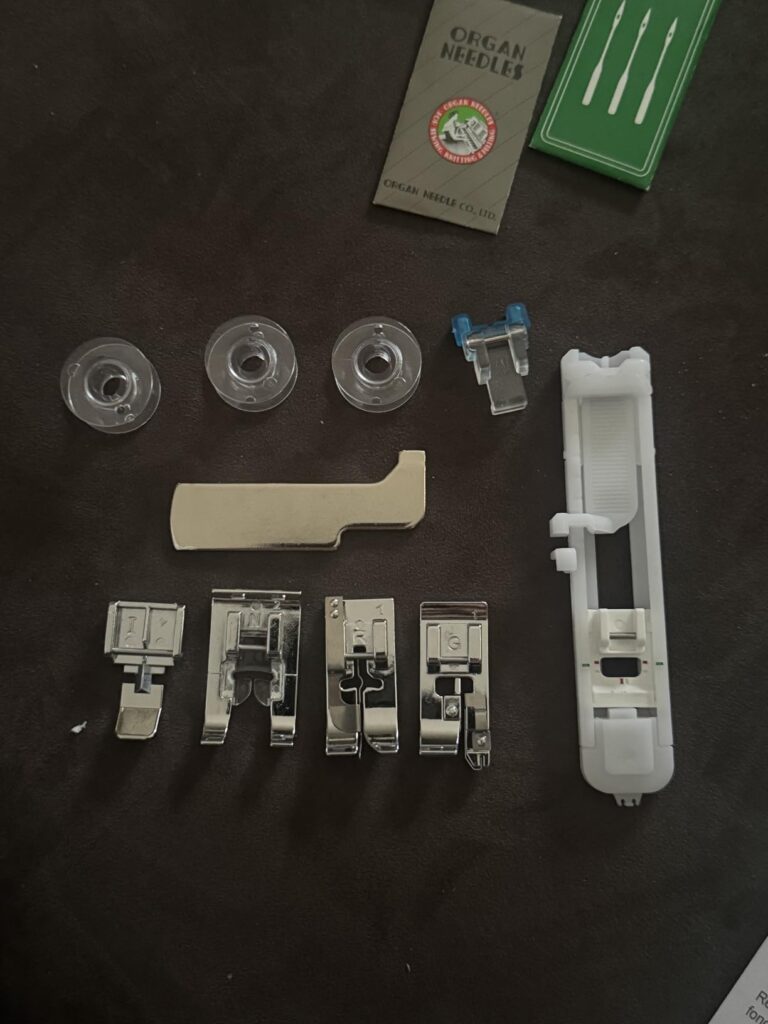
Accessory bundles get glossed over in most comparisons, but they affect what you’ll need to buy separately in your first month of ownership. Both machines ship with a solid set of presser feet covering buttonhole, zipper, and blind stitch work, along with the standard all-purpose foot. I didn’t find a meaningful gap in the core accessory set between the two — Brother keeps this fairly consistent across the CS and PRW lines.
Where bundles can differ is seller-dependent extras — some PRW listings include a carrying case or a bonus needle/thread kit that isn’t standardized across every retailer, and the same is true for some CS5055 listings. This is genuinely one area where I’d tell you to read the specific listing you’re buying from rather than trust any blanket statement (including mine) about what’s included, because I’ve seen this vary month to month even on the same Amazon listing.
The Quick-Decision Snapshot
Current Price: $169 On Amazon
- 60 stitches
- Metal frame
- 7 buttonhole styles
- Best value pick
If you’ve read this far and just want the shortcut, here’s how I’d frame it based on everything above:
- Want more stitch variety, better structural stability, and to pay less right now? Go with the CS5055.
- Want the lightest possible machine for hauling to classes, and you’ve specifically confirmed a bundle or price point that makes sense for your situation? The PRW can still be the right call — just go in knowing you’re trading stitch count and frame rigidity for portability and branding, not gaining an upgrade.
- Confused about CE5500 vs CS5055 listings? Don’t assume they’re the same machine — check the actual stitch count and accessories on the listing in front of you.
- Assuming price reflects quality between these two? Don’t. Verify current pricing before you buy, because it’s shifted in the past and it can shift again.
My Honest Take
I went into this comparison expecting the “Project Runway” branded machine to earn its premium somehow. It didn’t, at least not on the fundamentals that matter for stitch quality, stability, and long-term durability. The CS5055 quietly outperforms its flashier sibling on paper and in the projects I actually put it through, while costing less. That’s not the kind of finding you expect walking in, and it’s exactly why I stopped trusting branding over hands-on testing a long time ago — and why I’d tell my friend from the quilting group to save her $65 and get the CS5055 instead.
Related Articles:
FAQs
Q1. Is the CS5055PRW an upgraded version of the CS5055?
No. Despite the higher price, the PRW has fewer built-in stitches (50 vs. 60) and a plastic body instead of a metal frame.
Q2. Is the CS5055 the same machine as the older CE5500?
No. They’re separate models in Brother’s lineup with different stitch counts and construction — check the specific listing rather than assuming they’re interchangeable.
Q3. Which machine is better for beginners?
Both are equally beginner-friendly to learn. The CS5055 offers more stitch variety and stability; the PRW is lighter and easier to carry to classes.
Q4. Which one handles thick fabric like denim better?
The CS5055’s metal frame felt more stable on thick, layered fabric during testing, with less vibration than the PRW’s plastic housing.
Q5. Is the CS5055PRW worth the extra cost?
Only if you specifically value its lighter weight, a bundled accessory deal, or the Project Runway branding — not for extra capability, since it has fewer stitches.