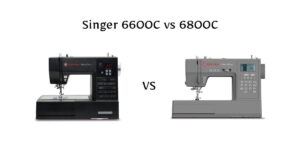
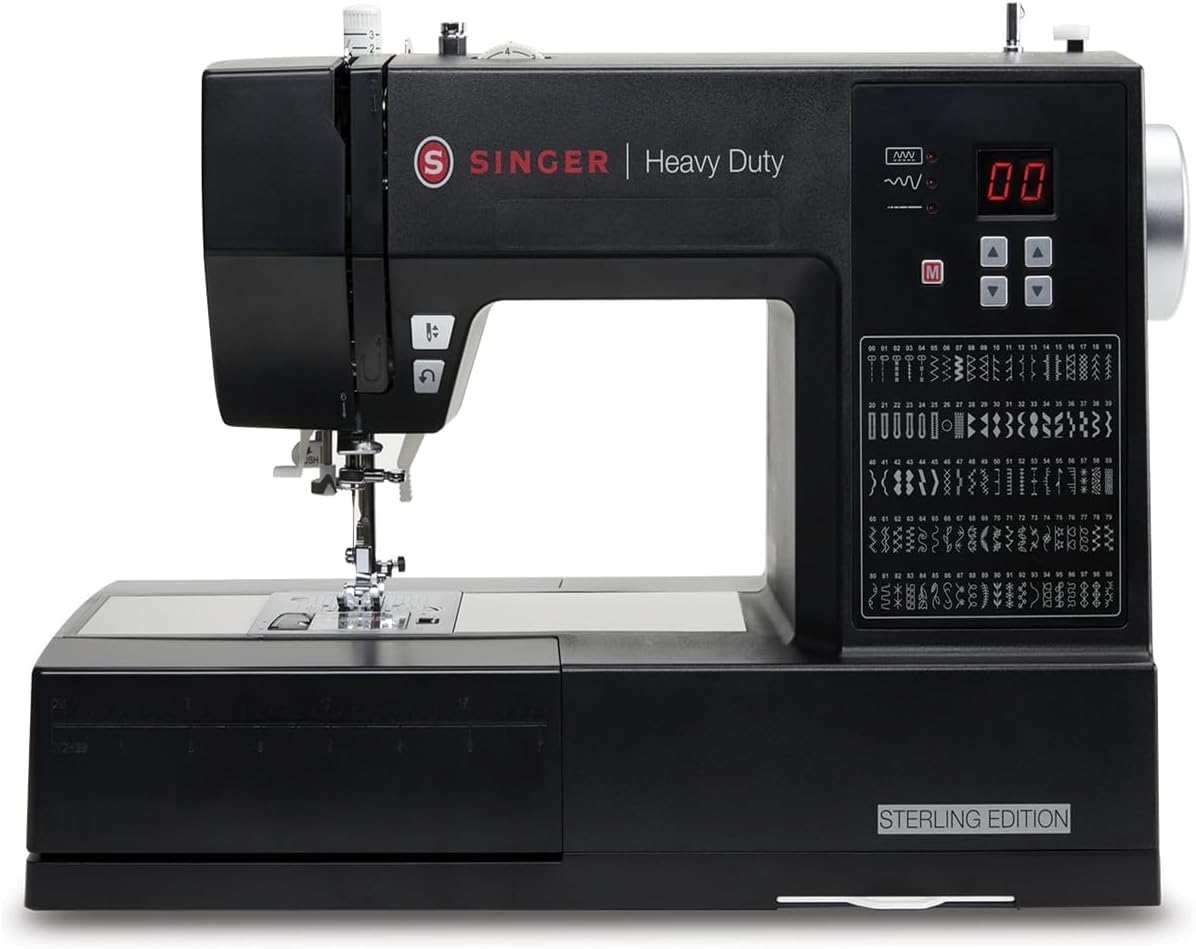
Current Price: $379
Best for: Quilters, beginners, garment sewists, anyone wanting precision controls
The case for it: Six exclusive features — speed cap, start/stop, auto thread cutter, needle up/down, stitch memory, built-in lettering — on top of the same heavy-duty foundation as the 6600C.
The catch: Auto thread cutter needs a learning curve to avoid tangles. You're paying for controls, not extra power.
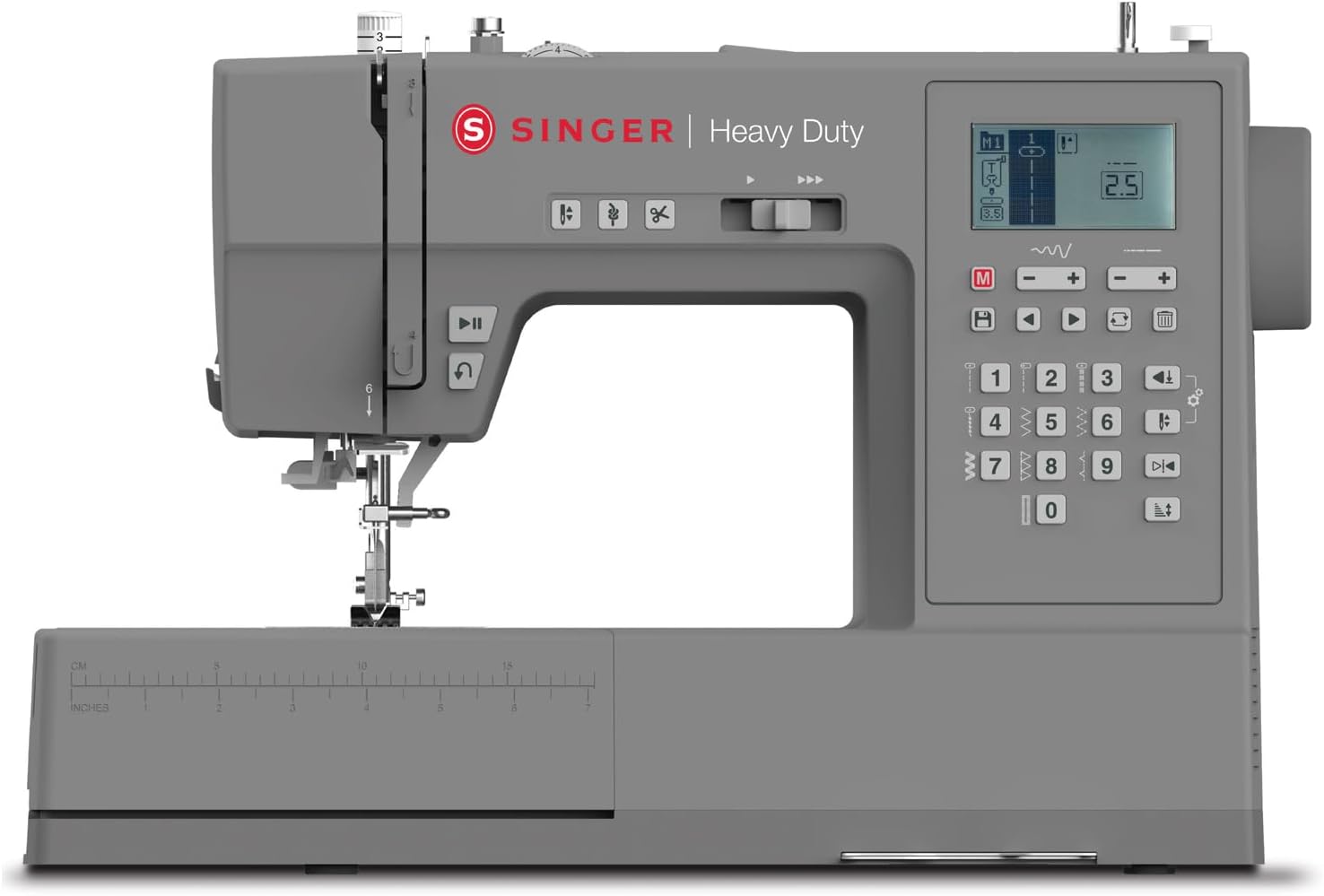

Current Price: $299
Best for: Heavy-duty sewists, denim/canvas work, budget-conscious buyers
The case for it: Same metal frame and 1,100 SPM motor as the 6800C. Handles thick fabrics without compromise. 100 stitches cover everything a practical sewist needs.
The catch: No speed slider, no pedal-free button, no auto cutter — pure fundamentals, nothing more.
Introduction
Let’s skip the part where I tell you “both are great machines” and walk you through a feature table like you haven’t already seen ten of those.
Here’s the real situation: you’re staring at an $80 price difference between two machines that look nearly identical in every photo, share the same motor speed, the same throat space, the same metal frame — and yet Singer charges 27% more for one of them. Something has to justify that gap. The question is whether it justifies it for you specifically.
That’s what this article figures out. Not in theory. In the actual scenarios where these machines live or die.
Table of Contents
TL;DR
The Singer 6600C ($299) and 6800C ($379) share the same motor, frame, and core power — the $80 gap buys you six control features: speed slider, start/stop button, auto thread cutter, needle up/down, stitch memory, and built-in lettering. If three or more of those match how you sew, get the 6800C. If not, the 6600C does the same mechanical work for less.
Related Articles:
At-a-glance: Singer 6600C vs 6800C
| Features | Singer 6600C | Singer 6800C |
|---|---|---|
| Price | $299 | $379 |
| Built-in Stitches | 100 (215 applications) | 300 (586 applications) |
| Motor Speed | 1,100 SPM | 1,100 SPM |
| Throat Space | 6.4" | 6.4" |
| Metal Frame | ✅ | ✅ |
| Speed Control Slider | ❌ | ✅ |
| Start/Stop Button | ❌ | ✅ |
| Auto Thread Cutter | ❌ | ✅ |
| Needle Up/Down Button | ❌ | ✅ |
| Stitch Memory | ❌ | ✅ |
| Built-in Lettering | ❌ | ✅ (2 fonts) |
| Best For | Heavy fabrics, budget-conscious | Quilters, beginners, precision work |
| Where To Buy | Check On Amazon | Check On Amazon |
The Confusion That Sends Buyers in Circles
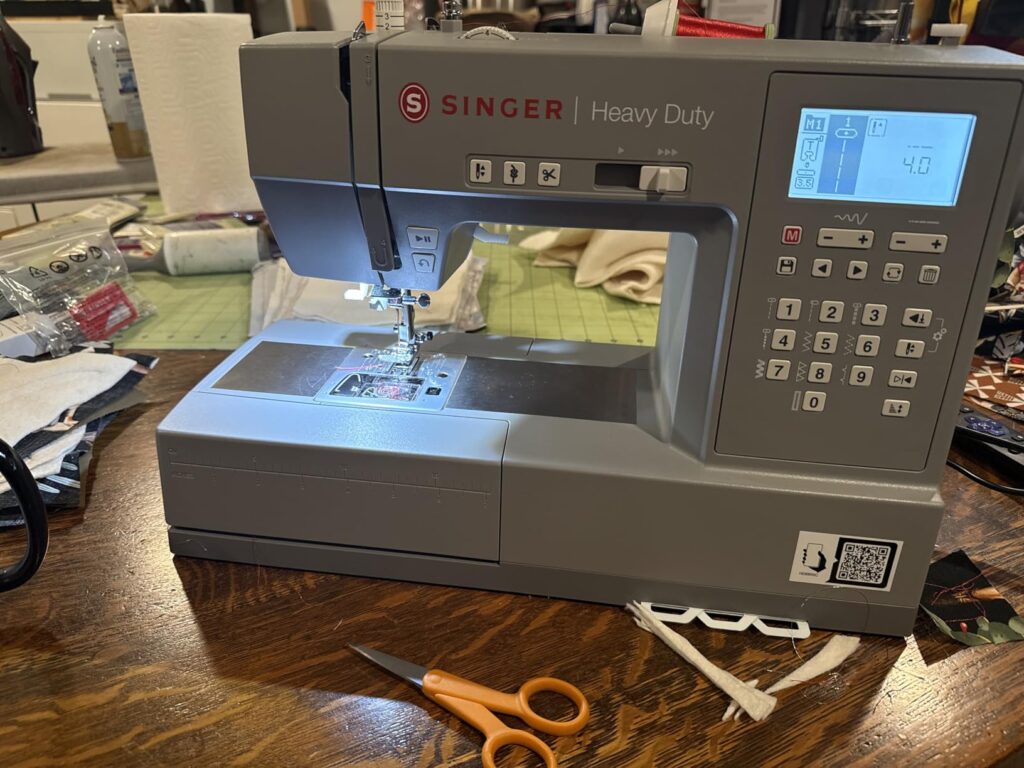
Before anything else, there’s a numbers problem you deserve to know about.
Go read five comparison articles about these two machines. You’ll find the 6600C described as having anywhere from 215 to 404 built-in stitches depending on who’s writing. The 6800C gets pegged at 586 in some places, 300 in others. These wildly different numbers aren’t typos — they’re a result of Singer using two different counting methods simultaneously, and most writers just grabbing whichever number sounds bigger.
Here’s what’s actually true:
The 6600C has 100 built-in stitches. Those 100 stitches produce 215 stitch applications — meaning each stitch can be set at multiple width and length combinations, so Singer counts each variation separately.
The 6800C has 300 built-in stitches, producing 586 stitch applications using the same counting logic.
Why does this matter? Because if you’re deciding between these machines and you think the 6600C has “215 stitches” and the 6800C has “586 stitches,” you’re solving the wrong math problem. The real gap is 100 vs 300 base stitches — and even that gap matters far less than what Singer puts on the other side of the $80 divide.
What the $80 Actually Buys? (And What It Doesn’t)
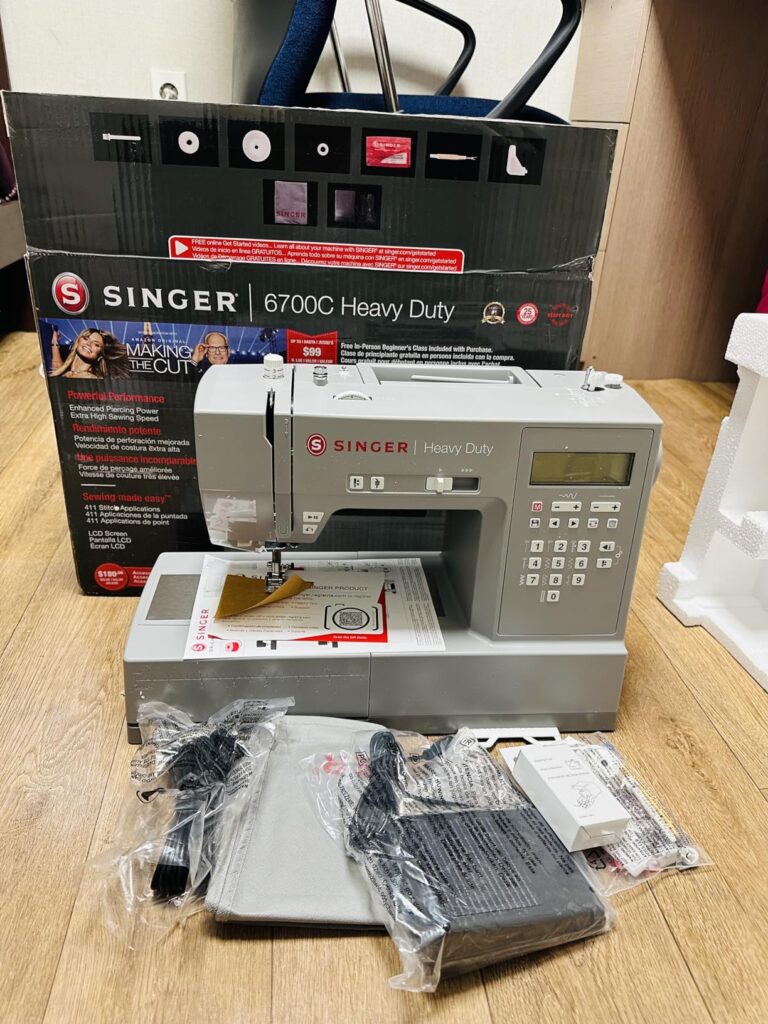
The 6800C doesn’t just give you more stitches. It gives you a fundamentally different operating experience. Six features exist on the 6800C that are completely absent on the 6600C:
1. Speed Control Slider
The 6600C controls speed the way most sewing machines do — through the foot pedal. Pedal pressure = machine speed. The 6800C adds a physical speed limit slider on the machine body itself. You set a ceiling, then the pedal operates within that ceiling. This sounds minor until you’re teaching a child to sew, doing fine embroidery where even a slight foot twitch sends the needle flying, or sewing around a tight corner where your foot instinctively tenses up. The slider turns speed control from a reflexive skill into a mechanical guardrail.
2. Start/Stop Button
Pedal-free sewing. You press the button, the machine runs at whatever speed the slider is set to, and you focus entirely on guiding the fabric. This feature polarizes sewists. Some find it liberating for precise detail work. Others miss the intuitive speed modulation of the pedal and never touch it. But for people with mobility limitations in their feet or ankles, it isn’t a preference — it’s a requirement.
3. Automatic Thread Cutter
One button press, and the machine trims both the top thread and the bobbin thread. Sounds like a luxury until you’re chain-sewing 40 quilt squares in an afternoon and manually snipping every single one. Time adds up fast. Here’s the honest part though: real users on sewing forums specifically mention they avoid the auto thread cutter sometimes, because starting your next seam right after using it can pull threads underneath and create a bird’s nest tangle below the fabric. The fix is simple — leave a couple inches of thread tail after cutting, and don’t position the needle right at the fabric edge when you resume. But it’s a learning curve that nobody in the product description warns you about.
4. Needle Up/Down Button
Press it and the needle stops in the down position every time you pause — keeping your fabric locked exactly where you are. This is genuinely underrated. The moment it becomes essential is when you’re pivoting at a corner: stop mid-seam, needle down, pivot your fabric, continue. Without it, stopping mid-pivot and having your fabric shift even a millimeter throws your line off. Precision workers — quilters, bag makers, garment sewists — notice this feature more than any other.
5. Stitch Memory
You configure a stitch — width, length, tension, all of it — and save it. Next time you turn the machine on, it’s there. If you sew the same garment patterns repeatedly, or if you have a go-to utility stitch for denim and another for chiffon, you stop re-dialing everything from scratch. For casual sewists who mostly do one or two kinds of projects, this feature is invisible. For people with rotating project types, it’s quietly one of the most time-saving things on the machine.
6. Two Lettering Fonts
The 6800C can embroider text directly onto fabric. Two alphabets, built-in. No separate embroidery machine needed for monogramming pillowcases, personalizing kids’ backpacks, or labeling fabric projects. This is either essential to you or completely irrelevant — there’s no middle ground. If you want this capability, the 6800C is the only option between these two. If you never considered it, don’t let it influence your decision.
What Both Machines Share? (And Why the Foundation Matters)
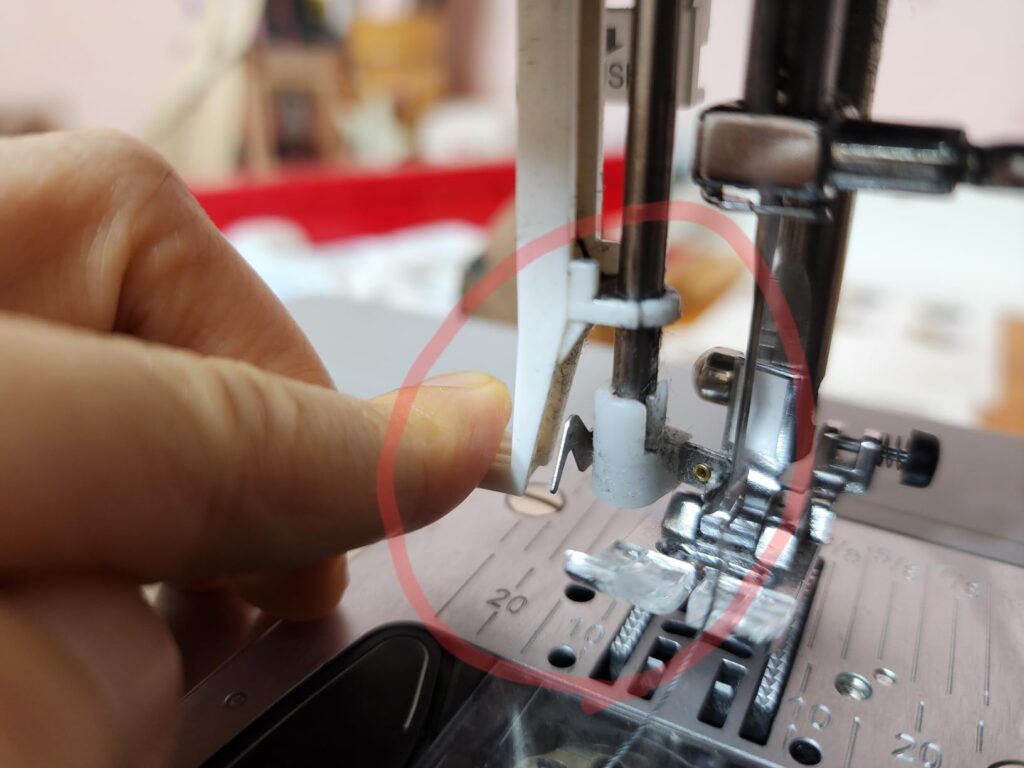
Neither machine is flimsy. That’s not a small thing.
Both the 6600C and 6800C are built around a heavy-duty metal frame with a stainless steel bedplate. This matters enormously for anyone who’s sewn on a cheaper plastic-chassis machine and watched it vibrate across the table, skip stitches on thick seams, or flex when pushing through multiple layers of denim. The metal frame keeps both these machines planted and stable.
Both run at 1,100 stitches per minute — identical motor speed. Both have the same 6.4-inch throat space (the distance between the needle and the right side of the machine), which determines how much room you have to maneuver large projects like quilts. Both have automatic needle threaders, top-loading drop-in bobbins, adjustable presser foot pressure, and built-in LED lighting.
On thick fabrics — denim layers, canvas, upholstery — both machines perform from the same mechanical baseline. The 6800C’s extra features don’t make it more powerful. They make it more controllable.
One thing both machines share that nobody seems to mention in comparisons: users across forums describe the motor sound as “clanky” — noticeable and mechanical, more like a vintage machine than a quiet modern computerized unit. This is a characteristic of the heavy-duty frame and high-torque motor, not a defect. But if you’re expecting the near-silent hum of a lighter home machine, both models will surprise you.
The Error Code Problem (Read This Before You Buy)
A meaningful number of Singer 6600C users report encountering “EL” and “5P” error codes — sometimes on brand-new machines, sometimes after just a few sessions of use. The EL error typically indicates a problem the machine detects with the hook timing or thread path. The 5P error triggers a different lockout entirely. Both render the machine unresponsive until resolved.
Users who encountered these errors tried the standard fixes — reclean the hook area, rethread from scratch, replace the needle, check the bobbin seating — and still needed to exchange the machine under warranty. Not every 6600C experiences this. But it’s happened enough times, across enough independent buyers, that it’s worth knowing before purchase.
Practical advice: register your machine the day it arrives, keep the packaging for the first 30 days, and buy from a seller with a clean return window. If you get a machine that throws error codes within the first week of use, exchange it immediately rather than troubleshooting indefinitely.
The 6800C doesn’t appear to have the same error code pattern reported with the same frequency. Whether that’s a firmware difference, a quality-control difference between production runs, or simply that more 6600C units are sold (meaning more reported problems), isn’t entirely clear. But it’s a data point worth factoring into a $299 vs $379 decision.
The Singer Lineup Nobody Mentions
Here’s something that genuinely changes the comparison: Singer built this line as a three-tier system — 6600C (Good) → 6700C (Better) → 6800C (Best) — and almost every comparison article pretends the 6700C doesn’t exist.
If you’re weighing whether $80 is worth the jump from 6600C to 6800C, knowing the 6700C exists matters. It sits between the two on price and features. Depending on where it’s selling at the moment you’re reading this, it might give you more of what you want from the 6800C without the full premium.
Check the current 6700C price alongside these two before finalizing your decision. The three-machine comparison might make your choice obvious in a way the two-machine framing doesn’t.
The Fabric Test: Where Each Machine Actually Lives
Forget the stitch count. Here’s how to think about this by what you actually sew:
If your work is mostly quilting: The needle up/down button on the 6800C becomes your best friend at every pivot point. Stitch memory means your walking-foot settings and free-motion settings are saved between sessions. The speed slider gives you control during free-motion quilting without fighting your foot. For serious quilters, the 6800C’s quality-of-life features stack up fast — this is the machine.
If you sew garments regularly: This one’s genuinely mixed. The 6600C’s 100 stitches cover every utility and decorative stitch a garment sewist actually uses. The extra 200 stitches on the 6800C are largely decorative variations you’ll rarely touch. The start/stop button and speed slider add precision for finicky fabrics like chiffon or silk. Whether that’s worth $80 depends on how often those fabrics appear in your projects.
Current Price: $379
Best for: Quilters, beginners, garment sewists, anyone wanting precision controls
The case for it: Six exclusive features — speed cap, start/stop, auto thread cutter, needle up/down, stitch memory, built-in lettering — on top of the same heavy-duty foundation as the 6600C.
The catch: Auto thread cutter needs a learning curve to avoid tangles. You're paying for controls, not extra power.
If you do heavy-duty work — denim, canvas, leather, upholstery: Both machines handle it from the same mechanical platform. The 6600C gives you everything you need here at $80 less. The 6800C adds no meaningful power advantage. This is where the 6600C makes the clearest case for itself.
If you’re a beginner: The speed slider and start/stop button on the 6800C aren’t gimmicks for beginners — they’re training wheels that actually work. Being able to cap your machine’s speed while you’re learning to guide fabric is a real advantage. If budget allows, the 6800C gives beginners more room to grow without feeling overwhelmed. If budget is tight, the 6600C’s feature set is still more than enough to learn on properly.
If you want embroidery: The 6800C’s built-in alphabets handle basic monogramming. But be clear-eyed: it’s two fonts, directly on fabric, for simple text. If you envision doing complex embroidery designs, you’ll eventually want a dedicated embroidery machine regardless. The 6800C’s lettering is a nice bonus, not a replacement for real embroidery capability.
Current Price: $299
Best for: Heavy-duty sewists, denim/canvas work, budget-conscious buyers
The case for it: Same metal frame and 1,100 SPM motor as the 6800C. Handles thick fabrics without compromise. 100 stitches cover everything a practical sewist needs.
The catch: No speed slider, no pedal-free button, no auto cutter — pure fundamentals, nothing more.
The Decision Framework (No Fluff)
Lay out the $80 against the six features the 6800C adds. That’s roughly $13 per feature at full spread. But features aren’t equal — some you’ll use every session, some you’ll never touch.
The features you’ll use every session (if they apply to you): speed control slider, needle up/down, start/stop button.
The features you’ll use regularly: stitch memory, auto thread cutter (once you learn its quirk).
The feature you’ll either use constantly or never: built-in lettering.
If three or more of these features land in your “every session” category based on how and what you sew — the $80 pays for itself in the first month of use.
If you read through all six and two or fewer genuinely apply to your sewing life — keep the $80. The 6600C’s metal-frame foundation gives you the same mechanical performance for every project where those extras don’t matter.
FAQs
Q: Is the Singer 6800C worth the extra $80?
Only if you’ll use its exclusive features — speed slider, needle up/down, start/stop, or stitch memory. If two or fewer apply to you, save the money.
Q: Can the 6600C handle denim and thick fabrics?
Yes. Same metal frame and motor as the 6800C. No power difference between them.
Q: What’s the EL error code on the 6600C?
A hook timing or threading sensor error. Rethread completely, clean the bobbin area, swap the needle. If it persists on a new machine, exchange it immediately.
Q: Does the 6800C’s auto thread cutter cause tangles?
It can if you start sewing right at the fabric edge after cutting. Leave a short thread tail and it stops being an issue.
Q: Which is better for beginners?
The 6800C — its speed slider acts as a physical speed limit while you’re learning to guide fabric.
Q: Are both machines loud?
Yes. Both sound noticeably “clanky” due to the heavy-duty metal frame. Not a defect — just the trade-off for the power.