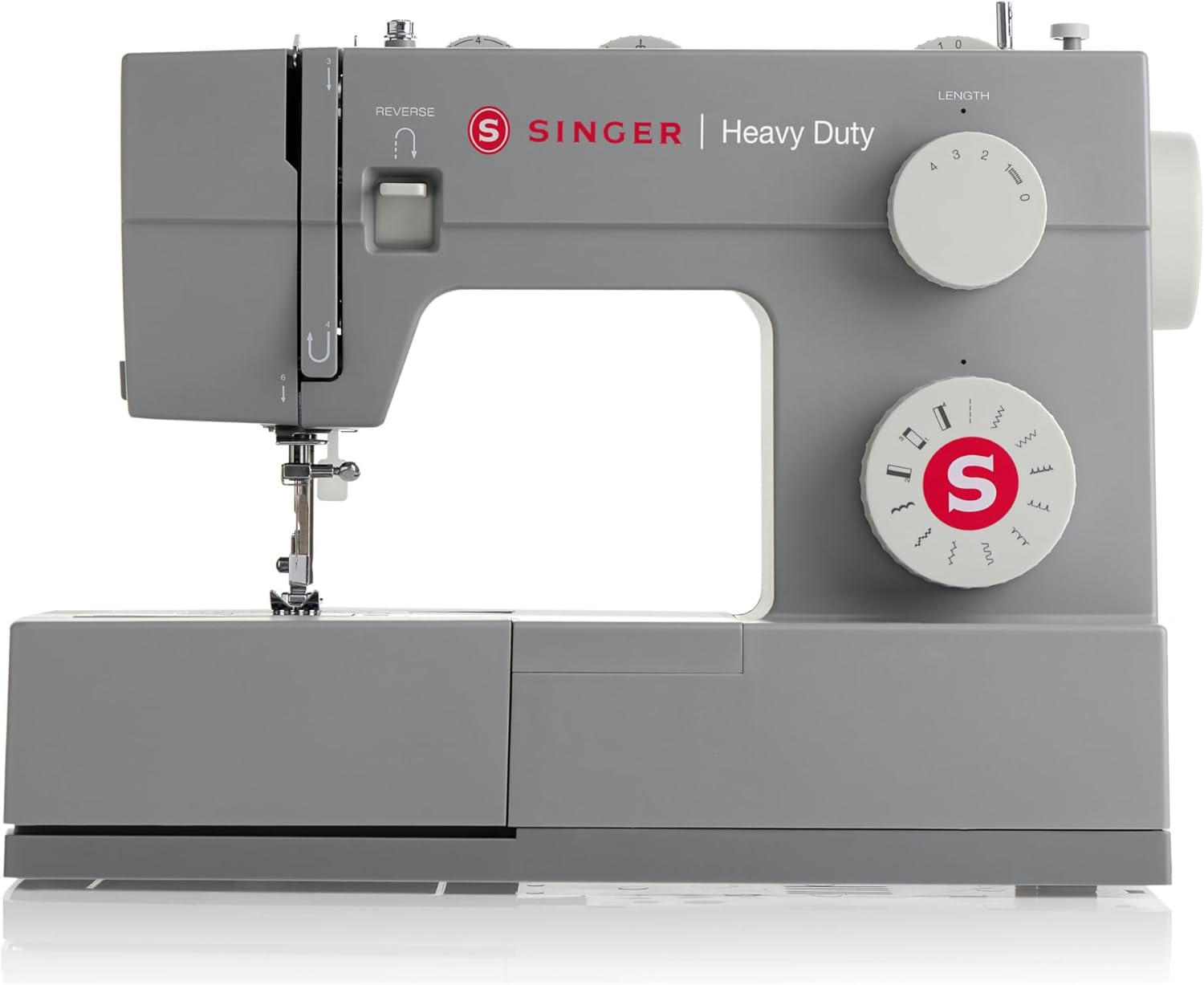
Current Price: $249
32 stitches, top drop-in bobbin, walking foot included. The bundled accessories ($30+ value) make this the better deal if you sew denim, quilt, or want a forgiving bobbin system as a beginner.
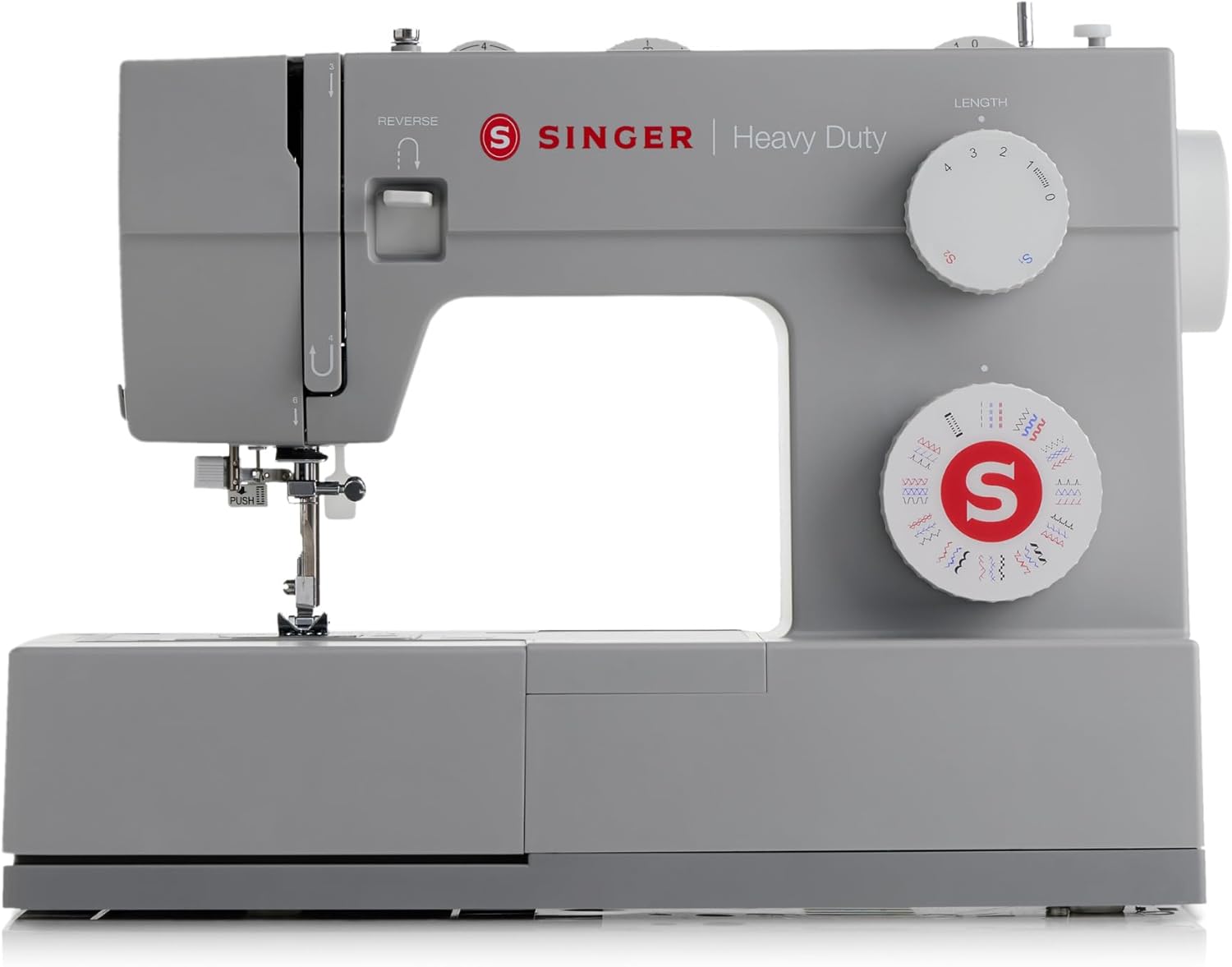

Current Price: $209
Same metal frame and 1,100 SPM speed as the 4452. Saves $40 upfront — smart buy if you sew cotton, linen, or basic garments and don't need the accessories bundle.
Introduction
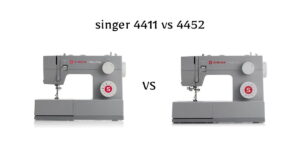
At current Amazon prices, the Singer 4411 runs $209 and the 4452 runs $249. The $40 gap sounds small, but before you assume the more expensive one is automatically the upgrade, you need to understand something that almost no comparison article explains:
The Singer 4452 vs 4432 are the same machine.
Same motor. Same stitch speed (1,100 SPM). Same metal interior frame. Same needle threader. Same bobbin system. The 4432 and 4452 share identical internals — the only difference is what Singer bundles in the box with the 4452: a walking foot, a non-stick presser foot, and a clearance plate.
Those three accessories retail for roughly $25–35 if purchased separately.
So when you’re comparing the 4411 to the 4452, you’re not comparing two fundamentally different machines. You’re comparing the 4411 to the 4432 machine body + $30 worth of accessories. That reframes the entire decision.
Table of Contents
TL;DR
The 4452 isn’t really an upgraded machine — it’s the same core motor and frame as the 4411, bundled with a walking foot and accessories worth ~$30. Pay the extra $40 only if you’ll actually use those accessories. If you sew light-to-medium fabrics, the 4411 at $209 is the smarter buy.
Related Articles:
At-a-glance: Singer 4411 vs 4452
| Features | Singer 4411 | Singer 4452 |
|---|---|---|
| Price | $209 | $249 |
| Built-in Stitches | 11 | 32 |
| Sewing Speed | 1,100 SPM | 1,100 SPM |
| Bobbin Type | Front-loading | Top drop-in |
| Interior Frame | Metal | Metal |
| Walking Foot Included | ❌ | ✅ |
| Non-stick Foot Included | ❌ | ✅ |
| Clearance Plate Included | ❌ | ✅ |
| Best For | Light–medium fabrics, budget buyers | Thick fabrics, beginners, quilters |
| Where To Buy | Check On Amazon | Check On Amazon |
The Functional Differences That Actually Matter
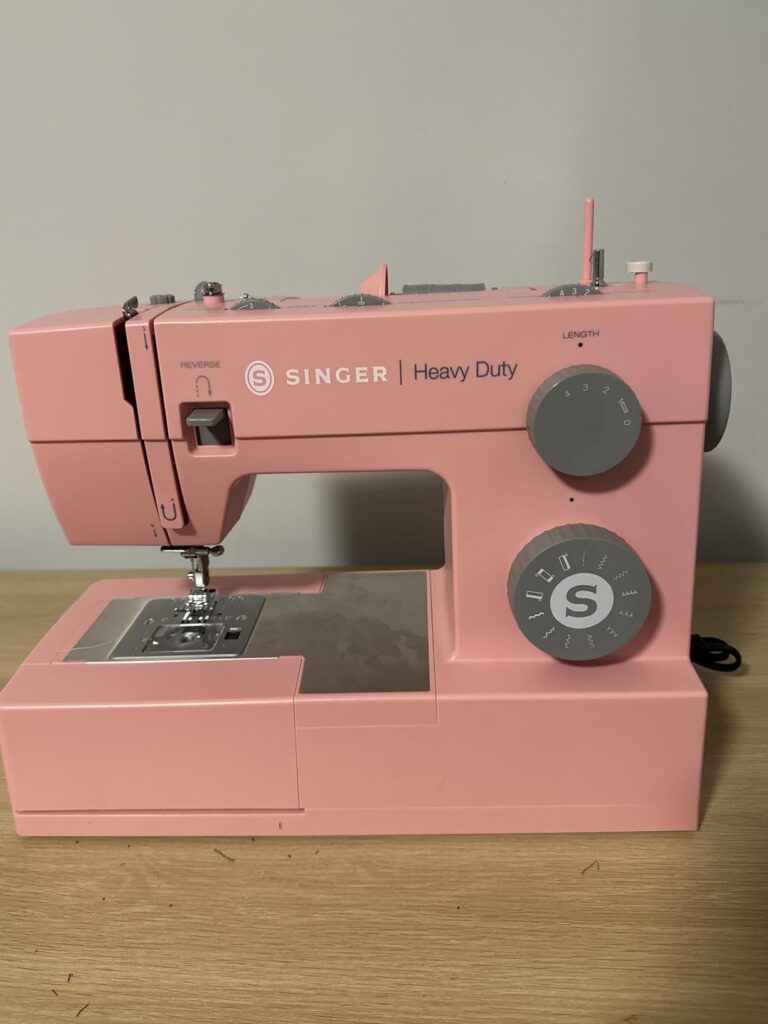
Set aside the accessories for a moment. There are two mechanical differences between the 4411 and 4452 that genuinely affect your sewing experience — and neither of them is stitch count.
1. The Bobbin System
The 4411 uses a front-loading bobbin. You open a small door on the front of the machine, thread the bobbin, and close it. It’s the older, classic design. Not difficult, but it requires proper tension setting and is slightly less forgiving for new sewists.
The 4452 uses a top drop-in bobbin. You drop the bobbin in from the top, under the needle plate. It’s easier to load, easier to see when thread is running low, and generally has more consistent tension for beginners.
If you’re new to sewing, this difference matters more than stitch count. Bobbin tension problems are one of the top frustrations for new sewists — threads bunching underneath the fabric, skipped stitches, jammed machines. The drop-in bobbin system reduces that friction significantly.
2. Built-In Stitches
The 4411 has 11 built-in stitches. The 4452 has 32.
Here’s the honest truth about that: most people who sew practically — garments, repairs, home projects — use maybe 5 stitches regularly. Straight stitch, zigzag, blind hem, stretch stitch, and occasionally a decorative option. If that’s you, 11 stitches is genuinely enough and 32 adds no real value.
Where the extra stitches earn their place: quilting (decorative stitch options), cosplay/costume construction, and sewists who regularly switch between different fabric types and need tailored stitch patterns for each.
The Complaint Nobody Talks About: The Foot Pedal
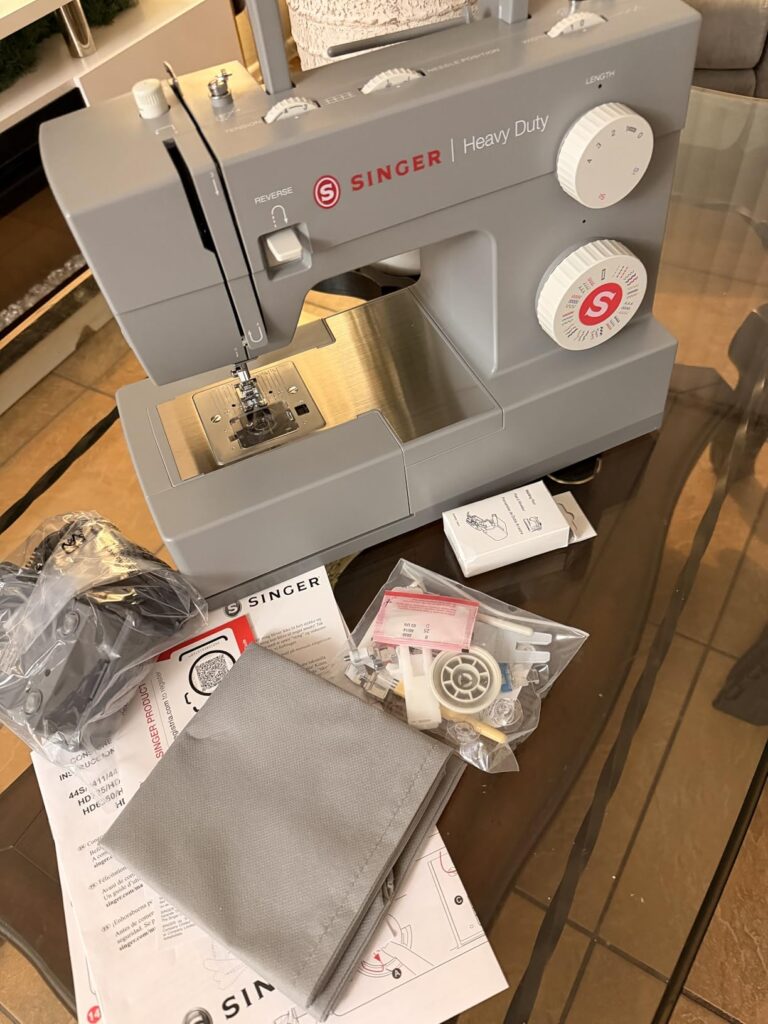
Both machines — the 4411 and 4452 — share the same foot pedal. And across sewing forums, Amazon Q&A sections, and user communities, the pedal comes up repeatedly as the most frustrating part of owning either machine.
The issue: the pedal goes from slow to fast with very little middle ground. There’s minimal resistance at the lower end of the pedal travel, so it’s easy to accidentally jump to full speed when you’re trying to sew a precise curve, navigate a corner, or do slow controlled stitching on a thick seam.
Experienced sewists learn to work around it. Beginners find it disorienting. If you’re buying either machine as your first sewing machine, expect a short learning curve with pedal control before your stitch length becomes consistent.
This isn’t a dealbreaker — it’s a known quirk you can adapt to. But it’s something the glossy comparison articles skip over, and it’s worth knowing before you sit down expecting an instant smooth experience.
The Quality Control Reality
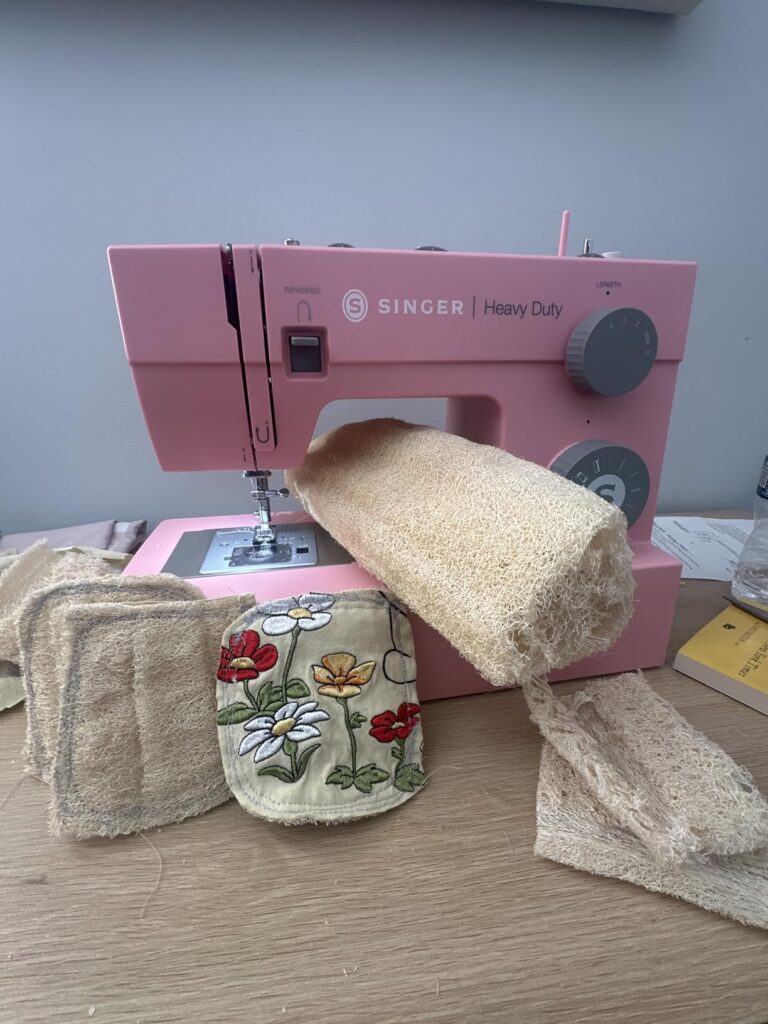
At this price point — $209 to $249 — Singer is making mass-market machines. The majority of buyers are very happy. But quality control at this tier is not as tight as machines in the $400+ range, and this shows up in real user reports in a specific pattern:
Some units arrive perfectly calibrated and run for years without a hiccup. Others come slightly out of timing from the factory, develop tension problems within the first few months of heavy use, or have minor alignment issues with the presser foot.
This is not unique to Singer. It’s the reality of consumer-grade machines at this price. The practical takeaway: buy from a retailer with a generous return/exchange policy. Amazon, Walmart, and large fabric retailers typically offer 30–90 day windows. If something is off with your machine, a straightforward swap solves it. Buying from an obscure third-party seller with a restocking fee for returns puts you in a worse position if you land on a unit with factory variance.
Who Should Stop Overthinking and Buy the 4411?
Current Price: $209
Same metal frame and 1,100 SPM speed as the 4452. Saves $40 upfront — smart buy if you sew cotton, linen, or basic garments and don't need the accessories bundle.
Get the 4411 at $209 if:
You’re new to sewing and focused on learning the fundamentals. 11 stitches covers everything a beginner needs. The budget savings let you invest in better thread, a seam ripper you’ll actually use, and fabric to practice on — all of which matter more early on than having 32 stitch options.
Your primary projects are light to medium fabrics. Cotton quilting fabric, linen, muslin, basic wovens — the 4411 handles all of it cleanly. Its 1,100 SPM speed is identical to the 4452, and its metal interior frame means it’s not a flimsy beginner machine despite the lower price.
You already own a walking foot or don’t need one. If you have a compatible walking foot from a previous machine or know you won’t be sewing heavy layers, you’re not missing anything meaningful by skipping the 4452 bundle.
You want a reliable backup machine. Sewists who already have a primary machine and want something dedicated to basic tasks — hemming, repairs, straight-stitch projects — don’t need the 4452’s expanded feature set.
Who Should Go Straight to the 4452?
Current Price: $249
32 stitches, top drop-in bobbin, walking foot included. The bundled accessories ($30+ value) make this the better deal if you sew denim, quilt, or want a forgiving bobbin system as a beginner.
Get the 4452 at $249 if:
You plan to sew denim, canvas, twill, or multiple fabric layers regularly. The walking foot included with the 4452 is not optional equipment for these materials — it’s essential. It feeds thick layers evenly and prevents the top fabric from shifting against the bottom. Without it, thick-layer sewing on either machine becomes a frustration exercise.
You’re a beginner who wants fewer tension headaches. The drop-in top-loading bobbin is meaningfully more forgiving than the 4411’s front-loading design. If you’re still learning, fewer thread tension problems means more time sewing and less time troubleshooting.
You make quilts or layered projects. The combination of walking foot, non-stick foot (excellent for quilting through batting and backing), and the clearance plate for thick seam allowances makes the 4452 bundle genuinely purpose-built for quilting.
You want more stitch flexibility without upgrading machines later. If you can already picture yourself wanting decorative stitches, stretch stitches for knit fabrics, or specialty options for crafting — getting 32 stitches now avoids an upgrade in 12 months.
The Durability Question: Will Either Machine Last?
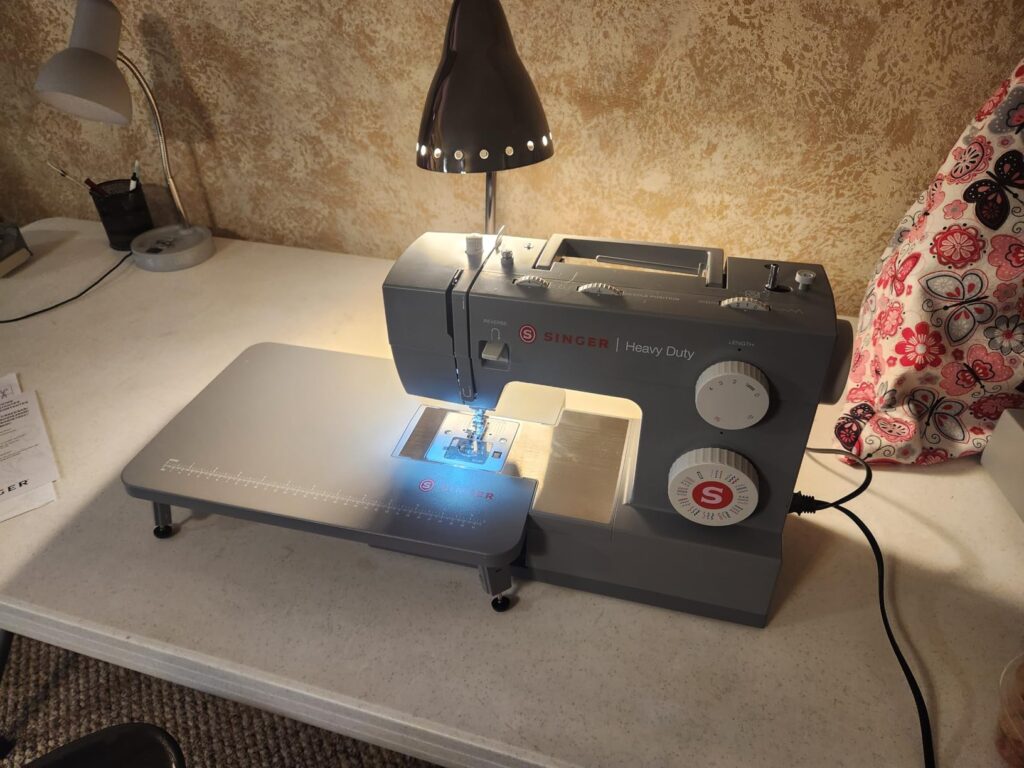
Both machines have a metal interior frame, which is what Singer markets as the key durability feature at this price point — and it’s legitimate. Plastic-interior machines at similar price points (common in the $100–150 range) wear more quickly under regular use.
The metal frame means neither machine is disposable. Both will hold up to regular home sewing use — several hours a week, consistent projects — for years with basic maintenance (regular cleaning, occasional oiling per the manual, needle changes every 8–10 hours of sewing time).
Where durability becomes a concern: heavy daily use. If you’re sewing 4–6 hours a day, running through thick materials consistently, or treating either machine like a light industrial workhorse, both machines will eventually show wear in ways a mid-range or professional machine wouldn’t. The 4411 and 4452 are built for consistent home use, not production volume.
The practical maintenance point that extends the life of both machines significantly: change your needle more often than you think you need to. A dull needle causes skipped stitches, thread breakage, and fabric damage — problems that get blamed on the machine but are almost always a needle issue. Keep a pack of assorted Schmetz needles on hand and swap them out regularly.
A Word on the Stitch Count Confusion Online
If you’ve been searching this comparison for a while, you’ve probably seen conflicting numbers. Some articles say the 4452 has 23 stitches. Others say 32. One says 34. The accurate number is 32 built-in stitches for the 4452 and 11 for the 4411. This discrepancy exists because several articles were written with outdated specs or were based on older model versions — and some have simply never been corrected. It’s one of those small things that signals whether a source is actually reliable or just recycling old information.
The Verdict: It’s an Accessories Decision, Not a Machine Decision
Here’s the honest summary: if you strip away the bundled accessories, the 4411 and 4452 are very similar machines at their core. The 4452’s top-loading bobbin and expanded stitch count are real improvements — but whether those improvements are worth $40 more depends entirely on your specific use case.
Choose the 4411 ($209) if you’re sewing light to medium fabrics, want to keep costs down, and don’t need the bundled accessories. It’s not a compromise machine — it’s a solid metal-frame sewing machine that handles the vast majority of home sewing projects without any issues.
Choose the 4452 ($249) if you’re sewing heavier materials, want the convenience of a drop-in bobbin, or know you’ll use the walking foot. The accessories bundle alone is worth more than the price difference if you’d otherwise need to buy them separately.
And if you’re on the fence: check current Amazon prices before buying. These two machines go on sale independently of each other. If the 4452 drops to $229 or the price gap narrows to $20, the decision makes itself. If the gap widens to $60+, the 4411 becomes the obvious value choice.
Either machine will sew. The question is which one fits the specific projects sitting on your cutting table right now.
FAQs
Is the Singer 4452 worth the extra $40 over the 4411? Only if you need the bundled accessories (walking foot, non-stick foot, clearance plate). If you don’t, you’re paying $40 for tools you’ll never use.
What’s the biggest functional difference between the two? The bobbin system. The 4452 has a top drop-in bobbin (easier, more forgiving). The 4411 has a front-loading bobbin that requires more precise tension setup.
Can the 4411 sew denim or thick fabric? Yes, but you’ll need to buy a walking foot separately (~$10–15). The 4452 includes one in the box.
Are the stitch counts accurate online? No — most articles get it wrong. The correct numbers are 11 stitches (4411) and 32 stitches (4452).
Which is better for beginners? The 4452, purely because of the drop-in bobbin. Fewer tension headaches = more time actually sewing.
Do both machines have the same speed? Yes. Both run at 1,100 stitches per minute with the same metal interior frame.