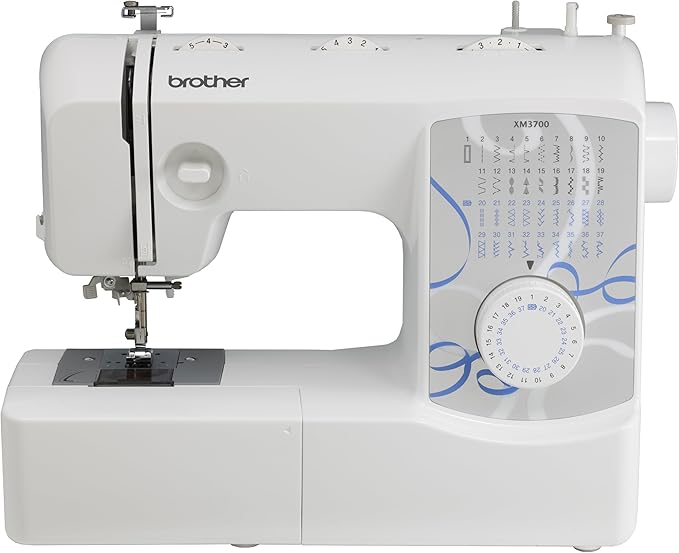
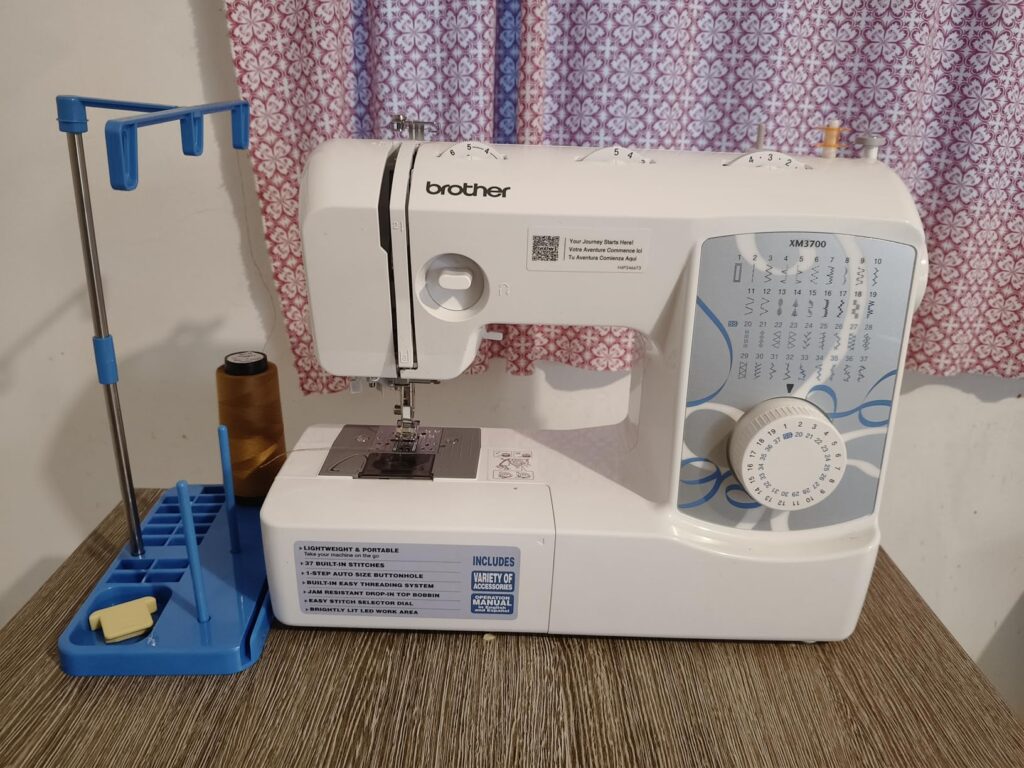
Current Price: $111
What You Get: 37 built-in stitches, automatic needle threader, free arm, drop-in bobbin, 5 sewing feet, built-in stitch guide, lightweight design (12 lbs)
Best For: First-time sewers, crafters, anyone working with cotton, polyester, and lightweight fabrics

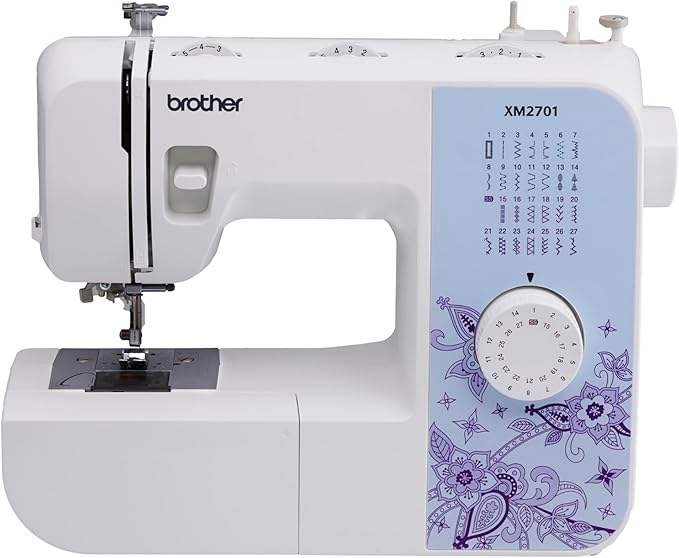
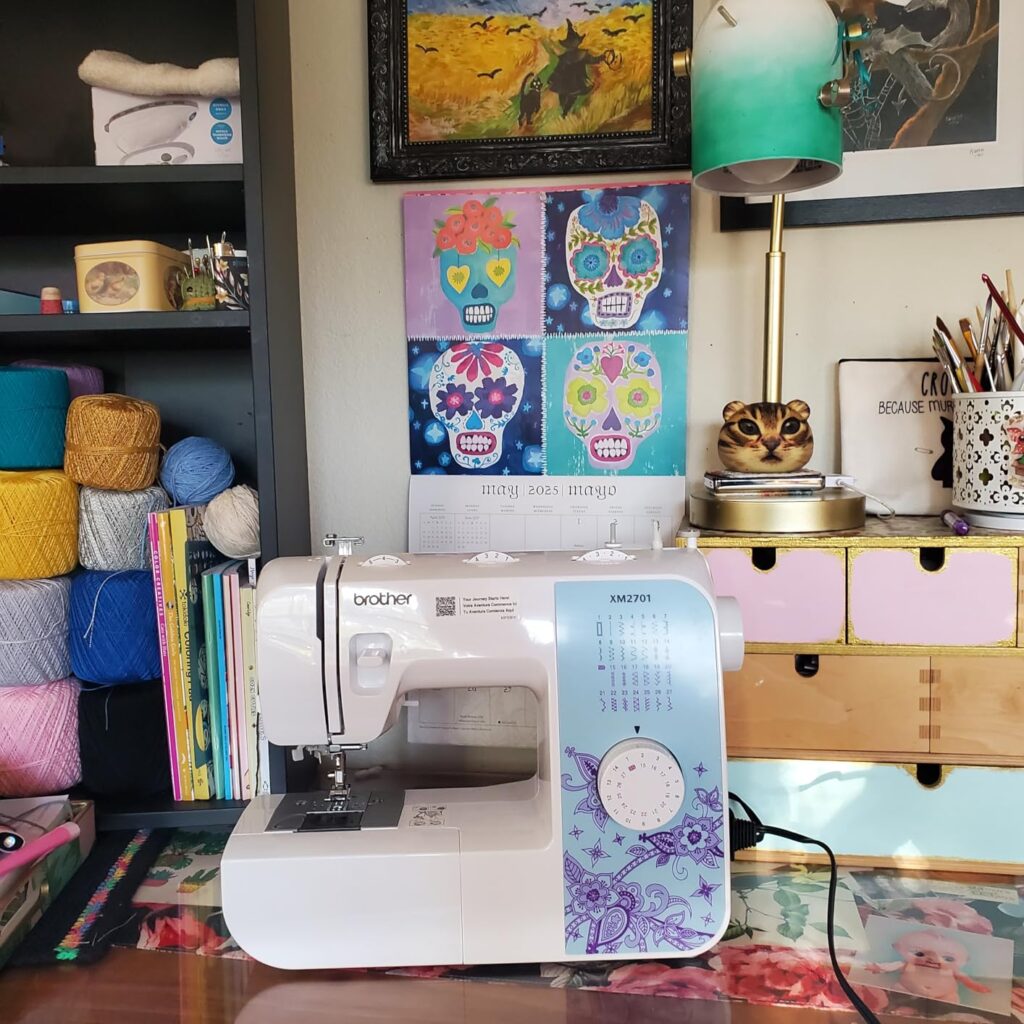
Current Price: $129
What You Get: 27 built-in stitches, automatic needle threader, free arm, drop-in bobbin, 6 sewing feet (includes button foot), built-in stitch guide
Best For: Button sewing enthusiasts, buyers who catch it on deep discount
Introduction
The XM2701 ($129) has 27 stitches. The XM3700 ($111) has 37 stitches. So you’re paying $18 more for the machine with fewer stitches.
Wait, what?
Why does the machine with more stitches costs less?
If you’re confused, you’re not alone. And if every review you’ve read glosses over this pricing inversion like it’s totally normal, that’s because most of them were written when the XM2701 was cheaper.
Let’s fix that.
Table of Contents
TL;DR
The XM3700 costs $18 less and has 10 more stitches than the XM2701—making it the obvious choice right now. Both machines share identical motors, build quality, and common issues (tension problems, fragile needle threader), so paying more for fewer features makes no sense. Get the XM3700 at $111 unless you desperately need the button sewing foot that comes with the XM2701.
At-a-glance: Brother XM2701 vs XM3700
| Features | Brother XM2701 | Brother XM3700 |
|---|---|---|
| Current Price | $129 | $111 |
| Built-in Stitches | 27 | 37 |
| Included Feet | 6 (with button foot) | 5 |
| Sewing Speed | 800 SPM | 800 SPM |
| Motor Power | Identical | Identical |
| Tension Control | Inconsistent | Inconsistent |
| Heavy Fabric Performance | Struggles | Struggles |
| Longevity | 2-3 years | 2-3 years |
| Best For | If on sale below $111 | Most buyers today |
| Where To Buy | Check On Amazon | Check On Amazon |
Why the Backwards Pricing Actually Matters?
Most people assume price equals value. When you see the XM2701 costs more, your brain tells you it must be better somehow. Maybe better build quality? More powerful motor? Some feature that justifies the premium?
Nope.
The XM2701 and XM3700 share the same motor, same frame design, same internal components. They’re siblings, not rivals. The only meaningful differences are stitch count and the accessory bundle.
Here’s what you actually get for that extra $18 with the XM2701:
- Fewer decorative stitches (27 vs 37)
- One extra sewing foot (button sewing foot)
- Slightly more established model (been on market longer)
That’s it. You’re essentially paying more to get less, plus a $10 button foot you might never use.
The pricing inversion exists because Brother released these models at different times, and retailers adjust prices based on inventory and demand rather than logic. Right now, the XM3700 is the smarter buy for most people. But that could flip next month.
This is why blindly following “best beginner machine” listicles is dangerous. They don’t update prices.
The Real Reason People Get Stuck Between These Two
You’re not actually choosing between two different machines. You’re choosing between two trim levels of the same machine.
Think of it like buying a car. The XM2701 is the base model. The XM3700 is the same car with a slightly better stereo and leather seats. Under the hood? Identical.
Both machines have:
- Automatic needle threader (works great for 6 months, gets finicky by year one)
- Free arm for sewing cuffs and sleeves
- Built-in stitch selector dial
- Drop-in bobbin system
- Four-step buttonhole
- Same 800 stitches-per-minute speed
- Identical weight and dimensions
So the decision really comes down to three things:
First: Do you care about decorative stitches?
If you’re planning to sew quilts, embellish clothes, or add decorative touches to projects, those extra 10 stitches on the XM3700 give you more creative options. Blind hem, scallop, multiple stretch stitches, decorative borders—stuff that makes projects look more polished.
If you’re hemming jeans, repairing jackets, or sewing basic garments, you’ll use maybe 5 stitches total. The extra 27 (or 37) are window dressing.
Second: Do you sew buttons?
The XM2701 includes an extra button sewing foot. If you frequently reattach buttons or add buttons to handmade garments, this extra foot is genuinely useful. It holds the button steady while you stitch through the holes.
You can buy this foot separately for about $10-15, which means if you get the XM3700 and later want button sewing capability, you’re still coming out ahead financially.
Third: Is the current price difference worth it?
At $18 more for fewer features, the XM2701 only makes sense if you find it on sale below the XM3700’s price, or if that button foot is mission-critical. Otherwise, why pay more for less?
The Problems Nobody Warns You About
Here’s where most reviews fail you. They list specs and features but ignore the stuff that actually breaks or frustrates you six months in.
Both machines have the same weak points because they’re basically identical under the skin.
The Tension Problem Is Real
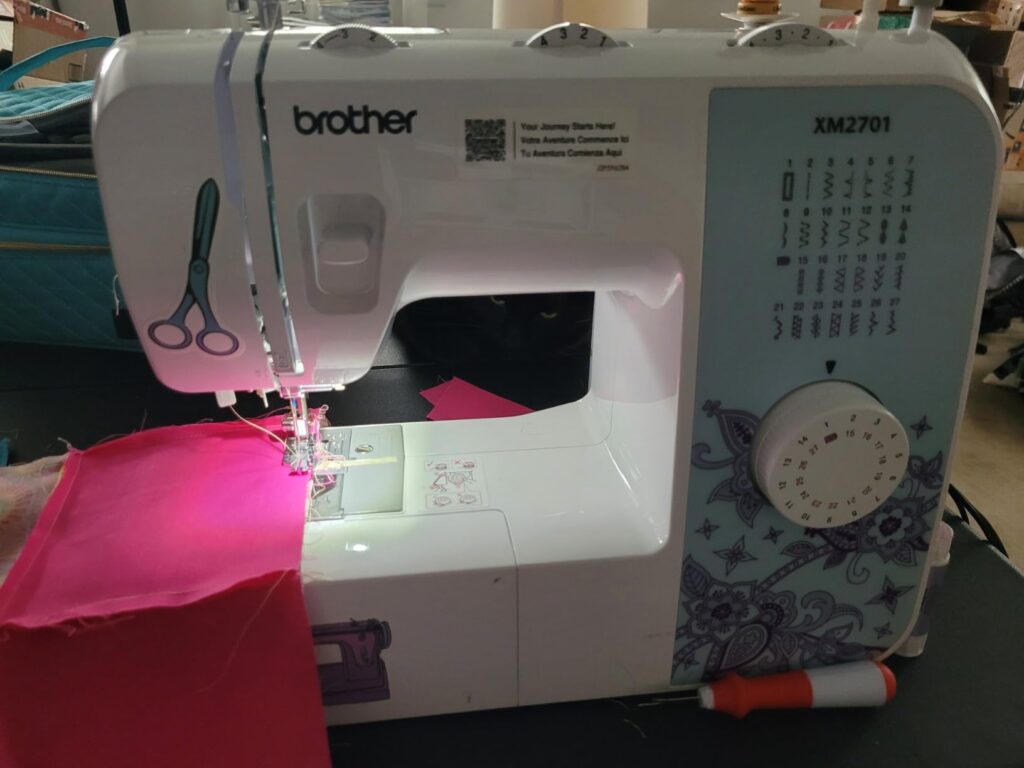
Go read Amazon reviews for either model and you’ll see the same complaint over and over: tension issues.
The tension dial on both machines has a frustrating tendency to be inconsistent. You set it to 4, and sometimes your stitches look perfect. Other times, the top thread is loose or the bottom thread is too tight, and you’re sitting there re-threading and adjusting for 20 minutes.
This isn’t a defect in individual machines. It’s a design characteristic of budget Brother machines. The tension assembly is plastic and relatively imprecise compared to more expensive machines.
The workaround: Most experienced sewers learn to ignore the numbers on the dial and adjust purely by feel and stitch appearance. You’ll do a test seam, check the results, and tweak the dial until it looks right. Annoying, but manageable once you get used to it.
The Automatic Needle Threader Will Break
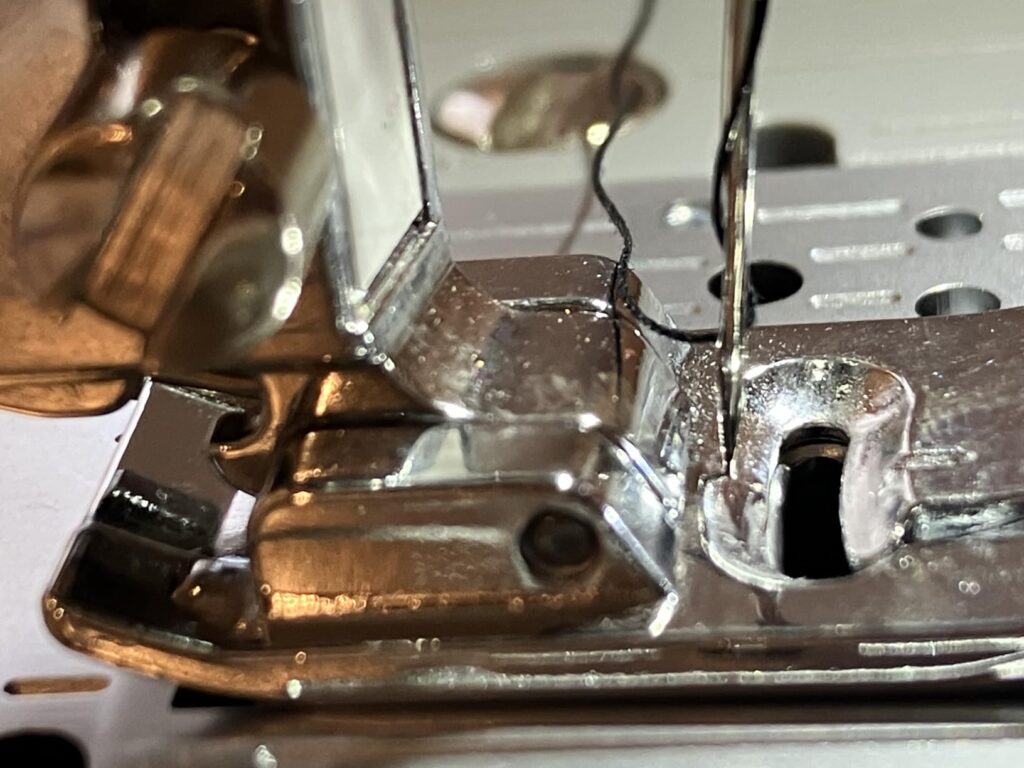
Both machines advertise the automatic needle threader as a huge time-saver. But it does not work as good as expected.
The mechanism is a tiny metal hook that swings down and pushes thread through the needle eye. It’s clever but fragile. Users consistently report it becoming misaligned or breaking within the first year.
Some people get two years out of it. Some get six months. Nobody gets forever.
The silver lining: Threading by hand takes 10 seconds. Yes, the threader is convenient, but losing it isn’t catastrophic. Keep a needle threader tool in your sewing kit (the $3 kind from any craft store) and you’re covered.
The Timing Issue (The Big One)
This one’s more serious and less well-known.
“Timing” refers to the precise synchronization between your needle and bobbin hook. When the needle comes down, the bobbin hook needs to catch the top thread at exactly the right moment to form a stitch.
Multiple users report timing problems developing after a few years of regular use (reports vary — some after ~1–2 years, others after 3–5 years). The symptoms are skipped stitches, loops on the bottom of fabric, or thread bunching in the bobbin case.
Fixing timing issues requires a technician. It’s not expensive (usually $50-80), but it’s often not worth it on a machine that cost $100-130 to begin with.
What this means for you: These machines have a shelf life. They’re not “buy it for life” tools. They’re “buy it to learn on, use it for a few years, then upgrade” tools. Set your expectations accordingly.
Heavy Fabrics Are a Deal-Breaker
Neither machine handles denim, canvas, upholstery fabric, or anything remotely heavy with confidence. You can sew jeans hems, but expect the machine to struggle on seams with multiple layers.
The motor just doesn’t have the torque. The feed dogs (the metal teeth that pull fabric through) don’t have enough grip. You’ll need to hand-crank the wheel through thick spots, which defeats the purpose of having a sewing machine.
If you plan to do any heavy-duty sewing—jeans alterations, home decor with canvas or duck cloth, bag making—skip both of these machines and budget for something in the $200-300 range with a stronger motor.
When These Machines Actually Shine?
Let’s be fair. Despite their limitations, both the XM2701 and XM3700 are genuinely good at what they’re designed for: learning to sew and handling lightweight to medium-weight fabrics.
These machines are great for:
- Teaching yourself to sew without risking $400 on a hobby you might abandon
- Kids and teens learning to sew (lightweight, simple controls, cheap enough that mistakes don’t hurt)
- Basic alterations like hemming pants, taking in shirts, repairing tears
- Quilting with cotton (as long as you’re not going through six layers at once)
- Lightweight garment sewing with fabrics like cotton, linen, or lightweight knits
- Craft projects like bags, pillows, or simple home decor
The sweet spot is someone who’s sewing 5-10 hours per month, working with everyday fabrics, and doesn’t need the machine to last a decade.
Making Your Decision: Brother XM2701 vs XM3700
Start here: What’s your budget ceiling?
If you can’t or won’t spend more than $130 on a sewing machine right now, the XM3700 at $111 is the logical choice. More features, lower price. Done.
If you can stretch to $150-200, strongly consider skipping both and getting the Brother CS7000i instead. It addresses most of the weak points we’ve discussed and will last longer.
Current Price: $129
What You Get: 27 built-in stitches, automatic needle threader, free arm, drop-in bobbin, 6 sewing feet (includes button foot), built-in stitch guide
Best For: Button sewing enthusiasts, buyers who catch it on deep discount
Next: How often will you actually sew?
Once a month or less? Either machine is fine. The XM3700 is cheaper and gives you more stitch options to experiment with.
Once a week or more? These machines will start showing their limitations within a year. You’ll wish you’d bought something better.
Current Price: $111
What You Get: 37 built-in stitches, automatic needle threader, free arm, drop-in bobbin, 5 sewing feet, built-in stitch guide, lightweight design (12 lbs)
Best For: First-time sewers, crafters, anyone working with cotton, polyester, and lightweight fabrics
Finally: What will you sew?
Lightweight fabrics only (cotton, polyester, thin linen)? Both machines handle this comfortably. Get the XM3700 and pocket the savings.
Any denim, canvas, or thick fabrics? Neither machine is right for you. You’ll be frustrated within a week.
What to Buy Instead (The Exit Ramp)
If you’re already wavering between the Brother XM2701 vs XM3700, and you’re reading this thinking “maybe I should spend a bit more,” here are the machines worth the upgrade:
Brother CS7000i ($189-210): This is the machine both the XM2701 and XM3700 want to be when they grow up. Same brand, better build quality, more power, better tension control. If you can afford it, buy this instead.
Singer Heavy Duty 4452 ($160-180): Metal frame, 1,100 stitches per minute (vs 800), handles heavier fabrics much better. Fewer decorative stitches, but if you need reliability over prettiness, this is it.
Janome 2212 ($180-200): Less flashy than Brother machines, but built like a tank. Mechanical (no electronics to fail), simple, and known for lasting 15+ years with basic maintenance.
None of these are “beginner” machines in the insulting sense that these terms usually mean. They’re just better machines that happen to be easy to learn on.
The Honest Bottom Line: Brother XM2701 vs XM3700
If you showed me both machines in a store, handed me $130 cash, and said I had to buy one right now, I’d grab the XM3700 without hesitation.
It’s cheaper, has more features, and performs identically to the XM2701. The pricing makes no sense, but when the market gives you a discount on the objectively better option, take it.
That said, neither machine is a revelation. They’re solid, functional, beginner-friendly sewing machines with known weak points. You’ll get 2-3 years of good service if you treat them well, and they’ll teach you whether sewing is a passing interest or a lifelong hobby.
If you’re still on the fence, consider this: The difference between these two machines is smaller than the difference between using them and not sewing at all. The “perfect” machine doesn’t exist. The machine you actually use is the one that matters.
Buy the XM3700, save $18, and spend that money on better thread and fabric instead.
FAQs
Can I sew stretchy fabrics like jersey or spandex?
Both machines include stretch stitches and can handle light stretch fabrics with a ballpoint needle. For serious knit sewing, you’ll want a machine with differential feed or a serger eventually, but you can start with these.
Will the plastic parts break?
The bobbin case is plastic and prone to cracking if you’re rough with it. The internal gears are metal, so they’ll outlast the plastic housing. Handle the bobbin case gently and it’ll be fine.
How loud are these machines?
About as loud as a kitchen mixer on medium speed. Not quiet enough to sew while someone’s sleeping in the next room, but reasonable for daytime use.
Do I need to oil these machines?
No. Both are “self-lubricating” according to Brother, which means the internal components are greased at the factory and don’t need regular oiling. Just keep them clean and free of lint.
Can I use generic bobbins and needles?
Needles, yes—any standard home sewing machine needle works. Bobbins, stick with Class 15 bobbins (standard size) from reputable brands. Cheap generic bobbins sometimes cause tension problems.
What happens if I have problems?
Brother has decent customer service, but these budget machines aren’t built to last forever. If something breaks in the first year, warranty covers it. After that, you’re usually better off buying a new machine than paying for repairs.
Can I sew leather?
No. Neither machine has the power or the right presser foot for leather. Don’t even try—you’ll bend needles and possibly damage the motor.
Which one should I buy if they’re both the same price?
The XM3700. More stitches gives you more room to grow, even if you don’t use them right away.