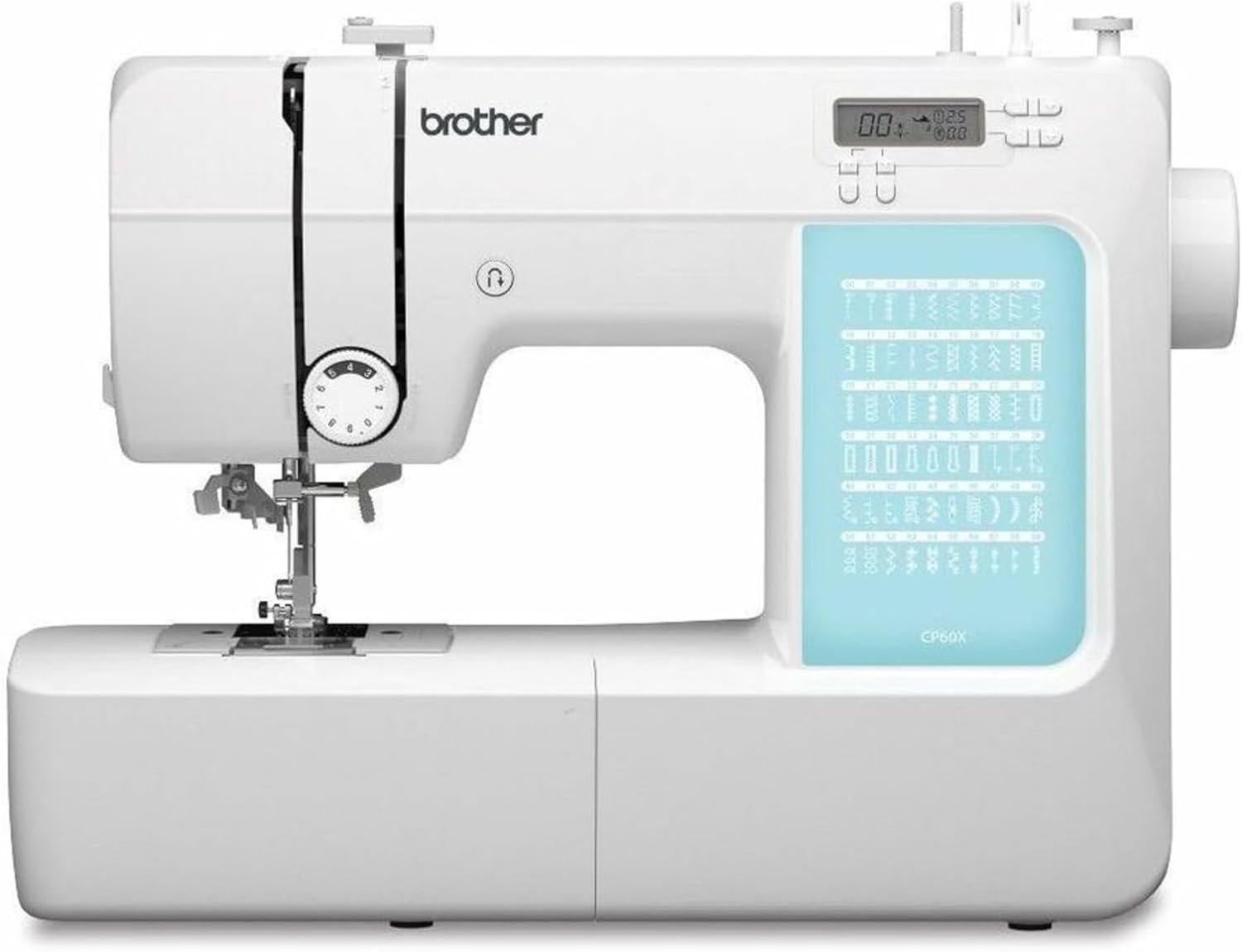
Current price: $159
- Better visibility
- Same features as CP60X
Best For: Beginners and casual sewers. Get the smarter choice with better display contrast.
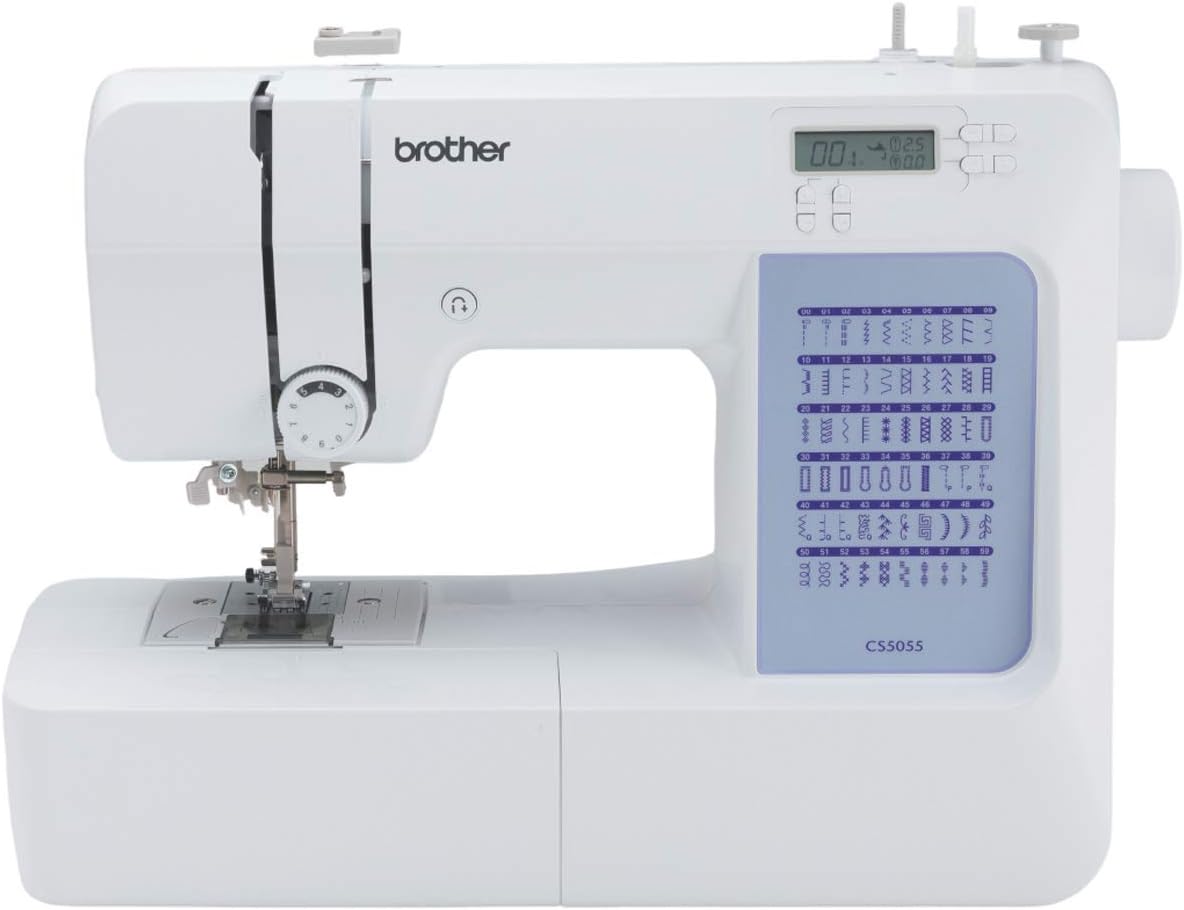

Current Price: $172
- All-white design
- Identical performance
Best For: Only buy if you prefer the aesthetic and don't mind paying more for worse visibility.
Introduction
I know you’re struggling to choose between Brother CP60X vs CS5055.
But you know what? According to Brother’s own customer service team, these two sewing machines are identical. Not similar. Not “basically the same.” Literally the same machine with different faceplate colors.
So why would anyone pay $13 extra for the CP60X?
They wouldn’t. At least, not if they knew what we’re about to tell you.
Table of Contents
TL;DR
Brother confirmed these are identical machines—same features, same performance. The only difference is faceplate color. The CS5055 ($159) has better display visibility than the CP60X ($172), costs less, and is the smarter buy. Don’t pay extra for a harder-to-read screen.
Related Articles:
At-a-glance: Brother CP60X vs CS5055
| Features | Brother CP60X | Brother CS5055 |
|---|---|---|
| Built-in Stitches | 60 | 60 |
| Stitches Per Minute | 850 | 850 |
| Display Visibility | Poor (white on light blue) | Better (pink/white contrast) ✓ |
| Needle Threader | Automatic (often fails) | Automatic (often fails) |
| Metal Frame | Yes | Yes |
| Weight | ~10-11 lbs | ~10-11 lbs |
| Included Feet | 6 snap-on | 6 snap-on |
| Best For | All-white aesthetic lovers | Everyone else ✓ |
| Price | $172 | $159 |
| Where To Buy | Check On Amazon | Check On Amazon |
The Faceplate Problem Nobody Talks About
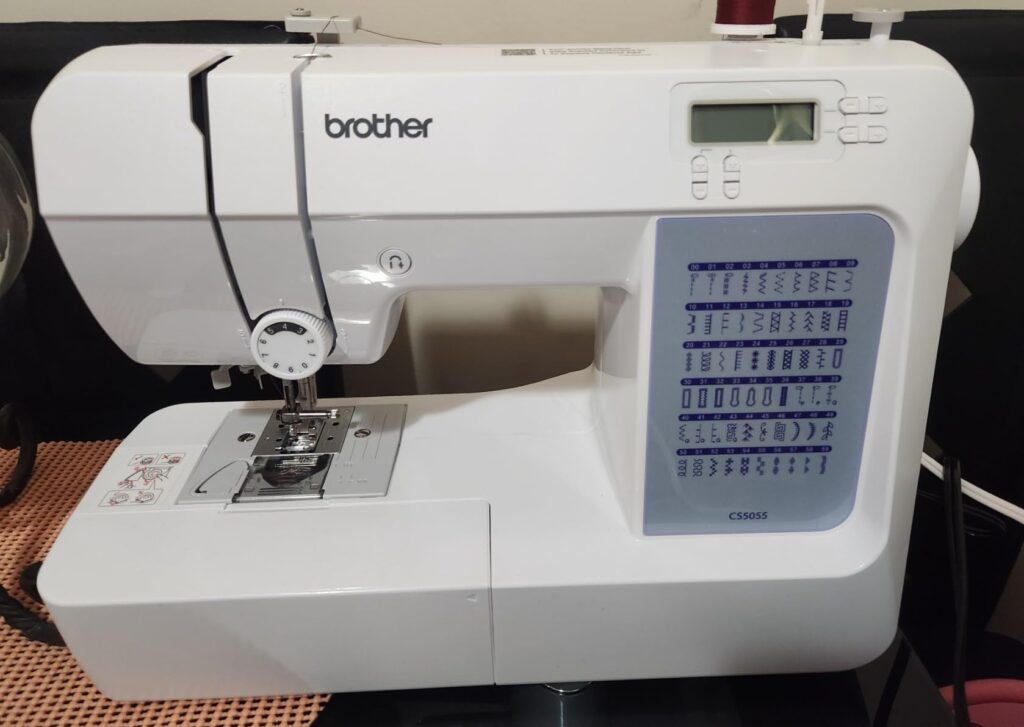
Let’s start with the biggest issue that every other comparison article completely ignores.
The Brother CP60X has white text on a light blue background. The CS5055 (the “Project Runway” edition) has better color contrast that makes the display actually readable.
This sounds minor until you’re actually trying to select stitch #47 in less-than-perfect lighting. Then it becomes the most annoying thing about your sewing machine.
One reviewer who happens to be an optometrist put it perfectly: “White text on light blue is NEVER a good idea for contrast sensitivity.”
Think about how often you’ll look at that display. Every single sewing session. Multiple times per project. For the next 2-3 years (we’ll explain that timeline in a minute).
That’s hundreds, maybe thousands of times you’ll squint at that screen wondering if you selected the scallop stitch or the straight stitch.
The CS5055 doesn’t have this problem. The pink and white color scheme provides better visual contrast. It’s easier to read. It’s less frustrating.
And it costs $13 less.
What Brother Actually Says? (Spoiler: They’re Honest)
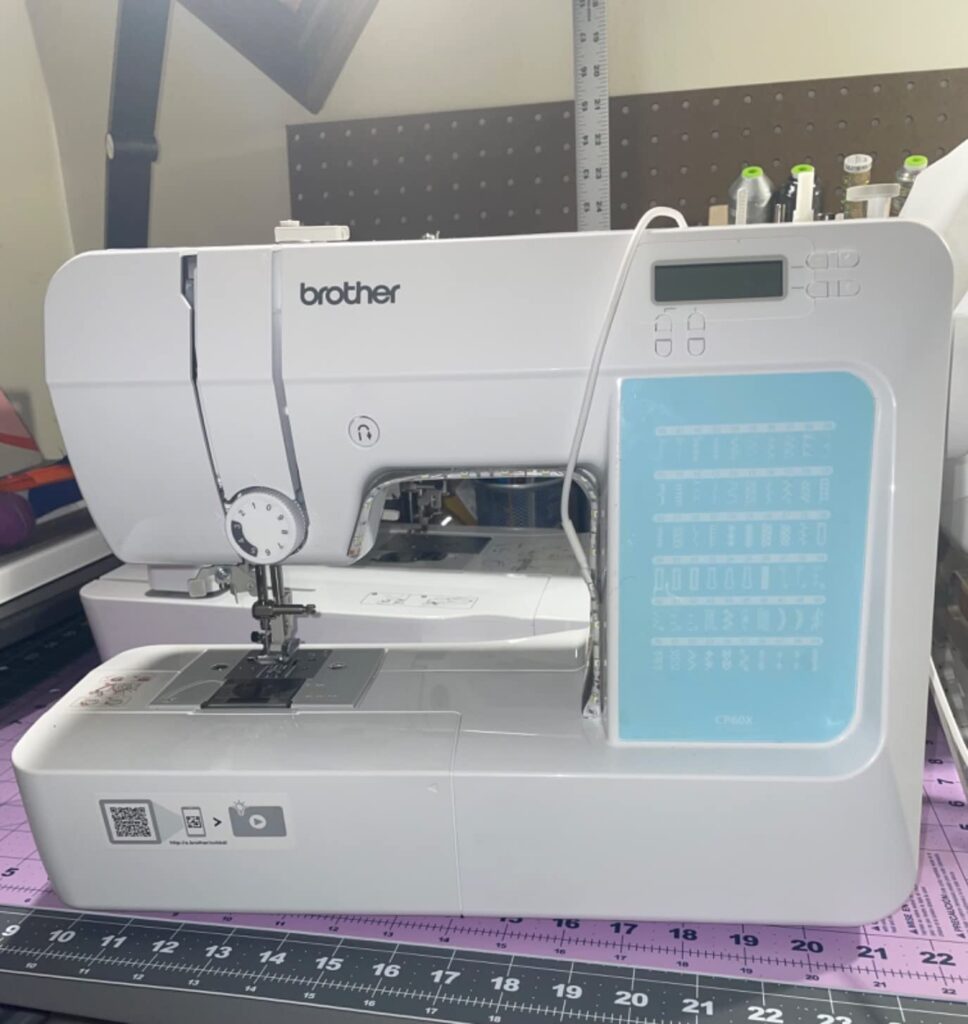
On April 8, 2021, Brother’s customer service gave someone the most straightforward answer you’ll ever get from a manufacturer:
“There are no differences in the features of the Brother CP-60X and Brother CS-5055. The difference is in the color of the faceplate of the machine.”
Read that again.
No differences in features. Just the faceplate color.
Yet every comparison article online treats these as two different machines with different capabilities. Some claim the CS5055 has 50 stitches while the CP60X has 60. Others list different speeds. Some even claim different weight specifications.
It’s all nonsense.
Both machines have:
- 60 built-in stitches
- 850 stitches per minute (some sources incorrectly list 700 SPM)
- Automatic needle threader
- Metal frame construction
- LCD display
- Free arm for circular sewing
- Same included accessories
The CP60X came out later as a refresh. The CS5055 was marketed as the “Project Runway” edition. Brother probably thought the all-white design of the CP60X looked more modern.
They were wrong. The visibility is worse.
The Real Problems Both Machines Share
Now that we’ve cleared up the “differences” (there aren’t any), let’s talk about the actual issues you need to know before buying either one.
The Needle Threader Will Probably Break
Both the CP60X and CS5055 come with an automatic needle threader. It’s one of their main selling features.
It’s also one of the most commonly reported failure points.
Users across reddit and multiple forums mention the needle threader stops working within the first 6-12 months. Sometimes it bends out of alignment. Sometimes it just breaks off entirely.
The good news? You can thread needles manually, just like sewers did for decades before automatic threaders existed. But it’s frustrating when a key feature you paid for becomes useless.
Tension Issues Are Real (And Normal)
Independent testing found “consistent tension trouble with most stitches on most fabrics” with these machines.
The bobbin tension in particular can be finicky. Decorative stitches like the scallop stitch seem especially prone to problems.
Here’s the thing: tension issues aren’t unique to Brother. Every sewing machine requires adjustment based on fabric type, thread weight, and the specific stitch you’re using.
The difference is that computerized machines like the CP60X and CS5055 make it seem like tension should be automatic. It’s not. You’ll still need to fiddle with settings, run test stitches, and adjust as you go.
Experienced sewers know this. First-time machine buyers often don’t, which leads to frustration and negative reviews.
The 2-3 Year Reality Check
Here’s what nobody wants to tell you: these are entry-level machines. They’re not built to last 25 years despite Brother’s generous warranty.
Forum discussions and real-world use reports suggest a realistic lifespan of 2-3 years with regular use. Maybe 5-7 years if you only sew occasionally.
That’s not a defect. That’s just the reality of modern entry-level sewing machines. They’re made to hit a price point, and longevity isn’t the priority.
At $159-172, that works out to about $53-86 per year if your machine lasts 2-3 years. That’s actually not terrible for a hobby or occasional sewing.
Just don’t expect this to be a family heirloom you pass down to your grandkids.
The Weight Confusion (Because Specs Are Chaos)
Different sources list wildly different weights for these machines:
- Some say 10.5 pounds
- Others claim 14 pounds
- A few list 10 pounds even
The most reliable sources put both machines around 10-11 pounds. Light enough to move between rooms, heavy enough to stay stable during use.
This weight confusion exists because many comparison sites just copy specs from each other without verification. Then the errors multiply across the internet.
Both machines weigh essentially the same because, again, they’re the same machine.
Making The Decision: Brother CP60X vs CS5055
Here’s where we cut through all the noise and give you the actual answer.
Buy the Brother CS5055 if:
Current price: $159
- Better visibility
- Same features as CP60X
Best For: Beginners and casual sewers. Get the smarter choice with better display contrast.
- It’s currently cheaper (which it is at $159 vs $172)
- You value better display visibility
- You don’t care about the all-white aesthetic
- You want the “Project Runway” branding
Buy the Brother CP60X if:
Current Price: $172
- All-white design
- Identical performance
Best For: Only buy if you prefer the aesthetic and don't mind paying more for worse visibility.
- The price drops below $155 (occasionally happens during sales)
- You strongly prefer the all-white appearance
- You have perfect vision and lighting in your sewing space
Don’t buy either if:
- You need a professional-grade machine for heavy daily use
- You’re expecting commercial-quality durability
- You sew very thick materials regularly (denim, canvas, leather)
- You have vision issues that require high-contrast displays
For most beginners and casual sewers, the CS5055 at $159 is the smarter buy right now. You’re getting the exact same machine with better visibility for less money.
What You Need To Know Before Checkout?
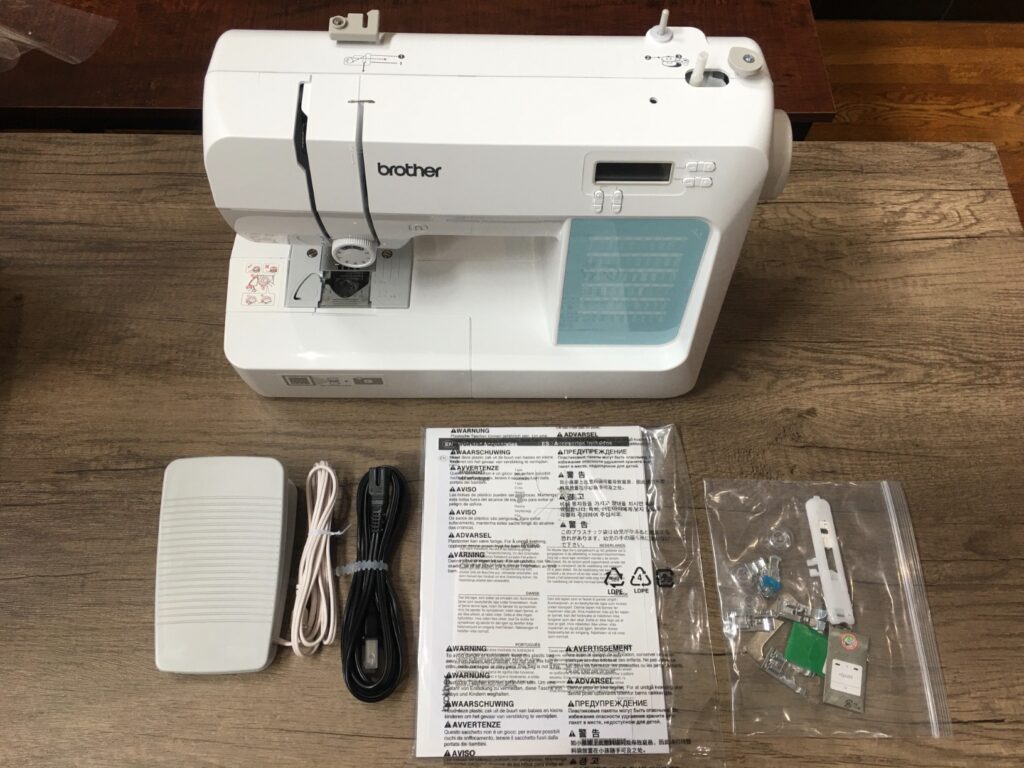
Both machines come with the same accessories:
- 6 snap-on presser feet
- Needles
- Bobbins
- Seam ripper
- Screwdriver
- Dust cover
- Quick reference guide
- Instruction manual
Neither comes with an extension table, which you might want for larger projects.
The free arm feature works well for sleeves, pant legs, and other circular sewing tasks on both machines.
The built-in stitch library includes basic stitches, stretch stitches, decorative stitches, and one-step buttonholes. It’s more than enough for garment construction, quilting, and home decor projects.
The Verdict: Same Machine, Different Price
The Brother CP60X vs CS5055 debate isn’t really a debate at all.
They’re the same machine. Brother confirmed it. The features are identical. The performance is identical. The problems are identical.
The only real differences are:
- Faceplate color (and resulting visibility)
- Current price (CS5055 is cheaper)
So unless you really, really want an all-white sewing machine and don’t mind paying extra for worse visibility, the CS5055 is the obvious choice right now.
Will this pricing stay the same? Probably not. Amazon prices fluctuate. Sales happen. Inventory changes.
But as of today, December 31, 2025, the CS5055 at $159 gives you everything the CP60X offers, plus better display contrast, for $13 less.
That’s not a hard decision.
The Bottom Line
Don’t overthink this. These machines are identical except for aesthetics. Buy whichever one is cheaper when you’re ready to purchase.
Just go in with realistic expectations: the needle threader might fail, you’ll need to adjust tension settings regularly, and the machine will probably last 2-3 years with regular use.
For beginners or casual sewers working on garments, quilts, or home projects, either machine (but especially the cheaper CS5055) will serve you well.
For serious sewers who need something that’ll handle heavy daily use for 10+ years, keep shopping. These aren’t those machines.
FAQs
What’s the actual difference between CP60X and CS5055?
Just the faceplate color. Brother confirmed they’re identical in features and performance.
Which one should I buy?
The CS5055. It’s $13 cheaper and has better display visibility than the CP60X.
How long will these machines last?
Realistically 2-3 years with regular use, 5-7 years with occasional sewing. They’re entry-level machines, not commercial-grade.
Does the automatic needle threader really break?
Yes, it’s a common complaint on both models. Many users report it failing within 6-12 months.
Are these good for beginners?
Yes, both are solid beginner machines for garments, quilts, and home projects. Just don’t expect professional durability.
Can these handle thick fabrics like denim?
Light to medium denim yes, but heavy canvas or leather will struggle. These aren’t heavy-duty machines.