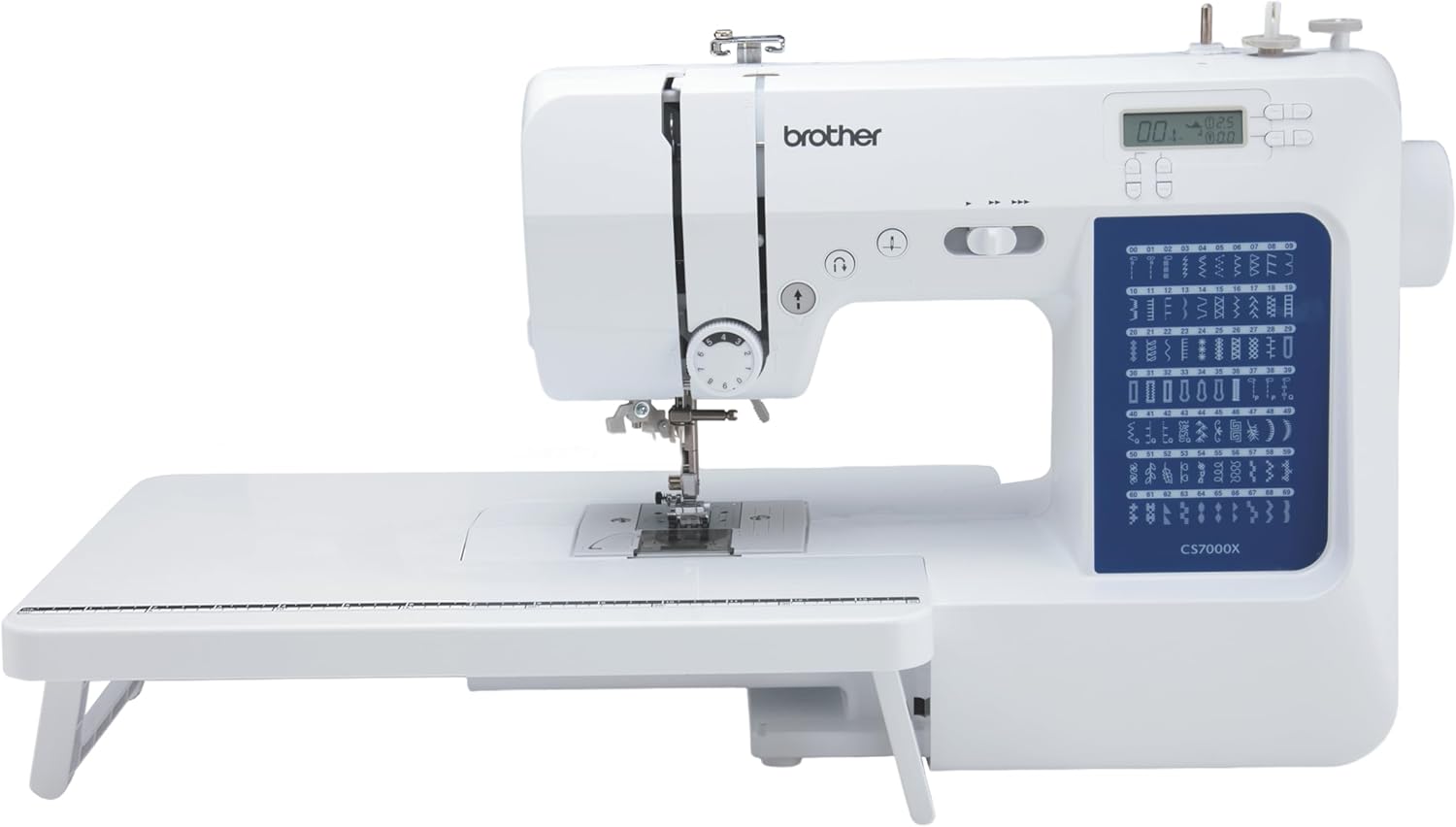
Current Price: $279
70 built-in stitches, 7 auto buttonholes, walking foot + hard case included. The more versatile, better-value pick for quilting, garments, and everyday sewing. Handles occasional thick fabrics without breaking a sweat.

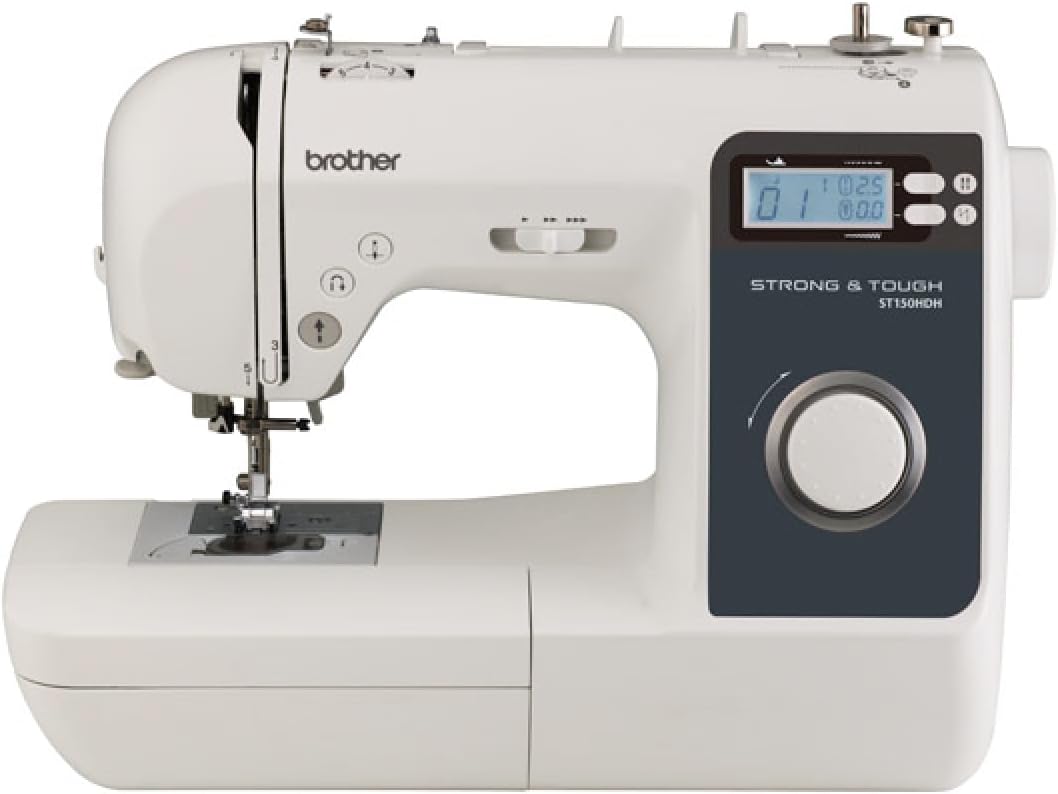
Current Price: $339
50 stitches, 7-point box feed system, heavy-duty metal build. Built for canvas, denim, multi-layer bags, and upholstery work done regularly — not as a one-off.
Introduction
You’ve probably already read three or four articles about these two machines. They all say the same thing: the ST150HDH is for heavy fabrics, the CS7000X is for beginners and quilters. Pick based on your needs.
That’s not wrong. But it’s also not enough.
What those articles don’t tell you is that the ST150HDH attracts a very specific type of buyer who ends up disappointed — not because the machine is bad, but because the marketing works a little too well. And on the other side, the CS7000X has a real, documented flaw that nobody talks about until you’ve already bought it and been mildly annoyed for a year.
This article is about the actual decision — the $60 question, the fabric frequency question, and the one functional detail that should tip your hand either way.
Table of Contents
TL;DR
The CS7000X ($279) is the smarter buy for most sewers — more stitches, includes a hard case, and handles everyday to moderate sewing well. The ST150HDH ($339) is worth the $60 extra only if heavy fabrics like canvas, denim, or upholstery are your regular reality, not occasional. Don’t let “Strong & Tough” marketing pull you toward a machine your projects don’t actually need.
Related Articles:
At-a-glance: Brother ST150HDH vs CS7000X
| Features | Brother ST150HDH | Brother CS7000X |
|---|---|---|
| Price | $339 | $279 |
| Built-in Stitches | 50 | 70 |
| Buttonholes | 5 auto | 7 auto |
| Max Speed | N/A (heavy-duty rated) | 750 spm |
| Feed System | 7-point box feed | Standard |
| Frame | Heavy-duty metal | Metal + plastic |
| Walking Foot | ✅ Included | ✅ Included |
| Hard Case | ❌ No | ✅ Yes |
| Best For | Canvas, denim, bags, upholstery | Quilting, garments, everyday sewing |
| Where To Buy | Check On Amazon | Check On Amazon |
The Problem the Marketing Creates (And Nobody Warns You About)
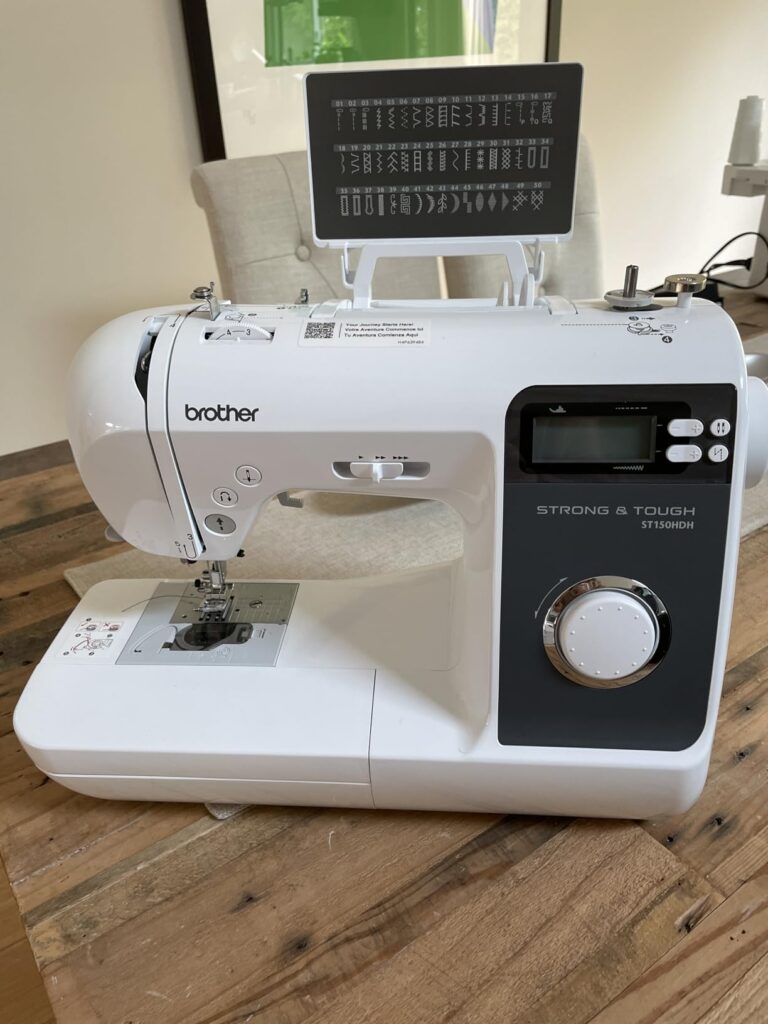
The Brother ST150HDH is sold under the “Strong & Tough” branding. That phrase does a lot of work — maybe too much.
It draws in people making bags for a small business. People who want to sew canvas totes regularly. Upholstery hobbyists. Folks who’ve outgrown their entry-level machine because it choked on thick seams.
Here’s what those buyers often find out post-purchase: the ST150HDH is not an industrial machine, and it’s not designed to run like one. It cannot handle a full production workload where you’re sewing eight or more hours a day. It’s a heavy-duty home machine — a meaningful step up from a standard computerized sewing machine, but a meaningful step down from a true industrial or semi-industrial workhorse like a Sailrite or Consew.
If you’re sewing heavy fabrics occasionally — a weekend project, a batch of bags once a month, thick quilt layers — the ST150HDH handles that well. But if you pictured yourself running this machine daily for hours on heavy material, that expectation needs recalibrating before you spend $339.
This isn’t a knock on the machine. It’s a clarification the product page doesn’t make clearly enough.
The CS7000X Flaw Nobody Talks About
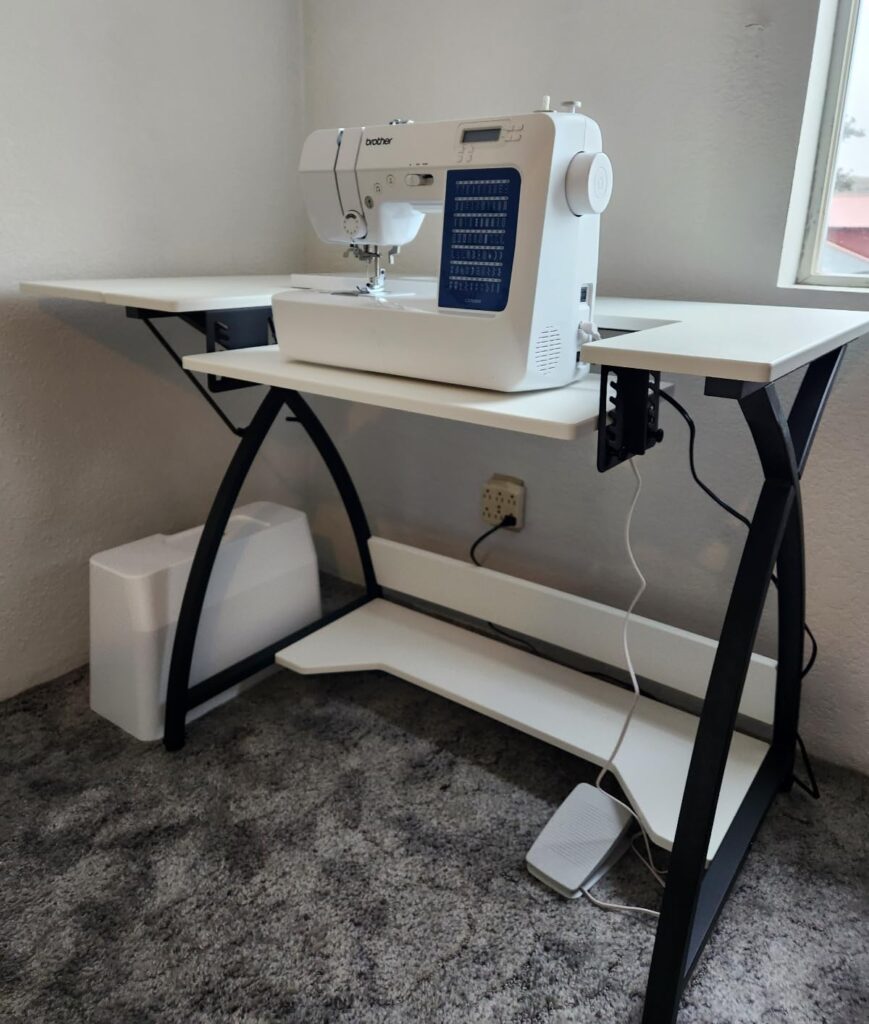
Here’s something that gets buried in reviews: the CS7000X is actually slower than its predecessors.
The CS6000i and CS7000i — the machines the CS7000X replaced — maxed out at 850 stitches per minute. The CS7000X tops out at 750 spm. Brother confirmed this when asked directly.
If you’re coming from one of those older machines, that regression is something you’ll feel. For a new buyer, 750 spm is still perfectly functional for most sewing tasks. But it’s worth knowing that Brother quietly dialed back the speed when they released this “upgrade.”
Additionally, the accessories and attachments that come with the CS7000X — particularly the feet on the extension table — feel noticeably flimsy. The machine itself has a solid metal frame, but the plastic molding and included attachments don’t feel like they’re built to last. That’s not unusual for this price point, but it contrasts with how durable the main machine body actually is.
One more thing: the small accessories pouch that came with the CS6000i is gone. It was a minor feature — probably cost next to nothing to manufacture — but it was genuinely useful for keeping presser feet organized. Longtime Brother owners will miss it.
None of this makes the CS7000X a bad machine. It’s still one of the better computerized sewing machines in this price range. But these are the things you find out after unboxing, and they should factor into your expectations.
The Detail That Changes Everything: Fabric Frequency
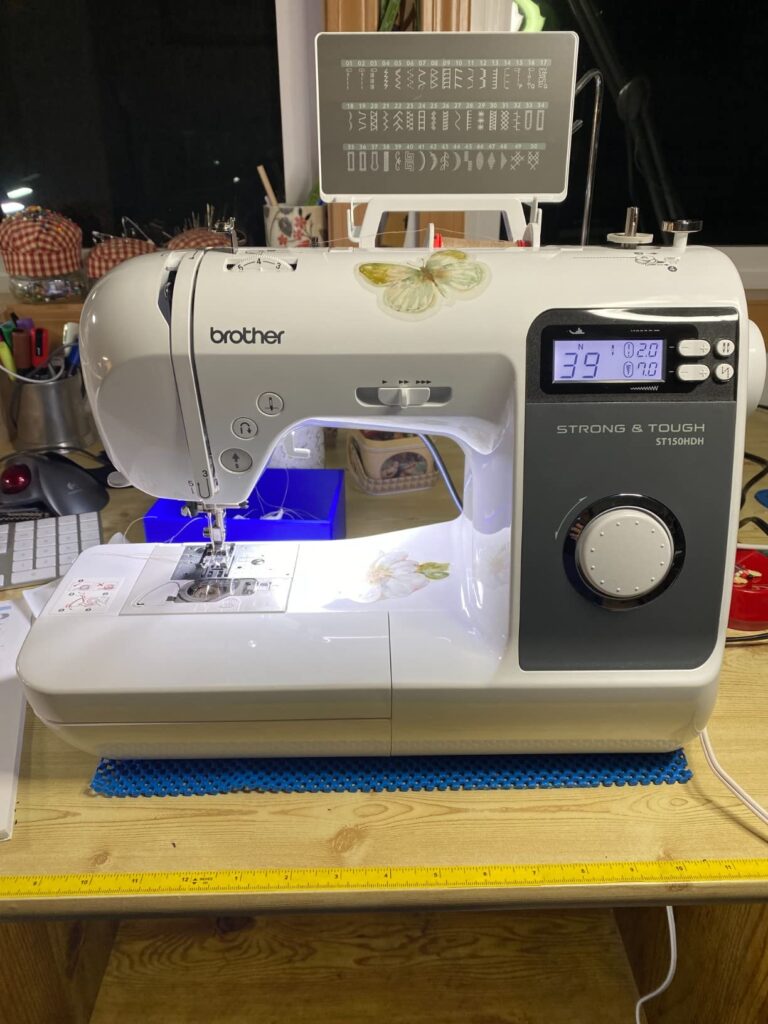
Here’s the single most useful framework for this decision, and no other article spells it out this clearly:
It’s not about what fabrics you sew. It’s about how often you sew them.
Both machines can handle denim. Both machines will get through multiple layers of quilting cotton. The CS7000X won’t fall apart if you occasionally run thick seams through it.
The question is: what percentage of your sewing involves thick or heavy fabrics?
- If the answer is less than 20% — mostly garments, quilts, everyday sewing with occasional thick layers — the CS7000X is your machine. The $60 savings is real, and you won’t miss the heavy-duty capacity.
- If the answer is more than 50% — you’re regularly sewing canvas, denim, multi-layer bags, upholstery fabric, or anything requiring consistent penetrating power — the ST150HDH earns its premium. Its 7-point box feed system and metal interior frame are genuinely better suited to that kind of regular stress.
- If you’re in the middle (20-50%)? You’re probably fine with either, but the ST150HDH gives you more headroom.
The Stitch Dial Problem (ST150HDH Users Should Know This)
Here’s a practical detail that surfaced in real user reviews and is absent from every comparison article out there:
The ST150HDH has a stitch selection dial on the side of the machine. It spins easily, which is intentional — it makes switching stitches fast. But that ease of rotation becomes a problem when you’re sewing a large piece of fabric. The fabric itself can brush against the dial mid-project and accidentally change your stitch type while you’re sewing.
One workaround that users discovered: place a piece of tape over the dial when you’re working with large or bulky material. It sounds low-tech, but it works. The point is — if you’re mid-seam on a large canvas bag and your machine suddenly switches to a zigzag, you’ll want to know this ahead of time rather than discover it while ruining a project.
This isn’t a dealbreaker. But it’s the kind of specific, real-world quirk that separates machines on paper from machines in actual use.
The Features That Actually Matter (Versus the Ones That Don’t)
Comparison articles love to list specs. Here’s a more honest take on which differences actually matter:
Stitch count: 50 (ST150HDH) vs 70 (CS7000X) This sounds like the CS7000X wins, but in practice, most sewers use fewer than 10 stitches regularly. The stitch count difference is largely irrelevant unless you’re actively using decorative stitches.
Buttonholes: 5 (ST150HDH) vs 7 (CS7000X) Both have automatic, one-step buttonhole functions. Two extra styles on the CS7000X matters if you do a lot of garment sewing with varied button styles. For most people, not a deciding factor.
The walking foot: both include it This is actually underrated as a talking point. A walking foot typically costs $30-50 when bought separately. Both machines include it in the box. This is a legitimate value-add for quilters especially, since a walking foot helps feed multiple layers of batting and fabric evenly.
Hard case: CS7000X includes one, ST150HDH does not If you transport your machine, store it in a dusty space, or just want the protection, this is a real advantage for the CS7000X. It’s easy to overlook in spec comparisons but worth noting — protective hard cases sold separately run $30-50.
The metal frame vs. heavy-duty construction Both machines have metal frames. The ST150HDH has a more robust internal build specifically designed for consistent heavy-fabric use. If you never push the machine hard, you’ll never notice the difference. If you do — you will.
What the $60 Price Gap Actually Buys You?
At $339 vs $279, the ST150HDH costs $60 more. Here’s the honest accounting of what that premium gets you:
✅ A 7-point box feed system instead of standard feed dogs — better traction on thick fabrics
✅ A more robust internal build for sustained heavy-duty use
✅ Greater confidence when sewing canvas, leather blends, or multi-layer material consistently
What it does NOT get you: ❌ More stitches (CS7000X has more)
❌ A hard case (CS7000X includes one)
❌ A speed advantage (CS7000X at 750 spm is actually the more documented figure here)
❌ Industrial capability (neither machine is that)
The $60 premium is worth it when you genuinely need the heavy-duty construction regularly. It’s not worth it when you’re paying for reassurance rather than capability you’ll actually use.
Quick Decision Guide: Brother ST150HDH vs CS7000X
You should buy the Brother CS7000X ($279) if:
Current Price: $279
70 built-in stitches, 7 auto buttonholes, walking foot + hard case included. The more versatile, better-value pick for quilting, garments, and everyday sewing. Handles occasional thick fabrics without breaking a sweat.
- Your primary projects are garments, quilts, or general home sewing
- You want more stitch variety and a slightly more versatile machine
- You want a hard case included in the box
- Thick fabrics come up, but not as a regular thing
- You’re coming from a very basic machine and this is a genuine upgrade
You should buy the Brother ST150HDH ($339) if:
Current Price: $339
50 stitches, 7-point box feed system, heavy-duty metal build. Built for canvas, denim, multi-layer bags, and upholstery work done regularly — not as a one-off.
- You regularly sew canvas, denim, leather, upholstery, or multi-layer bags
- Heavy fabrics are the majority of your projects, not the exception
- You want the confidence that the machine won’t strain on thick seams
- You understand it’s a heavy-duty home machine, not a production workhorse
Neither machine is right if:
- You’re running a production sewing operation and need daily heavy use (look at semi-industrial or industrial machines)
- You primarily do embroidery (look at Brother’s SE or PE lines)
- Your budget is tighter than $279 (the CS6000i or XR9550 exist in a lower bracket)
The Bottom Line: Brother ST150HDH vs CS7000X
The CS7000X is the smarter buy for most people searching this keyword. It’s more versatile, it comes with a hard case, it has more built-in stitches, and the $60 savings is real.
The ST150HDH earns its price for a specific sewer — one whose projects regularly demand heavy-fabric performance, who wants that extra mechanical resilience, and who knows going in that they’re buying a durable home machine, not an industrial one.
What neither machine is? Perfect. The CS7000X has that speed regression and flimsy accessories. The ST150HDH has that stitch dial quirk. At $279–$339, you’re buying well-built mid-range home machines from a reliable brand — not heirloom-quality equipment.
Both will sew well. The question is just whether the $60 is buying you capability you’ll genuinely use, or peace of mind for projects that either machine could handle. For most people reading this, the honest answer is the latter — and that makes the CS7000X the practical pick.
FAQs
Is the Brother ST150HDH worth the extra $60 over the CS7000X?
Only if you regularly sew thick fabrics. For general sewing and quilting, the CS7000X covers everything you need for $60 less.
Can the CS7000X handle denim?
Yes — occasionally. It’ll push through denim fine for one-off projects. It’s not built for consistent, daily heavy-fabric work.
Is the ST150HDH an industrial machine?
No. It’s a heavy-duty home machine. It cannot handle full production workloads or 8+ hours of daily heavy sewing.
Which machine is better for quilting?
The CS7000X. More stitches, a walking foot included, and better all-around versatility for quilt work.
Why does the CS7000X have a lower max speed than older Brother models?
Brother quietly reduced the max speed from 850 spm (CS6000i/CS7000i) to 750 spm on the CS7000X. It’s functional, but a step back from its predecessors.
Does either machine come with a hard case?
Only the CS7000X includes a hard case. The ST150HDH does not.