Current Price: $249
Best for: Beginners and mixed-use sewers who want more stitch variety and added finger safety.
The pitch: The finger guard and 16 extra stitches — including SS1/SS2 stretch options — are worth the $20 if your projects go beyond heavy fabric. Just confirm it's in stock before ordering.
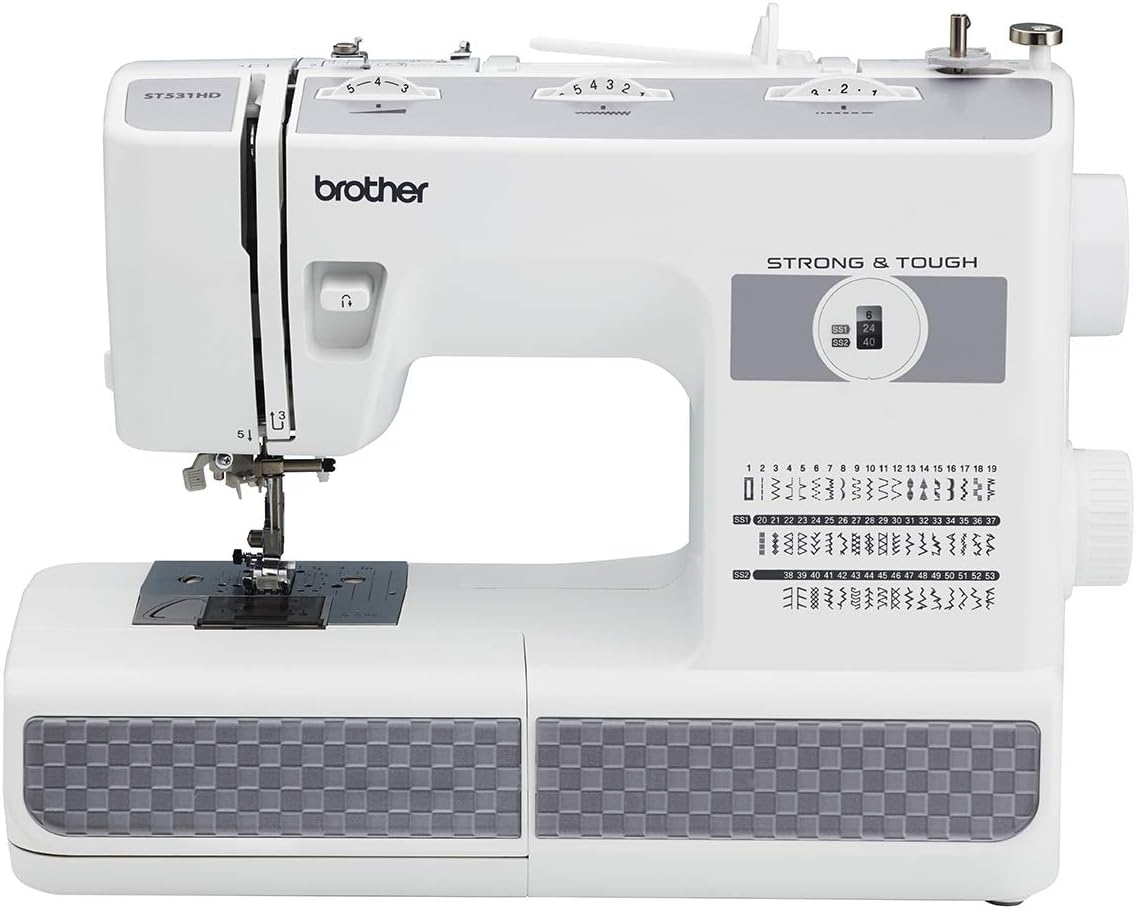

Current Price: $239
Best for: Canvas, leather, denim, and anyone who wants the best value out of the box.
The pitch: Same engine as its pricier sibling — with a nonstick foot already included. If heavy-duty is your main game, this is the smarter buy.
Introduction
Before diving into anything else, here’s the most important thing Brother’s own customer service confirmed that almost no review article mentions:
These are the same machine.
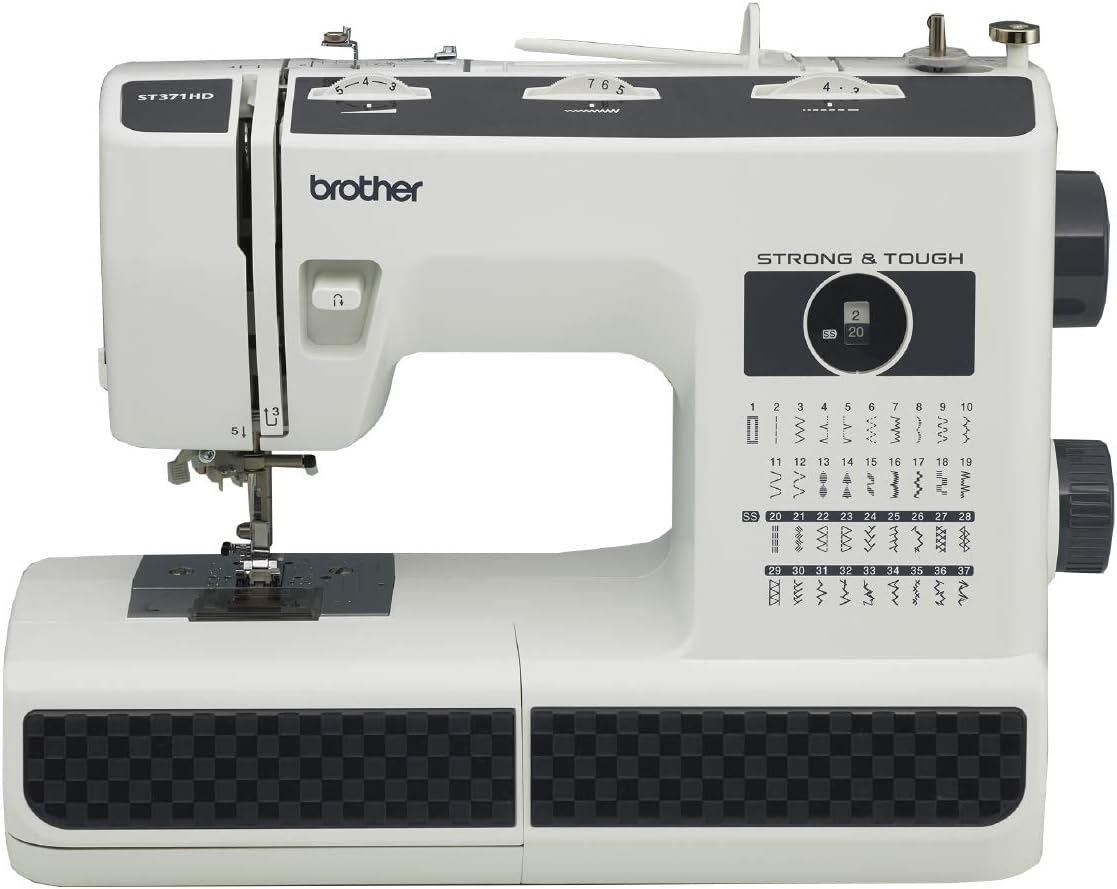
That’s not a simplification. That’s a direct quote from Brother’s support team: “The ST371HD and the ST531HD are the same machines.” Same motor. Same 800 stitches per minute. Same frame. Same 6-point feed dogs. Same drop feed. Same automatic needle threader. Same jam-resistant Quick-Set bobbin. Same weight. Same dimensions. Same 25-year limited warranty on the frame.
If you came here expecting a complex engineering comparison, there isn’t one. The ST531HD is the ST371HD with a different paint job, 16 additional stitches, and a metal finger guard attached to the presser foot area.
That’s it.
So now the real question becomes: is that package worth $20 more?
The answer is: it depends entirely on what you actually sew. And that’s where every other article fails you — they list what’s different but never tell you which difference matters for your work.
Table of Contents
TL;DR
The ST371HD and ST531HD are the same machine — same motor, same frame, same performance. The ST531HD adds 16 decorative stitches and a finger guard for $20 more, but the ST371HD actually ships with a nonstick foot the ST531HD doesn’t include — making it the better-equipped option for heavy-duty sewing straight out of the box.
Related Articles:
- Brother GX37 Vs LX3817!
- Brother XR3774 Vs CS7000X!
At-a-glance: Brother ST371HD vs ST531HD
| Features | ST371HD | ST531HD |
|---|---|---|
| Price | $239 | $259 |
| Built-in Stitches | 37 | 53 |
| Finger Guard | ✗ | ✓ |
| Nonstick Foot (Included) | ✓ | ✗ |
| Stretch Stitch Selector (SS1/SS2) | ✗ | ✓ |
| Motor / Speed | 800 SPM | 800 SPM |
| Layers of Denim | 6 | 6 |
| Frame Warranty | 25 years | 25 years |
| Availability | ✅ Widely in stock | ⚠️ Limited |
| Best For | Heavy-duty / leather / canvas | Mixed sewing / beginners |
| Where To Buy | Check On Amazon | Check On Amazon |
The One Difference That Nobody Is Talking About (And It Matters Most for Heavy-Duty Work)
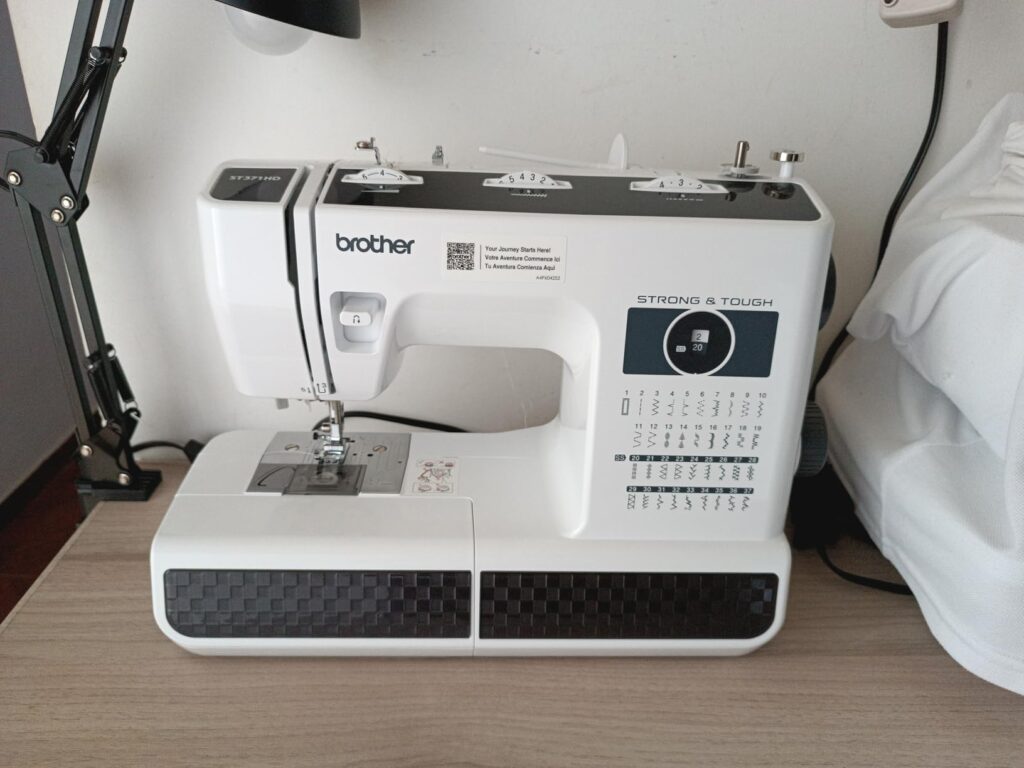
Here’s where it gets interesting — and where the research uncovered something genuinely buried.
When you put both machines side-by-side on Amazon’s own comparison chart, something jumps out. The ST371HD includes a nonstick presser foot in the box. The ST531HD does not.
Instead, the ST531HD swaps it out for a narrow hem foot.
Why does this matter? Because both of these machines are marketed as “heavy duty.” The name implies leather. Vinyl. Suede. Canvas. Denim. The exact fabrics where a nonstick foot makes a tangible, practical difference — it literally glides over materials that would otherwise stick and stutter under a regular metal foot.
The ST371HD ships ready for that work, right out of the box.
The ST531HD — the one that costs more, the one with “heavy duty” stamped on its grey casing — does not include that foot. You’d need to buy it separately, which runs $8–$15 depending on the source, effectively erasing most of the price difference between the machines or making the ST531HD the more expensive option overall.
Is the narrow hem foot useless? Not at all — it’s great for finishing edges on lightweight and medium fabrics. But if you’re buying a machine specifically to sew tough materials, the ST371HD is, counterintuitively, the better-equipped option straight out of the box.
This is the kind of detail that changes a purchasing decision. And it’s sitting in a product comparison table that most reviewers never even look at.
The Stitch Count Debate: Does 16 More Stitches Actually Matter?
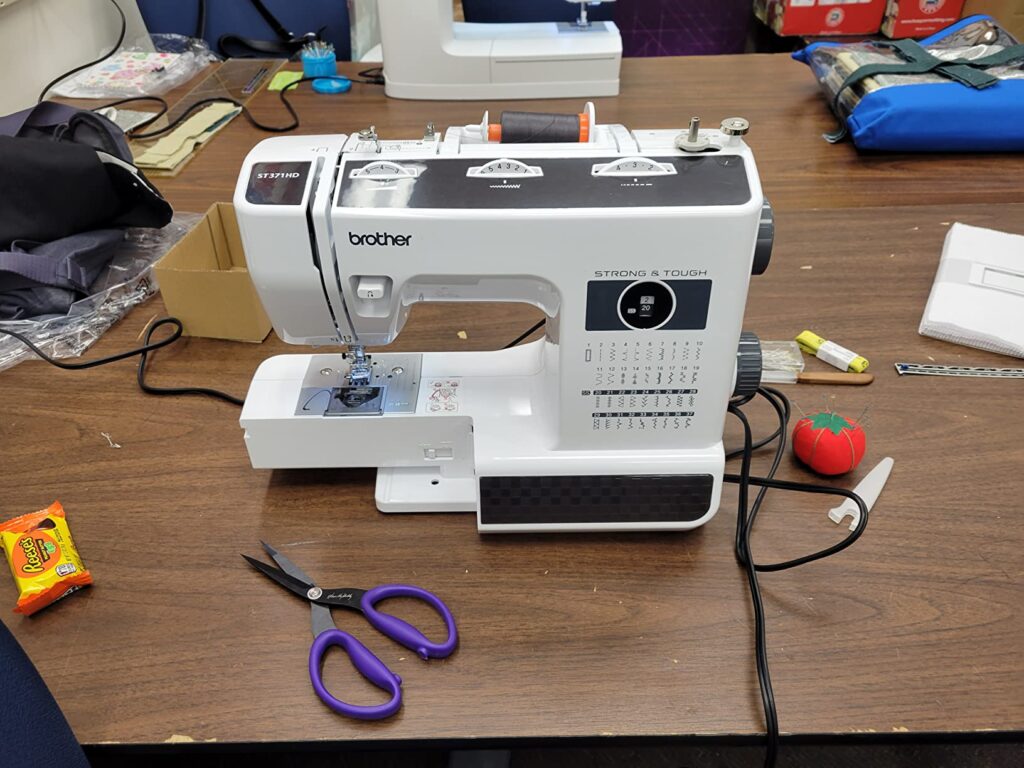
The ST371HD has 37 built-in stitches. The ST531HD has 53. The question isn’t which number is bigger — it’s whether those extra 16 stitches will ever appear in your sewing.
Let’s be real about who buys machines in this category. Brother positions both of these as heavy-duty machines for people sewing through multiple layers of denim, canvas, upholstery material, leather, and similar tough fabrics. That work demands maybe 4–6 stitches at most: a straight stitch, a zigzag, a stretch stitch for elastic fabrics, and a few reinforcement options.
The ST371HD covers all of those. Comfortably.
The extra 16 stitches on the ST531HD land squarely in decorative and specialty territory. Scallops. Blind hems. Satin stitches. Additional stretch variations. These are legitimately useful stitches — but they’re useful for a different kind of sewing than what “heavy duty” suggests.
Here’s the honest breakdown:
The extra stitches matter if you:
- Do both heavy-duty and garment/decorative sewing on the same machine
- Sew stretch fabrics frequently and want more SS (stretch stitch) options — the ST531HD notably includes SS1 and SS2 stretch stitch selector functionality the ST371HD lacks
- Are buying this as your only machine for a wide variety of projects
The extra stitches don’t matter if you:
- Primarily sew canvas, leather, denim, upholstery, or bags
- Already own another machine for lighter, decorative work
- Only use 5–8 stitches in your regular rotation (which most sewers do)
The SS1/SS2 stretch stitch addition on the ST531HD is, arguably, the most practically useful of the extra stitches — especially for anyone sewing athletic wear or jersey fabric alongside heavier projects. That specific detail pushes the ST531HD’s value case for mixed-use sewers.
The Finger Guard: Safety Feature or Niche Addition?
The ST531HD includes a metal finger guard near the presser foot. The ST371HD does not.
The honest truth? It’s a legitimate safety feature, not a gimmick — but it solves a specific problem for a specific group of sewers. Beginners, especially those who are still building muscle memory around keeping fingers away from the needle path, benefit meaningfully from having that physical reminder present. It interrupts bad habits before they become accidents.
For experienced sewers, it often gets ignored or even removed, because their hands simply don’t go where the guard would matter.
So the practical verdict on the finger guard:
- Worth it for: Beginners, parents buying a machine for a teenager learning to sew, anyone who’s had a close call and wants an extra layer of protection
- Not a deciding factor for: Anyone with more than a few months of regular sewing experience
If you’re purchasing this machine as a gift for someone learning, the ST531HD’s finger guard adds genuine peace of mind. If you’re buying for yourself and you already know your way around a machine, you’ll barely notice it.
The Availability Problem (This Might Be the Most Important Section)
Here’s something that affects your buying decision in a way that has nothing to do with stitches or feet or finger guards:
The ST531HD is currently listed as out of stock on Brother’s official website.
At least one major retail-facing review site has gone further and labeled it discontinued. At time of writing, it remains available through Amazon at $259 and some third-party sellers — but the supply picture for the ST531HD is uncertain in a way the ST371HD’s simply isn’t.
Why does this matter practically?
If you buy the ST531HD and something goes wrong — a damaged part arrives, a component needs replacement, the machine needs warranty service — availability of parts and manufacturer support can become harder when a model is being phased out. Warranty coverage on the frame lasts 25 years, which is a long time. The question of whether Brother will continue supporting a potentially discontinued model with parts is worth considering.
The ST371HD, by contrast, is widely stocked, actively listed, and shows no signs of being phased out.
This doesn’t mean you shouldn’t buy the ST531HD if you find it at a good price and it fits your needs. It means: if you’re deciding between the two and availability or long-term support is something you care about, the ST371HD is the lower-risk purchase.
What Both Machines Do Well? (And One Thing Worth Knowing Before You Buy Either)
In the interest of a complete picture, here’s what both machines genuinely deliver — and where both have the same ceiling.
Where they both perform:
- Sewing through 6 layers of denim is well within their capability, which is strong performance for machines in this price range
- The Quick-Set drop-in bobbin genuinely reduces frustration, especially for newer sewers
- The automatic needle threader is one of Brother’s better implementations — it works consistently
- Free arm functionality makes sleeve and cuff work manageable
- Build quality for the price is solid; the metal needle plate extends longevity compared to all-plastic machines
Where both machines have the same ceiling:
- These are not professional-grade or industrial machines. They’ll handle significant home sewing workloads and hobbyist heavy-duty projects, but they’re not replacements for a dedicated industrial machine if your needs are truly production-level
- A third-party lab test (TechGearLab) scored the ST371HD at 49 out of 100 in their methodology. Context matters here — their testing framework prioritizes features and versatility over durability and simplicity, so a machine designed for heavy utility sewing rather than feature breadth will score lower on that rubric. But it’s worth knowing that independent evaluation exists and doesn’t paint the machine as exceptional across all categories
Neither machine has a known widespread failure pattern in user feedback. Thread tension issues and bobbin-related complaints exist in reviews, but they’re consistent with what you see across machines in this price range and don’t appear at disproportionate rates for either model.
The $20 Question: Brother ST371HD vs ST531HD
At $239 for the ST371HD and $259 for the ST531HD, the price gap is small enough that it shouldn’t be the only factor — but it’s not so small that it’s irrelevant either.
Here’s how to actually decide:
Get the ST371HD ($239) if:
Current Price: $239
Best for: Canvas, leather, denim, and anyone who wants the best value out of the box.
The pitch: Same engine as its pricier sibling — with a nonstick foot already included. If heavy-duty is your main game, this is the smarter buy.
You primarily sew heavy materials — leather, canvas, vinyl, denim, upholstery. It comes with the nonstick foot that makes that work easier out of the box. It’s the more available machine with less supply uncertainty. The stitch count is more than enough for functional heavy-duty sewing. You’re experienced enough that the finger guard doesn’t add meaningful safety value for you.
Get the ST531HD ($259) if:
Current Price: $249
Best for: Beginners and mixed-use sewers who want more stitch variety and added finger safety.
The pitch: The finger guard and 16 extra stitches — including SS1/SS2 stretch options — are worth the $20 if your projects go beyond heavy fabric. Just confirm it's in stock before ordering.
You sew a mixed range of projects — heavy fabrics and garment sewing, stretch fabrics, or decorative work — and want a single machine that covers more of that range. The SS1/SS2 stretch stitch selector matters to you. You’re a beginner or buying for one, and the finger guard provides comfort or safety you’ll actually use. You can find it in stock from a reputable seller and aren’t worried about the availability picture.
Wait or look elsewhere if:
You find the ST531HD listed significantly above $259, which happens with third-party sellers capitalizing on limited availability. The price premium isn’t worth it at any meaningful markup over MSRP. If you can’t find it at or near $259, the ST371HD at $239 becomes the obvious choice without reservation.
One Last Thing Before You Decide
There’s a version of this decision that trips people up: the feeling that buying the “lesser” machine means settling. That paying less means getting less.
It doesn’t apply here in the way it usually does.
The ST371HD isn’t the budget version of the ST531HD. It’s the same machine with a different accessory package — one that happens to be better equipped for the heavy-duty work the “HD” branding implies. The irony of the nonstick foot situation is real: the cheaper machine is better prepared for tough fabric out of the box.
If the extra stitches and finger guard are genuinely useful to you, $20 is an easy yes. If they’re not, you’re not getting a lesser machine by choosing the ST371HD. You’re getting the same machine with $20 back in your pocket and a nonstick foot already in the box.
That’s the decision. Everything else is noise.
FAQs
Q: What’s the actual difference between the ST371HD and ST531HD?
Three things: 16 extra stitches, a metal finger guard, and a grey color — that’s it. Brother confirmed they’re the same machine internally.
Q: Is the ST531HD discontinued?
It’s currently out of stock on Brother’s official website and supply is tightening. The ST371HD remains widely available.
Q: Which is better for sewing leather and canvas?
The ST371HD — it includes a nonstick presser foot out of the box. The ST531HD doesn’t.
Q: Is the $20 price difference worth it?
Only if you’ll use the extra stitches for stretch/decorative sewing or genuinely need the finger guard as a beginner.
Q: Do both machines sew through denim?
Yes — both handle up to 6 layers of denim and carry the same 25-year frame warranty.
Q: Can I buy the ST531HD’s extra accessories separately?
Yes. The nonstick foot for the ST371HD costs $8–$15. The finger guard is also sold separately, giving you full flexibility either way.