Current Price: $299
Best for: Quilters and decorative sewers who want creative range and reliable daily performance.
Why it wins: 185 stitches, mirror stitch function, comfortable presser foot access, no recurring mechanical complaints.
The catch: Walking foot and ¼" piecing foot sold separately.
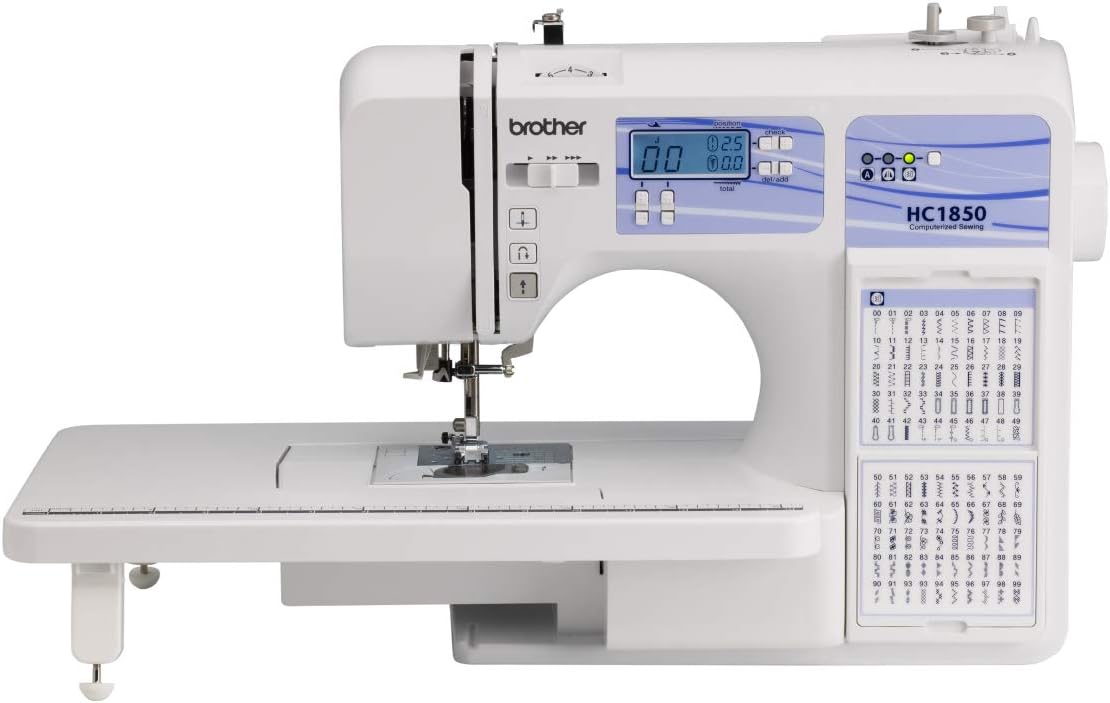

Current Price: $269
Best for: Beginners and garment sewers who want a complete out-of-the-box kit at a lower entry price.
Why it works: 11 presser feet included, 150 stitches, solid general-purpose performance.
The catch: Documented presser foot ergonomic flaw + thread tangling complaints worth knowing about.
Introduction
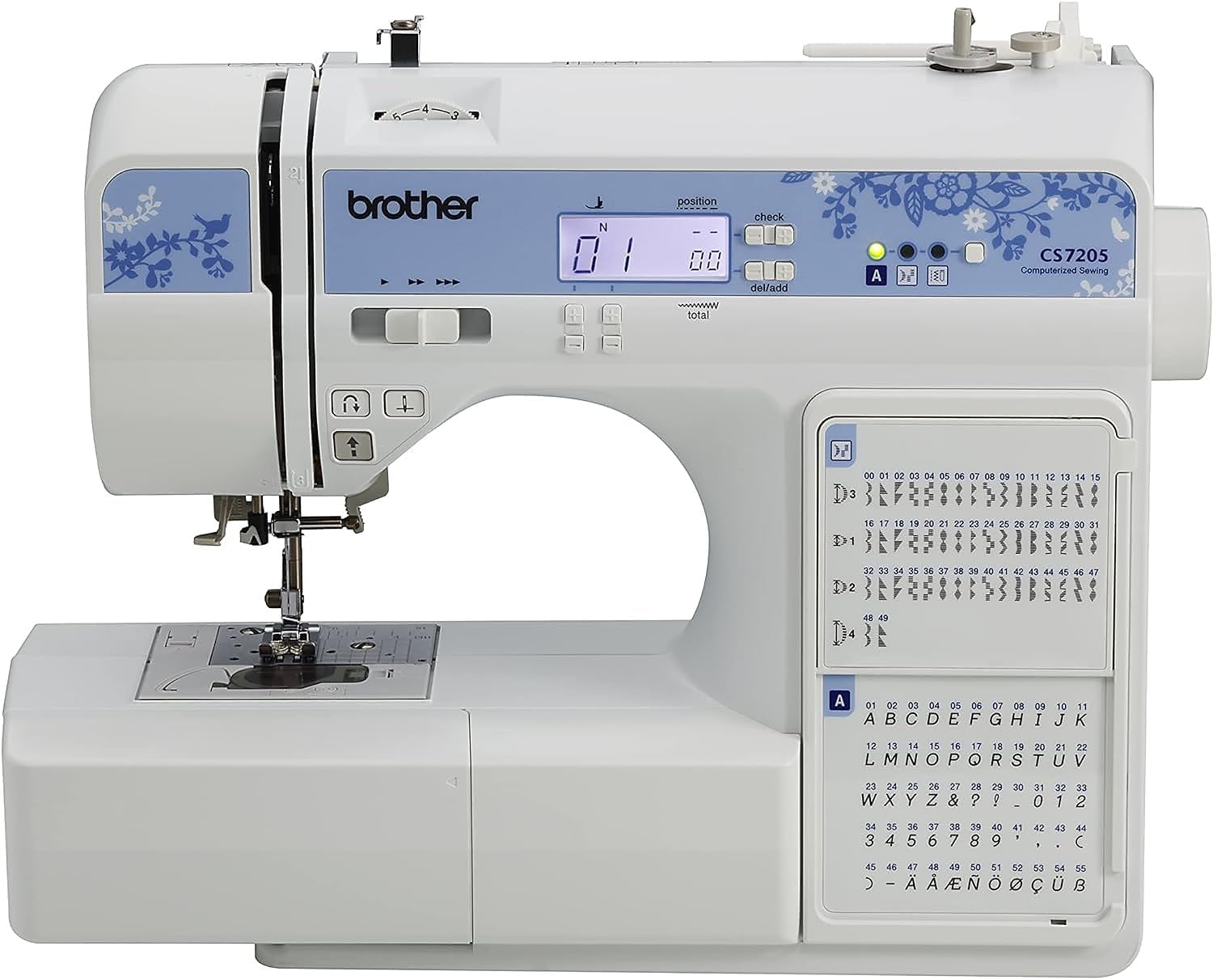
At first glance, this comparison looks straightforward: the Brother HC1850 runs $299 on Amazon, the CS7205 is $269, and both are computerized Brother machines with similar stitch counts and the same 850 SPM speed. They even look almost identical sitting on a shelf.
But here’s the thing — the $30 difference between them isn’t what you should be thinking about. The real gap between these two machines lives in places that don’t appear on any spec sheet: how they handle daily use, what frustrates people three months in, and which one was quietly designed with a flaw that Brother has never publicly acknowledged.
That’s what this article is actually about.
Table of Contents
TL;DR
The HC1850 wins for creative and quilting-focused sewers — better ergonomics, mirror stitch, and fewer reliability complaints. The CS7205 is a solid budget pick for garment sewers, but has a documented presser foot access flaw and recurring thread tangling reports. Neither includes a walking foot, so factor that into your real budget.
Related Articles:
At-a-glance: Brother HC1850 vs CS7205
| Features | HC1850 | CS7205 |
|---|---|---|
| Price | $299 | $269 |
| Stitches | 185 | 150 |
| Mirror Stitch | ✅ | ❌ |
| Presser Feet Included | 8 | 11 |
| Walking Foot | ❌ | ❌ |
| Ergonomics | ✅ Comfortable | ⚠️ Cramped access |
| Reliability Flag | None documented | Thread tangling reported |
| Best For | Quilting + decorative sewing | Garments + general sewing |
| Where To Buy | Check On Amazon | Check On Amazon |
Before the Specs, Let’s Talk About Why People Get This Wrong
Most buyers researching these two machines are trying to answer one of three real questions:
“I want to quilt — which one is actually built for that?”
“I do decorative sewing and embellishments — which gives me more creative control?”
“I’m somewhere in between — which one won’t feel limiting in a year?”
The mistake is assuming that stitch count answers those questions. It doesn’t. The HC1850 has 185 stitches and the CS7205 has 150 — but that number alone tells you almost nothing about which machine actually serves you better for your specific work. What matters is how those machines behave when you’re deep into a project, under time pressure, or trying to do something the machine wasn’t quite designed for.
Let’s get into it.
The CS7205’s Hidden Design Problem (And Why It Matters More Than You’d Think)
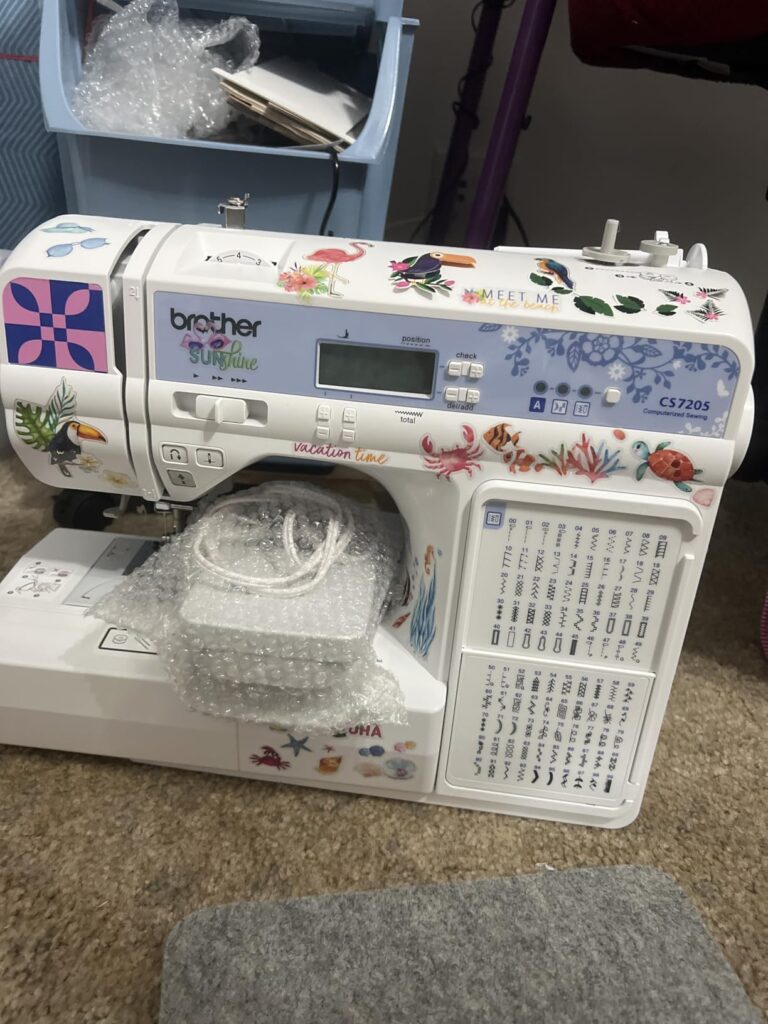
Multiple verified buyers — across Home Depot, Staples, and sewing forums — have independently flagged the same issue with the CS7205: the left side of the machine comes down too far, making it genuinely difficult to access the presser foot area with your hand.
One buyer put it plainly: changing the presser foot requires awkward, cramped hand positioning that becomes genuinely frustrating when you’re swapping feet mid-project. For someone who sews straight seams and buttonholes on garments, this is a minor inconvenience. For a quilter who regularly rotates between a standard foot, a quilting foot, and a walking foot? It’s a design flaw that will irritate you every single time.
This isn’t a one-off complaint. It’s a consistent, repeatable issue that reflects a genuine ergonomic oversight in the CS7205’s clamshell design.
The HC1850 doesn’t have this problem. Its body proportions leave more clearance around the foot attachment area, making foot swaps significantly less fiddly — especially important because quilters switch feet constantly.
Why this matters: If you’re planning to do any serious quilting or regular foot-swapping, this ergonomic difference alone may be worth more than the entire $30 price gap.
The Walking Foot Trap (HC1850 Edition)
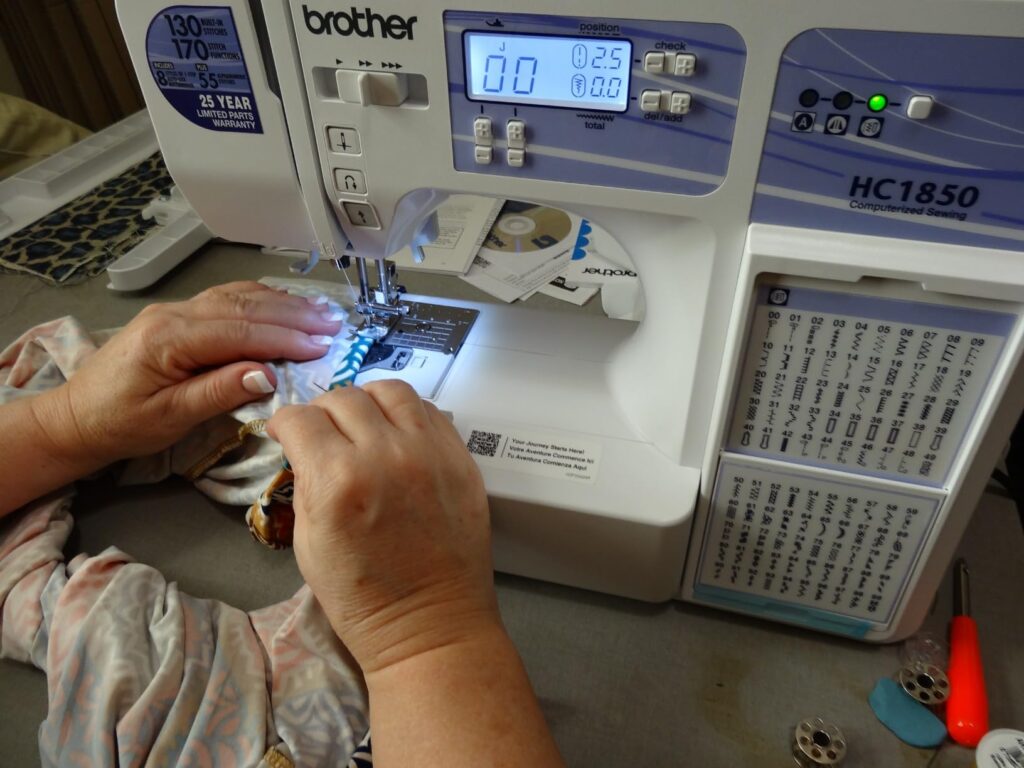
Brother markets the HC1850 heavily toward quilters. The wide table, the spring action quilting foot, the 185 stitches — it’s positioned as a quilting-ready machine. And to be fair, it genuinely is capable of serious quilting work.
But the walking foot is not included.
Neither is the ¼” piecing foot, which is arguably the single most-used foot in patchwork quilting.
At $299, buyers expecting a complete quilting setup — ready to go out of the box — are going to discover they need to purchase additional accessories before they can do the type of quilting Brother’s marketing implies. A quality walking foot for Brother machines typically runs $15-30 extra, and the ¼” foot is another $10-15.
So the “cheaper” CS7205 at $269 actually comes with 11 presser feet compared to the HC1850’s 8 — and the CS7205’s included kit is arguably more complete for general sewing right out of the box.
This doesn’t make the HC1850 a worse machine. It makes it a more expensive one than the $299 sticker suggests if you’re serious about quilting.
The honest math: If you’re buying the HC1850 for quilting and you need a walking foot and a ¼” piecing foot, your real cost is closer to $325-$330. Keep that in mind.
The CS7205’s Thread Tangling Issue: Pattern or Coincidence?
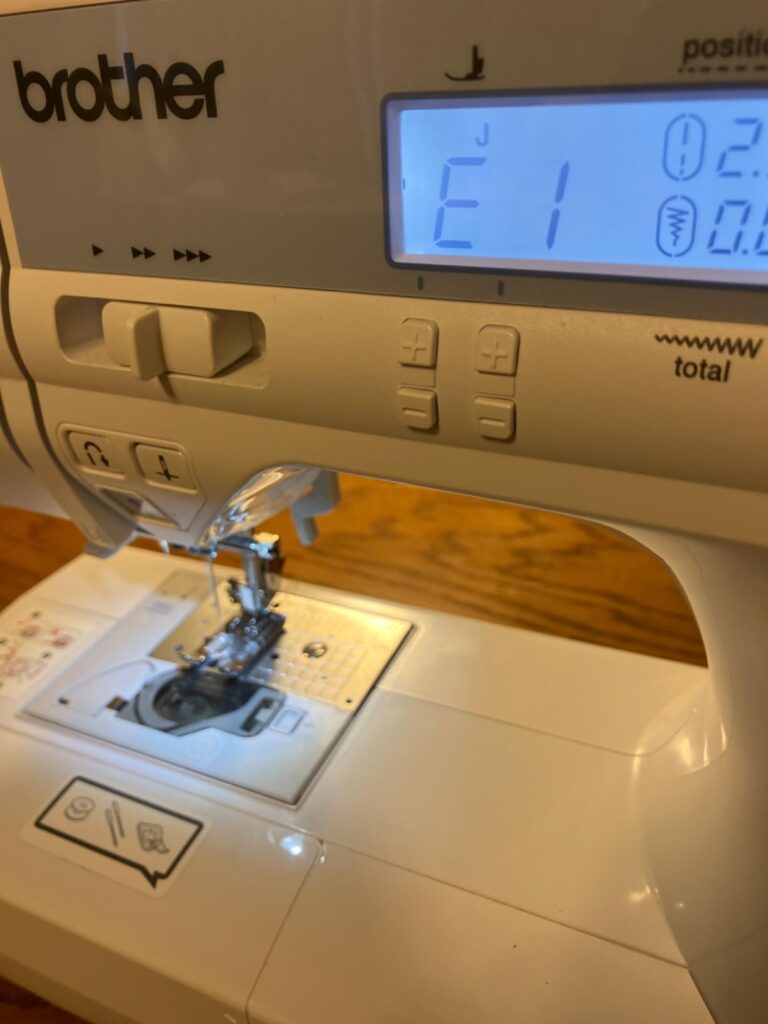
Here’s something that warrants careful attention before you pull the trigger on the CS7205.
Across multiple platforms, a notable cluster of CS7205 owners have reported the same specific defect: thread tangling around the take-up lever — not a one-time jam, but a recurring mechanical issue that returns even after the machine has been serviced or replaced.
Now, to be fair — every sewing machine line has some percentage of defective units, and this doesn’t mean every CS7205 will experience this. But when multiple buyers independently describe the same specific failure point (the take-up lever, not just “thread problems”), that’s a pattern worth flagging. It suggests a potential design vulnerability rather than random manufacturing variance.
The HC1850 doesn’t have a comparable cluster of complaints around a single recurring mechanical failure point. Its negative reviews are more scattered — the occasional tension issue, the occasional threading frustration — but nothing that reads as a systemic mechanical problem.
The Mirror Stitch Gap: Small Feature, Big Creative Difference
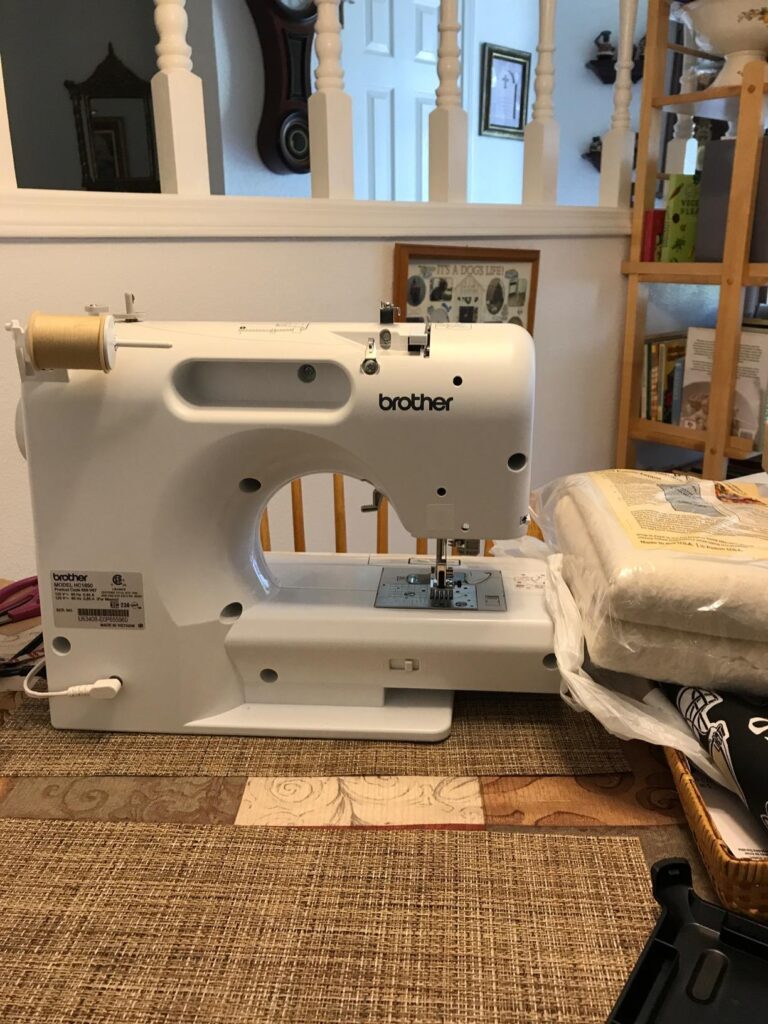
This one’s subtle but meaningful for a specific type of sewer.
The HC1850 has a mirror stitch function. The CS7205 does not.
For those unfamiliar: mirror stitching lets you flip a decorative stitch horizontally or vertically to create symmetrical patterns without repositioning fabric or manually reversing your sewing direction. It’s especially useful for:
- Decorative borders on quilts and table runners
- Symmetrical embellishments on garments
- Any project where you want a mirrored repeating pattern
If you’re primarily sewing utilitarian garments or doing basic quilting, you may never miss this feature. But if you’re drawn to decorative or artistic sewing — the kind of work where you’re using 30 of those 150 stitches regularly — the absence of mirror stitching on the CS7205 is a real creative limitation that its 150-stitch count doesn’t compensate for.
Having 150 stitches without mirror capability is like having a big palette of paint colors but no brush that can blend them. The HC1850’s 185 stitches paired with mirror function gives you meaningfully more creative range, not just a bigger number.
The Durability Conversation Nobody Wants to Have
Both the HC1850 and CS7205 are plastic-frame, clamshell-body machines. Neither has an internal metal frame. This is standard at this price point, and it doesn’t mean they’re fragile.
But sewing machine technicians are consistent on one point: all-plastic-body Brother machines in this category are not designed for extended hours of daily use. They’re built for the home sewer who uses their machine regularly — a few hours several times a week — not for someone producing garments or quilt tops for 6-8 hours daily.
This isn’t a secret or a scandal. It’s just reality at the sub-$300 price tier.
What matters for your decision: if you’re a hobbyist or weekend sewer, both machines are appropriately built for your use pattern and will likely serve you well for years. If you’re ramping up toward semi-professional volume, neither of these machines is your long-term answer — and buying the CS7205 hoping it’ll grow with you into heavy daily use is setting yourself up for disappointment, regardless of the attractive price.
The Throat Space Reality Check for Quilters
Both machines offer 5.75 inches of throat space — the distance between the needle and the right side of the machine body. That’s the working area you have when feeding a quilt through.
For small-to-medium quilts (lap quilts, wall hangings, baby quilts), 5.75 inches is workable, though you’ll be wrestling a bit with bulk as you guide the quilt through. For anything approaching a twin or full-size quilt, you will feel the constraint.
This isn’t a knock unique to either machine — it’s a shared limitation of both at this price point. But if you’re buying primarily to quilt and you already know your projects tend to run large, this spec should push you toward considering a machine with a wider throat space, full stop. Neither the HC1850 nor the CS7205 is going to make large quilt finishing a comfortable experience.
So Which One Should You Actually Buy?
Rather than a vague verdict, here’s a direct answer mapped to the actual situations that bring people to this comparison:
Buy the HC1850 if:
You do a meaningful amount of decorative or artistic sewing and the mirror stitch function would be in regular rotation for you. You’re comfortable purchasing a walking foot and ¼” piecing foot separately and you factor that into your budget. You sew a variety of project types and want the machine that gives you the most creative range over time without hitting a ceiling. The ergonomic presser foot access issue on the CS7205 would genuinely bother you based on how often you swap feet.
Current Price: $299
Best for: Quilters and decorative sewers who want creative range and reliable daily performance.
Why it wins: 185 stitches, mirror stitch function, comfortable presser foot access, no recurring mechanical complaints.
The catch: Walking foot and ¼" piecing foot sold separately.
Buy the CS7205 if:
Current Price: $269
Best for: Beginners and garment sewers who want a complete out-of-the-box kit at a lower entry price.
Why it works: 11 presser feet included, 150 stitches, solid general-purpose performance.
The catch: Documented presser foot ergonomic flaw + thread tangling complaints worth knowing about.
You primarily sew garments, home décor items, and basic quilting — and you won’t regularly use decorative stitches beyond the essentials. You want a more complete accessory kit out of the box without immediately needing to purchase add-ons. You’re a beginner-to-intermediate sewer who wants a capable, capable machine at a slightly lower entry price. You’re aware of the documented presser foot ergonomics issue and it doesn’t apply to your typical workflow.
Buy neither if:
You’re planning to sew heavily every single day for hours at a stretch. At that volume, you’ll outgrow the durability ceiling of both machines faster than their 25-year warranty suggests. Moving up to a machine with a metal frame and a larger throat space will serve you significantly better.
The Question Nobody Asks But Everyone Should
Here’s something worth sitting with before you order either machine:
What frustrated you about your last sewing machine — or what do you wish it did that it didn’t?
If your answer involves wanting more stitch variety and creative flexibility: the HC1850. If your answer involves wanting a more complete kit without extra purchases: the CS7205. If your answer involves wanting more room to maneuver large projects: neither of these — look at machines with at least 7-8″ of throat space.
The best comparison article can’t make the decision for you. But it can make sure you’re making the decision based on the right information — not just stitch count marketing and a spec table that looks the same on every website.
Now you have that.
FAQs
Is the HC1850 really worth the extra $30 over the CS7205?
For most sewers, yes — but not because of the $30. The HC1850’s mirror stitch function, better presser foot ergonomics, and absence of the documented thread tangling complaints give it a meaningful edge in day-to-day usability. The $30 itself is irrelevant. The practical differences are not.
Does the CS7205 come with a walking foot?
No. Neither the HC1850 nor the CS7205 includes a walking foot in the box. This is a common misconception, especially with the HC1850 which is marketed toward quilters. Both machines are compatible with standard Brother walking feet, which you’ll need to purchase separately.
Can you quilt king-size quilts on either of these machines?
Technically, yes — but practically, not comfortably. Both machines have 5.75″ of throat space, which makes managing the bulk of a large quilt challenging. Most experienced quilters use these machines for lap quilts and baby quilts. For larger quilts, you’d ideally want a longarm or a machine with significantly more throat clearance.
What’s the actual difference in presser feet between them?
The CS7205 includes 11 presser feet; the HC1850 includes 8. However, neither machine includes a walking foot or a ¼” piecing foot — two of the most-used feet for quilting. If quilting is your focus, plan to purchase these separately for either machine.